 flip
flipSikhye — sweet malted rice drink
Sikhye — sweet malted rice drink
Why this dish? The cool sweetness that closes grand Korean meals and feasts, served icy with a few floating rice grains. For an economist fascinated by fermentation as a metaphor for long time, sikhye is perfect: its sugar comes not from a packet but from malted barley that slowly digests the rice starch — nature making its own sweetness.
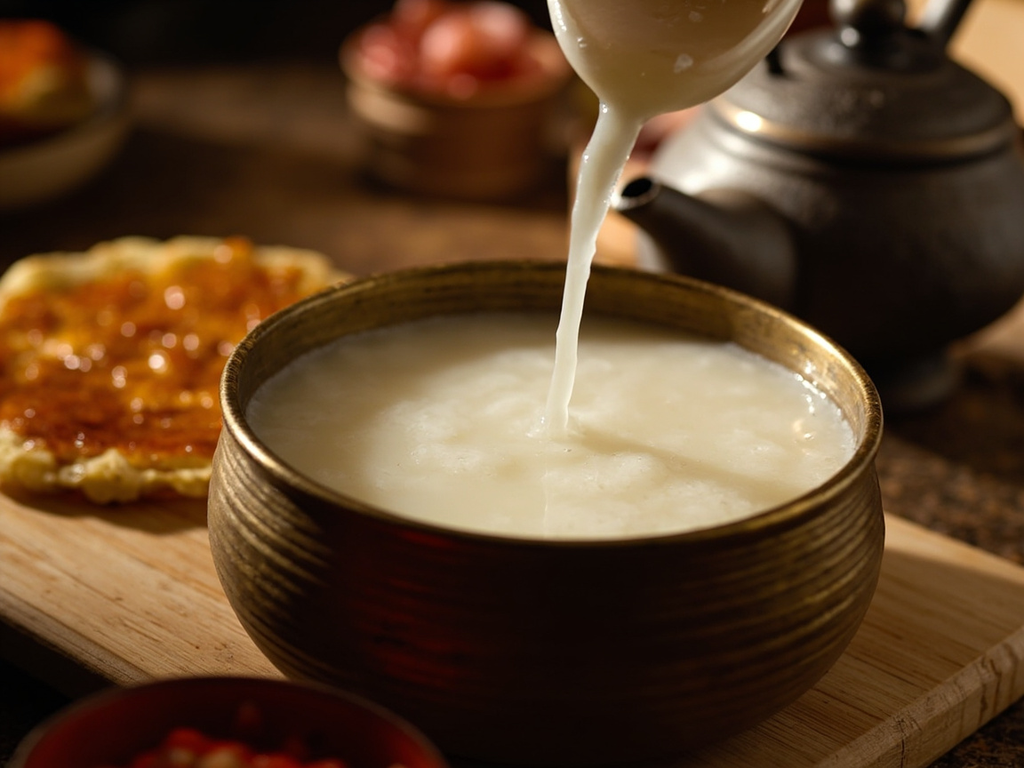
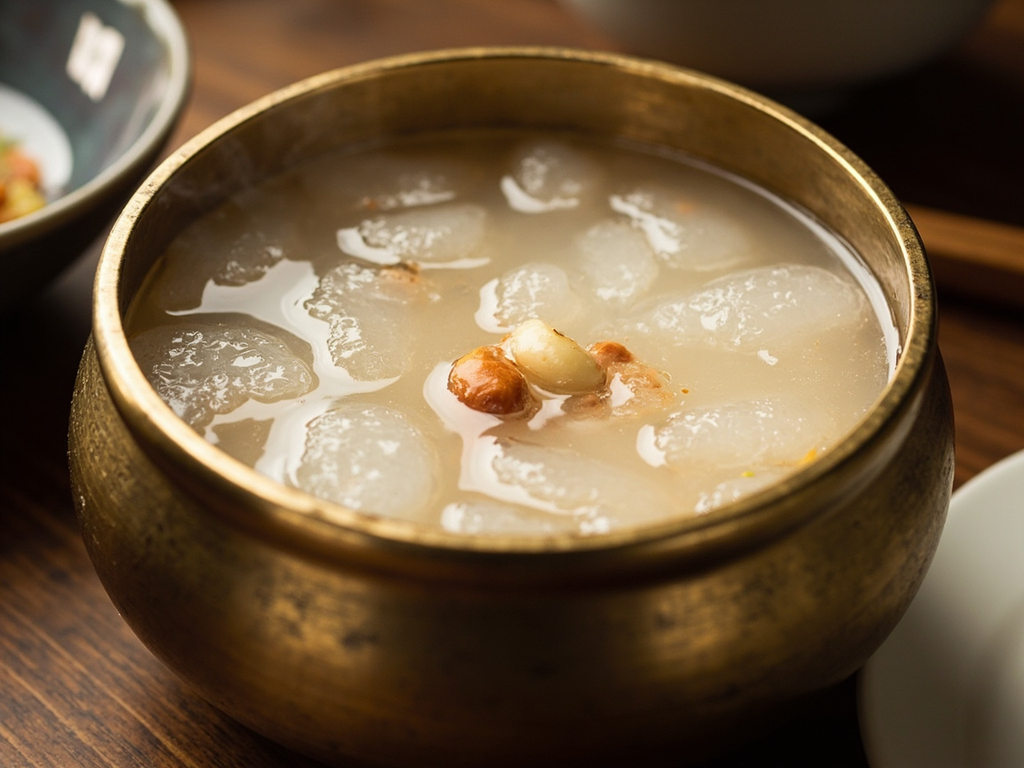
A translucent, sweet, refreshing drink made by fermenting cooked rice in malted barley water. Served very cold, with a few floating rice grains and sometimes a pine nut. The Korean sweet point without cake.
When everyone has put down their spoon, the sikhye is brought out, icy, and that is the real Korean dessert — not a cake, a drink. Look at this marvel: we add almost no sugar, it is the malted barley that, through its enzymes, patiently transforms the rice starch into sweetness. Nature makes its own richness, without market intervention! My only rule: stop the fermentation at the right moment, as soon as the rice grains rise to the surface, otherwise it turns sour. Serve well chilled, with a few grains floating like little boats.
- •Cooked rice — a bowl (starch to transform)
- •Malted barley powder (yeotgireum) — a good measure (sweetening enzymes)
- •Water — as needed (fermentation medium)
- •A little honey or raw sugar — to taste (sweetness adjustment)
- •Pine nuts — a few (garnish)
Sikhye — sweet malted rice drink
A translucent, sweet, refreshing drink made by fermenting cooked rice in malted barley water. Served very cold, with a few floating rice grains and sometimes a pine nut. The Korean sweet point without cake.
Why this dish? The cool sweetness that closes grand Korean meals and feasts, served icy with a few floating rice grains. For an economist fascinated by fermentation as a metaphor for long time, sikhye is perfect: its sugar comes not from a packet but from malted barley that slowly digests the rice starch — nature making its own sweetness.
When everyone has put down their spoon, the sikhye is brought out, icy, and that is the real Korean dessert — not a cake, a drink. Look at this marvel: we add almost no sugar, it is the malted barley that, through its enzymes, patiently transforms the rice starch into sweetness. Nature makes its own richness, without market intervention! My only rule: stop the fermentation at the right moment, as soon as the rice grains rise to the surface, otherwise it turns sour. Serve well chilled, with a few grains floating like little boats.
Ingredients (period version)
- Cooked rice — a bowl (starch to transform)
- Malted barley powder (yeotgireum) — a good measure (sweetening enzymes)
- Water — as needed (fermentation medium)
- A little honey or raw sugar — to taste (sweetness adjustment)
- Pine nuts — a few (garnish)
Ingredients
- Cooked white rice — 200 g (starch)
- Barley malt powder (yeotgireum) — 100 g (malted enzymes)
- Water — 2 liters (liquid base)
- Sugar — 60 g (adjust) (additional sweetness)
- Ginger (optional) — a few slices (flavor)
- Pine nuts — 1 tsp (floating garnish)
Method
- Dissolve the malt powder in water, let rest for 1 h, then strain to keep only the clear malt water.
- Pour this water over the cooked rice in a container; maintain at 50-60 °C (in a pot, yogurt maker, or warm oven) for 4-6 h, until some rice grains rise to the surface.
- Remove a few grains, rinse them, and reserve for decoration.
- Bring the liquid to a boil with sugar (and ginger), skim, then cool completely.
- Serve very cold, with the reserved rice grains and a few pine nuts floating on top.
How it was made : Sikhye is a traditional drink attested since the Joseon era, prepared for feasts and rituals. Fermentation was once done near the hearth (ondol) or in the warmth of a covered jar; barley malt was produced by germinating and then drying barley, exactly as for beer — proof of an ancient enzymatic know-how shared among the world's cuisines.
The contemporary twist : Serve in a frosted glass over crushed ice, 'slush' style, with a dash of yuja (Korean yuzu) juice for a tangy note.
Ha-Joon Chang · Charactorium