 flip
flipDoenjang jjigae — fermented soybean paste stew
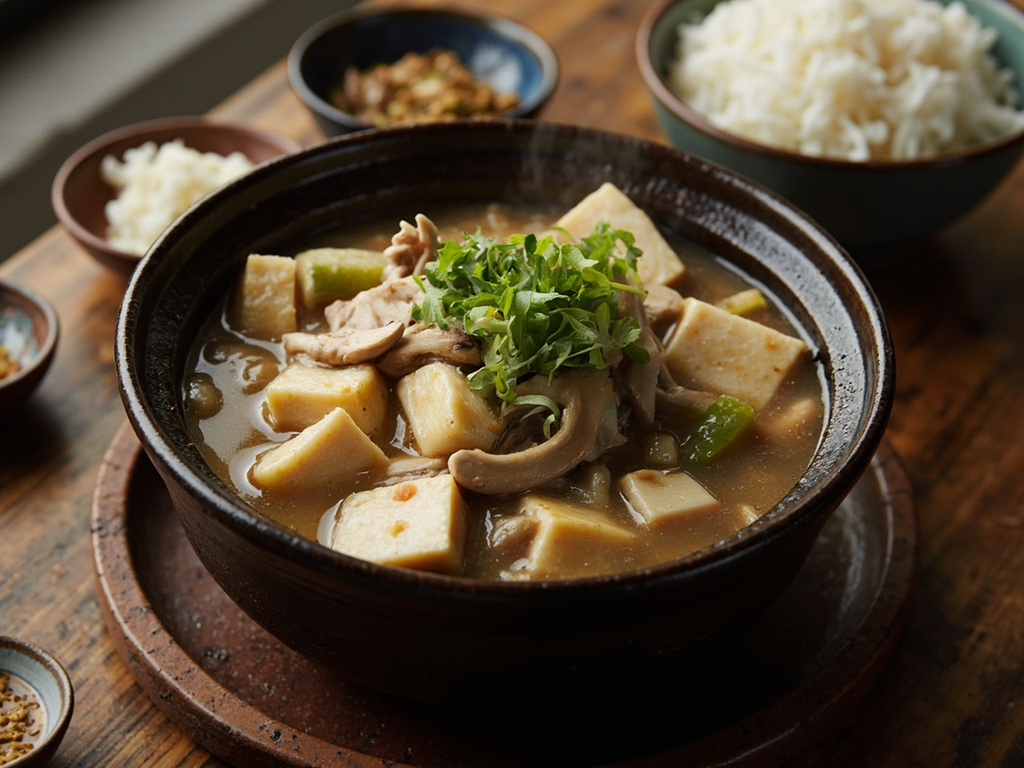
Doenjang jjigae — fermented soybean paste stew
Why this dish? The comfort food of his childhood in Seoul in the 1960s-70s. Chang readily tells that it's the most ordinary and most beloved food in Korean households: a stew made with next to nothing and the fermented paste from the cupboard. It's the dish that, for him, proves that the richness of a cuisine lies not in the price of ingredients but in the time invested in their making.
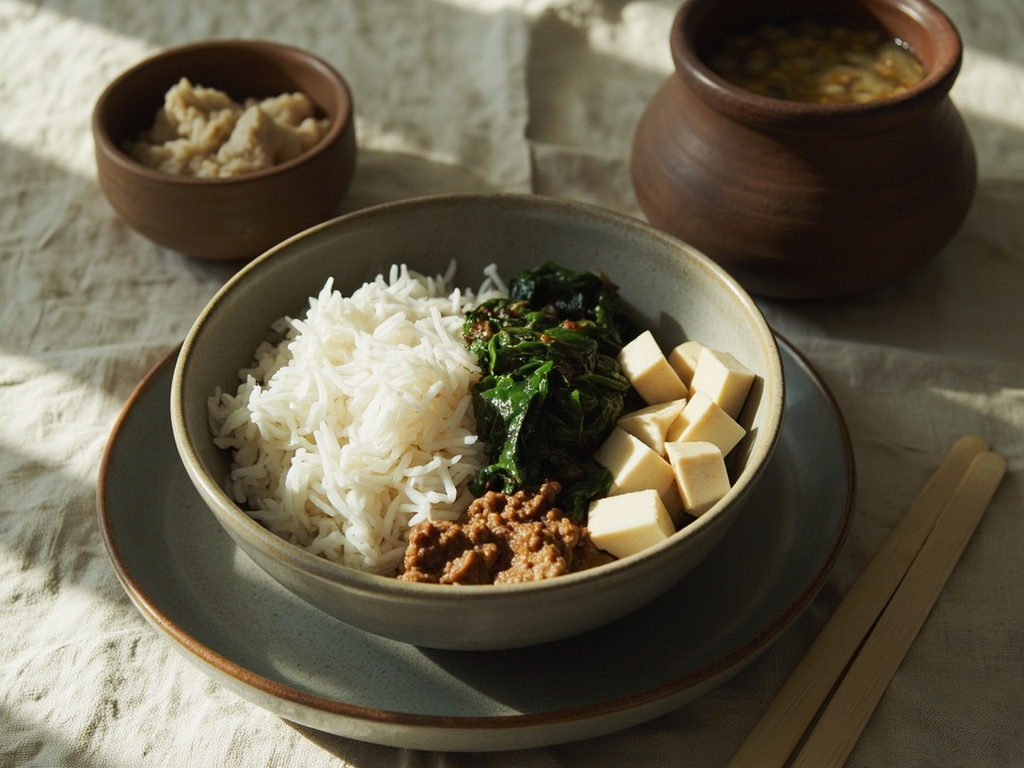
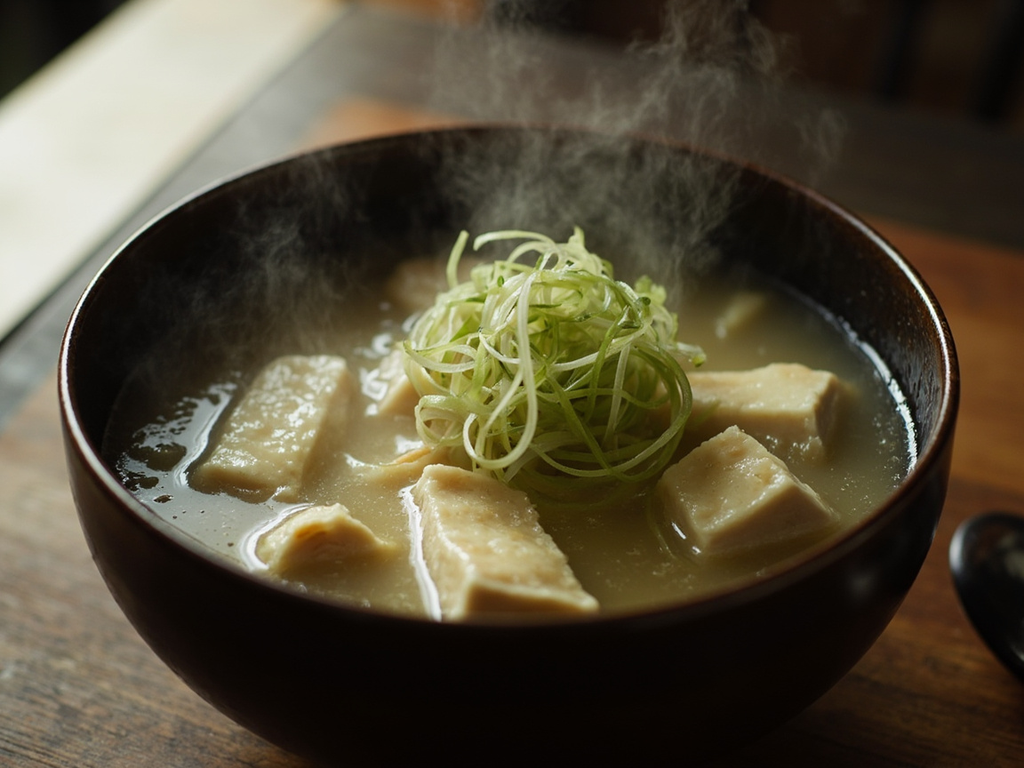
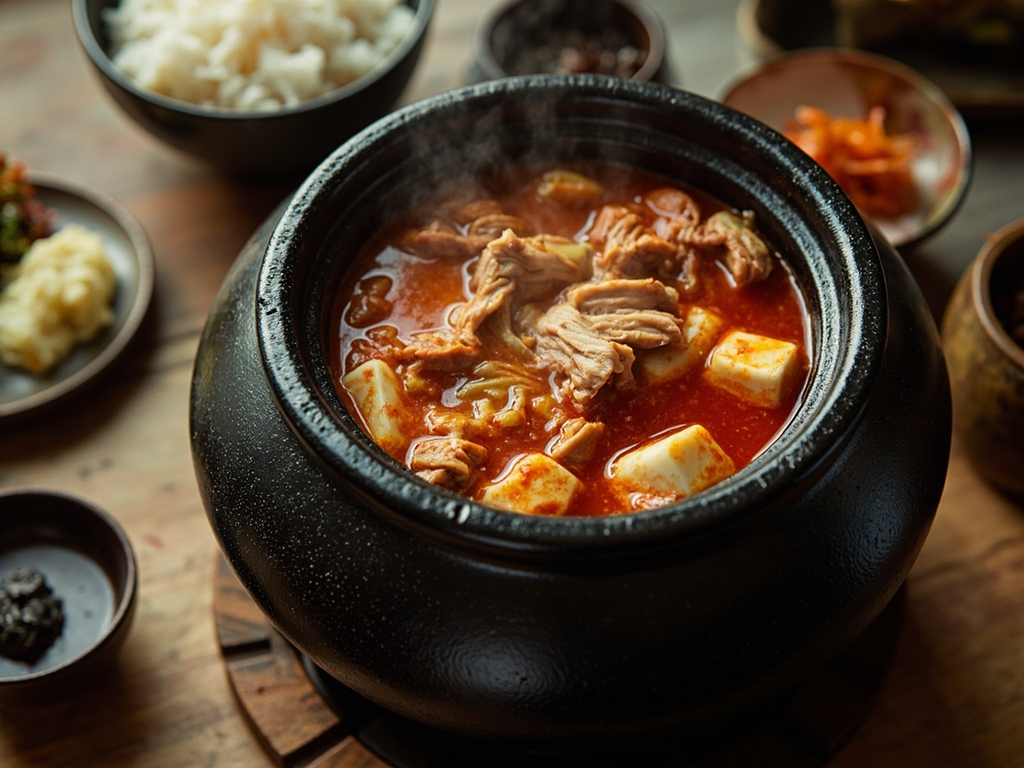
A cloudy, deeply savory stew: zucchini, tofu, onion, and mushrooms melt in a fermented soybean paste broth. Served bubbling in its earthenware pot, it is shared with a spoon, over white rice.
You see, I'm always asked what the secret of economic growth is, and I answer: the same as that of this stew — time. The doenjang my mother took from the cupboard had fermented for months, maybe years; no 'efficient' market will give you that taste in an afternoon. We threw into the water whatever was left — a piece of zucchini, some tofu, an onion — and that humble paste turned next to nothing into something profound. My trick: never boil too hard, otherwise the doenjang becomes bitter and sulks. Patience, always patience.
- •Doenjang (homemade fermented soybean paste) — two good spoonfuls (umami and salty base)
- •Korean zucchini (aehobak) — one, in half-rounds (melting vegetable)
- •Firm tofu — one block, cubed (mild protein)
- •Onion and green onion — as available (aromatics)
- •Rice washing water — a large bowl (traditional cloudy broth)
- •Dried anchovies (myeolchi) — a handful (umami broth base)
Doenjang jjigae — fermented soybean paste stew
A cloudy, deeply savory stew: zucchini, tofu, onion, and mushrooms melt in a fermented soybean paste broth. Served bubbling in its earthenware pot, it is shared with a spoon, over white rice.
Why this dish? The comfort food of his childhood in Seoul in the 1960s-70s. Chang readily tells that it's the most ordinary and most beloved food in Korean households: a stew made with next to nothing and the fermented paste from the cupboard. It's the dish that, for him, proves that the richness of a cuisine lies not in the price of ingredients but in the time invested in their making.
You see, I'm always asked what the secret of economic growth is, and I answer: the same as that of this stew — time. The doenjang my mother took from the cupboard had fermented for months, maybe years; no 'efficient' market will give you that taste in an afternoon. We threw into the water whatever was left — a piece of zucchini, some tofu, an onion — and that humble paste turned next to nothing into something profound. My trick: never boil too hard, otherwise the doenjang becomes bitter and sulks. Patience, always patience.
Ingredients (period version)
- Doenjang (homemade fermented soybean paste) — two good spoonfuls (umami and salty base)
- Korean zucchini (aehobak) — one, in half-rounds (melting vegetable)
- Firm tofu — one block, cubed (mild protein)
- Onion and green onion — as available (aromatics)
- Rice washing water — a large bowl (traditional cloudy broth)
- Dried anchovies (myeolchi) — a handful (umami broth base)
Ingredients
- Doenjang — 2 tbsp (umami and salty base)
- Zucchini — 1/2, in half-moons (melting vegetable)
- Firm tofu — 200 g, cubed (mild protein)
- Onion — 1/2, sliced (aromatic)
- Mushrooms (oyster or shiitake) — 100 g (vegetable umami)
- Dried anchovies or dashi — 1 packet or 6 anchovies (broth base)
- Rice water (1st rinse) or water — 500 ml (broth)
- Minced garlic and green onion — 1 clove + 1 stalk (finish)
Method
- Simmer the rice water with dried anchovies for 10 min, then remove the anchovies.
- Dissolve the doenjang in the broth using a strainer or spoon to avoid lumps.
- Add onion, zucchini, and mushrooms; simmer gently for 8-10 min.
- Add tofu and garlic, continue for 5 min without boiling hard.
- Sprinkle with green onion and serve bubbling hot, with a bowl of white rice and some banchan.
How it was made : In post-war Korea, doenjang was homemade: soybean blocks (meju) were hung to dry from the ceiling all winter, then fermented in brine in large earthenware jars (onggi) on the terrace. The jjigae was cooked in a ttukbaegi, an earthenware pot that retains heat long after serving.
The contemporary twist : Serve the ttukbaegi still boiling on a wooden board, with a raw egg cracked in the center that will poach on its own in the stew's heat.
Sources : Ha-Joon Chang, Edible Economics: A Hungry Economist Explains the World (2022), chapter on anchovy and Korean broth
Ha-Joon Chang · Charactorium