 flip
flipJapchae — stir-fried sweet potato noodles with vegetables
Japchae — stir-fried sweet potato noodles with vegetables
Why this dish? The dish for birthdays, lunar holidays (Chuseok, Seollal), and large Korean family meals. Chang speaks of cooking as a way to understand societies: japchae, shiny and colorful, is the dish brought out when hosting — opulence reserved for special occasions, in a Korea that had known scarcity.
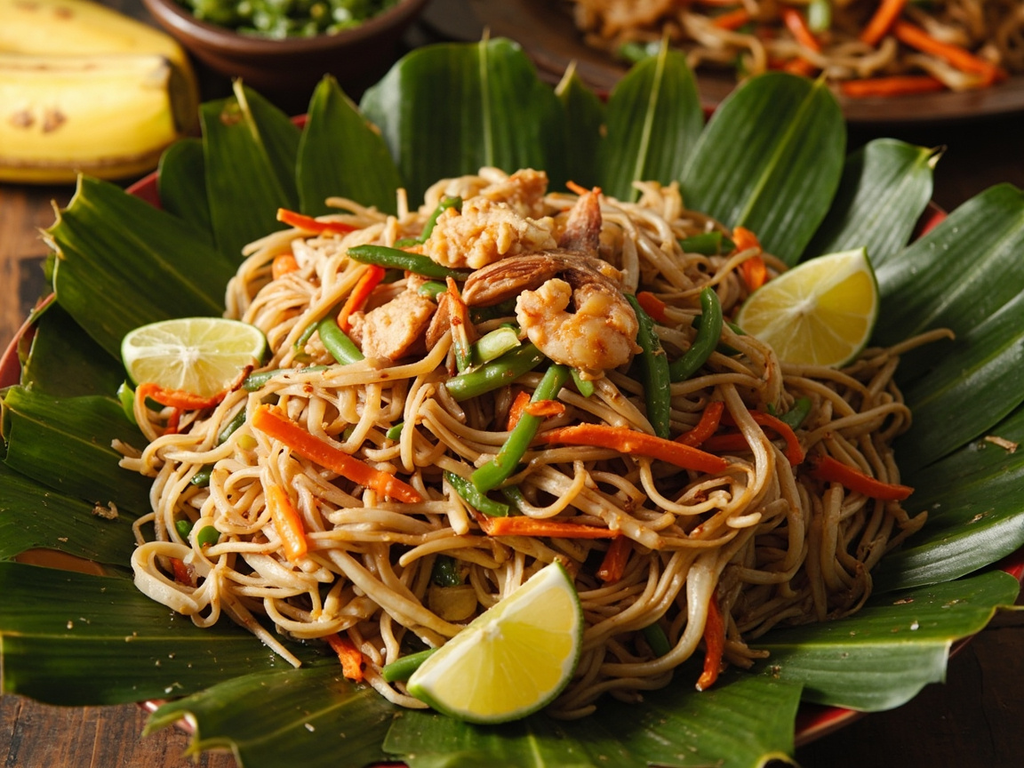
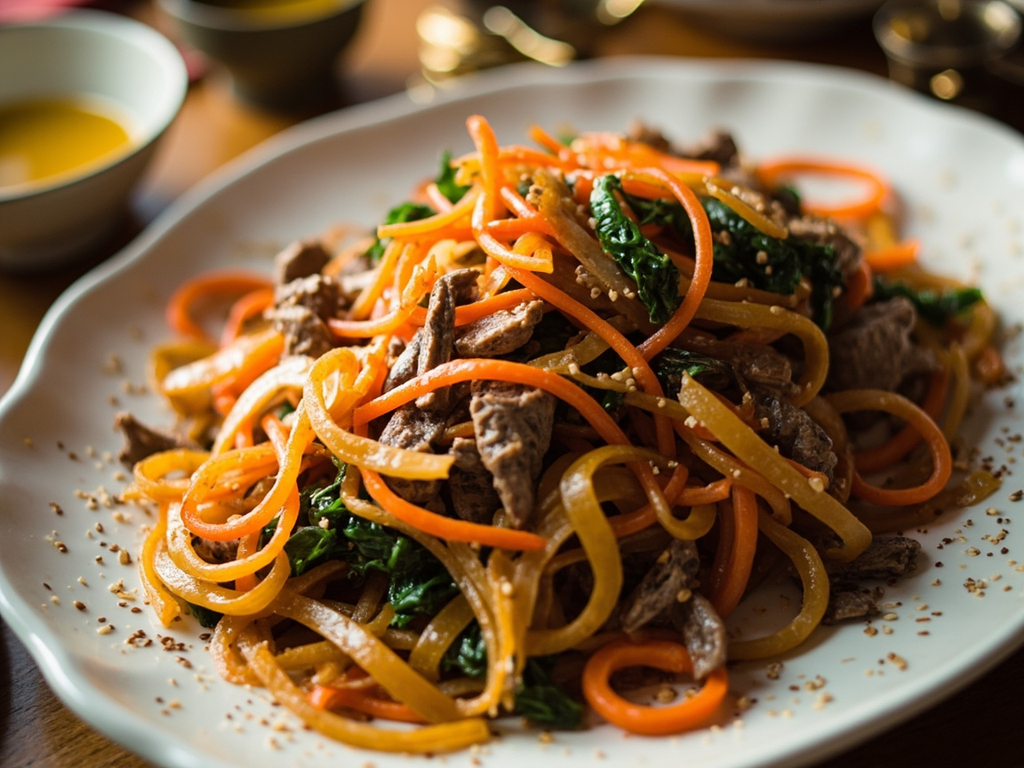
Translucent sweet potato starch noodles (dangmyeon), stir-fried and glistening with sesame oil, mingled with a rainbow of julienned vegetables, mushrooms, and a strip of beef. Sweet-savory, silky, it is the showpiece dish of celebrations.
This dish wasn't brought out just any day — it signaled a celebration. As a child, I watched for japchae like a signal: today we're hosting, today is abundance. Each vegetable is cut and stir-fried separately to keep its color and crunch — a painstaking work that my grandmother orchestrated like a conductor directing her sections. It's the very opposite of the standardized mass production my fellow economists love: here, value arises precisely from refusing to cook everything in the same pot. Gloss the noodles well with sesame, and never skimp on the patience of the knife.
- •Dangmyeon (sweet potato starch noodles) — a handful per person (translucent base)
- •Spinach, carrot, onion — seasonal (colors and crunch)
- •Mushrooms (rehydrated shiitake) — a few (umami)
- •Sliced beef — a little, for feast days (festive richness)
- •Soy sauce, sugar, sesame oil, toasted sesame — to taste (sweet-savory seasoning)
Japchae — stir-fried sweet potato noodles with vegetables
Translucent sweet potato starch noodles (dangmyeon), stir-fried and glistening with sesame oil, mingled with a rainbow of julienned vegetables, mushrooms, and a strip of beef. Sweet-savory, silky, it is the showpiece dish of celebrations.
Why this dish? The dish for birthdays, lunar holidays (Chuseok, Seollal), and large Korean family meals. Chang speaks of cooking as a way to understand societies: japchae, shiny and colorful, is the dish brought out when hosting — opulence reserved for special occasions, in a Korea that had known scarcity.
This dish wasn't brought out just any day — it signaled a celebration. As a child, I watched for japchae like a signal: today we're hosting, today is abundance. Each vegetable is cut and stir-fried separately to keep its color and crunch — a painstaking work that my grandmother orchestrated like a conductor directing her sections. It's the very opposite of the standardized mass production my fellow economists love: here, value arises precisely from refusing to cook everything in the same pot. Gloss the noodles well with sesame, and never skimp on the patience of the knife.
Ingredients (period version)
- Dangmyeon (sweet potato starch noodles) — a handful per person (translucent base)
- Spinach, carrot, onion — seasonal (colors and crunch)
- Mushrooms (rehydrated shiitake) — a few (umami)
- Sliced beef — a little, for feast days (festive richness)
- Soy sauce, sugar, sesame oil, toasted sesame — to taste (sweet-savory seasoning)
Ingredients
- Dangmyeon noodles — 200 g (translucent base)
- Fresh spinach — 100 g (green and crunchy)
- Carrot + onion + bell pepper, julienned — 1 each (colors)
- Shiitake mushrooms — 4-5, sliced (umami)
- Sliced beef (optional) — 150 g (festive protein)
- Soy sauce — 4 tbsp (salty)
- Sugar — 2 tbsp (sweet)
- Sesame oil + sesame seeds — 2 tbsp + 1 tbsp (fragrant binder and finish)
- Minced garlic — 2 cloves (aromatic)
Method
- Cook the noodles in boiling water for 6-7 min, drain, roughly cut, and immediately season with a little soy sauce and sesame oil.
- Stir-fry each vegetable separately over high heat to preserve color and texture; set aside.
- Sauté the marinated beef (soy sauce, garlic, sugar) if using.
- Combine noodles, vegetables, and beef in the pan; add remaining soy sauce, sugar, and garlic; stir-fry for 2 min to gloss.
- Off the heat, perfume with sesame oil, sprinkle with sesame seeds, and serve warm at the center of the table.
How it was made : Japchae dates back to the 17th century, but originally it was made without noodles — only julienned vegetables. Sweet potato starch noodles only became standard in the 20th century. Its lengthy preparation, vegetable by vegetable, made it a dish reserved for days of honor and celebration.
The contemporary twist : Arrange the japchae into a nest with tongs, like a bouquet, and top with a finely sliced fried egg yolk in golden strips (jidan).
Ha-Joon Chang · Charactorium