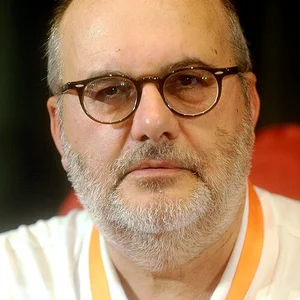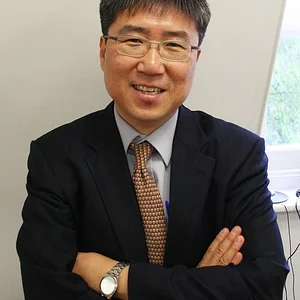

Heterodox South Korean economist, professor at Cambridge and later at SOAS in London. A critic of dogmatic free-trade ideology, he champions the role of the state in economic development and highlights the place of protectionism in the history of industrialization among today's wealthy countries.
Frequently asked questions
Key Facts
- Born in 1963 in Seoul, South Korea
- Has taught development economics at the University of Cambridge since the 1990s
- Published 'Kicking Away the Ladder' in 2002, a critique of the free-trade policies imposed on developing countries
- Published '23 Things They Don't Tell You About Capitalism' in 2010, an international best-seller
- A major figure in contemporary heterodox economics and a critic of the neoliberal consensus
Works & Achievements
Groundbreaking work showing that wealthy countries themselves used protectionism to develop. It earned him the Gunnar Myrdal Prize.
An accessible critique of the free trade imposed on poor countries, defending the protection of infant industries.
A worldwide bestseller that dismantles twenty-three common myths about capitalism and the free market.
An accessible primer presenting the major schools of economic thought in an open and critical way.
An original book where each chapter explains an economic concept through a food, making the discipline both flavorful and accessible.
Anecdotes
Ha-Joon Chang likes to recount that he grew up in South Korea during the 1960s and 70s, when his country — then poorer than many African nations — transformed itself into an industrial giant within just a few decades. This lived experience runs through all his work: he saw with his own eyes that a proactive state could change a nation's economic destiny.
The title of his most famous book, *Kicking Away the Ladder*, borrows an image from the 19th-century German economist **Friedrich List**: once they have climbed to the top thanks to protectionism, wealthy countries kick away the ladder behind them by forbidding poorer countries from using the same methods. The book earned him the prestigious Gunnar Myrdal Prize in **2003**.
A passionate cook, Chang published *Edible Economics* in **2022**, where each chapter opens with a food — from okra to anchovies — to explain an economic idea. He likes to say that understanding economics should be as accessible as sharing a meal.
In *23 Things They Don't Tell You About Capitalism* (**2010**), he delights in demolishing received wisdom, arguing for instance that “the washing machine has changed the world more than the internet,” to show that household technologies freed up a considerable amount of working time, particularly for women.
Chang likes to point out mischievously that the United States and Great Britain, today the champions of free trade, were in reality among the most protectionist countries in history when they were building up their own industries.
Primary Sources
Developed countries want to impose free-trade and laissez-faire policies on developing countries—policies they themselves never applied when they were in their own catching-up phase.
My son Jin-Gyu is six years old. Many people think I should send him out into the labour market. Of course, that sounds absurd: we protect a child while he grows up, exactly as we should protect a young industry.
There is no such thing as a free market. Every market obeys rules and limits that restrict freedom of choice.
Ninety-five per cent of economics is common sense made complicated. Economics is too important to be left to economists alone.
Key Places
Birthplace of Ha-Joon Chang, where he grew up during his country's spectacular industrial takeoff.
Institution where Chang completed his early economics studies before leaving for the United Kingdom.
University where he earned his doctorate and taught economics for nearly thirty years, until 2021.
School of Oriental and African Studies where Chang became a professor in 2021, continuing his work on development.
Typical Objects

The book that made Chang known worldwide, dismantling the myth that rich countries developed thanks to free trade.

Tools of the teacher he long was at Cambridge, where he explained economic history to his students.

Okra, anchovies, carrots: foods that Chang uses as metaphors to make economics accessible in “Edible Economics.”

An everyday object that Chang turns into a symbol: for him, this invention transformed society more than the computer did, by freeing up domestic time.
📷 CC BY 2.0 · Wikimedia Commons ↗
The central image of his thinking: the rich countries, having reached the top, pull the ladder up behind them to prevent poor countries from catching up.

The working tool of the contemporary economist, on which he writes his books, analyzes data, and prepares his courses and lectures.
📷 CC BY-SA 4.0 · Wikimedia Commons ↗School Curriculum
Vocabulary & Tags
Key Vocabulary
Tags
Lieu
Daily Life
Morning
Ha-Joon Chang's morning resembles that of a modern academic: reading the international economic press, answering emails, and preparing his lectures. He likes to start with a coffee while browsing the latest economic data.
Afternoon
The afternoon is devoted to teaching, research meetings, and supervising doctoral students. It is also the time when he writes his articles and book chapters, often in his office or a university library.
Evening
In the evening, he gladly takes to cooking, his great passion, and takes part in conferences, debates, or interviews with media from around the world. He sets aside time for reading, which feeds his thinking.
Food
A great lover of fine food, Chang explores cuisines from all over the world, from the Korean dishes of his childhood to Italian or British specialties. For him, sharing a meal is also a way of understanding societies and their economies.
Clothing
Like most contemporary university professors, he dresses in a simple and casual way: shirt, jacket, sometimes a tie for official conferences, without any quest for ostentation.
Housing
He lives in a townhouse in the United Kingdom, in Cambridge and later London, in the ordinary comfort of a middle-class academic, surrounded by many books.
Historical Timeline
Period Vocabulary
Liens externes & ressources
Références
Œuvres
Kicking Away the Ladder (Retirer l'échelle)
2002
Bad Samaritans (Les Mauvais Samaritains)
2007
23 Things They Don't Tell You About Capitalism
2010
Economics: The User's Guide (L'Économie : mode d'emploi)
2014
Edible Economics (L'Économie comestible)
2022