 flip
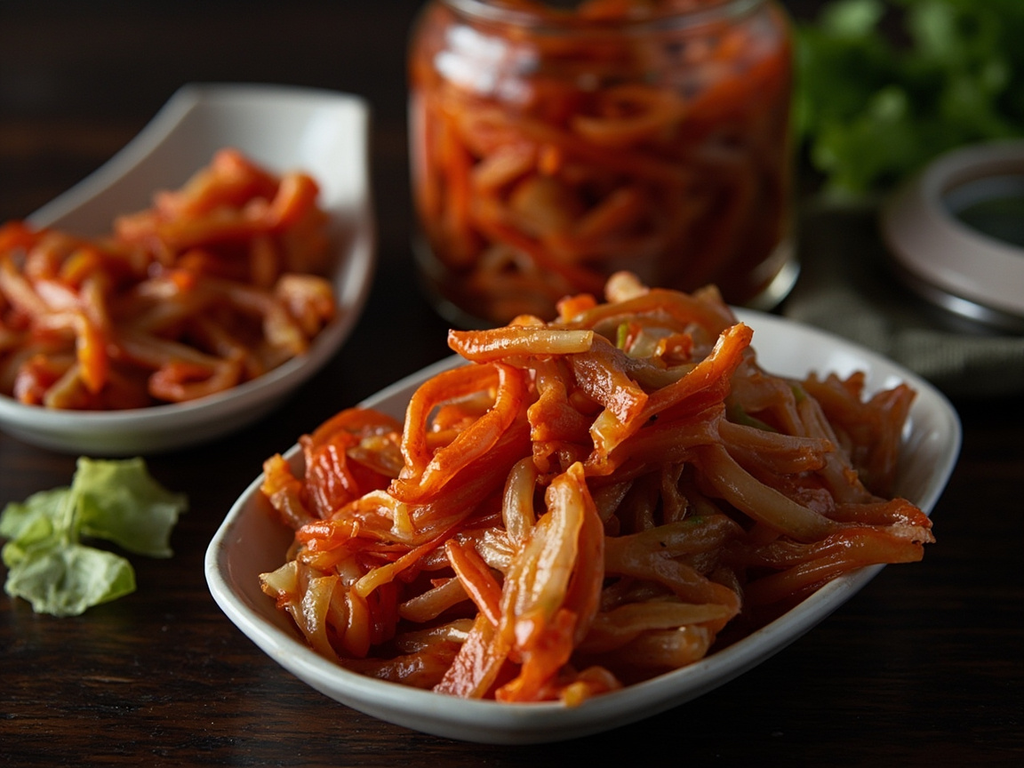
flipBaechu-kimchi (fermented napa cabbage with chili)
Baechu-kimchi (fermented napa cabbage with chili)
Why this dish? Kimchi is explicitly listed among the foods associated with Han Kang. A central ferment of every Korean table, it embodies this cuisine of memory and slow transformation that echoes her writing — what is kept, what matures, what survives time.
Napa cabbage salted then coated with a living red paste (chili, garlic, ginger, pear) and left to ferment. Crunchy, spicy, tangy: it accompanies almost every meal and improves over weeks.
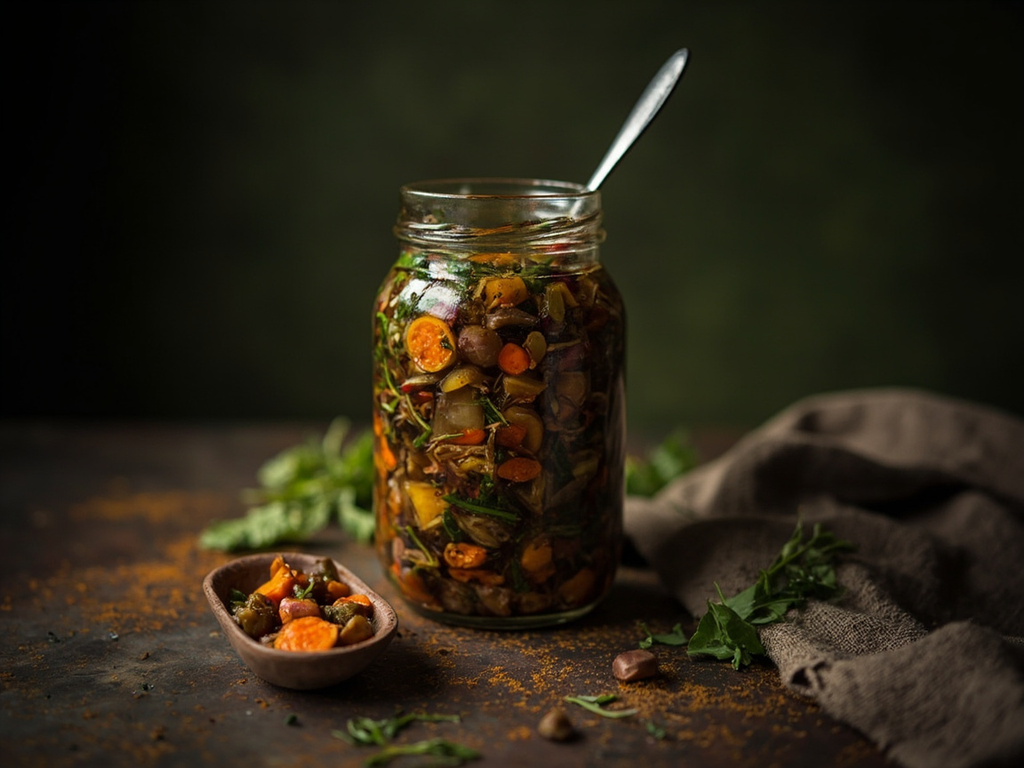
The secret lies in the salt and patience, nothing else. I salt the cabbage and let it release its water for several hours, until the leaf bends without breaking — that's when it's ready to receive the paste. I coat each leaf, one by one, without rushing, like turning pages. Then I pack everything into a jar, leave it a day or two in the kitchen air, and the rest in the cold. At first it's sharp; later it sours, becomes deeper. You don't make kimchi, you accompany it while it makes itself.
- •Napa cabbage (baechu) — one large (base vegetable)
- •Coarse salt — a generous handful (salting and dehydration)
- •Korean chili powder (gochugaru) — several spoons (spice and color)
- •Garlic and ginger — equal parts (aromatics)
- •Asian pear — half (sweetness, sugar for fermentation)
- •Scallions — a bunch (freshness)
- •Fermented fish sauce (jeotgal) — a dash (umami)
Baechu-kimchi (fermented napa cabbage with chili)
Napa cabbage salted then coated with a living red paste (chili, garlic, ginger, pear) and left to ferment. Crunchy, spicy, tangy: it accompanies almost every meal and improves over weeks.
Why this dish? Kimchi is explicitly listed among the foods associated with Han Kang. A central ferment of every Korean table, it embodies this cuisine of memory and slow transformation that echoes her writing — what is kept, what matures, what survives time.
The secret lies in the salt and patience, nothing else. I salt the cabbage and let it release its water for several hours, until the leaf bends without breaking — that's when it's ready to receive the paste. I coat each leaf, one by one, without rushing, like turning pages. Then I pack everything into a jar, leave it a day or two in the kitchen air, and the rest in the cold. At first it's sharp; later it sours, becomes deeper. You don't make kimchi, you accompany it while it makes itself.
Ingredients (period version)
- Napa cabbage (baechu) — one large (base vegetable)
- Coarse salt — a generous handful (salting and dehydration)
- Korean chili powder (gochugaru) — several spoons (spice and color)
- Garlic and ginger — equal parts (aromatics)
- Asian pear — half (sweetness, sugar for fermentation)
- Scallions — a bunch (freshness)
- Fermented fish sauce (jeotgal) — a dash (umami)
Ingredients
- Chinese cabbage (nappa) — 1 large (about 1.5 kg) (base vegetable)
- Coarse sea salt — 100 g (salting)
- Gochugaru (Korean chili flakes) — 5 tbsp (spice and color)
- Garlic — 6 cloves, grated (aromatic)
- Fresh ginger — 1 tbsp grated (aromatic)
- Pear (nashi or conference) — 1/2, blended (natural sugar)
- Scallions — 4, cut into segments (freshness)
- Fish sauce (nuoc-mam or myeolchi-jeot) — 2 tbsp (vegan option: 1 tbsp soy sauce) (umami)
Method
- Cut the cabbage into quarters, separate leaves and salt generously between each leaf. Let it wilt for 3-4 hours, turning halfway.
- Rinse the cabbage thoroughly (3 times) to remove excess salt, drain well.
- Mix gochugaru, garlic, ginger, blended pear, fish sauce, and scallions into a thick paste.
- Coat each leaf with the paste, wearing gloves. Pack tightly into a clean jar, leaving 3 cm headspace.
- Let ferment 1-2 days at room temperature (until first bubbles appear), then refrigerate. Ready to eat from day 3, best after 2 weeks.
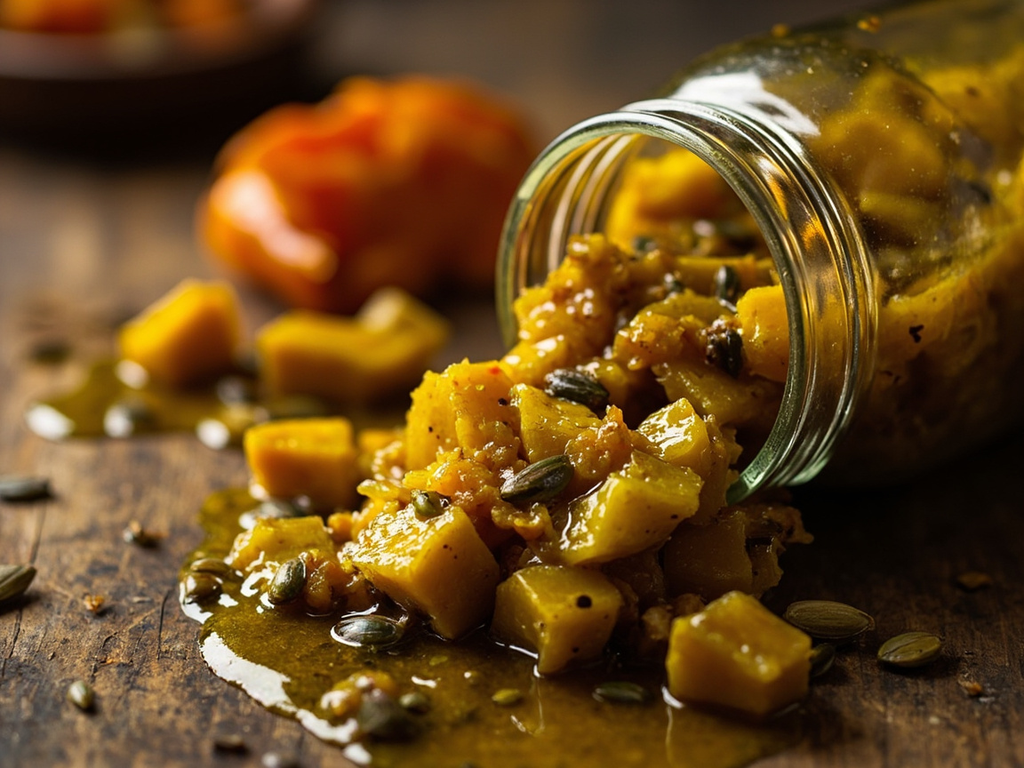
How it was made : Kimjang — the large collective making of kimchi before winter — is a centuries-old Korean tradition, now inscribed on UNESCO's Intangible Cultural Heritage list. Before refrigerators, onggi jars were buried in the ground to stabilize fermentation all winter. Chili, which arrived in Korea after the 16th century, only gave red kimchi later; earlier versions were white, with salt and aromatics.
The contemporary twist : Keep a small jar of 'young' (3 days) and one of 'mature' (3 weeks) side by side to taste, in the same bite, how time changes flavor — a tasting of fermentation like reading two states of the same text.
Han Kang · Charactorium