 flip
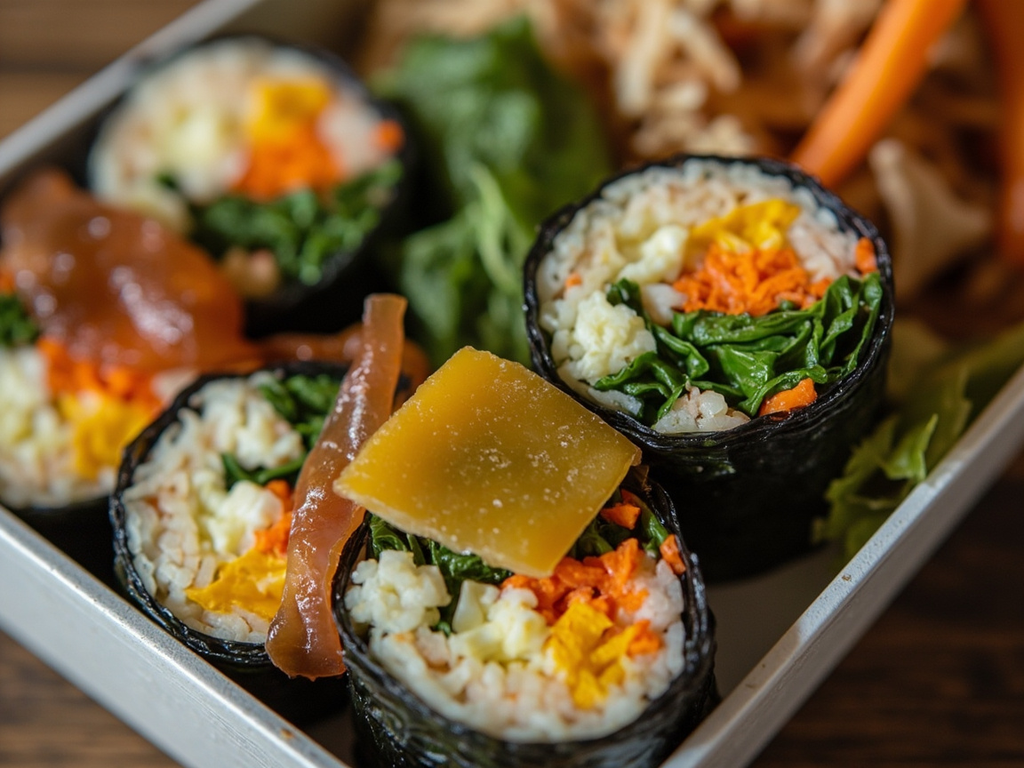
flipJeju bingtteok — buckwheat crepe rolled with radish
Jeju bingtteok — buckwheat crepe rolled with radish
Why this dish? Jeju Island is among the places associated with Han Kang; her novel 'We Do Not Part' is set there, around the memory of the island. Bingtteok is the humble, emblematic specialty of Jeju: a pale buckwheat crepe rolled around seasoned radish, born from a volcanic land poor in rice.
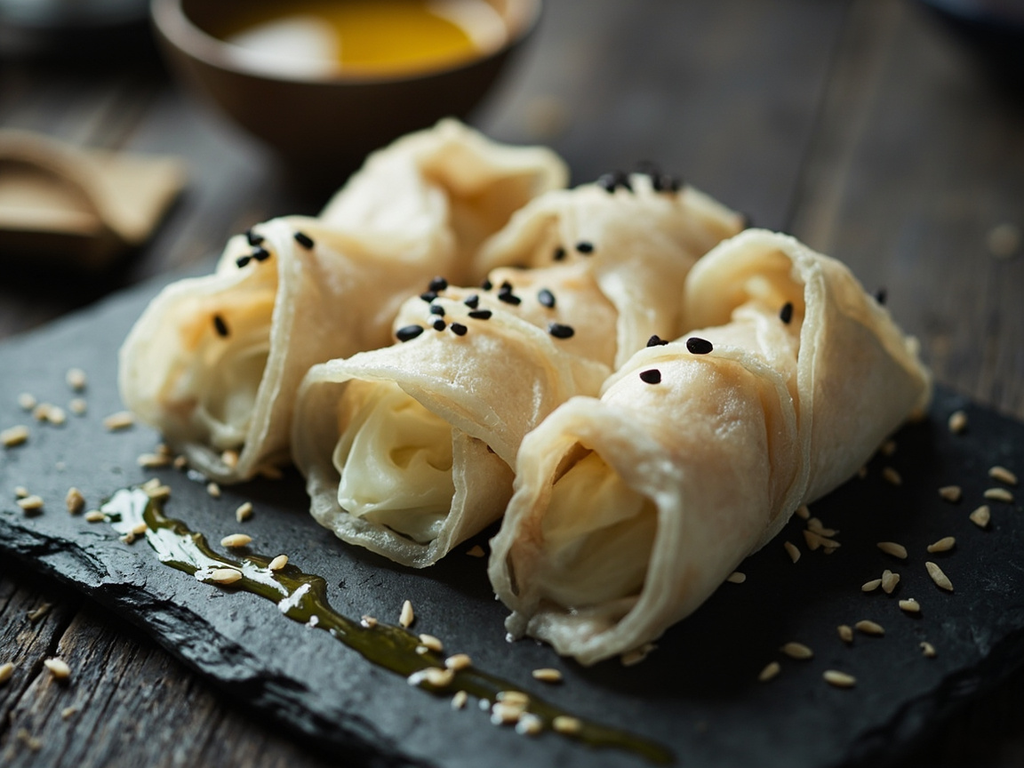
A thin, supple buckwheat crepe, almost white, rolled around a filling of shredded white radish, blanched and seasoned with sesame oil and scallion. Delicate, lightly salted, comforting: the subsistence cuisine of a wind-beaten island.
On the island, the earth is black and does not yield rice easily — so we make do with buckwheat, which grows where the rest gives up. The batter must remain pale and thin, almost translucent; we cook it barely, without coloring it, otherwise it hardens. The radish, I cut it into threads, blanch it just enough, and season it very simply, sesame and scallion, because on this island you don't add what you don't have. We roll, we cut, we share standing, between two tasks. It's poor and it's right, and it sticks to the body in windy weather.
- •Buckwheat flour (memil) — several bowls (crepe batter)
- •Salted water — to consistency (binder)
- •White radish (mu) — one large (filling)
- •Scallions — a bunch (aromatic)
- •Sesame oil — a drizzle (seasoning)
- •Salt — to taste (seasoning)
Jeju bingtteok — buckwheat crepe rolled with radish
A thin, supple buckwheat crepe, almost white, rolled around a filling of shredded white radish, blanched and seasoned with sesame oil and scallion. Delicate, lightly salted, comforting: the subsistence cuisine of a wind-beaten island.
Why this dish? Jeju Island is among the places associated with Han Kang; her novel 'We Do Not Part' is set there, around the memory of the island. Bingtteok is the humble, emblematic specialty of Jeju: a pale buckwheat crepe rolled around seasoned radish, born from a volcanic land poor in rice.
On the island, the earth is black and does not yield rice easily — so we make do with buckwheat, which grows where the rest gives up. The batter must remain pale and thin, almost translucent; we cook it barely, without coloring it, otherwise it hardens. The radish, I cut it into threads, blanch it just enough, and season it very simply, sesame and scallion, because on this island you don't add what you don't have. We roll, we cut, we share standing, between two tasks. It's poor and it's right, and it sticks to the body in windy weather.
Ingredients (period version)
- Buckwheat flour (memil) — several bowls (crepe batter)
- Salted water — to consistency (binder)
- White radish (mu) — one large (filling)
- Scallions — a bunch (aromatic)
- Sesame oil — a drizzle (seasoning)
- Salt — to taste (seasoning)
Ingredients
- Buckwheat flour — 150 g (batter)
- Water — 300 ml (binder)
- Salt — 1/2 tsp (seasoning)
- White radish (daikon) — 300 g, cut into fine sticks (filling)
- Scallions — 2, chopped (aromatic)
- Toasted sesame oil — 1 tbsp (seasoning)
- Sesame seeds — 1 tsp (finishing)
Method
- Mix buckwheat flour, water, and a pinch of salt to obtain a thin batter (like a light crepe batter). Let rest 15 min.
- Blanch the radish sticks for 2 minutes in boiling water, drain, squeeze lightly, then season with scallions, oil, sesame seeds, and a little salt.
- Cook thin, pale crepes in a lightly oiled pan over medium-low heat, without browning (1 min per side).
- Place a little radish filling on the edge of each crepe and roll tightly like a cigar.
- Cut in half or leave whole, serve warm.
How it was made : Bingtteok is one of the most iconic dishes of Jeju, a volcanic island where rice was scarce and buckwheat, hardy and fast-growing, provided most of the starch. The simplicity of the filling (radish, sesame) reflects a cuisine of necessity, shaped by haenyeo (female divers) and a frugal island economy. Buckwheat, an ancient plant from Northeast Asia, has no connection to the New World.
The contemporary twist : Serve three small tight rolls on a dark slate with a drizzle of sesame oil and a few seeds — the contrast of pale white on black evokes the volcanic soil of the island.
Han Kang · Charactorium