
Heraclea refers to several Greek cities founded in honor of the hero Heracles, the most famous of which is Heraclea Pontica. These colonial foundations illustrate the role of mythological heroes in shaping ancient Greek identity.
Heraclea
Saint-Tropez
9 min read
Frequently asked questions
Key Facts
- Heraclea Pontica was founded around 560 BCE on the shores of the Black Sea by colonists from Megara and Boeotia
- The city takes its name from Heracles, the pan-Hellenic hero said to have traveled through these regions
- Heraclea Pontica was the birthplace of Heraclides Ponticus (387–312 BCE), a philosopher at Plato's Academy
- The Battle of Heraclea (280 BCE) saw Pyrrhus of Epirus crush the Roman legions for the first time
- Several dozen cities named Heraclea testify to the widespread cult of Heracles throughout the Greek world
Works & Achievements
Establishment of the Megarian colony on the Black Sea, which became one of the most prosperous Greek cities in the Pontus Euxinus. This foundation illustrates the Greek colonial model, which relied on mythological legitimation to justify the occupation of new lands.
The collection of legendary exploits of the hero, gradually codified by Greek poets. This narrative cycle symbolically justified Greek colonization as a divinely ordained civilizing mission, with each new Heraclea extending the hero's work.
A work by the philosopher born at Heraclea Pontica, in which he proposed that the Earth rotates on its own axis every twenty-four hours. This revolutionary astronomical insight, anticipating Copernicus, illustrates the intellectual influence of cities founded in the name of Heracles.
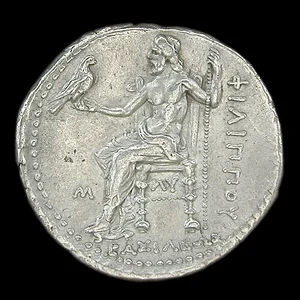
A series of coins struck bearing the image of Heracles wearing his lion skin — direct archaeological evidence of civic devotion to the founding hero. These coins, found throughout the Mediterranean basin, attest to the city's commercial dynamism.
The main temple dedicated to the city's patron hero, serving as the center of religious and civic life. The sanctuary hosted the Heracleia, annual festivals combining athletic competitions and religious ceremonies that united citizens around a shared identity.
Anecdotes
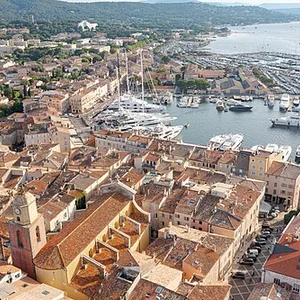
According to Greek mythology, Heracles passed through the Mediterranean coastlines during his tenth labor, driving back the cattle of the giant Geryon. This legendary odyssey allegedly led him along the shores of southern Gaul, where the city of Heraclea — modern-day Saint-Tropez — would later rise. The Greek colonists saw this mythical passage as divine endorsement of their settlement.
Founding a city under the patronage of Heracles was no coincidence: the hero was regarded as the protector of travelers and city founders. By naming their colonies Heraclea, the Greeks asserted their right to occupy foreign lands and placed themselves under the protection of the son of Zeus. As a result, some twenty cities across the Mediterranean world bore this name.
Heraclea Pontica, the most celebrated city of that name, was founded around 560 BCE by colonists from Megara on the shores of the Black Sea. It quickly became a thriving commercial and intellectual hub, home to thinkers such as Heraclides Ponticus, who put forward the revolutionary hypothesis that the Earth rotates on its own axis every twenty-four hours — anticipating Copernicus by nearly two millennia.
The legend of the Pillars of Heracles — the Strait of Gibraltar — perfectly illustrates the hero's role as a boundary marker of the known world. The Greeks believed Heracles had erected these two pillars to warn sailors of the edge of the inhabited world. To found a city in his name was therefore to claim a place within civilized, bounded space, shielded from the forces of chaos.
In Heraclea, as in all Greek colonies, civic life was organized around the cult of the founding hero. Annual festivals called Heracleia celebrated the feats of Heracles through athletic contests, sacrifices, and communal banquets. These gatherings reinforced the colonists' sense of shared identity, even as they lived thousands of kilometers from their home city.
Primary Sources
Heracles, having crossed Europe and Africa to complete his labors, founded altars and sanctuaries in his own honor in various places, so that future generations would remember his passage.
Heraclea Pontica was founded by the Megarians [...] it is situated on the seashore and possesses a remarkable harbor. The city owes its name to Heracles, who is said to have descended to the Underworld at this very spot through a cave known as the Acherusian cavern.
Heracles, traveling through the western lands during his tenth labor, brought peace to the regions he crossed, founding cities and establishing laws among the barbarian peoples he brought under the influence of Greek civilization.
The founders of Heraclea Pontica, who came from Megara and Boeotia, chose this site for its strategic position and dedicated it to the hero Heracles, near whose cave the descent to the Underworld was said to lie.
Heracles, from the moment of his birth, had received from the gods the gift of bringing order where chaos reigned. His labors were not trials in vain, but the foundation of a civilized world of which the cities bearing his name are the true heirs.
Key Places
A Greek trading post founded on the Var coast, probably linked to the Phocaean colony of Massalia. This small port allowed the Greeks to trade with the Ligurian populations of the hinterland while honoring the founding hero.
The most important of the cities bearing this name, founded around 560 BCE on the Black Sea. A major commercial and intellectual center, it housed the mythological cave through which Heracles was said to have descended to the Underworld to capture Cerberus.
A major Phocaean colony founded around 600 BCE, the principal Greek metropolis of southern Gaul. It served as a base for secondary trading posts such as Heraclea on the Var coast, linking local trade to Mediterranean networks.
The mythological boundary of the known world, where Heracles was said to have erected two pillars during his tenth labor. This place symbolized the frontier between the civilized world and the unknown — a boundary that colony founders heroically sought to push back.
The site of Heracles' first labor, where he slew the invulnerable lion. This sanctuary hosted the Nemean Games, one of the four great Panhellenic festivals, and its memory was kept alive in all the cities bearing the name of Heraclea.
Typical Objects

The hero's emblematic weapon, carved from a wild olive tree in Nemea, symbolizing raw strength tamed by intelligence. It appeared on coins and emblems of cities bearing the name Heraclea as a sign of divine protection.

The hide of the invulnerable lion slain during the first labor, worn as armor by Heracles. In colonies that claimed his patronage, this image was engraved on official seals and the architectural decorations of temples.

A two-handled ceramic vessel used to transport wine, oil, and grain between Greek colonies. Heraclea was an important commercial hub, and these amphorae stamped with the city's name have been found throughout the Mediterranean basin.

A ship with three banks of oarsmen that formed the naval power of Greek colonial cities. Heraclea Pontica maintained a significant fleet to protect its trade routes across the Black Sea.

An upright stone bearing dedicatory inscriptions to Heracles, erected at the entrances of cities and sanctuaries. These stelae marked the sacred territory placed under the founding hero's protection and commemorated his legendary journeys.

A ritual bronze object from which priestesses delivered their oracles. According to myth, Heracles himself once attempted to seize the tripod at Delphi during a quarrel with Apollo — an episode frequently depicted on the temple friezes of Heraclea.
School Curriculum
Vocabulary & Tags
Key Vocabulary
Daily Life
Morning
At sunrise, the priests of Heraclea open the sanctuary of the founding hero for daily prayer and offerings of wine and flatbreads. Merchants make their way to the port to oversee the unloading of amphorae arriving from Massalia, while magistrates gather at the agora to settle the day's civic affairs.
Afternoon
Craftsmen work in their workshops producing ceramics stamped with the seal of Heraclea, exported throughout the Mediterranean basin. Young men train at the gymnasium under the supervision of their masters in preparation for the Heracleia games. Women tend to the household and weaving in their lime-washed homes, whose whitened walls open onto an interior courtyard.
Evening
At sunset, families gather around a simple meal — barley bread, olives, grilled fish, and wine mixed with water. Symposia among the city's notables take place in the wealthier homes, where philosophy, trade, and politics are discussed around kraters decorated with scenes from the founding hero's exploits. Watchmen light torches at the crossroads, and the city gates are closed for the night.
Food
The diet of Heraclea's Greek colonists is built around the Mediterranean triad: wheat (bread and porridge), olive oil, and wine diluted with water. Fish — sea bream, tuna, mackerel — is ever-present, dried or fresh depending on the season. Legumes (lentils, broad beans) and goat's cheese round out a frugal diet, which the wealth of merchants enriches with sacrificial meat during the festivals of Heracles.
Clothing
The colonists wear the chiton, a fine linen tunic fastened with bronze fibulae, and the himation, a large woolen cloak draped over the shoulder. Vivid colors — ochre, brick red, sea blue — set the notables apart from common folk. Women adorn their hair with ribbons and wear bronze jewelry featuring motifs linked to the Labors of Heracles.
Housing
The houses of Heraclea are built of local stone or mud brick, lime-washed, and organized around an interior courtyard (aulos) that provides light and ventilation in the Mediterranean heat. The main rooms are the men's hall (andron), reserved for banquets, and the gynaeceum, dedicated to women. The terracotta-tiled roofs sometimes feature acroteria depicting the founding hero keeping watch over his people.
Historical Timeline
Period Vocabulary
Visual Style
Esthétique de la colonisation grecque archaïque : architecture dorique en calcaire blanc sur littoral méditerranéen, céramique à figures noires et lumière dorée de Méditerranée sous un ciel azur profond.
Sound Ambience
L'ambiance sonore d'une cité coloniale grecque du VIe siècle av. J.-C., entre activité portuaire méditerranéenne, chants rituels en l'honneur d'Héraclès et vie quotidienne animée de l'agora.
Liens externes & ressources
Références
Œuvres
Fondation d'Héraclée du Pont
vers 560 av. J.-C.
Les Douze Travaux d'Héraclès (cycle mythologique)
codifié aux VIIe–Ve siècles av. J.-C.
Héraclide du Pont, Sur les corps célestes
IVe siècle av. J.-C.
Monnayage d'Héraclée du Pont
Ve–IIe siècles av. J.-C.
Sanctuaire d'Héraclès à Héraclée du Pont
VIe–Ve siècles av. J.-C.