
Hermes is a major deity in Greek mythology, son of Zeus and Maia. He is venerated as the messenger of the gods, protector of commerce, travelers, and thieves, and identified with Mercury in Roman mythology.
Hermes
Hermes
8 min read
Frequently asked questions
Key Facts
- Son of Zeus and Maia, one of the Pleiades, born in a cave on Mount Cyllene in Arcadia
- Inventor of the lyre, which he crafted from a tortoise shell and gave to Apollo
- Main domains: protection of merchants, travelers, shepherds, and thieves; ability to move swiftly between the world of the living and the dead
- Depicted with the caduceus (a winged staff entwined by two serpents) and winged sandals (talaria)
- Worship attested throughout ancient Greece, particularly honored by merchants and athletes
Works & Achievements
Hermes is said to have created the lyre from a tortoise shell, an instrument he later gave to Apollo. This invention represents Hermes's contribution to the arts and music in Greek mythology.
The caduceus, a staff entwined with two serpents, is Hermes's distinctive attribute, symbolizing his authority as divine messenger and his role as mediator between worlds. It became the symbol of commerce and diplomacy.
Hermes served as the guide of the souls of the dead to Hades, a major responsibility in Greek cosmology. This role reflects his importance as a mediator between the world of the living and the world of the dead.
Hermes is recognized as the protector of merchants, travelers, orators, and thieves, establishing the spheres of divine influence that gave him a central role in everyday life in the ancient world.
From the moment of his birth, Hermes stole Apollo's cattle — a mythological feat that illustrates his cunning and mischievous nature, while showcasing his boldness in the face of the major gods.
In Roman mythology, Hermes was equated with Mercury, god of commerce and trade, further reinforcing and enriching his attributes related to commerce and communication in Greco-Roman culture.
Anecdotes
On the very day of his birth, Hermes escaped from his cradle and stole the cattle of his brother Apollo. To cover his tracks, he made the animals walk backward so their hoofprints pointed in the wrong direction. When Apollo discovered him, Hermes soothed his anger by offering him the lyre he had just invented by hollowing out a tortoise shell.
Hermes is the only Olympian god who can freely traverse all realms: the sky, the earth, and the Underworld. It was he who escorted the souls of the dead to the banks of the Styx, thus fulfilling the role of psychopomp, meaning "guide of souls." This function explains why offerings were made to Hermes during funerals in ancient Greece.
Hermes received from Zeus winged sandals, called talaria, as well as a wide-brimmed hat and a caduceus — a staff entwined with two serpents. These attributes allowed him to move at prodigious speed and to put mortals to sleep or wake them at will. The caduceus is still used today as a symbol of medicine in some countries.
In the myth of Odysseus, Hermes plays a decisive role by giving the hero a magical herb called moly, capable of countering the spells of the enchantress Circe. Without this divine aid, Odysseus would have been turned into a pig like his companions. This episode illustrates Hermes' function as protector of travelers facing the dangers of the world.
The ancient Greeks placed herms — stone pillars bearing the god's likeness — at crossroads, in front of houses, and along roads. These markers served both as waypoints for travelers and as magical protection against evil encounters. In 415 BC, in Athens, the mutilation of these statues caused a huge political scandal that contributed to the indictment of the general Alcibiades.
Primary Sources
Hermes was born in the morning, by noon he was playing the lyre, and by evening he had stolen Apollo's cattle. It was the fourth day of the month, the day his mother Maia had given birth to him.
Zeus, the cloud-gatherer, lay with Maia, the youngest of the Pleiades, in a shadowed cave, and she bore Hermes, the messenger of the blessed gods.
Mercury, son of Maia and the king of the gods, showed his ingenuity from the cradle: he invented the lyre and commerce, guardian of roads and protector of merchants.
Send a herald to the gods! Let Hermes come down! For it is he who presides over heralds and messengers among mortals and immortals alike.
Hermes, the swift messenger with winged heels, holding his golden caduceus, conversed with the other Olympians about the affairs of heaven and earth.
Key Places
A mountain in Arcadia, Greece, where Hermes was born in a cave according to Greek mythology. This birthplace is famous because the young god is said to have invented the lyre there before stealing Apollo's cattle.
The capital of ancient Greece, where Hermes was worshipped as the protector of commerce and crossroads. Herms (herm columns) adorned public squares and roads throughout the city.
A memorial site associated with Hermes through the famous statue of Hermes and the Infant Dionysus, a masterpiece of Greek sculpture created by the sculptor Praxiteles and preserved in Olympia.
A sacred site of ancient Greece where Hermes was honored as the protector of athletes and competitions. The sanctuary at Olympia housed several representations of the messenger god.
A major center of the cult of Mercury, the Roman equivalent of Hermes. The Romans venerated him especially as the god of commerce and merchants, with celebrations held during the Mercuralia festival.
Hermes was worshipped at crossroads and along roads as the protector of travelers and guide of souls. Herms (small shrines or stone pillars) marked these important waypoints throughout the ancient Mediterranean world.
Typical Objects
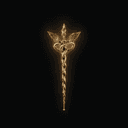
A staff entwined by two intertwined snakes, topped with two wings. It is Hermes' primary attribute, symbolizing his authority as messenger of the gods and his role as mediator between worlds.
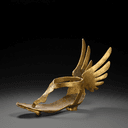
Sandals fitted with golden wings that allow Hermes to fly across the skies and carry out his missions as divine messenger. They symbolize his speed and mobility.
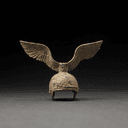
A broad-brimmed round hat adorned with wings, the distinctive headwear of Hermes. It represents his divine nature and his role as a traveler between the sky, the earth, and the underworld.
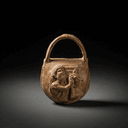
Hermes is often depicted holding a purse or money bag, reflecting his domain over commerce, trade, and merchant transactions in the ancient world.

A musical instrument that the young Hermes is said to have invented from a tortoise shell. It symbolizes his artistic talents and his role as protector of musicians and poets.
📷 CC BY-SA 4.0 · Wikimedia Commons ↗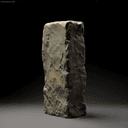
A rectangular stone pillar called a herm, placed at crossroads and boundaries. These sculptures bearing the bust of the god marked territorial limits and protected travelers.

Often shown in Hermes' hands, the torch symbolizes his role as guide of souls and protector of night travelers in ancient Greek and Roman tradition.
📷 CC BY-SA 4.0 · Wikimedia Commons ↗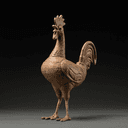
An animal sacrificed to Hermes and a symbol of vigilance and awakening. It represents the aspect of the messenger god who must remain alert and active to fulfill his duties.
School Curriculum
Vocabulary & Tags
Key Vocabulary
Daily Life
Morning
Hermes begins his day on Olympus by receiving orders from Zeus for his divine messenger duties. He dons his characteristic attributes and prepares to travel between the realms of gods, mortals, and the dead. He consults the souls and spirits that fall under his domain before descending to earth.
Afternoon
Hermes travels the roads and crossroads, guiding lost travelers and protecting merchants and traders. He oversees commercial exchanges in the agoras and monitors transactions, maintaining order in trade. The afternoon is also devoted to diplomatic missions between deities or to escorting the souls of the newly dead down to Hades.
Evening
At day's end, Hermes returns to Olympus to report on his missions to Zeus and the other gods. He takes part in the divine feasts and assemblies of Olympus, where he is prized for his quick wit and skill as a speaker. He may also make himself known to mortals through nocturnal signs and wonders.
Food
As a deity, Hermes feeds on ambrosia and nectar at the Olympian feasts — the food of the gods that bestows immortality. During his appearances among mortals, he can consume ordinary human food such as bread, wine, cheese, and sacrificial meat offered in his honor. He also occasionally samples the offerings left by grateful pilgrims and merchants.
Clothing
Hermes is recognizable by his petasus, a flat, round winged hat, and his talaria, golden winged sandals that allow him to fly with extraordinary speed. He wears a draped himation (Greek cloak), often golden or shimmering, reflecting his divine status. His caduceus — a staff entwined with two serpents — is his signature accessory and emblem of power.
Housing
Hermes resides on Olympus in Zeus's divine palace alongside the other major deities. His true domain, however, is the in-between: roads, crossroads (marked by hermai), and the boundaries between worlds. He has no fixed earthly home, being in constant motion between the different realms and kingdoms he oversees.
Historical Timeline
Period Vocabulary
Visual Style
Un style inspiré de la céramique grecque antique associant la technique du vase à figures rouges à des touches dorées et une atmosphère divine. L'esthétique conjugue l'élégance linéaire des motifs grecs classiques avec une luminosité chaleureuse évoquant la nature céleste et protectrice d'Hermès.
Sound Ambience
Ambiance sonore du dieu des voyageurs et du commerce : fusion de bruits de marché antique grec avec des éléments musicaux légers et des sons évoquant la rapidité et la mobilité d'Hermès, le messager divin des dieux de l'Olympe.
Liens externes & ressources
Références
Œuvres
Invention de la lyre
Antiquité grecque
Invention du caducée
Antiquité grecque
Rôle de psychopompe
Antiquité grecque
Protections et fonctions divines
Antiquité grecque et romaine
Vol du troupeau d'Apollon
Antiquité grecque
Identification à Mercure
Période romaine