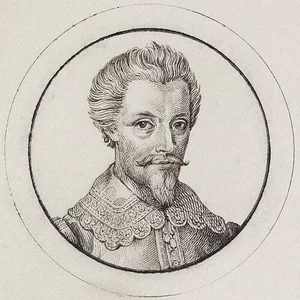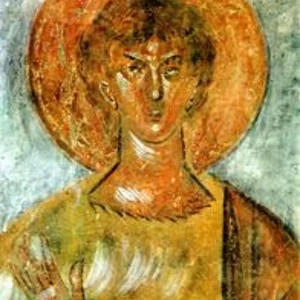

A French Orientalist and Sanskritist of the 19th century, Hippolyte Fauche was the first to produce a complete French translation of the Mahabharata. His monumental work opened Indian epic literature to French-speaking audiences.
Hippolyte Fauche(1797 — 1869)
Hippolyte Fauche
France
9 min read
Frequently asked questions
Key Facts
- Born in 1795 in Rouen, died in 1869
- First complete translator of the Mahabharata into French (1863–1870)
- Also translated the Ramayana and other major Sanskrit texts
- Corresponding member of the Institut de France
- Helped popularize classical Indian literature in France
Works & Achievements
The first complete French translation of the Ramayana, in two volumes. This pioneering work introduced the epic of Rama to French-speaking audiences and established Fauche's reputation as France's foremost Indologist translator.
A translation of Kalidasa's dramatic masterpiece (4th–5th century), already celebrated in England and Germany. Fauche's version finally allowed French readers to discover this foundational text of classical Sanskrit literature.
A translation of Kalidasa's lyric poem, considered one of the pinnacles of Sanskrit poetry. Fauche offered an elegant rendering that resonated with French Romantics drawn to its melancholy and poetic grandeur.
A collection of translations of several plays from the Sanskrit dramatic repertoire, giving French readers for the first time a comprehensive overview of classical Indian drama.
A monumental work in ten volumes, the first and only complete translation of the Mahabharata into French for several generations. Despite a few inaccuracies noted by later Indologists, it remains a foundational landmark of French Indology.
A translation of another major play by Kalidasa, enriching the corpus of Indian texts available in French and completing the picture readers could form of classical Sanskrit theatre.
Anecdotes
Hippolyte Fauche undertook the translation of the Mahabharata, a Sanskrit epic comprising more than 100,000 distiches — roughly 1.8 million words, nearly ten times the combined length of the Iliad and the Odyssey. He was the first scholar in the world to attempt a complete translation of this literary colossus into French, a challenge that even British Indologists had not dared to take on.
Fauche worked under conditions that were remarkably challenging for the time: he relied on rare manuscripts held at the Bibliothèque nationale in Paris and on Horace Hayman Wilson's Sanskrit-English dictionaries, the only tools available to him. He taught himself Sanskrit largely on his own, at a time when the language had only been taught at the Collège de France since 1832.
He died in 1869 without having seen his monumental work completed: the final volumes of his translation of the Mahabharata were published posthumously in 1870. Despite the imperfections acknowledged by the Indologists who came after him, his work remained for several generations the only French gateway into the great Indian epic.
Fauche did not limit himself to the Mahabharata: he also translated the Ramayana (1854–1858) and several works by the poet Kalidasa, including *Shakuntala* and the *Meghaduta* (The Cloud Messenger). In doing so, he introduced French readers to the full breadth of classical Sanskrit literature, paving the way for an entire generation of Indologists.
His work was part of a broader intellectual movement: the rediscovery of ancient India by Romantic Europe. His contemporaries — Burnouf, Renan, Michelet — saw in Indian civilization a fascinating source of primordial wisdom. Fauche's translations fed this Orientalist dream that left a deep mark on French culture throughout the nineteenth century.
Primary Sources
Fauche writes in his preface: 'We did not shrink from the scale of a task that no one had dared undertake before us. French literature deserved to possess this monument of human thought.'
In the introduction, Fauche presents Rama as 'the hero par excellence of India, whose adventures have reflected the moral and religious ideals of an entire people for millennia'.
Fauche notes that this play 'is to India what the tragedies of Sophocles are to Greece: the purest expression of the literary genius and moral sensibility of a great civilization'.
Fauche presents this lyrical poem as 'one of the most beautiful elegies that world literature has ever produced, surpassing in delicacy many works of Greco-Latin Antiquity'.
Fauche writes in his preamble: 'Indian theatre is unknown to our public; this is a serious gap in Europe's understanding of the poetry of Eastern nations.'
Key Places
The BnF held Sanskrit manuscripts brought back from India by French travellers and diplomats. It was in its reading rooms that Fauche gained access to the original texts of the Mahabharata and the Ramayana, essential to his work as a translator.
The institution where Eugène Burnouf began teaching Sanskrit in 1832, training the first generation of French Indologists. Fauche moved in these scholarly circles and drew on Burnouf's work for his own translations.
Founded in 1822, the Société asiatique published the *Journal asiatique* and brought together French Orientalists. Fauche found his peers there, along with publishing outlets and the scholarly resources his research required.
Home of the Asiatic Society of Bengal and the nerve centre of Indian studies in the nineteenth century. It was here that the first printed Sanskrit texts were edited and circulated in Europe, enabling scholars like Fauche to work from reliable source material.
A French trading post in India, Pondicherry embodied the French presence on the subcontinent and served as a relay for intellectual exchange between Indian scholars (*pandits*) and European Orientalists. Fauche drew indirectly on these Franco-Indian networks.
Typical Objects

Fauche worked from copies of manuscripts held at the Bibliothèque nationale in Paris, stored in wooden boxes or wrapped in cloth. Written in Devanagari script, these texts were the raw material of his entire scholarly life.

An indispensable tool for any nineteenth-century Indologist before the era of major French dictionaries, this reference work was consulted daily by Fauche to decipher the epic vocabulary of the Mahabharata.

A scholarly journal published by the Société asiatique de Paris since 1822, the *Journal asiatique* was the official outlet for Orientalist research. Fauche followed his peers' advances in its pages and published his own notes there.

A foundational grammar composed in the 4th century BCE, Pāṇini's *Ashtadhyayi* is the most rigorous description of classical Sanskrit ever written. Every nineteenth-century Indologist had to master it in order to grasp the subtleties of the epic language.

Fauche wrote the entirety of his translations by hand — thousands of manuscript pages covered in dense script. It was through this simple tool that the Indian epic took shape in French.

Nineteenth-century Orientalists kept geographical maps of India on their desks to locate the kingdoms, battles, and pilgrimages mentioned in the epics. For Fauche, these maps were indispensable aids to understanding the Mahabharata.

Often working into the evening and through the night to make headway on his monumental translation, Fauche relied on an oil lamp to illuminate his manuscripts. The yellow, flickering light of these lamps was the defining atmosphere of the Romantic scholar's study.
School Curriculum
Vocabulary & Tags
Key Vocabulary
Daily Life
Morning
Fauche rose early, at dawn, to make the most of natural light — precious for deciphering the Devanagari script of Sanskrit manuscripts. After a frugal lunch, he settled at his desk and picked up the translation where he had left it the evening before, dictionary open within reach.
Afternoon
The afternoon was devoted to the writing itself: rendering Sanskrit into elegant French required not only linguistic mastery but also a refined literary sensibility. Fauche re-read his pages, corrected them, compared several versions of the same passage, and consulted his grammatical notes.
Evening
In the evening, by the light of his oil lamp, Fauche read the work of his peers — publications of the Asiatic Society, German grammars, English editions of Indian texts. He sometimes wrote letters to fellow Orientalists or annotated difficult passages to revisit the following day.
Food
Like a Parisian bourgeois of his time, Fauche ate modestly: bread, cheese, soups, seasonal vegetables. Nineteenth-century French cooking, plain and nourishing, left little room for indulgence for a scholar who lived off his translations and a meager academic income.
Clothing
Fauche wore the characteristic dress of the nineteenth-century bourgeois intellectual: a dark frock coat, waistcoat, knotted cravat, and fine-striped trousers. In his study, he sometimes exchanged the frock coat for a dressing gown or a comfortable jacket so he could work without restriction.
Housing
Fauche lived in a modest Parisian apartment, yet one enveloped in books. His study was the heart of his existence: floor-to-ceiling shelves, a large table covered with handwritten sheets, Sanskrit manuscripts stored in wooden boxes, and a few maps of India hung on the walls.
Historical Timeline
Period Vocabulary
Visual Style
Style portrait académique français du XIXe siècle, lumière chaude d'une lampe à huile sur un bureau d'érudit encombré de manuscrits sanskrits et de dictionnaires, atmosphère romantique et studieuse.
Sound Ambience
L'ambiance sonore du cabinet de travail de Fauche : le silence studieux d'un érudit parisien du XIXe siècle, rythmé par le grattement de la plume et le froissement des manuscrits sanskrits.
Liens externes & ressources
Références
Œuvres
Le Ramayana de Valmiki
1854–1858
Çakountala ou l'Anneau fatal
1853
Le Méghadouta ou Le Nuage Messager
1853
Théâtre indien — recueil de pièces sanskrites
1860
Le Mahabharata — traduction intégrale en français
1863–1870
Vikramorvaci ou La Récompense de la vaillance
1858