 flip
flipRed lentil soup with onion and cumin from the silt
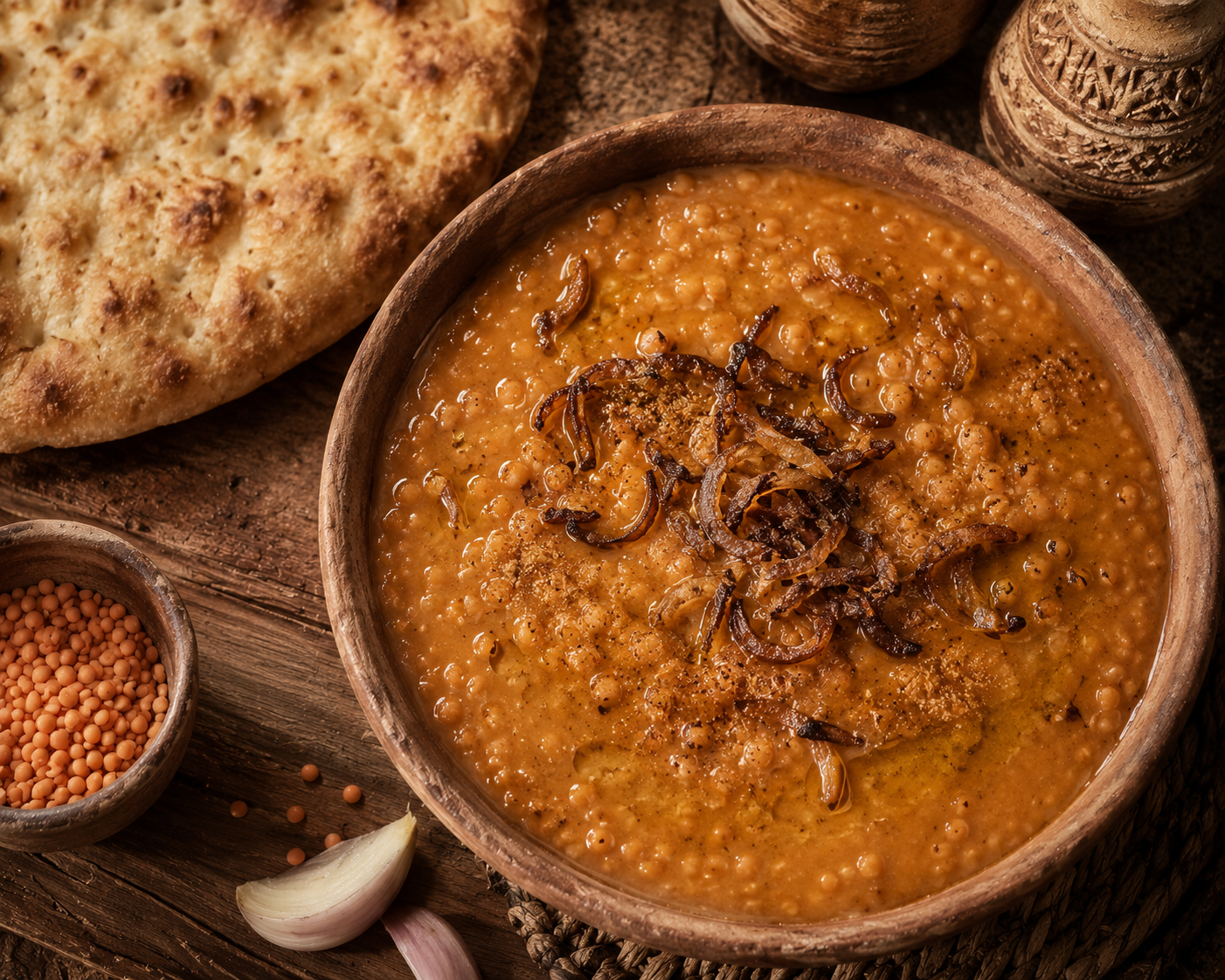
Red lentil soup with onion and cumin from the silt
Why this dish? Under the gaze of Horus, protector of Egypt and its people, families along the Nile ate the same thing every day: a legume dish flavored with garlic and onion, those foods of the silt that the falcon-god made grow by watching over the floods. This is the humble food that sustained those who built his temples.
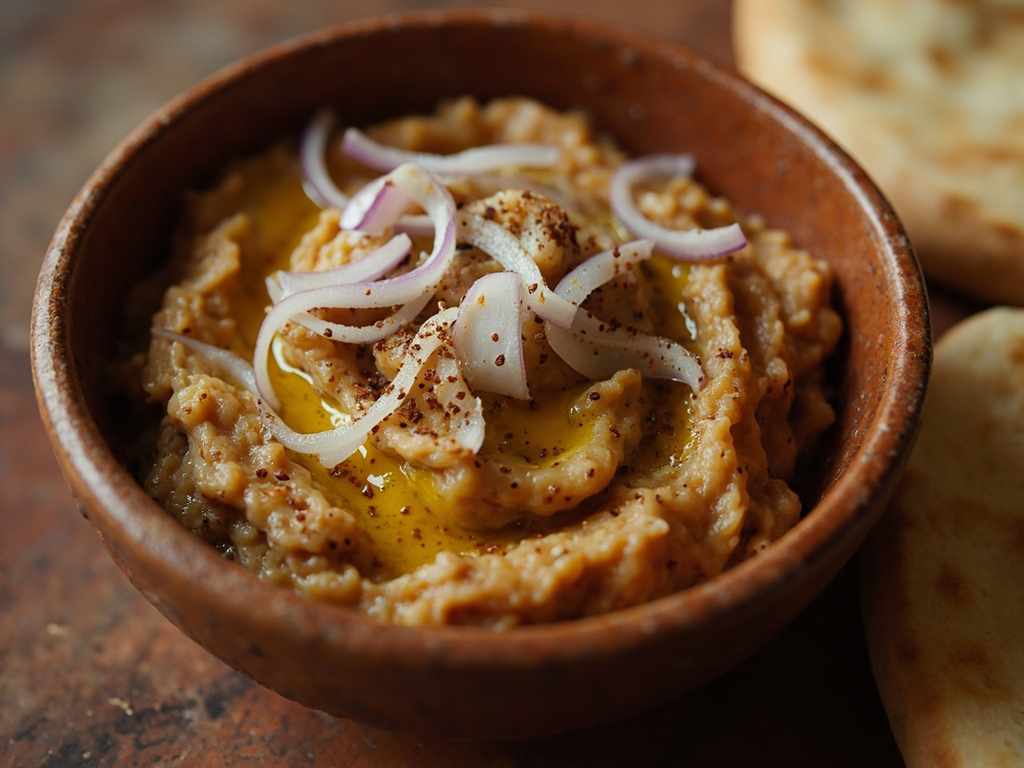
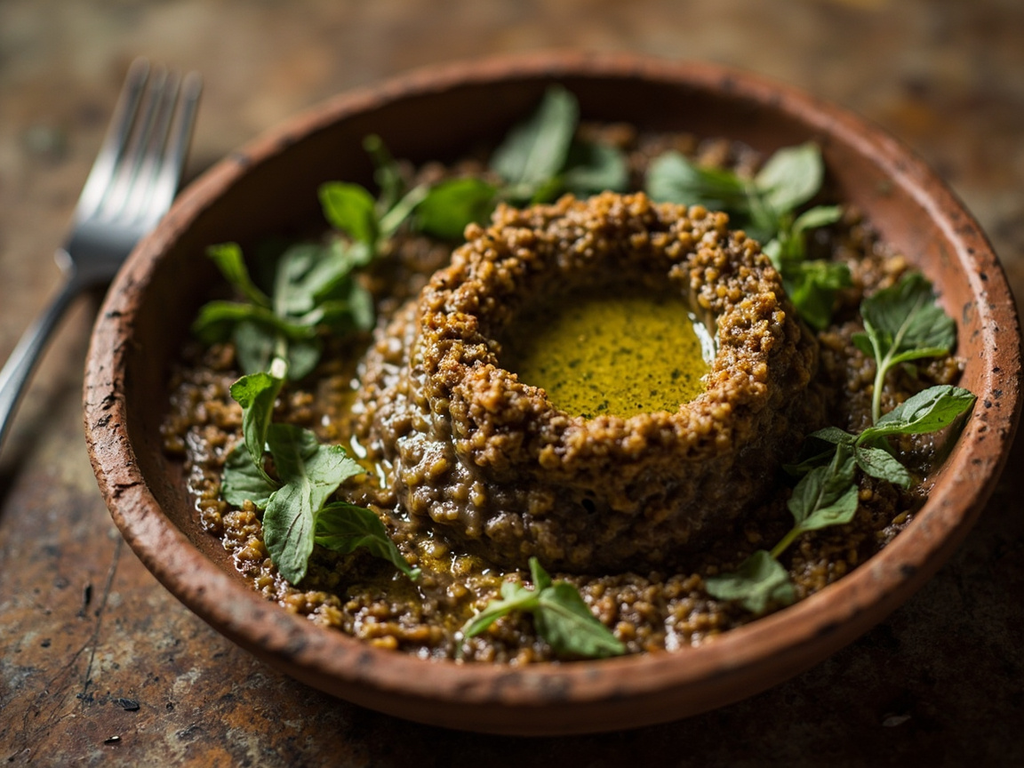
A thick soup of melting lentils, perfumed with onion, garlic and cumin, bound with a drizzle of oil. The daily dish, simple, filling and cheap, eaten with bread.
I watch over the Two Lands as the falcon watches over the field. See my people: they do not eat the fat flesh of the goose every day — no — they boil lentils and onion in the earthen pot, and dip their bread in the broth. This is a right food, in accordance with ma'at, that satisfies the worker under the sun I carry. Never despise the humble dish: it raised my pyramids.
- •Lentils — two measures (nourishing base)
- •Onions — several (flavor and base)
- •Garlic — a few cloves (aromatic)
- •Cumin — a pinch (Nile spice)
- •Oil (linseed or sesame) — a drizzle (binding and fat)
- •Salt — to taste (seasoning)
Red lentil soup with onion and cumin from the silt
A thick soup of melting lentils, perfumed with onion, garlic and cumin, bound with a drizzle of oil. The daily dish, simple, filling and cheap, eaten with bread.
Why this dish? Under the gaze of Horus, protector of Egypt and its people, families along the Nile ate the same thing every day: a legume dish flavored with garlic and onion, those foods of the silt that the falcon-god made grow by watching over the floods. This is the humble food that sustained those who built his temples.
I watch over the Two Lands as the falcon watches over the field. See my people: they do not eat the fat flesh of the goose every day — no — they boil lentils and onion in the earthen pot, and dip their bread in the broth. This is a right food, in accordance with ma'at, that satisfies the worker under the sun I carry. Never despise the humble dish: it raised my pyramids.
Ingredients (period version)
- Lentils — two measures (nourishing base)
- Onions — several (flavor and base)
- Garlic — a few cloves (aromatic)
- Cumin — a pinch (Nile spice)
- Oil (linseed or sesame) — a drizzle (binding and fat)
- Salt — to taste (seasoning)
Ingredients
- Red lentils (split) — 250 g (melting base)
- Onions — 2 large (aromatic base)
- Garlic — 3 cloves (aromatic)
- Ground cumin — 1 tsp (signature spice)
- Coriander seeds (optional) — 1/2 tsp (flavor)
- Sesame or olive oil — 2 tbsp (fat)
- Water or broth — 1 liter (cooking liquid)
- Salt — to taste (seasoning)
Method
- Sweat the sliced onions in the oil until golden.
- Add the minced garlic, cumin (and coriander); let perfume for 1 minute.
- Pour in the rinsed lentils and water; bring to a boil.
- Simmer for 25-30 minutes, until the lentils fall apart.
- Season with salt, coarsely mash to thicken, add a drizzle of oil.
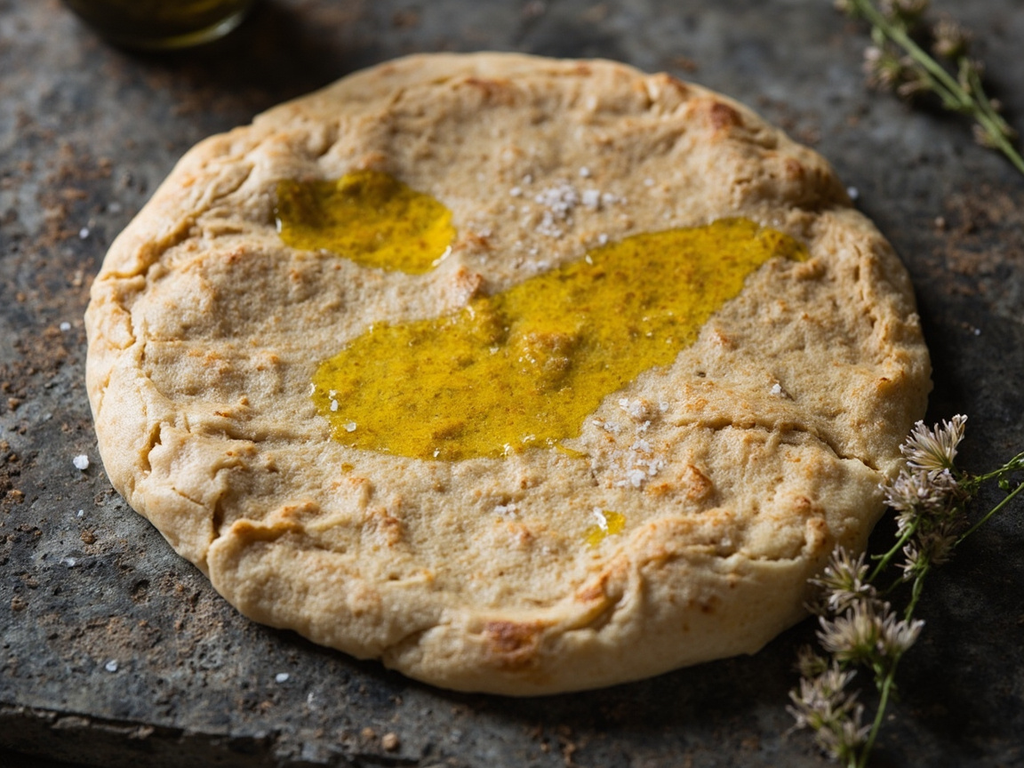
- Serve hot with emmer bread (recipe r1) for dipping.
How it was made : Lentils, fava beans, chickpeas and onions were the core of the Egyptian popular diet. Onion and garlic, almost sacred, were so tied to Egypt that the Greeks mocked them. Everything was cooked in earthen pots over a low hearth, and legume broth was eaten by dipping bread.
The contemporary twist : A spoonful of tahini and some fried onions on top bring this dish close to koshari and modern ful — direct descendants of this millenarian pot.
Sources : Pierre Tallet, La cuisine des pharaons (Actes Sud) · Hilary Wilson, Egyptian Food and Drink (Shire Egyptology)
Horus · Charactorium