 flip
flipOffering bread with emmer and sweet beer (the table of Horus)
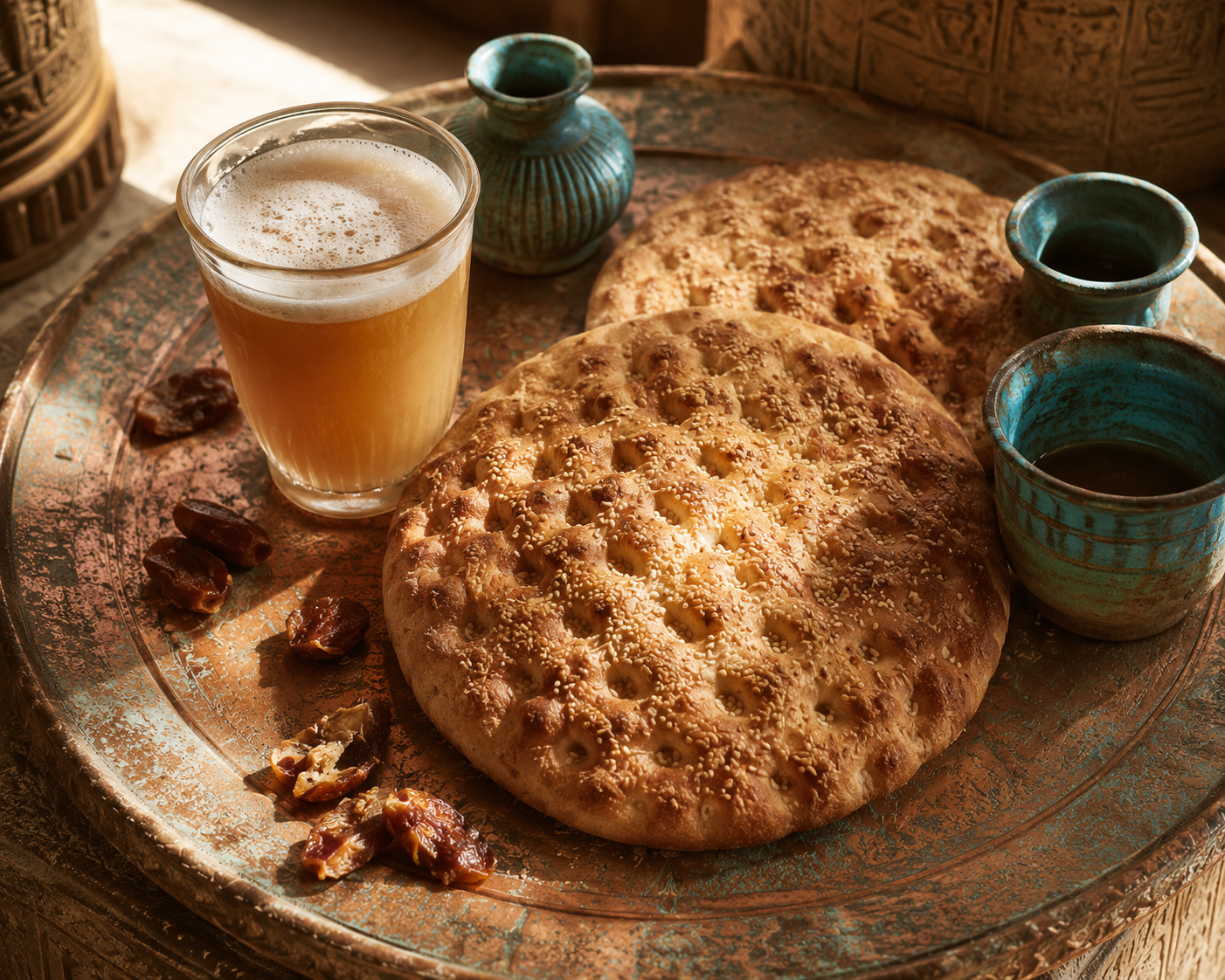
Offering bread with emmer and sweet beer (the table of Horus)
Why this dish? In all temples of Horus — Edfu, Khemmis, Heliopolis — the priests daily presented the falcon-god with bread and beer, the first offering of the sacred formula. It is the food that 'nourishes' the god and connects earth to sky: one cannot imagine Horus without this table of bread and beer steaming before his golden statue.
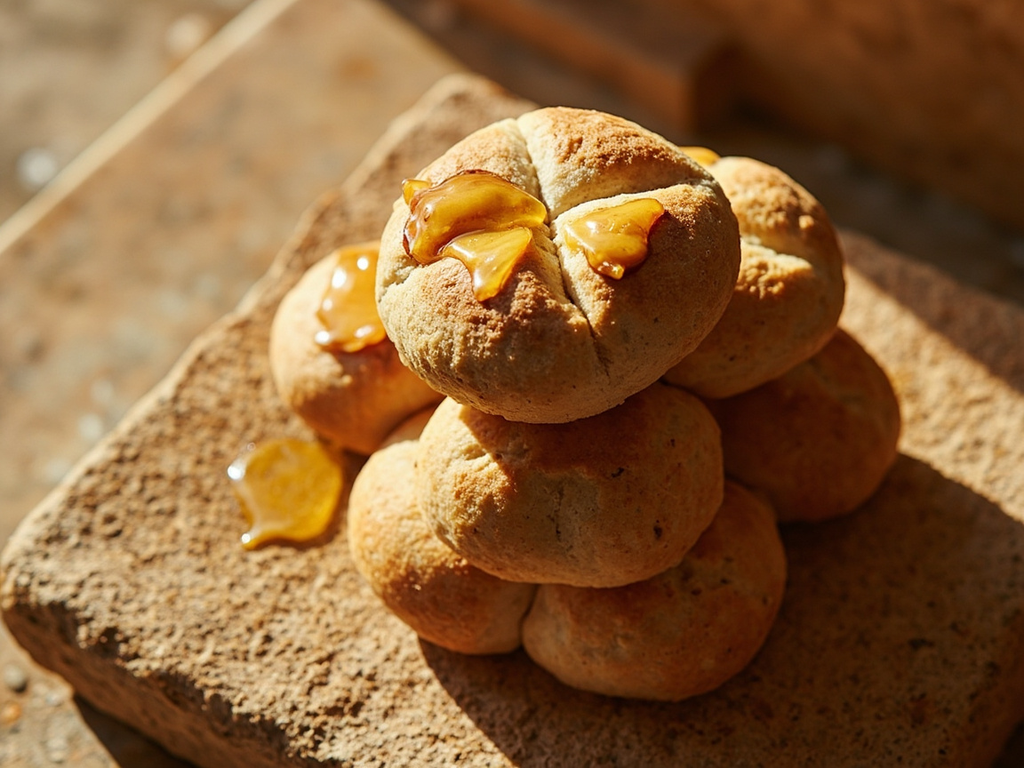
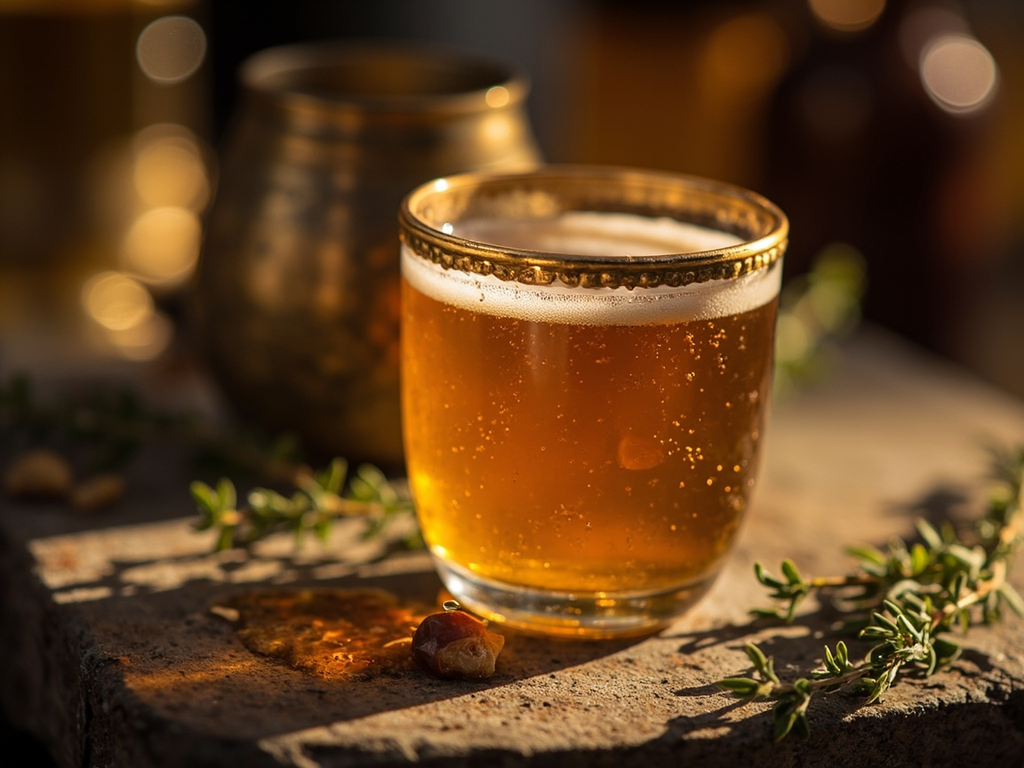
A dense, flat bread made from emmer wheat, lightly sweetened with dates, accompanied by a thick, sweet barely alcoholic barley beer — the national drink of the Nile banks, drunk by gods and pyramid builders alike.
Approach, mortal, and fear not. I am Horus, the falcon whose two eyes are the sun and the moon, son of Osiris and Isis. Each morning, my priests break before me the emmer bread, still warm from the earthen oven, and pour the thick beer into cups of blue faience. Know this: this bread is not simple flour — it is the offering that maintains the order of the world, ma'at. Eat of it in your turn, and may a little of the light of my wings descend upon your table.
- •Emmer wheat flour — a good measure (base of the bread)
- •Crushed dates — a handful (sweetness and natural leavening)
- •Nile water — as needed (binding)
- •Salt — a pinch (seasoning)
- •Germinated barley and barley loaves — for the beer (fermentation of the sweet beer)
Offering bread with emmer and sweet beer (the table of Horus)
A dense, flat bread made from emmer wheat, lightly sweetened with dates, accompanied by a thick, sweet barely alcoholic barley beer — the national drink of the Nile banks, drunk by gods and pyramid builders alike.
Why this dish? In all temples of Horus — Edfu, Khemmis, Heliopolis — the priests daily presented the falcon-god with bread and beer, the first offering of the sacred formula. It is the food that 'nourishes' the god and connects earth to sky: one cannot imagine Horus without this table of bread and beer steaming before his golden statue.
Approach, mortal, and fear not. I am Horus, the falcon whose two eyes are the sun and the moon, son of Osiris and Isis. Each morning, my priests break before me the emmer bread, still warm from the earthen oven, and pour the thick beer into cups of blue faience. Know this: this bread is not simple flour — it is the offering that maintains the order of the world, ma'at. Eat of it in your turn, and may a little of the light of my wings descend upon your table.
Ingredients (period version)
- Emmer wheat flour — a good measure (base of the bread)
- Crushed dates — a handful (sweetness and natural leavening)
- Nile water — as needed (binding)
- Salt — a pinch (seasoning)
- Germinated barley and barley loaves — for the beer (fermentation of the sweet beer)
Ingredients
- Spelt or einkorn flour — 400 g (replaces emmer)
- Pitted Medjool dates — 80 g (sweetness and softness)
- Warm water — 250 ml (hydration)
- Sourdough starter or baker's yeast — 10 g fresh yeast (fermentation)
- Salt — 1 tsp (seasoning)
- Sweet wheat beer (for serving) — 1 bottle (evoke Egyptian beer (modern version))
Method
- Mash the dates with a little warm water into a paste.
- Mix the flour, salt, yeast, date paste and water to form a supple dough; knead for 10 minutes.
- Let rise for 1.5 hours under a cloth in a warm place.
- Shape into thick flatbreads (or conical loaves, like Egyptian bedja molds).
- Bake at 220 °C for 20-25 minutes, until golden and dense.
- Serve warm, with a well-chilled sweet wheat beer to evoke Nile beer.
How it was made : Bread (ta) and beer (henqet) formed the fundamental food pair of Egypt. Emmer flour, harder to separate from the bran, gave a dense, slightly gritty bread (mummies show very worn teeth!). Beer, brewed from lightly baked barley loaves that were then soaked and fermented, was nutritious, thick, barely alcoholic — a true liquid food distributed as rations to workers.
The contemporary twist : Arrange the conical bread on a copper tray with a drizzle of honey and a few flower petals, like a mini altar from Edfu; serve the beer in blue faience goblets.
Sources : Pierre Tallet, La cuisine des pharaons (Actes Sud) · Delwen Samuel, recherches sur le pain et la bière de l'Égypte ancienne (British Museum / Amarna)
Horus · Charactorium