 Flip the card
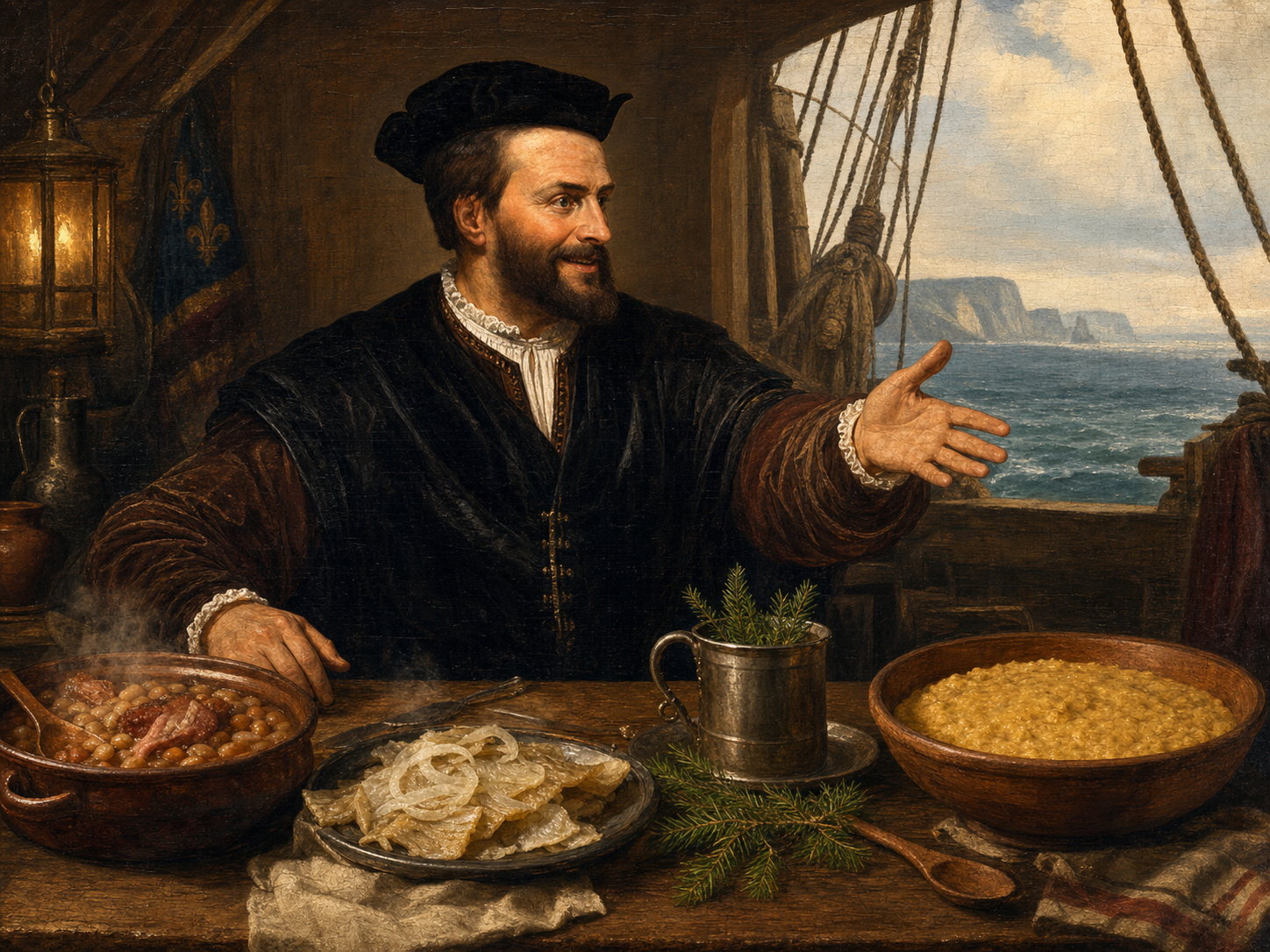
Jacques Cartier at the table
1492 — 1557
On the menu
Ship's Fare and the Malouin Table
For a Breton captain in the Renaissance, meals follow two opposing rhythms. At sea, it's 'ship's fare,' regulated by the master cook: long-lasting provisions distributed at fixed hours, no starter or dessert, just enough to sustain weeks of crossing. On land, in Saint-Malo, the Malouin table celebrates the return with fish, cider, and galettes. And in Canada, a third register emerges: forced sharing with the Iroquois of Stadacona and Hochelaga, where unknown foods are tasted and a herbal tea saves the crew from scurvy. The structure is not starter/main/dessert, but: what is taken, what is preserved, what is exchanged, and what heals.
Signature : Salt and Drying
All of Cartier's cuisine revolves around preservation: Atlantic salt (Guérande, Bourgneuf Bay) and wind-drying make it possible to carry cod, lard, and biscuit for months. It is this Breton mastery of salting and smoking that enables the long voyages to New France.
click to flip back
Jacques Cartier at the table
1492 — 1557
5 period recipes
 Everyday
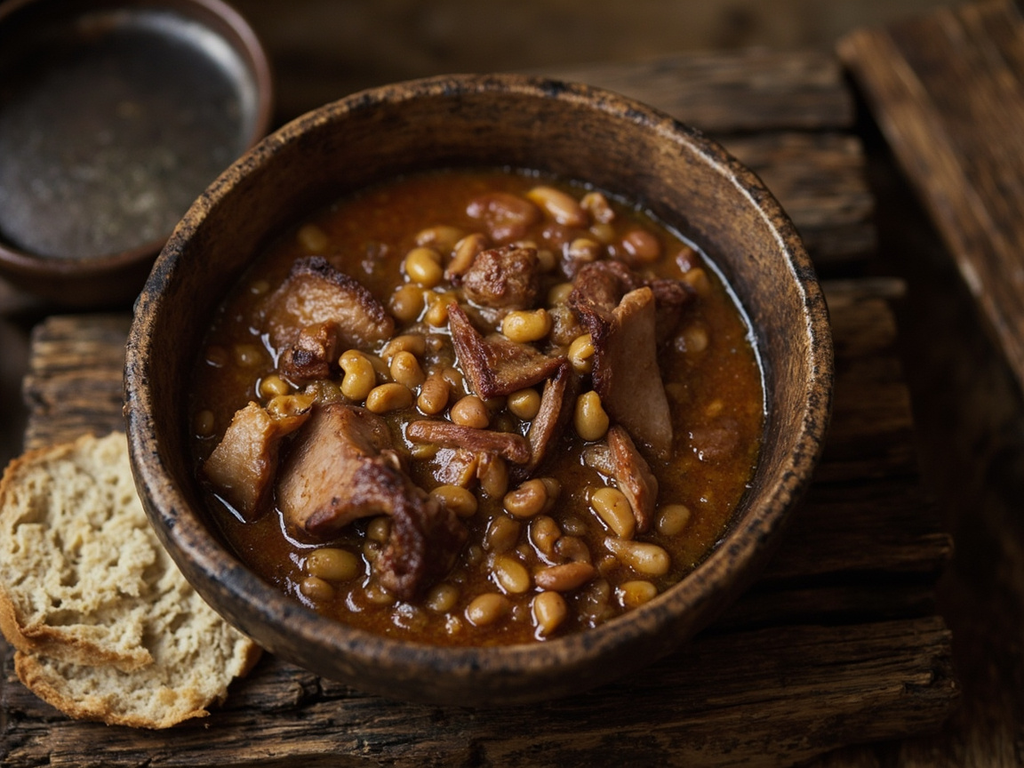
Ship's Broth with Beans and Salt Pork
Sea fare (the master cook's measured portion)
🧂 🍄· 1 h 45 (plus soaking)
View the recipe
 Preserving
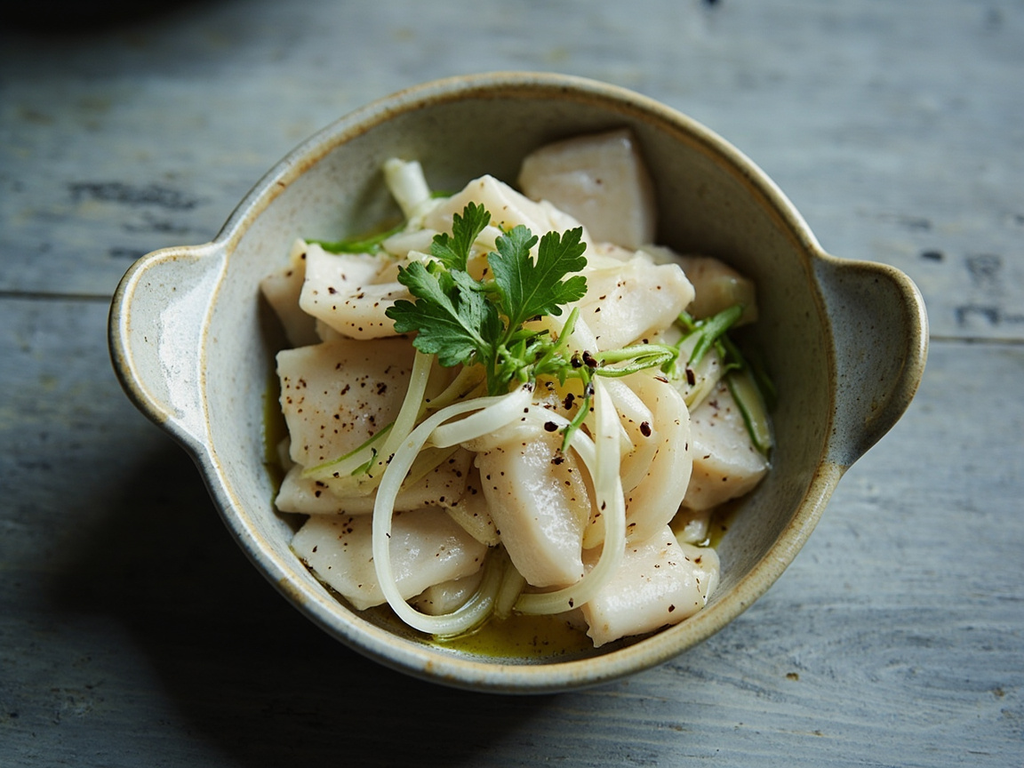
Dried Salt Cod Malouin Style, with Vinegar and Onion
Stored provisions (hold supplies, salted and dried for the crossing)
🧂 🍄 🍋· 30 min (plus 24-36 h desalting)
View the recipe
 Remedy
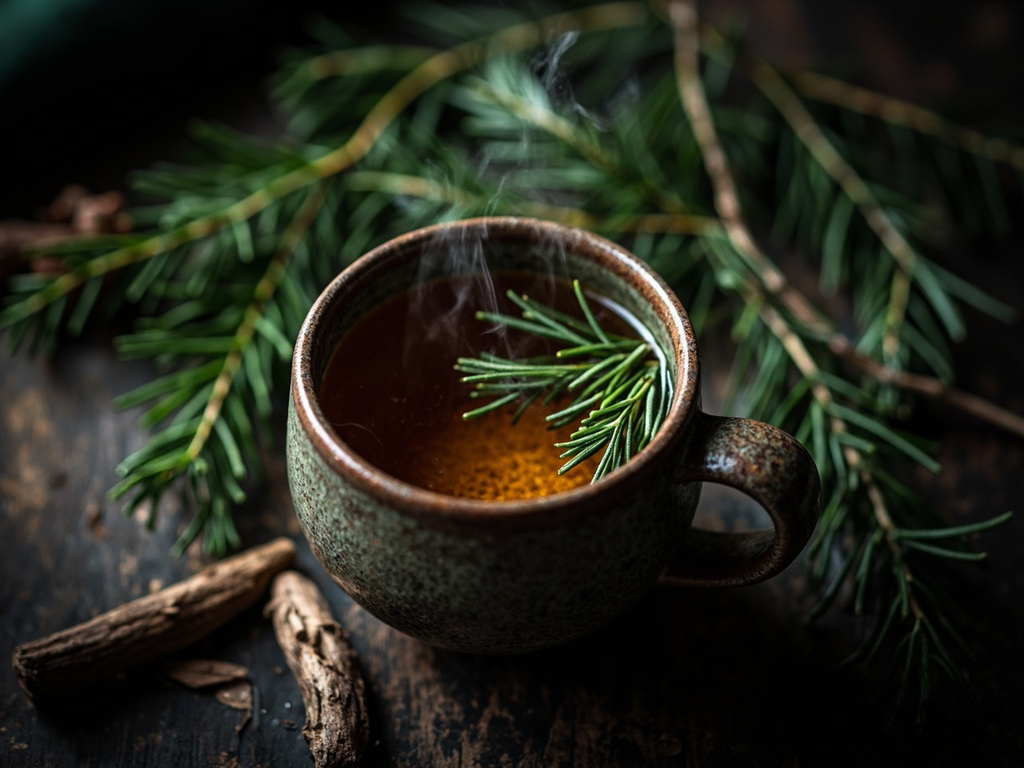
Annedda Herbal Tea, the Remedy That Saved the Crew
Hold remedy (medicinal decoction taken against seasickness/land sickness)
☕· 20 min
View the recipe
 Festive
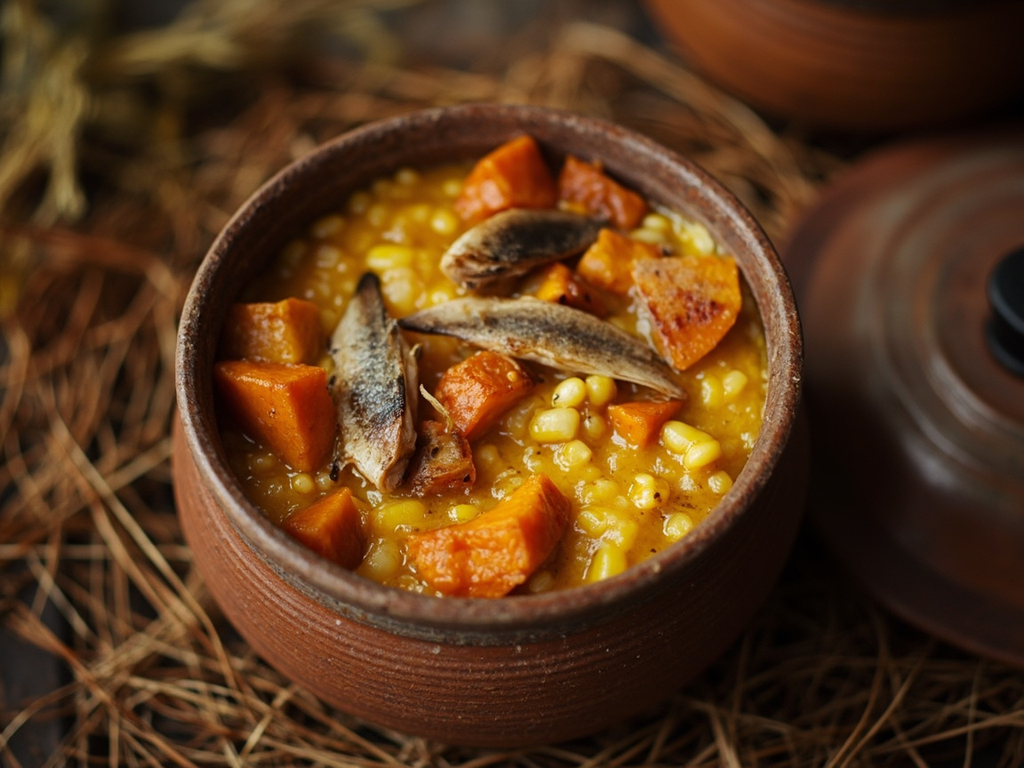
Sagamité of the Hochelaga Welcome
Iroquoian sharing dish (community porridge offered to visitors)
🍄 🧂· 50 min
View the recipe
 Drink
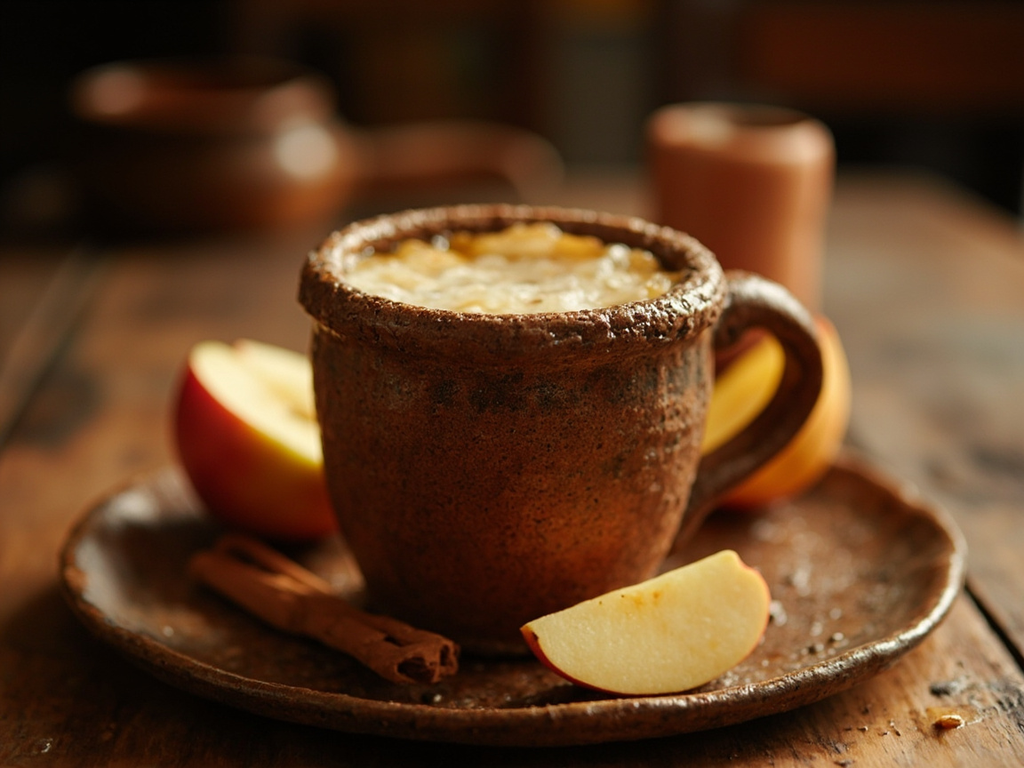
DrinkBreton Cider of the Return
Malouin table drink (farmhouse cider served at meals and celebrations)
🍋 🍯 🫙· 10 min
View the recipe