 flip
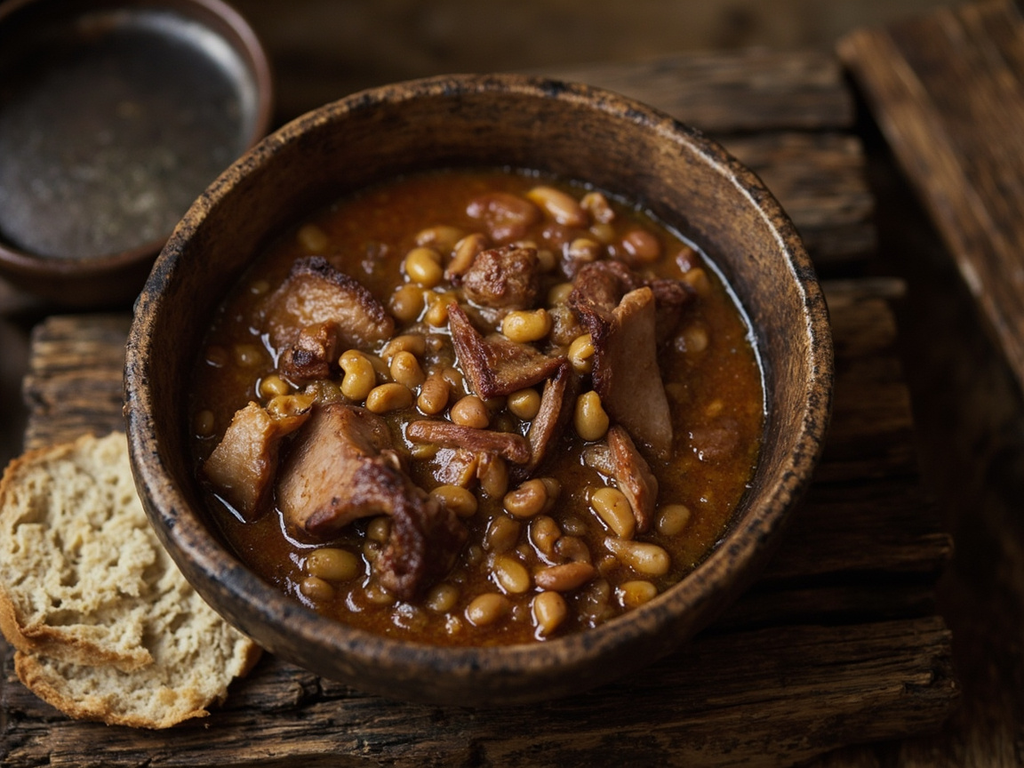
flipShip's Broth with Beans and Salt Pork
Ship's Broth with Beans and Salt Pork
Why this dish? On board the Grande Hermine and during the long weeks between Saint-Malo and the Gulf of St. Lawrence, Cartier's crew had only the provisions embarked: biscuit, salt pork, and dried vegetables. This thick broth cooked in the galley's great cauldron was the sailors' ordinary meal.
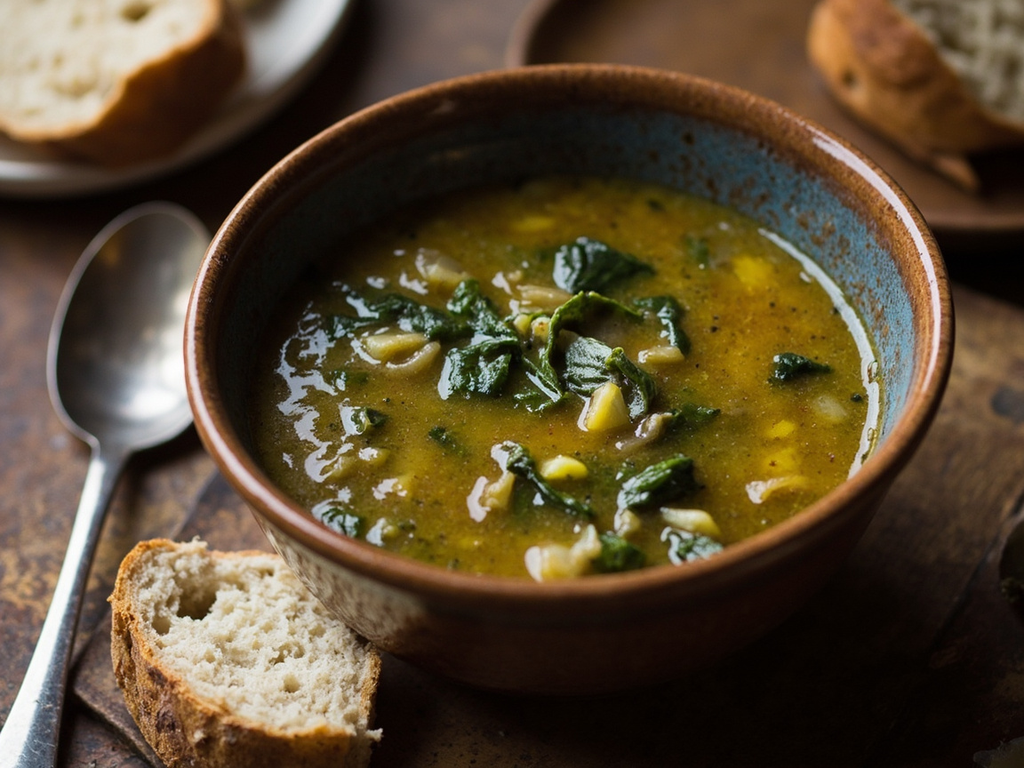
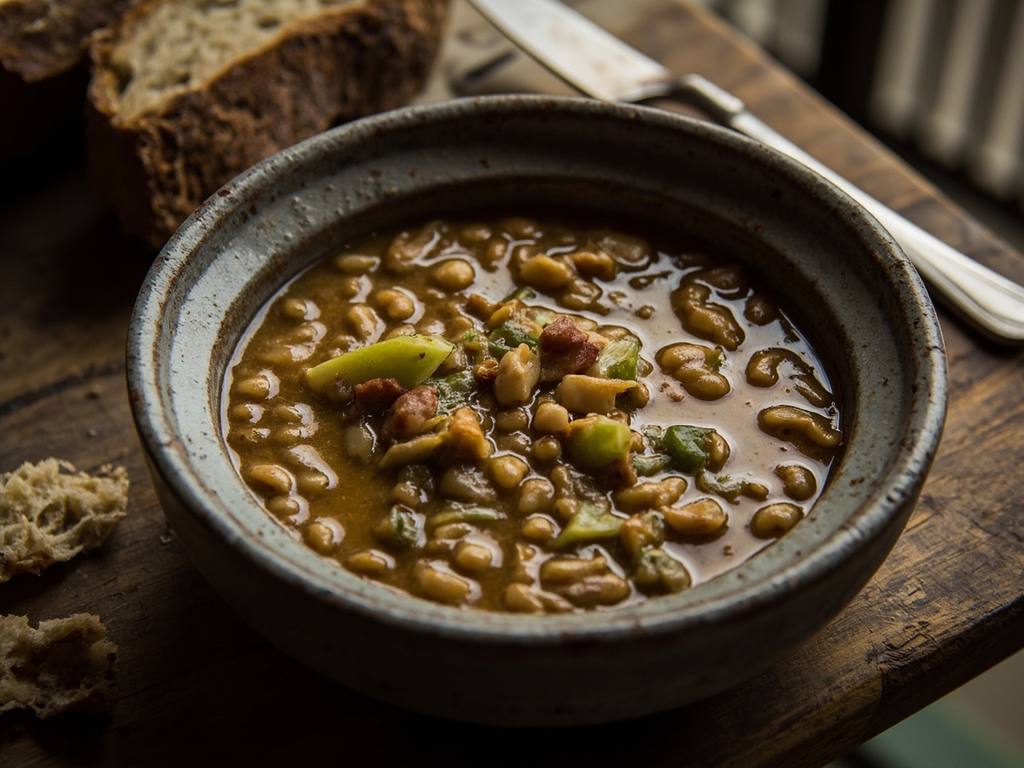
A nourishing soup-porridge of beans and dried peas bound with salt pork, into which hard ship's biscuit was crumbled. Poor in variety but rich in energy, it was the fuel for Atlantic crossings.
Know, my friend, that on the high seas there is no feast: the master cook gives each man his portion, and much good may it do him. The beans and peas are boiled in a great cauldron with salt pork, and the biscuit is dipped in—so hard that it would break a tooth that did not soften it. By rough seas and cold, this hot broth kept our bellies and courage. Eat it steaming, for cold it is worth little.
- •Dried beans — two handfuls (nourishing base)
- •Dried peas — one handful (binder and protein)
- •Salt pork — a good piece (fat and salt)
- •Ship's biscuit — a few galettes (thickening starch)
- •Onion — one (flavor)
Ship's Broth with Beans and Salt Pork
A nourishing soup-porridge of beans and dried peas bound with salt pork, into which hard ship's biscuit was crumbled. Poor in variety but rich in energy, it was the fuel for Atlantic crossings.
Why this dish? On board the Grande Hermine and during the long weeks between Saint-Malo and the Gulf of St. Lawrence, Cartier's crew had only the provisions embarked: biscuit, salt pork, and dried vegetables. This thick broth cooked in the galley's great cauldron was the sailors' ordinary meal.
Know, my friend, that on the high seas there is no feast: the master cook gives each man his portion, and much good may it do him. The beans and peas are boiled in a great cauldron with salt pork, and the biscuit is dipped in—so hard that it would break a tooth that did not soften it. By rough seas and cold, this hot broth kept our bellies and courage. Eat it steaming, for cold it is worth little.
Ingredients (period version)
- Dried beans — two handfuls (nourishing base)
- Dried peas — one handful (binder and protein)
- Salt pork — a good piece (fat and salt)
- Ship's biscuit — a few galettes (thickening starch)
- Onion — one (flavor)
Ingredients
- Dried beans (or split beans) — 200 g (soaked overnight) (nourishing base)
- Split peas — 100 g (binder and protein)
- Salt pork or demi-sel pork belly — 150 g (fat and salt)
- Stale bread or rye rusk — 2 slices (thickening starch)
- Onion — 1, sliced (flavor)
- Water — 1.2 L (cooking liquid)
- Thyme, bay leaf — 1 sprig / 1 leaf (aromatics)
Method
- Soak beans and split peas overnight in cold water, then drain.
- In a pot, sauté the sliced onion with the pork cut into lardons until the fat renders.
- Add beans, peas, thyme, and bay leaf; cover with water and bring to a simmer.
- Simmer covered for 1 hour 30 minutes, skimming, until everything is tender.
- Crumble the stale bread into the pot to thicken; stir for 5 more minutes.
- Serve very hot, without adding salt (the pork is enough)—taste first.
How it was made : On 16th-century ships, ship's biscuit (twice-baked to dry completely) could keep for months but became rock-hard; it was soaked in broth. Dried legumes and salt pork formed the caloric base. Cooking was done in a masonry hearth laid on sand, at the forward part of the ship, and was forbidden in heavy weather.
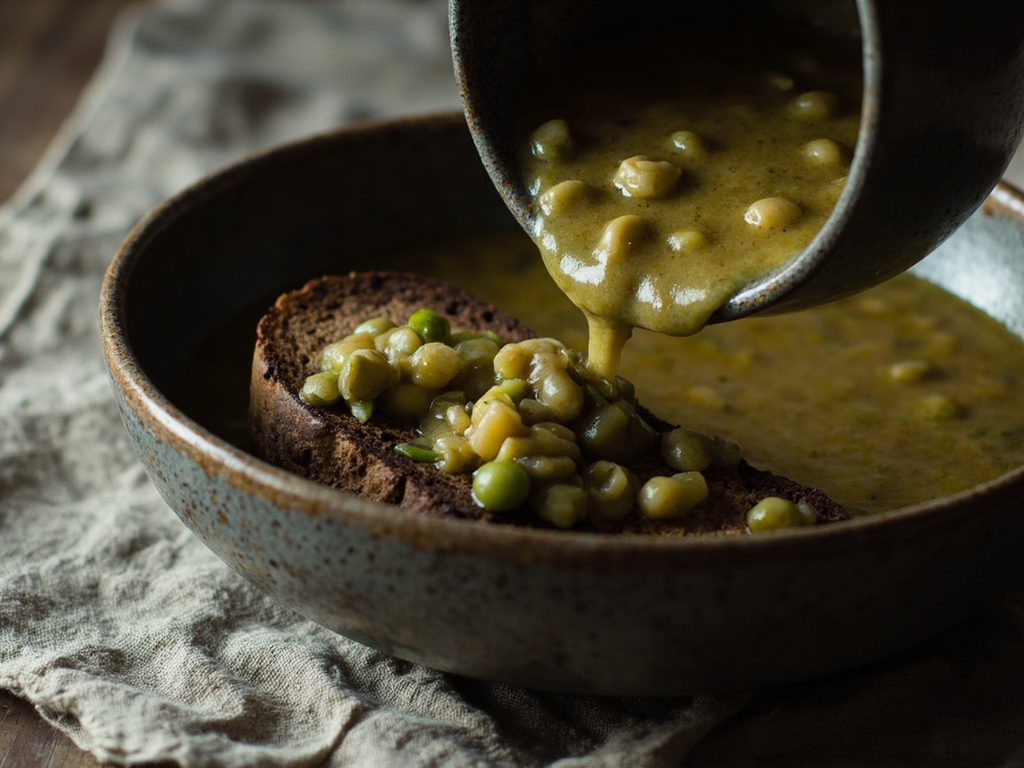
The contemporary twist : Served in a wooden bowl with a piece of grilled rye bread standing upright like a sail, and a drizzle of hazelnut oil.
Sources : Jacques Cartier, “Relations” (travel accounts), modern editions
Jacques Cartier · Charactorium