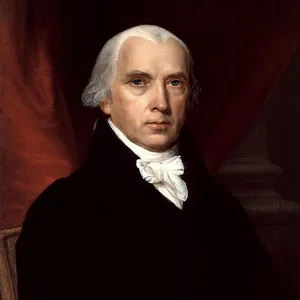

American statesman (1751–1836), regarded as the "Father of the Constitution" of the United States. Architect of the Bill of Rights and fourth President of the United States, he was one of the foremost theorists of American republicanism.
James Madison(1751 — 1836)
James Madison
États-Unis
9 min read
Frequently asked questions
Famous Quotes
« If men were angels, no government would be necessary.»
« Knowledge will forever govern ignorance; and a people who mean to be their own governors must arm themselves with the power which knowledge gives.»
Key Facts
- 1751: Born in Port Conway, Virginia
- 1787: Central role in drafting the United States Constitution at the Philadelphia Convention
- 1788: Co-author of the Federalist Papers with Hamilton and Jay to advocate for ratification of the Constitution
- 1791: Drafting and adoption of the Bill of Rights (first ten amendments to the Constitution)
- 1809–1817: Fourth President of the United States
Works & Achievements
Madison's proposal submitted to the Constitutional Convention, calling for a federal government with three branches (legislative, executive, judicial) and proportional representation. This plan formed the backbone of what would become the United States Constitution.
A series of 85 articles published in New York newspapers to advocate for the ratification of the Constitution. Madison's essays — notably No. 10 on factions and No. 51 on the separation of powers — are considered masterpieces of modern political thought.
Drafted and championed by Madison in Congress, this text guarantees the fundamental freedoms of American citizens: freedom of speech, religion, and the press, as well as the right to a fair trial. It remains the most influential document in American constitutional history.
A text written by Madison in response to the repressive Alien and Sedition Acts, asserting the right of states to resist unconstitutional laws passed by the federal government. This document fueled debates over federalism throughout the entire 19th century.
A detailed handwritten journal of all the debates at the Philadelphia Convention, kept by Madison over four months. Published after his death, these notes remain the essential primary source for the history of America's founding.
The presidential address in which Madison laid out the reasons for declaring war on Great Britain, citing repeated violations of American neutrality and the impressment of American sailors. This was the first official declaration of war in United States history.
Anecdotes
James Madison was one of the smallest men of his era: he stood about 5 feet 4 inches tall and weighed less than 120 pounds. During debates at the Constitutional Convention of 1787, his opponents often underestimated him, but the force of his arguments made him a formidable presence. Alexander Hamilton called him 'the great man in the little body.'
Madison took detailed handwritten notes throughout the entire Constitutional Convention in Philadelphia in 1787, sometimes working to the point of exhaustion. These notes, which he forbade from being published during his lifetime, are today the primary source for understanding how the American Constitution was drafted. They were not published until 1840, four years after his death.
During the War of 1812 against Britain, Madison became the first American president to personally lead troops in wartime, riding to the battlefield at Bladensburg. Shortly after, the British invaded Washington and burned the White House. His wife Dolley Madison showed great courage by saving a portrait of George Washington before fleeing.
Madison and Thomas Jefferson were close friends and neighbors in Virginia. They exchanged hundreds of letters on political philosophy, botany, and agriculture. Jefferson called Madison 'the greatest man in the world in public affairs' — a rare compliment from the most learned president the United States had ever known.
In retirement at his Montpelier estate, Madison continued to receive visitors from around the world who came to discuss politics and philosophy. Despite mounting debts, he flatly refused to sell his enslaved people in ways that would separate them from their families — a painful contradiction that he himself acknowledged with the very principle of equality he had helped to write.
Primary Sources
If men were angels, no government would be necessary. If angels were to govern men, neither external nor internal controls on government would be necessary. In framing a government which is to be administered by men over men, the great difficulty lies in this: you must first enable the government to control the governed; and in the next place oblige it to control itself.
By a faction, I understand a number of citizens, whether amounting to a majority or a minority of the whole, who are united and actuated by some common impulse of passion, or of interest, adversed to the rights of other citizens, or to the permanent and aggregate interests of the community.
My objections to the Bill of Rights were that the rights thus secured might be reduced to too narrow a formula and would be regarded as granting everything not expressly reserved. I have since been led to think that both objections are in large part refuted by experience.
I find myself placed in the most difficult position that a man can occupy, called upon to enforce laws I would not have chosen and to administer a government I would not have designed. But the Constitution I helped to draft is the expression of the will of the American people.
This Assembly doth explicitly and peremptorily declare, that it views the powers of the federal government as resulting from the compact to which the states are parties; and that in case of a deliberate, palpable, and dangerous exercise of other powers, not granted by the said compact, the states who are parties thereto have the right, and are in duty bound, to interpose for arresting the progress of the evil.
Key Places
Madison's family estate where he was born, lived, and died. It was at this plantation that he studied, reflected, and welcomed the greatest minds of his era, before retiring there permanently after his presidency.
Site of the Constitutional Convention of 1787, where Madison played a central role in drafting the United States Constitution. This building had already hosted the signing of the Declaration of Independence in 1776.
The official residence of American presidents, which Madison occupied from 1809 to 1817. In 1814, the British burned it down while he was president, and his wife Dolley famously saved the portrait of Washington before fleeing.
The central building of the College of New Jersey where Madison studied from 1769 to 1771. It was here that he discovered Enlightenment philosophy, natural law, and republican theory — ideas that would shape his entire career.
The seat of the United States Congress, where Madison served as a representative from Virginia and secured the passage of the Bill of Rights in 1789. This landmark stands as the culmination of his constitutional work.
Liens externes & ressources
Références
Œuvres
Le Plan de Virginie
1787
The Federalist Papers (avec Hamilton et Jay)
1787-1788
Le Bill of Rights (dix premiers amendements à la Constitution)
1789-1791
Résolutions de Virginie
1798
Notes de la Convention constitutionnelle
1787 (publ. 1840)
Message au Congrès déclarant la guerre à la Grande-Bretagne
1er juin 1812
See also
Related Characters
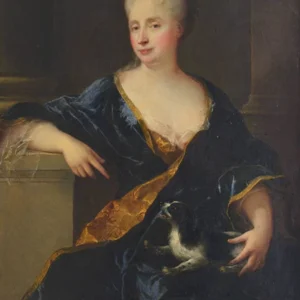
Anne Thérèse de Marguenat de Courcelles, marquise de Lambert
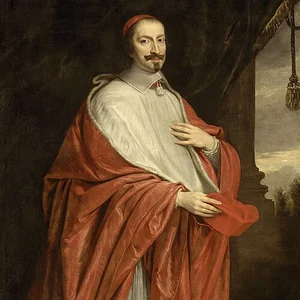
Cardinal Mazarin
1602 — 1661
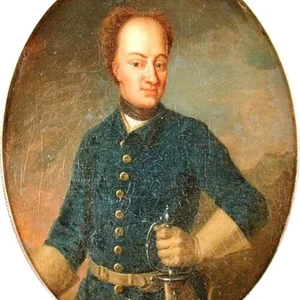
Charles XII of Sweden

Frederick II of Denmark
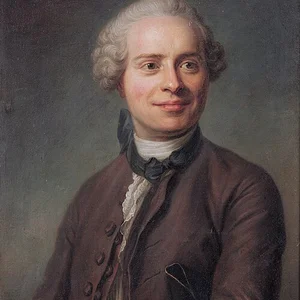
Jean le Rond d'Alembert
1717 — 1783
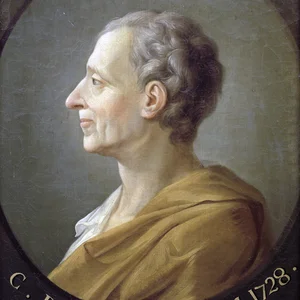
Montesquieu
1689 — 1755