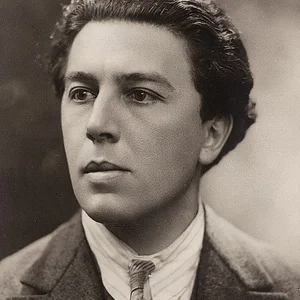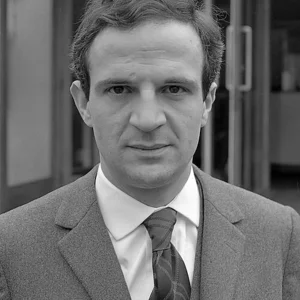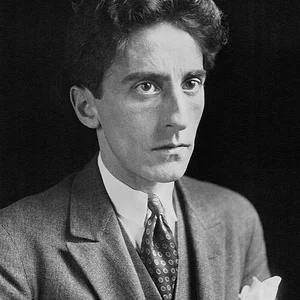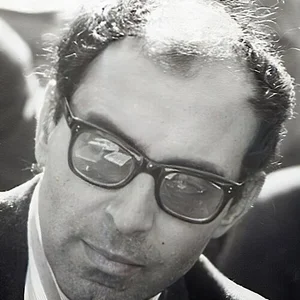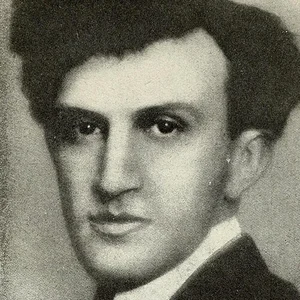

Franco-Polish film director, essayist, and theorist (1897–1953), Jean Epstein is a major figure of the French cinematic avant-garde of the 1920s–1930s. He coined the concept of "photogénie" and directed experimental works such as *The Fall of the House of Usher*.
Jean Epstein(1897 — 1953)
Jean Epstein
France
8 min read
Frequently asked questions
Famous Quotes
« Photogénie is to the cinematic art what color is to painting.»
« Cinema is a language that speaks to us through the eyes.»
Key Facts
- Born in Warsaw in 1897, naturalized French
- Published *Bonjour Cinéma* in 1921, the first major theoretical essay on the seventh art
- Directed *The Fall of the House of Usher* in 1928, a masterpiece of French Expressionism
- Coined the concept of "photogénie" to describe cinema's ability to reveal the beauty of movement
- Died in Paris in 1953, leaving behind an influential body of theoretical work on film aesthetics
Works & Achievements
Epstein's first major theoretical essay, in which he formulates the concept of "photogénie." This enthusiastic manifesto established him as one of the leading thinkers of French silent cinema.
A silent film shot in the port of Marseille and a masterpiece of French impressionist cinema. Epstein experiments with close-ups and rhythmic editing to illustrate his theories on photogénie.
A dreamlike adaptation of Edgar Allan Poe's short story, making use of slow motion, multiple exposures, and fantastical atmospheres. Shot with Luis Buñuel as assistant director, this film is a landmark of the cinematic avant-garde.
A drama filmed on the Breton islands with non-professional fishermen. A pioneering work of the fiction documentary, it foreshadows neorealism and reflects Epstein's deep attachment to Brittany.
A major philosophical essay in which Epstein analyzes the camera as a new organ of knowledge, capable of perceiving time in ways impossible for the human eye.
A poetic short film shot in Brittany, universally recognized as a masterpiece of French poetic documentary. Blending reality and legend, it ranks among Epstein's last films.
An essay in which Epstein explores the relationship between cinema, philosophy, and mysticism, extending his reflections on time and space as distinctly cinematic dimensions.
Anecdotes
Before dedicating himself to cinema, Jean Epstein studied medicine at the University of Lyon between 1917 and 1921. This scientific training deeply informed his theoretical thinking: he approached film as an instrument for investigating reality, capable of revealing truths invisible to the naked eye.
In 1921, Epstein published *Bonjour Cinéma*, in which he first articulated his theory of "photogénie." He believed cinema possessed a unique power to reveal the hidden beauty and essence of things — a face in close-up, a spinning wheel, a flame. This concept became central to the aesthetics of French silent cinema.
To shoot *Finis Terrae* (1929), Epstein spent several weeks on the Breton islands of Ouessant and Bannec. He cast local, non-professional fishermen as actors, pioneering a form of neorealism before the term existed, and had to contend with ferocious storms at sea alongside his crew.
During the German Occupation, Jean Epstein, who was of Jewish heritage, was forced to go into hiding in Brittany — a region where he had forged deep ties during his shoots. Far from giving in to despair, he continued writing his theoretical essays on cinema, which were published as soon as the Liberation came.
For his adaptation of Edgar Allan Poe's short story, *The Fall of the House of Usher* (1928), Epstein used slow motion, double exposures, and unusual camera angles to create a dreamlike atmosphere. A certain Luis Buñuel, then a newcomer, took part in the shoot as assistant director — a testament to the artistic ferment of 1920s Paris.
Primary Sources
Photogénie is the aspect of things, beings, and souls whose cinematic reproduction is enhanced. Any aspect that is not enhanced by filmic reproduction is not photogenic and does not belong to the art of cinema.
Cinema is an artificial brain that sees where the human eye cannot, and feels where ordinary sensitivity remains numb. It cuts through time and space according to its own laws, not ours.
The camera perceives time in a way that man cannot directly access. Slow motion and time-lapse reveal worlds hidden within the ordinary moment, entire universes that our everyday consciousness ignores.
Cinema is the only art capable of representing pure duration — time as it actually flows — without filtering or distorting it through human intelligence or memory. This is both its glory and its mystery.
Key Places
Birthplace of Jean Epstein, born on March 26, 1897, into a middle-class Jewish family. Poland was then under Russian rule, and the family was forced to flee during the First World War.
The city where Epstein studied medicine (1917–1921) and discovered cinema — the same city where the Lumière brothers had invented the cinematograph. This double connection deeply shaped his vision of cinema as both science and art.
The heart of Epstein's intellectual and artistic life: he published his manifestos there, moved in avant-garde circles, and directed several films. He died there on April 3, 1953.
A remote Breton island off the coast of Finistère where Epstein shot *Finis Terrae* (1929) with local fishermen. This rugged, authentic place became the symbol of his poetic documentary cinema.
The region Epstein adopted as his own, where he took refuge during the Occupation and made several of his most personal films. The sea, the islands, and the Breton fishermen form a recurring thread throughout his filmography.
Typical Objects

A silent-film camera operated manually at variable speed. Epstein experimented with filming rates to create slow-motion or fast-motion effects, exploring the possibilities of *photogénie*.

A machine for viewing and assembling filmed reels. It was at the editing table that Epstein composed the visual rhythm of his films, giving concrete form to his theories on cinematic time.

The standard photographic medium of silent cinema and the early sound era — highly flammable and fragile. Epstein's films, shot in grueling conditions at sea, put these precious reels through a severe ordeal.

The writing tool behind his theoretical essays and screenplays. Epstein was as much a theorist as an artist: he wrote dozens of articles, manifestos, and books on the nature of cinema and its relationship to time.

The traditional vessel of the islands of Ouessant and Bannec, central to Epstein's Breton films (*Finis Terrae*, *L'Or des mers*). These boats embody a harsh and authentic way of life that the filmmaker sought to immortalize.

Epstein recorded his observations on perception, time, and the image in notebooks. These notes fed into both his films and his major theoretical publications.
School Curriculum
Vocabulary & Tags
Key Vocabulary
Daily Life
Morning
Jean Epstein began his mornings writing, often at dawn. He drafted his theoretical essays methodically, filling notebooks before moving to the typewriter. His Parisian apartment was overrun with books on philosophy, physics, and literature.
Afternoon
Afternoons were devoted to screenings, meetings with film crews, or visits to development laboratories. During his stays in Brittany, he would spend hours observing the sea and the light before deciding on his shots.
Evening
In the evenings, Epstein frequented the cafés and cinemas of Saint-Germain-des-Prés, discussing art and film with Parisian intellectuals. He read extensively, particularly philosophy and the fantastic literature of Edgar Poe.
Food
Like many Parisian intellectuals of the interwar period, Epstein frequented the modest brasseries and restaurants of the Latin Quarter. During his stays in Brittany, he shared meals with fishermen — fish, bread, and cider.
Clothing
Epstein favored the sober, intellectual dress typical of the Parisian artistic milieu of the 1920s and 1930s: dark suit, felt hat, and overcoat. On sea shoots, he wore practical clothes and oilskins to weather the Breton elements.
Housing
In Paris, Epstein lived in apartments in the Latin Quarter or Montparnasse, centers of the bohemian and intellectual life of the era. These modest lodgings were cluttered with film reels, books, and work materials, reflecting a life entirely devoted to creation.
Historical Timeline
Period Vocabulary
Liens externes & ressources
Références
Œuvres
L'Intelligence d'une machine
1946