 Flip the card
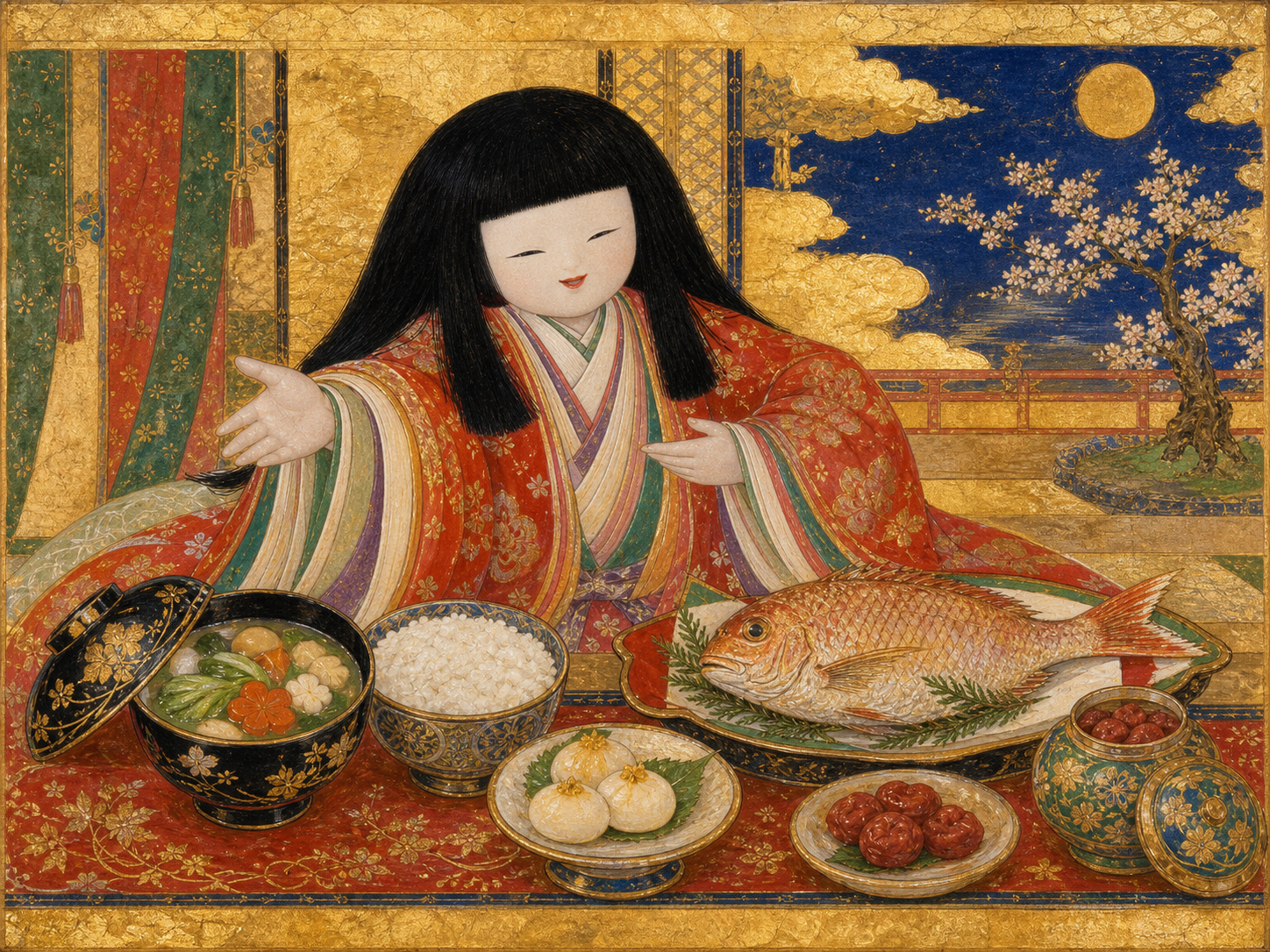
Kaguya-hime at the table
On the menu
Ichijū-sansai (一汁三菜) around gohan
The Japanese table of the Heian period is organized not as starter/main/dessert, but around steamed rice (gohan), the heart of the meal. It is surrounded by 'one soup and three side dishes' (ichijū-sansai): a broth (shiru), a main dish often grilled or dried, and pickled or preserved vegetables. Among peasants like the couple who raised Kaguya-hime, they made do with one soup and one side dish (ichijū-issai). Sweetness was not a dessert but a precious rarity, reserved for offerings and festivals. Everything is placed at the same time on a low tray (oshiki), each serving themselves at their own pace.
Signature : Hishio (醤), ancestor of miso
Before the smooth miso we know today, Heian Japanese seasoned everything with hishio: a fermented paste of soybeans, grains, and salt, inherited from China. It provides the umami and salty base for almost every dish. For the rare sweet taste, there was no sugar but amazura, a syrup made from boiled sap of a wild vine.
click to flip back
Kaguya-hime at the table
5 period recipes
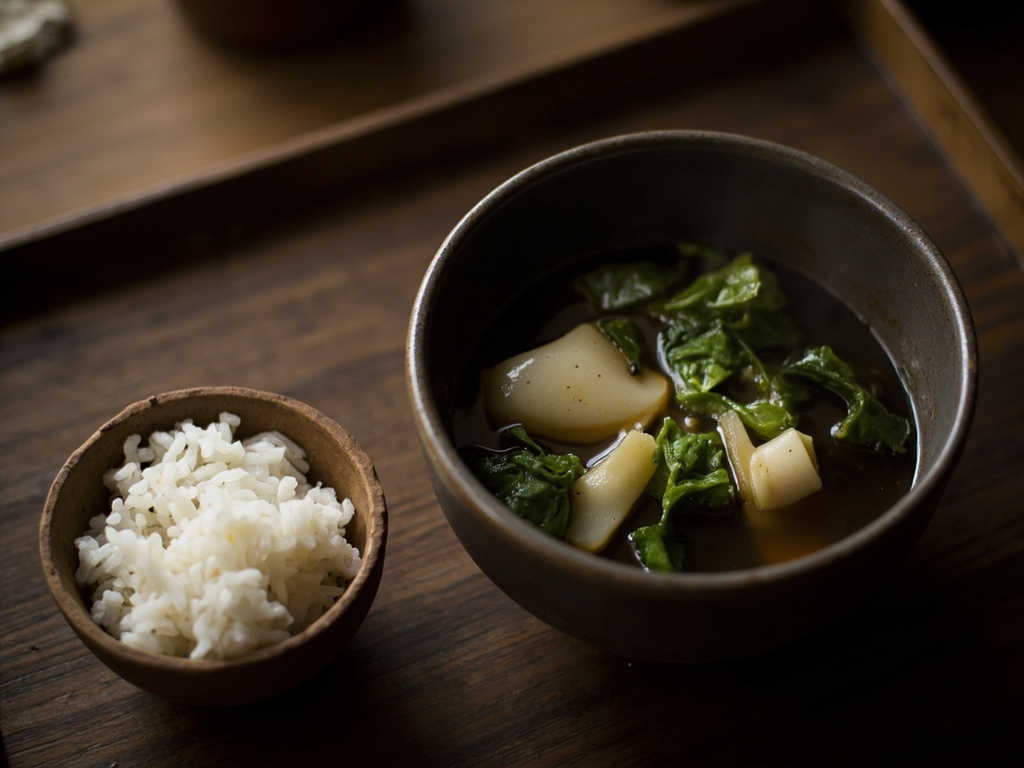 Everyday
Hishio shiru with seasonal vegetables and a bowl of rice
Ichijū-issai (the one-soup, one-side meal of the peasant class)
🧂 🍄 🫙· 40 min
View the recipe
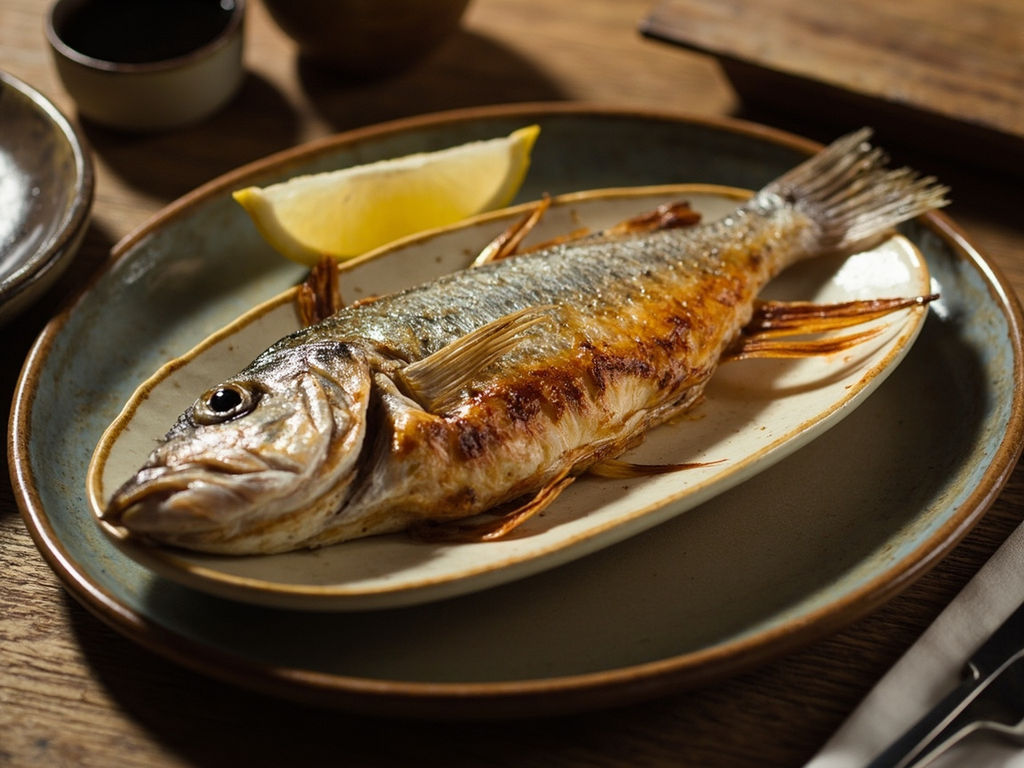 Festive
Salt-grilled sea bream, court banquet style
The honor dish of the daikyō (grand banquet of Heian nobility)
🍄 🧂· 35 min
View the recipe
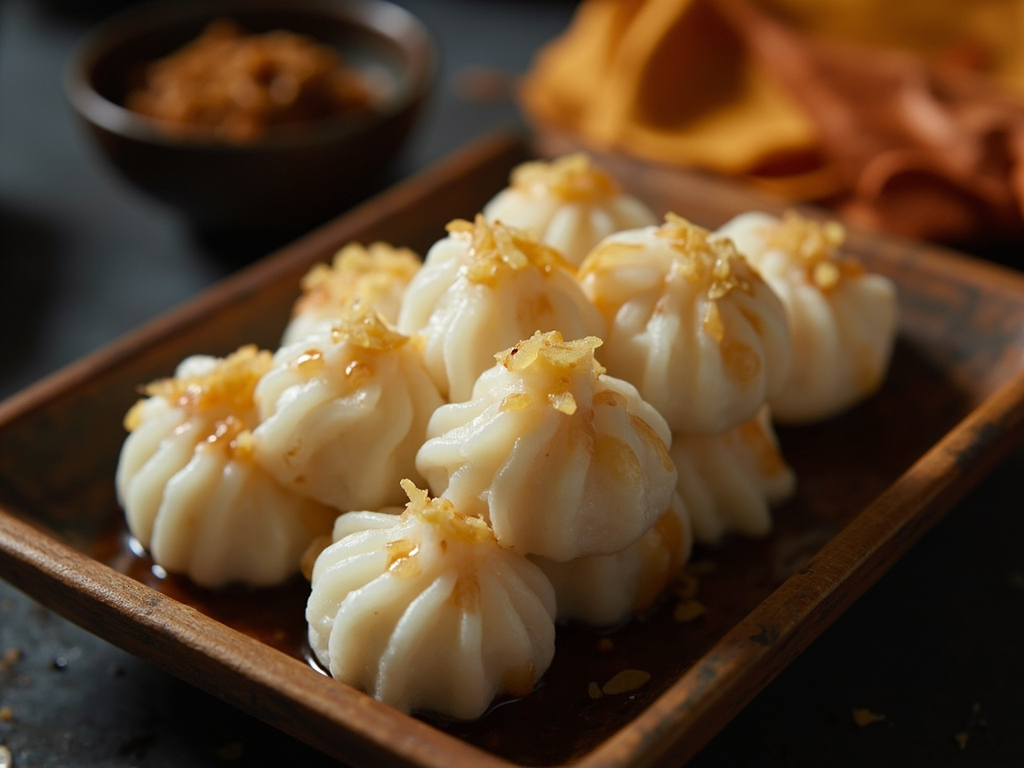 Offering
Amazura mochi, offering to the Moon
Wagashi of offering (ritual sweet presented to the celestial body)
🍯· 3 h (including soaking)
View the recipe
 Preserving
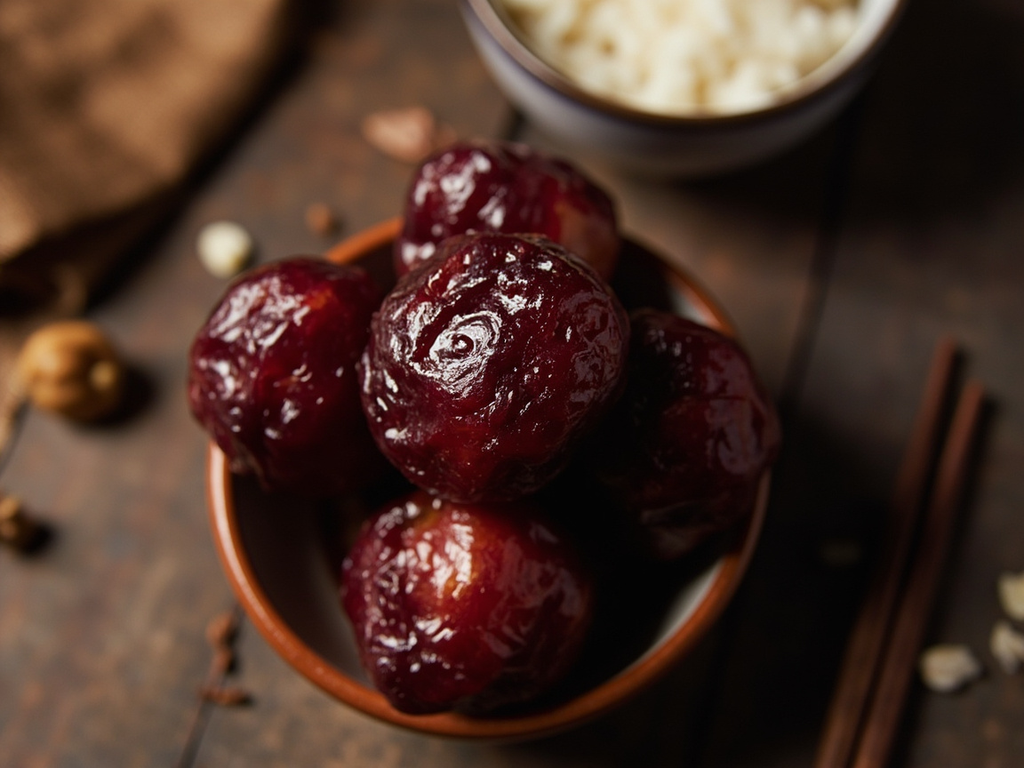
Umeboshi, salted plums for storage and travel
Konomono / tsukemono (preserved pickles from the pantry)
🍋 🧂· 20 min preparation + 2 to 3 weeks maceration and drying
View the recipe
 Drink
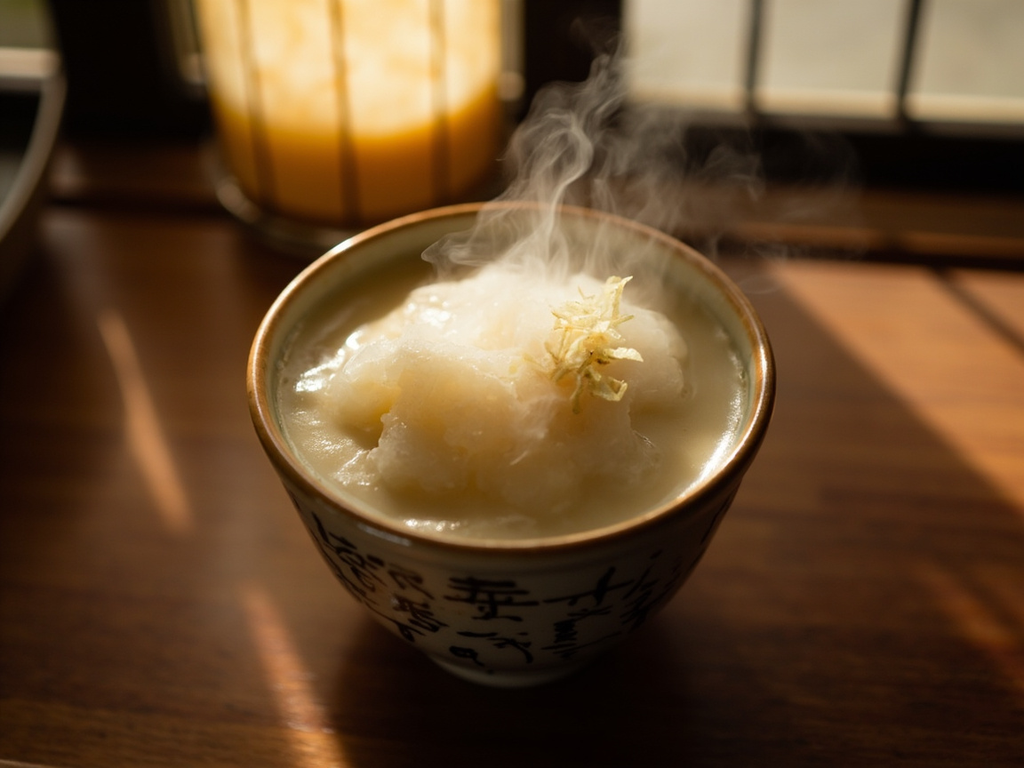
DrinkAmazake, sweet fermented rice beverage
Festive and offering beverage (thick food-drink, served warm)
🍯 🫙· 30 min + 6 to 10 h fermentation
View the recipe