 flip
flipUmeboshi, salted plums for storage and travel
Umeboshi, salted plums for storage and travel
Why this dish? In the bamboo grove hut, nothing was wasted: summer fruits were preserved for lean months. The salted ume, a sour and durable fruit, accompanied rice all year round and served as provisions when traveling to Heian-kyō. A food of prudence and memory, the opposite of courtly splendor.
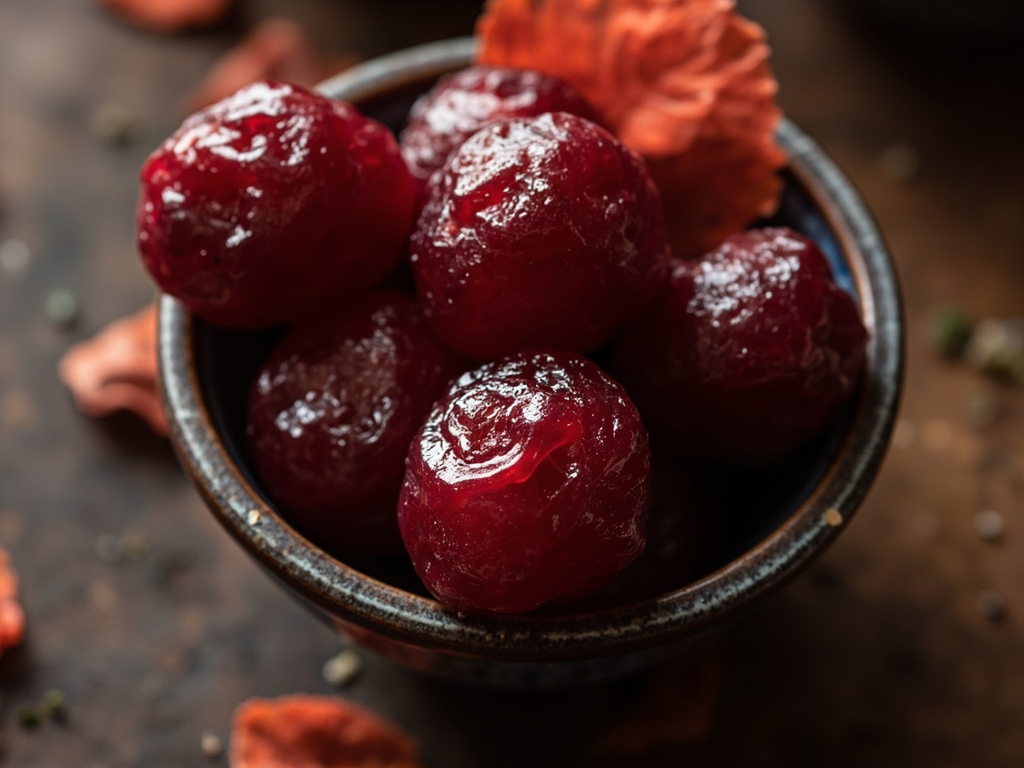
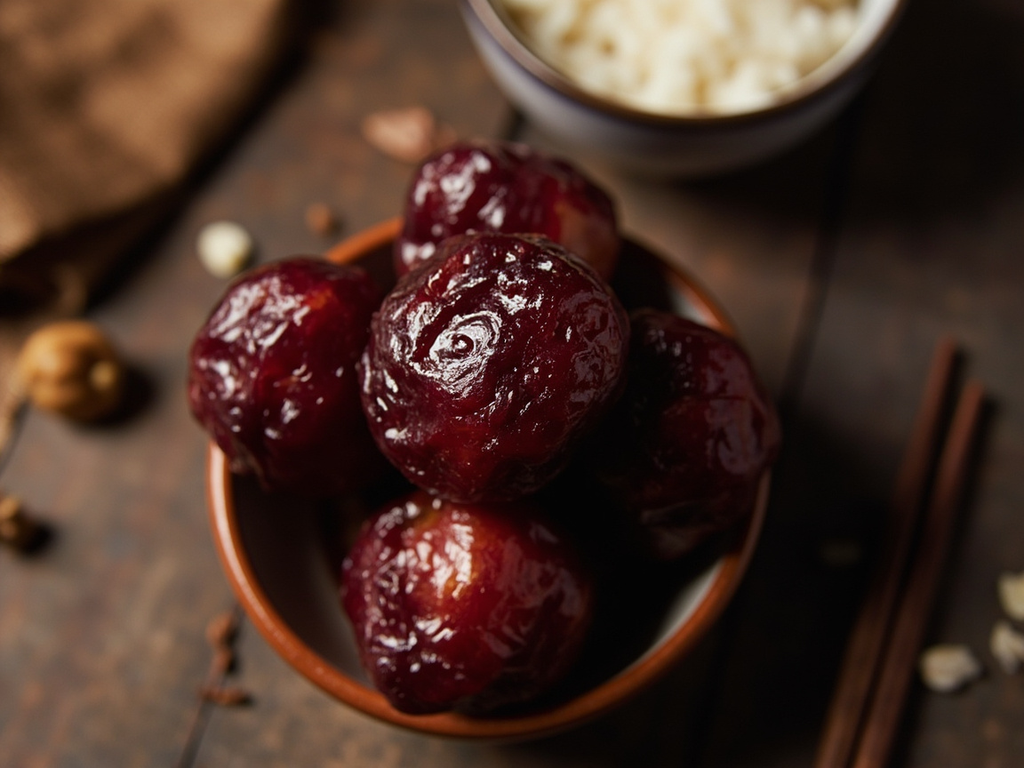
Japanese plums (ume) macerated in salt then dried in the sun: intensely sour and salty, they keep for years and enliven a simple bowl of rice. At once condiment, preserve, and folk remedy.
Keep this, my mother told me, and you shall never quite be hungry. We choose firm ume, lay them in salt until they release their water, then let them drink the sun for three days. See how they wrinkle and darken: thus kept, they pass through winters and journeys without ever turning. A single one, placed on white rice, awakens the mouth — they even said it chased away road fatigue and ill humors.
- •Ripe firm ume (Japanese apricots) — a full basket (fruit to salt)
- •Sea salt — about one-fifth the weight of the fruit (salting and preservation)
- •Red shiso leaves — one bunch (optional) (color and aroma)
Umeboshi, salted plums for storage and travel
Japanese plums (ume) macerated in salt then dried in the sun: intensely sour and salty, they keep for years and enliven a simple bowl of rice. At once condiment, preserve, and folk remedy.
Why this dish? In the bamboo grove hut, nothing was wasted: summer fruits were preserved for lean months. The salted ume, a sour and durable fruit, accompanied rice all year round and served as provisions when traveling to Heian-kyō. A food of prudence and memory, the opposite of courtly splendor.
Keep this, my mother told me, and you shall never quite be hungry. We choose firm ume, lay them in salt until they release their water, then let them drink the sun for three days. See how they wrinkle and darken: thus kept, they pass through winters and journeys without ever turning. A single one, placed on white rice, awakens the mouth — they even said it chased away road fatigue and ill humors.
Ingredients (period version)
- Ripe firm ume (Japanese apricots) — a full basket (fruit to salt)
- Sea salt — about one-fifth the weight of the fruit (salting and preservation)
- Red shiso leaves — one bunch (optional) (color and aroma)
Ingredients
- Fresh ume (in season) or firm apricots as substitute — 1 kg (fruit to salt)
- Unrefined sea salt — 180 g (18% of weight) (salting)
- Red shiso leaves — 1 bunch (optional) (red color and aroma)
- Sterilized jar and weight — 1 (maceration)
Method
- Wash the ume, remove the small stem, and dry them thoroughly.
- Layer fruit and salt alternately in a clean jar, place a weight on top, and cover.
- Let macerate for 1 to 2 weeks: a liquid (umezu) should rise and cover the fruit; add red shiso if you want color.
- On a dry, sunny day, spread the fruit on a rack and sun-dry for 3 days, bringing them in at night.
- Return them to the jar: they keep for months, even years.
How it was made : Salted ume is attested very early in Japan: as early as the Heian period, it was credited with medicinal virtues (against fatigue and stomach ailments) as well as culinary ones. It is one of the oldest Japanese preserves, direct ancestor of modern umeboshi, a staple ration for travelers and soldiers.
The contemporary twist : Insert an umeboshi in the center of a rice ball: the famous 'hinomaru' onigiri, white rice and red plum evoking the solar disk — or here, lunar.
Kaguya-hime · Charactorium