 flip
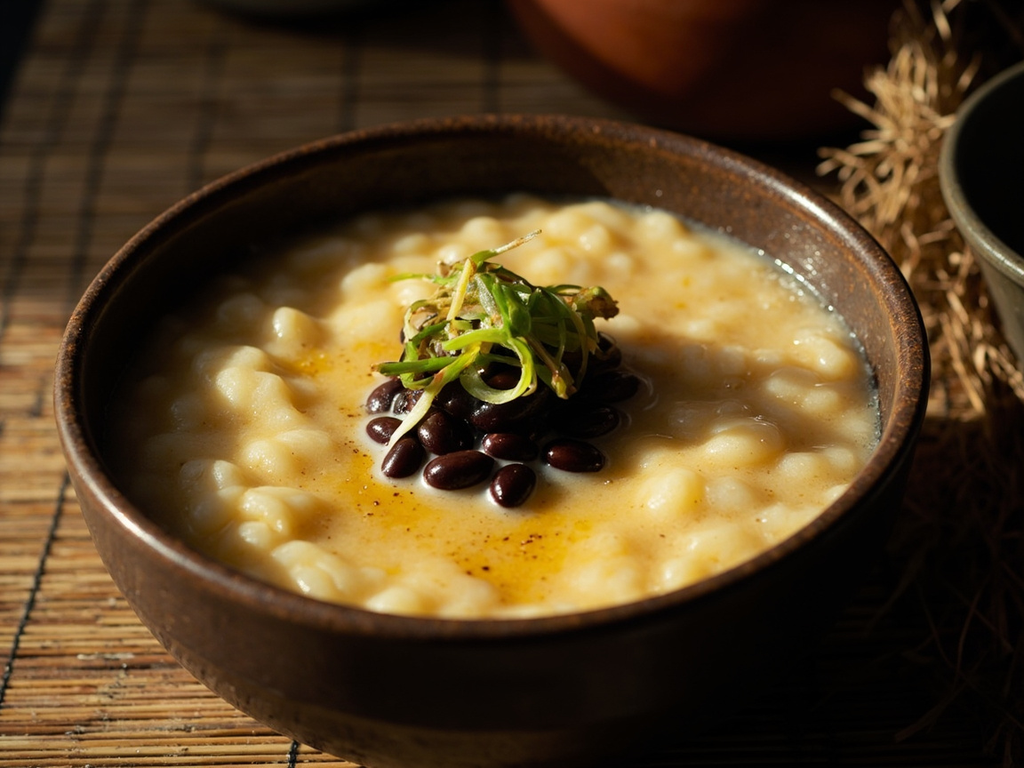
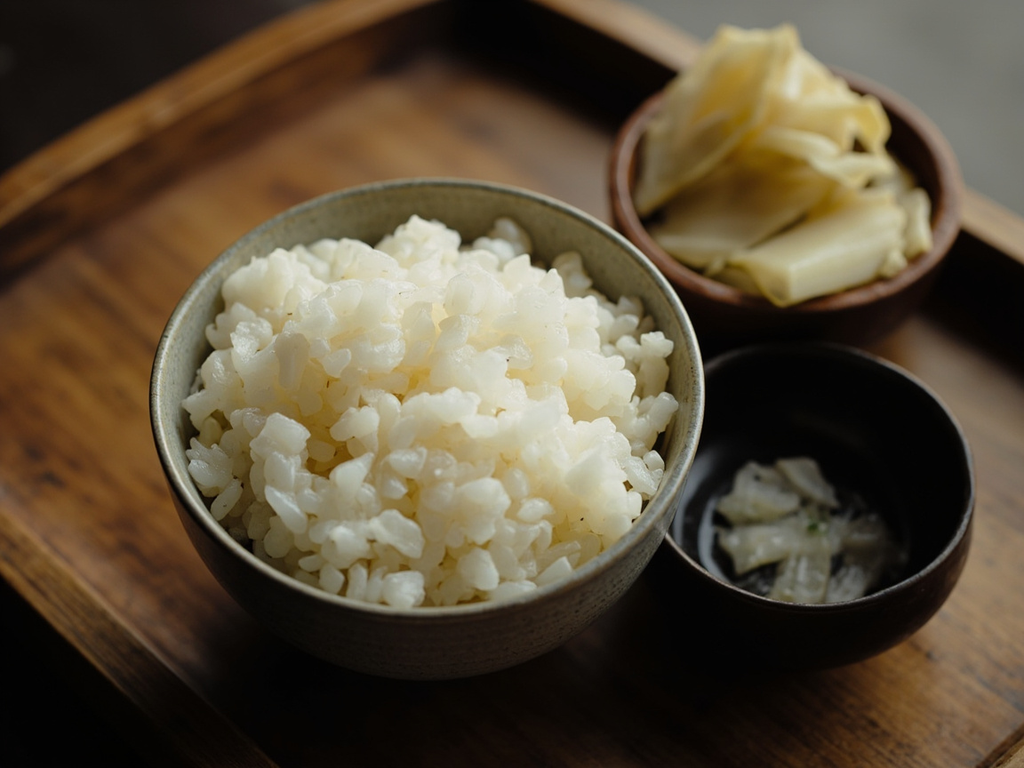
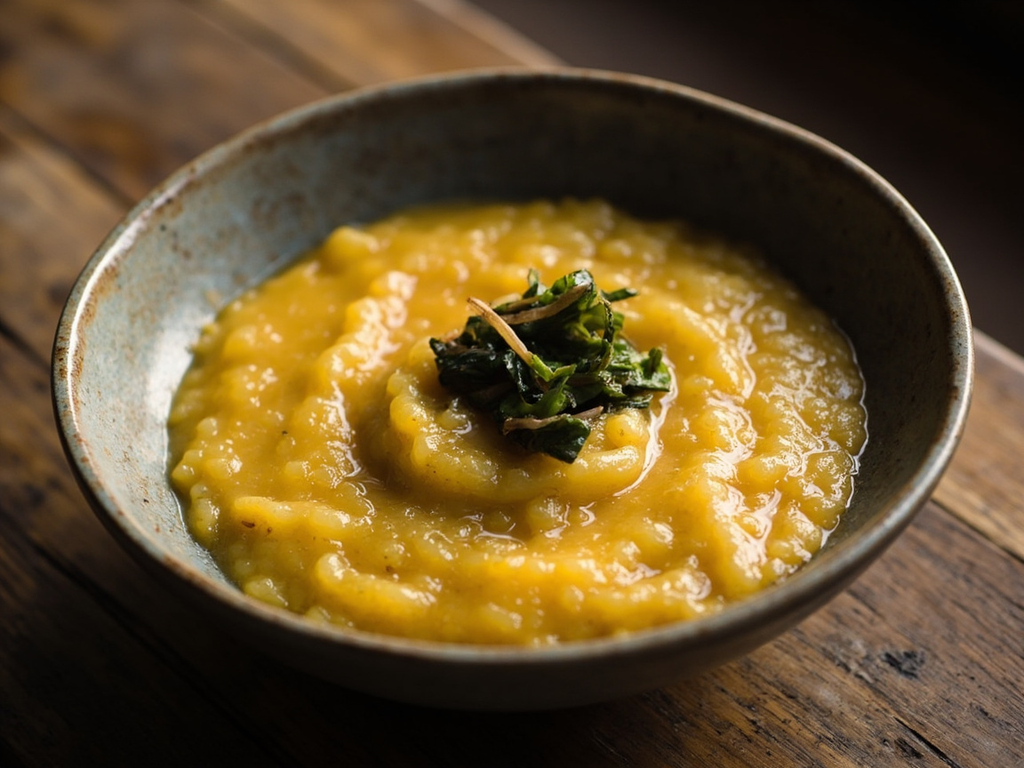
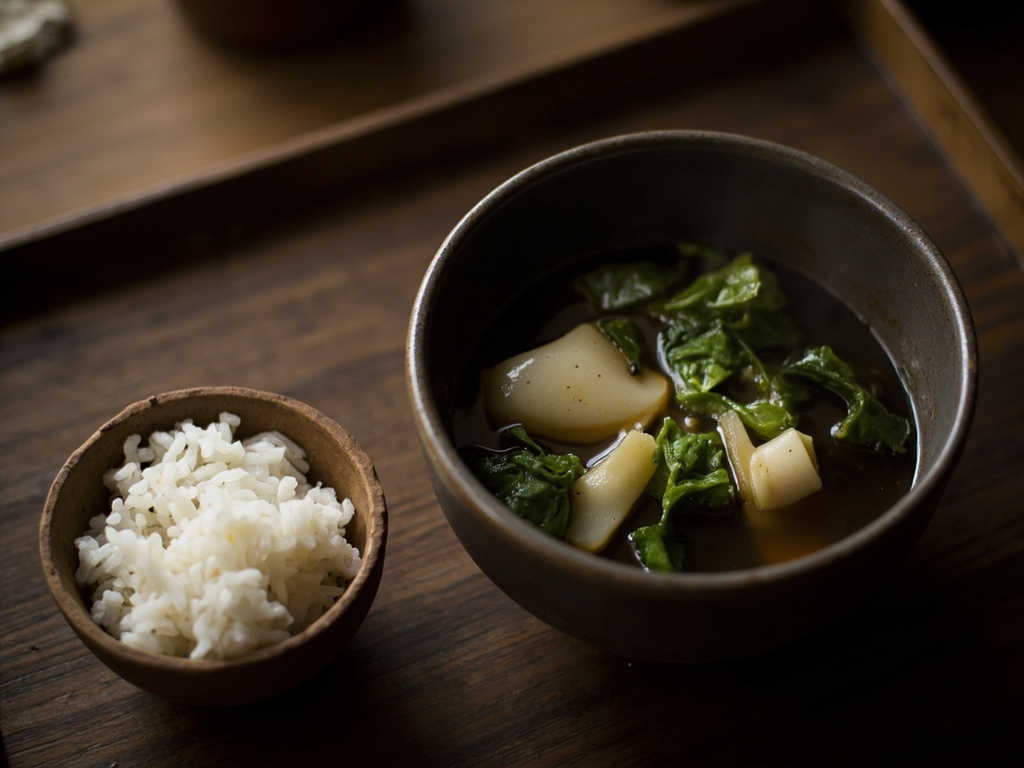
flipHishio shiru with seasonal vegetables and a bowl of rice
Hishio shiru with seasonal vegetables and a bowl of rice
Why this dish? This is the everyday meal in the hut of the bamboo cutter and his wife, the simple peasants who took in the luminous child found in the bamboo. Before becoming a princess, Kaguya-hime ate this steaming bowl of rice and this fermented paste soup, humble food from the bamboo groves of Kyoto.
A comforting broth made with fermented hishio and kelp, garnished with garden vegetables, served alongside a bowl of white or brown rice. The foundational meal of Japanese cuisine, in its most modest form.
Come close to the hearth, and I shall tell you. Before the Moon, before the princes and their gifts, there was this bowl that my foster mother set before me at daybreak. The rice, we steamed it in the bamboo basket my father had woven; the soup, she drew it from a spoonful of dark paste kept in a jar, stirred just before it boiled, never after — else the fragrance flees. It was poor, and yet nothing up there had that warmth.
- •Rice — two handfuls per person (heart of the meal (gohan))
- •Hishio (fermented soybean and grain paste) — one heaped spoonful (umami seasoning for the broth)
- •Kelp (konbu) — one strip (broth base)
- •Turnip and mustard greens (na) — a generous handful (seasonal vegetables)
- •Spring water — one bowl per person (base)
Hishio shiru with seasonal vegetables and a bowl of rice
A comforting broth made with fermented hishio and kelp, garnished with garden vegetables, served alongside a bowl of white or brown rice. The foundational meal of Japanese cuisine, in its most modest form.
Why this dish? This is the everyday meal in the hut of the bamboo cutter and his wife, the simple peasants who took in the luminous child found in the bamboo. Before becoming a princess, Kaguya-hime ate this steaming bowl of rice and this fermented paste soup, humble food from the bamboo groves of Kyoto.
Come close to the hearth, and I shall tell you. Before the Moon, before the princes and their gifts, there was this bowl that my foster mother set before me at daybreak. The rice, we steamed it in the bamboo basket my father had woven; the soup, she drew it from a spoonful of dark paste kept in a jar, stirred just before it boiled, never after — else the fragrance flees. It was poor, and yet nothing up there had that warmth.
Ingredients (period version)
- Rice — two handfuls per person (heart of the meal (gohan))
- Hishio (fermented soybean and grain paste) — one heaped spoonful (umami seasoning for the broth)
- Kelp (konbu) — one strip (broth base)
- Turnip and mustard greens (na) — a generous handful (seasonal vegetables)
- Spring water — one bowl per person (base)
Ingredients
- Japanese short-grain rice — 150 g (heart of the meal)
- Miso (if hishio is unavailable) — 2 tbsp (umami seasoning)
- Konbu seaweed — 1 piece (10 cm) (broth (vegetarian dashi))
- Turnip — 1 small (vegetable)
- Green leaves (spinach, komatsuna, or turnip tops) — a handful (vegetable)
- Water — 700 ml (base)
Method
- Rinse the rice until the water runs clear, then cook it in water or steam (12 min cooking, 10 min rest covered).
- Soak the konbu in cold water for 20 min, then heat gently without boiling and remove the seaweed just before boiling.
- Add the turnip sliced thinly, simmer until tender, then add the green leaves at the end of cooking.
- Off the heat (or at a very low simmer), dissolve the miso in a ladle of broth and return it to the pot: never let the miso boil afterwards.
- Serve the bowl of rice and the bowl of soup side by side, piping hot.
How it was made : In the Heian period, rice was often steamed (kowameshi) rather than boiled, and hishio replaced our smooth miso. Peasants mostly ate brown rice or mixed grains (millet, barley), while polished white rice was a luxury reserved for the nobility of Heian-kyō.
The contemporary twist : A touch of yuzu zest placed on the soup just before serving, like a crescent moon on the broth.
Kaguya-hime · Charactorium