 flip
flipMakhan-Mishri (fresh butter and rock sugar)
Makhan-Mishri (fresh butter and rock sugar)
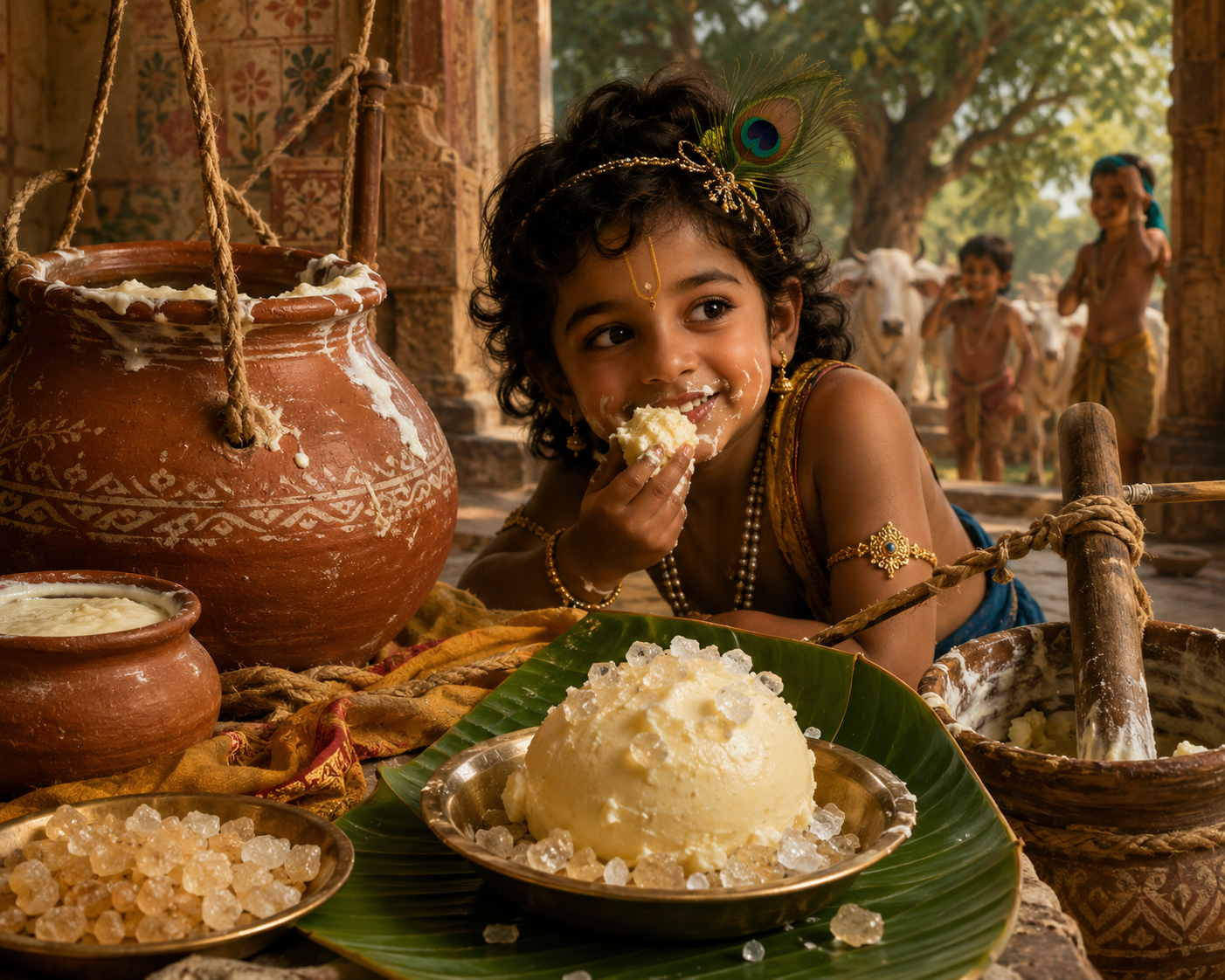
Why this dish? This is Krishna's quintessential food: as a child in Vrindavan, he would steal the fresh butter the gopis (milkmaids) had just churned, earning him the nickname Makhan Chor. The still-warm butter, sprinkled with sugar crystals, remains his most tender offering.
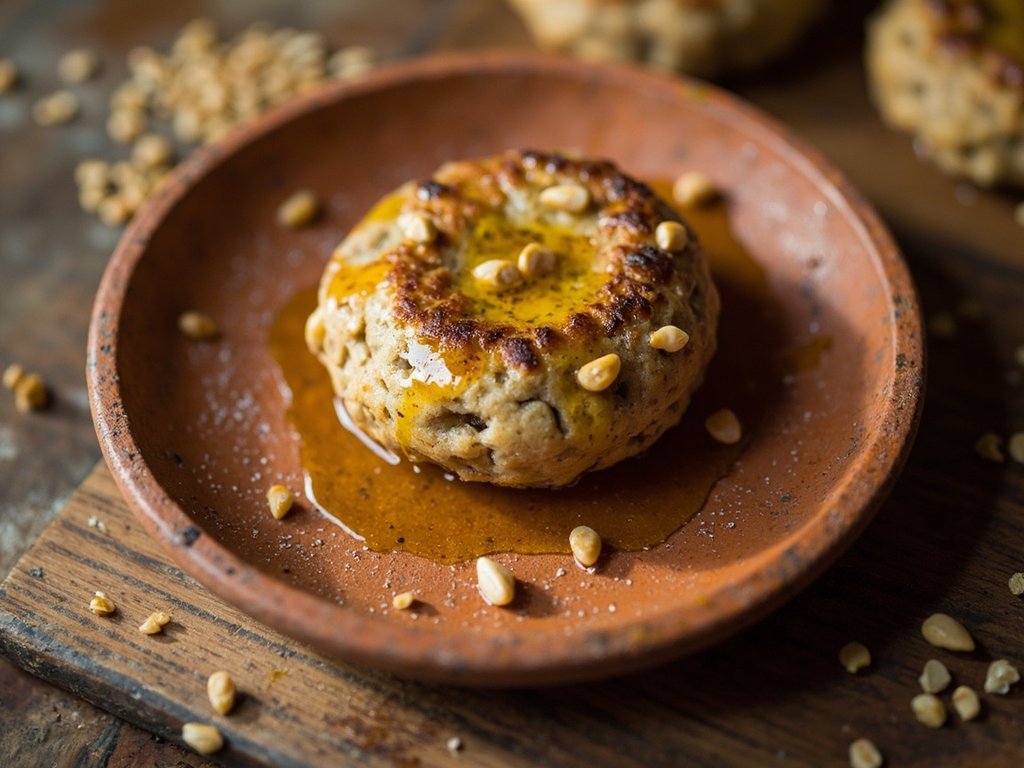
Freshly churned, unsalted butter, simply mixed with mishri (rock sugar crystals) that crunch under the tooth. A bite of childhood, sweet and melting, still offered today to statues of baby Krishna.
Come closer, don't be afraid of me. See that pot Mother Yashoda thought she had hidden well up high, hung out of reach — my cowherd friends and I would climb like a pyramid to dip our fingers in, and the butter would run down our laughing chins. Take a walnut-sized piece still warm, crush it with a grain of sugar, and let it melt: that is all the sweetness of the pastures of Vrindavan in a single bite. Eat, and smile as we smiled under the kadamba trees.
- •Cow's milk cream (malai) — the top of several pots of milk (material to churn)
- •Rock sugar (mishri) — a handful of crystals (crunchy sweetness)
Makhan-Mishri (fresh butter and rock sugar)
Freshly churned, unsalted butter, simply mixed with mishri (rock sugar crystals) that crunch under the tooth. A bite of childhood, sweet and melting, still offered today to statues of baby Krishna.
Why this dish? This is Krishna's quintessential food: as a child in Vrindavan, he would steal the fresh butter the gopis (milkmaids) had just churned, earning him the nickname Makhan Chor. The still-warm butter, sprinkled with sugar crystals, remains his most tender offering.
Come closer, don't be afraid of me. See that pot Mother Yashoda thought she had hidden well up high, hung out of reach — my cowherd friends and I would climb like a pyramid to dip our fingers in, and the butter would run down our laughing chins. Take a walnut-sized piece still warm, crush it with a grain of sugar, and let it melt: that is all the sweetness of the pastures of Vrindavan in a single bite. Eat, and smile as we smiled under the kadamba trees.
Ingredients (period version)
- Cow's milk cream (malai) — the top of several pots of milk (material to churn)
- Rock sugar (mishri) — a handful of crystals (crunchy sweetness)
Ingredients
- Very cold heavy cream — 500 ml (to churn into butter)
- Ice water — 1 bowl (to rinse the butter)
- Rock sugar (mishri) or coarse brown sugar — 2 tbsp (crunchy garnish)
Method
- Whip the very cold cream (with a mixer or by shaking a sealed jar vigorously) until it passes the whipped cream stage and separates into butter grains and buttermilk.
- Drain the buttermilk (keep it for the chaas recipe!).
- Gather the butter, rinse it with ice water while pressing until the water runs clear: it keeps better.
- Shape into a small ball, place in a bowl, sprinkle generously with rock sugar crystals.
- Serve immediately, at room temperature, so the butter stays soft.
How it was made : In ancient India, butter was made by churning yogurt or cream in an earthenware jar using a churning stick (mathani) pulled back and forth by a rope. The butter was eaten fresh or melted into ghee for preservation. Sugar, from cane native to the subcontinent, was crystallized into mishri.
The contemporary twist : Serve the butter ball on a banana leaf with a shard of amber rock sugar and a pinch of ground cardamom, as a “butter thief” amuse-bouche.
Krishna · Charactorium