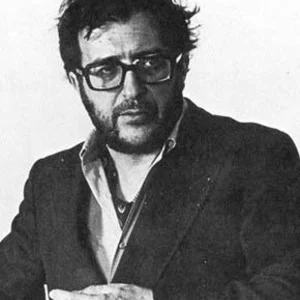

Luciano Berio (1925-2003) was an Italian composer, a major figure in contemporary music and the postwar avant-garde. A pioneer of electroacoustic music, he is known for his explorations of the human voice and his virtuosic instrumental writing.
Luciano Berio(1925 — 2003)
Luciano Berio
Italie, royaume d'Italie
6 min read
Frequently asked questions
Key Facts
- Born in 1925 in Oneglia (Imperia), Italy, into a family of musicians
- Founded the RAI Studio di Fonologia Musicale in Milan in 1955 with Bruno Maderna, dedicated to electronic music
- Began composing the Sequenze cycle in 1958, virtuosic solo pieces exploring the resources of each instrument
- Created Sinfonia (1968-1969) for orchestra and voices, an emblematic work blending musical quotations and a collage of texts
- Died in 2003 in Rome; he influenced several generations of musicians and taught at major institutions
Works & Achievements
Founding electroacoustic work that transforms the voice of Cathy Berberian reading Joyce; a milestone of tape music.
A set of fourteen pieces pushing each instrument to its technical and expressive limits; a major landmark of the modern repertoire.
A piece exploring the full range of human vocal sounds, from laughter to whisper, composed for Cathy Berberian.
A work for eight voices and orchestra, famous for its collage of musical and textual quotations; an emblem of musical postmodernism.
A work combining voices, instruments, and tape on a text by Edoardo Sanguineti, a meditation on Dante and memory.
An opera inspired by Italo Calvino, a reflection on listening, power, and theatre.
A vast work for voices and instruments blending folk songs from around the world with texts by Pablo Neruda.
A musical restoration of the sketches for Schubert's unfinished 10th symphony, in which Berio fills the gaps with his own writing.
Anecdotes
In 1944, the young Berio seriously injured his right hand while handling a weapon on the first day of his military service under the Republic of Salò. This injury prevented him from becoming a virtuoso pianist and steered him definitively toward composition.
For his series of solo pieces titled *Sequenza*, Berio wanted to push each instrument to its limits. The Sequenza III for voice asks the singer to laugh, cough, whisper and sing, exploring the entire range of human emotions in just a few minutes.
In his famous *Sinfonia* (1968), Berio layers fragments of dozens of works (Mahler, Bach, Debussy, Ravel) like a vast musical collage. Eight voices recite snippets of text all at once, creating an effect of crowds and collective memory.
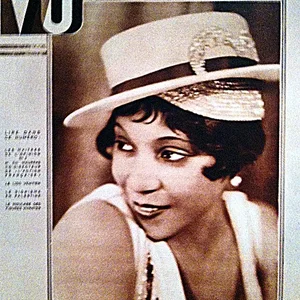
Berio was married to the American singer Cathy Berberian, whose extraordinary voice inspired many of his works. For her he composed pieces that demanded vocal feats never before asked of a classical performer.
In 1955, Berio founded with Bruno Maderna the Studio di Fonologia of Italian radio (RAI) in Milan, one of the first European laboratories dedicated to electronic music, where sounds were crafted using tape recorders and oscillators.
Primary Sources
Music is everything that one listens to with the intention of listening to music. It is a perpetual rediscovery and reinvention of the past.
I tried to capture and set to music the wide variety of vocal behaviors that characterize the human being, from articulate language to the most inarticulate sounds.
I never believed in the idea of an avant-garde that would destroy the past. The past is part of us; it lives in our very way of listening.
Key Places
Berio's birthplace on the Ligurian coast, where he grew up in a family of organists and musicians.
An electronic music laboratory founded by Berio and Maderna in 1955, a pioneer of electroacoustics in Italy.
A music research institute founded by Pierre Boulez, where Berio led the electroacoustics section in the 1970s.
A music production and research center founded by Berio in 1987, dedicated to new sound technologies.
The city where Berio directed the Accademia Nazionale di Santa Cecilia and where he died in 2003.
Typical Objects

A device that recorded sound onto magnetic tape, which could be cut and spliced to create new sounds. A central tool of the Studio di Fonologia in Milan.

An electronic sound generator that produced pure sound waves. It made it possible to create entirely new timbres, impossible to achieve with acoustic instruments.

A music notebook in which Berio wrote down virtuosic playing techniques and sometimes unusual graphic notation. Each Sequenza explores the limits of a solo instrument.

At the heart of Berio's research, the voice becomes an instrument in its own right, able to sing, whisper, laugh, or burst into inarticulate sounds.

Berio was also a renowned conductor, leading his own works and those of other composers. The baton extends his musical gesture before the musicians.

A desk used to blend and spatialize several sound sources, notably in the electroacoustic studios of IRCAM and Tempo Reale.
School Curriculum
Vocabulary & Tags
Key Vocabulary
Daily Life
Morning
Berio often began his days composing, pencil in hand on music paper, in the quiet of his studio. He placed great importance on reading, weaving literature, poetry, and linguistics into his musical thinking.
Afternoon
Afternoons were devoted to studio work, to sonic experimentation with tape recorders and electronic equipment, or to rehearsals with musicians. He talked a great deal with performers and writers, such as the poet Edoardo Sanguineti.
Evening
In the evening, Berio conducted concerts, attended premieres, or received friends and collaborators, including writers and composers. These intellectual exchanges fed his ever-evolving music.
Food
An Italian deeply attached to his country's culture, Berio enjoyed Mediterranean cooking, based on pasta, vegetables, olive oil, and wine from his native Liguria. Meals were occasions for conviviality and conversation.
Clothing
Berio wore the ordinary clothes of a 20th-century intellectual: suits, jackets, and understated shirts, without ostentation. His conductor's attire remained elegant but discreet.
Housing
He lived in several cities according to his posts — Milan, the United States, Paris, Florence, then Rome. At the end of his life, he resided in a large Tuscan estate, *Il Colombaio*, near Siena.