Medieval Turkish Sofra
The sofra (a cloth spread on the ground) of the Karakhanid Turks organizes the meal around a few staples: nan (flatbread, omnipresent), ash or tuttmaç (soups and noodle broths, the daily foundation), et (boiled or roasted meat, a marker of celebration and hospitality), fermented or dried dairy products (qurut, ayran, qımız) that accompany every meal, and beverages. There is no sequential service: dishes are set out together, and each person serves themselves by hand or with a wooden spoon.
Signature : Fat-Tailed Sheep Tail Fat (quyruq yağı)
Fat-tailed sheep tail fat is the principal cooking fat of medieval Central Asian Turkish cuisine. Al-Kashgari documents several terms related to fat-tailed sheep in the Dîwân. This melting fat, with its pronounced, slightly smoky flavor, serves as both a cooking medium, a condiment, and a preservative. It radically distinguishes this cuisine from Mediterranean olive oil traditions or Indian clarified butter.
Mahmoud al-Kashgari at the table
1005 — 1102
5 period recipes
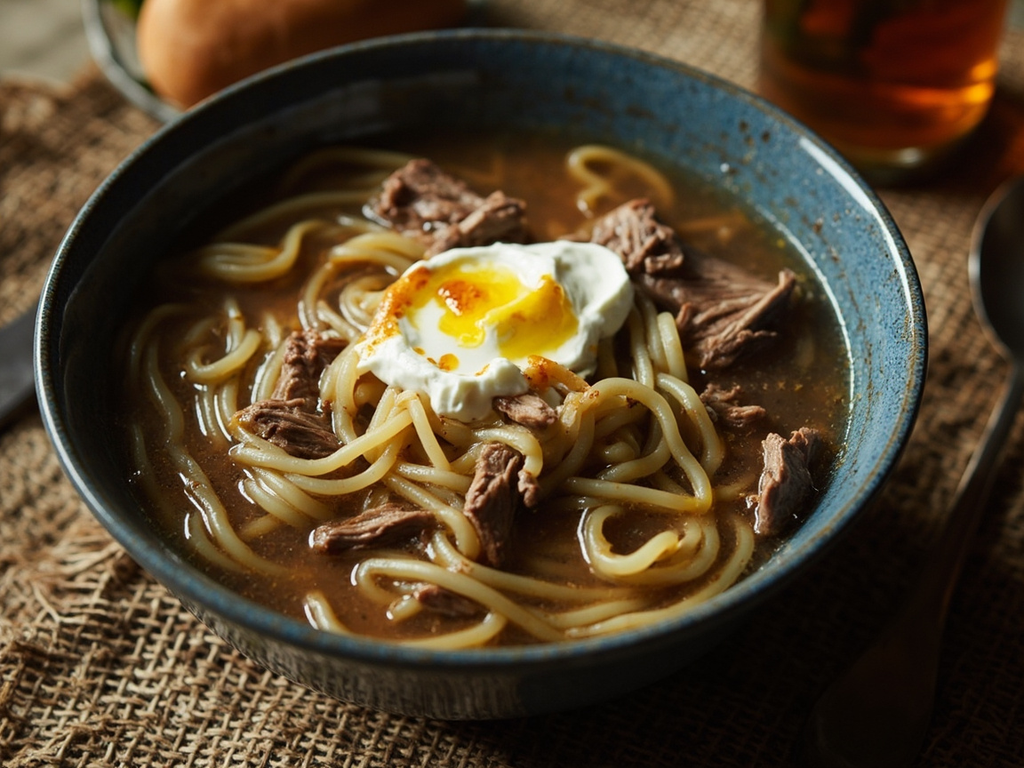 Everyday
Tuttmaç
Ash (soup-meal)
🧂 🍄 🍋· 1 h 45
View the recipe
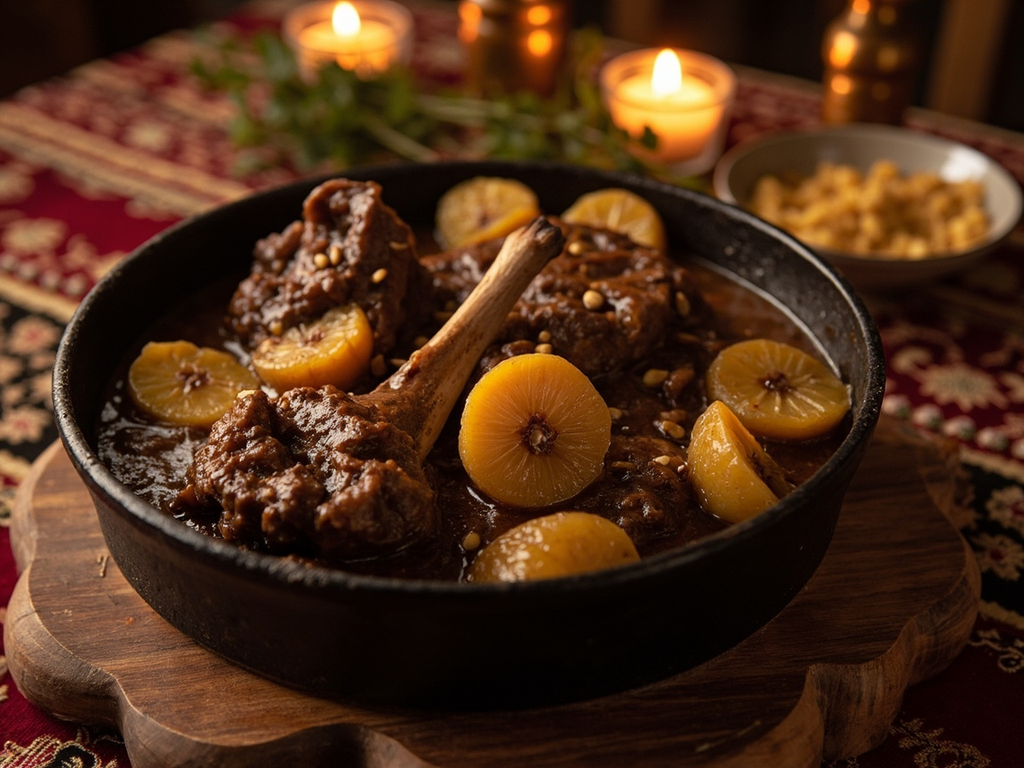 Festive
Lamb Qovurma with Quinces
Et (meat dish)
🧂 🌶️ 🍯· 1 h 45
View the recipe
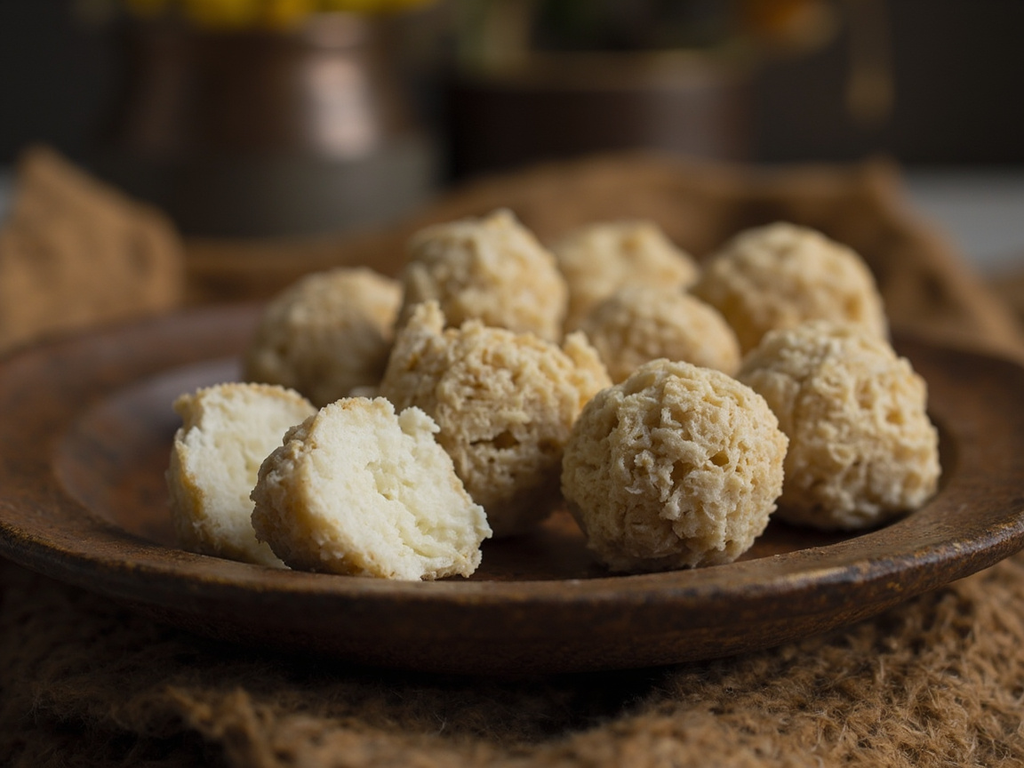 Preserving
Qurut
Süt (dairy product)
🍋 🧂 🫙· 30 min + 3-7 days drying
View the recipe
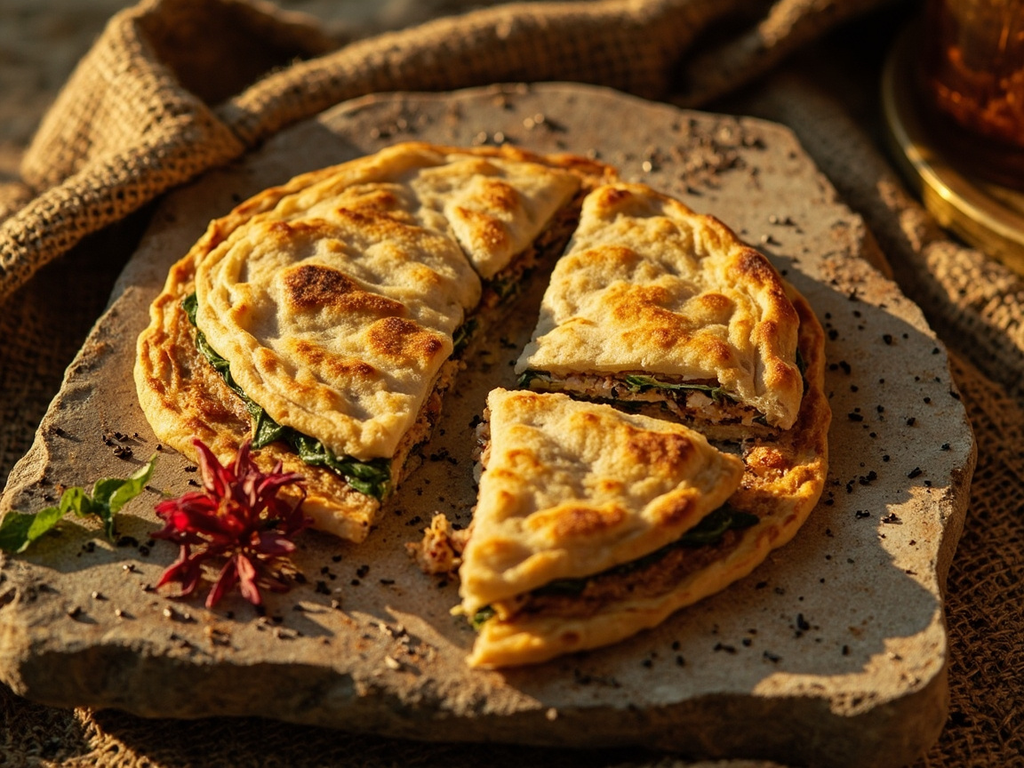 Travel
Herbed Yupqa
Nan (bread / dough)
🧂 🌶️· 1 h
View the recipe
 Drink
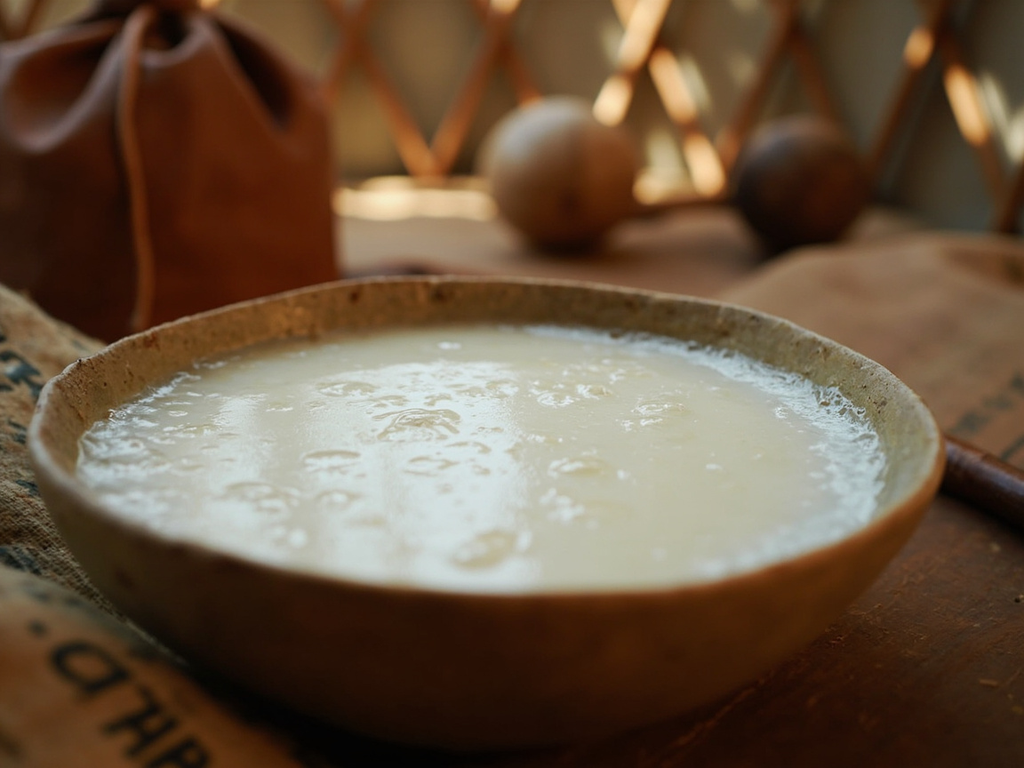
DrinkQımız
İçecek (beverage)
🍋 🫙· 15 min + 24-48 h fermentation
View the recipe