 flip
flipQımız
Qımız
Why this dish? Qımız (fermented mare's milk) is one of the most powerful cultural markers of the Turkic peoples documented by al-Kashgari. Originally from Barskhan, on the shore of Lake Issyk-Kul, he grew up in a region of horse breeding where this drink was daily. The Dîwân mentions vocabulary related to the horse and its products, including mare's milk.
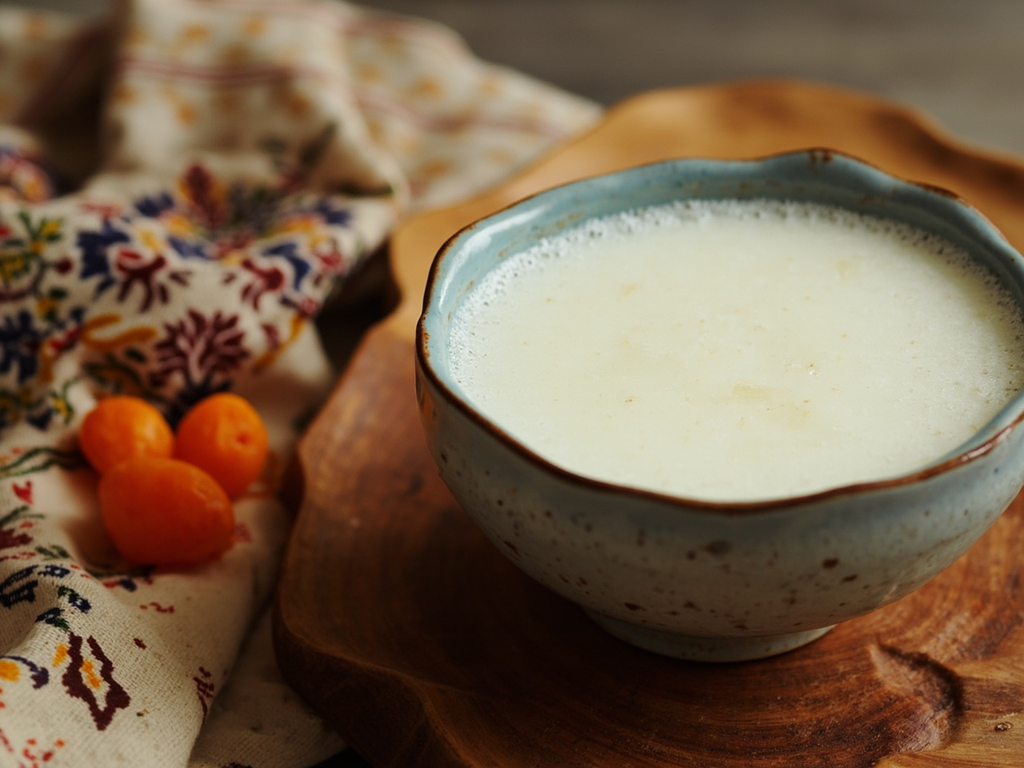
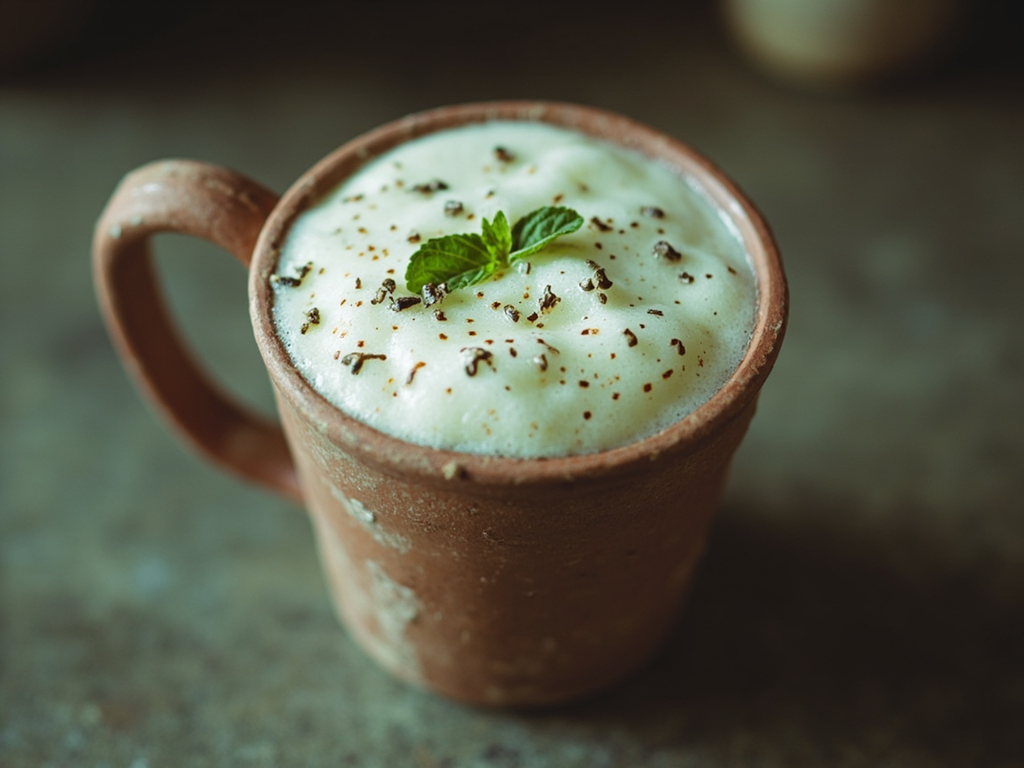
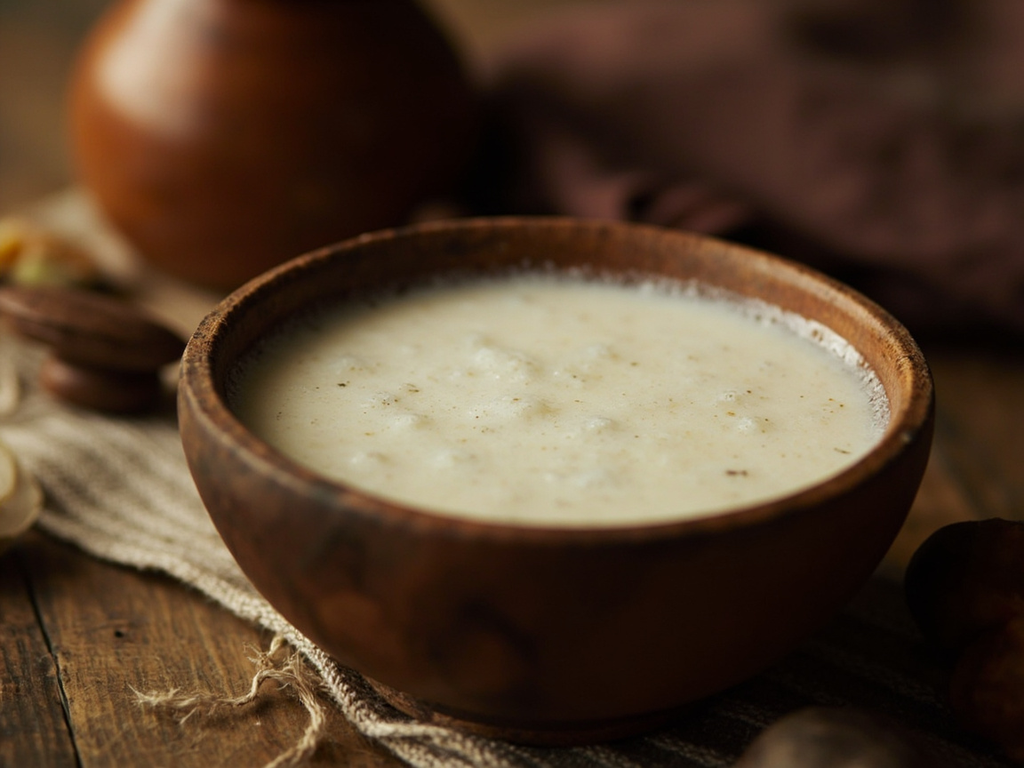
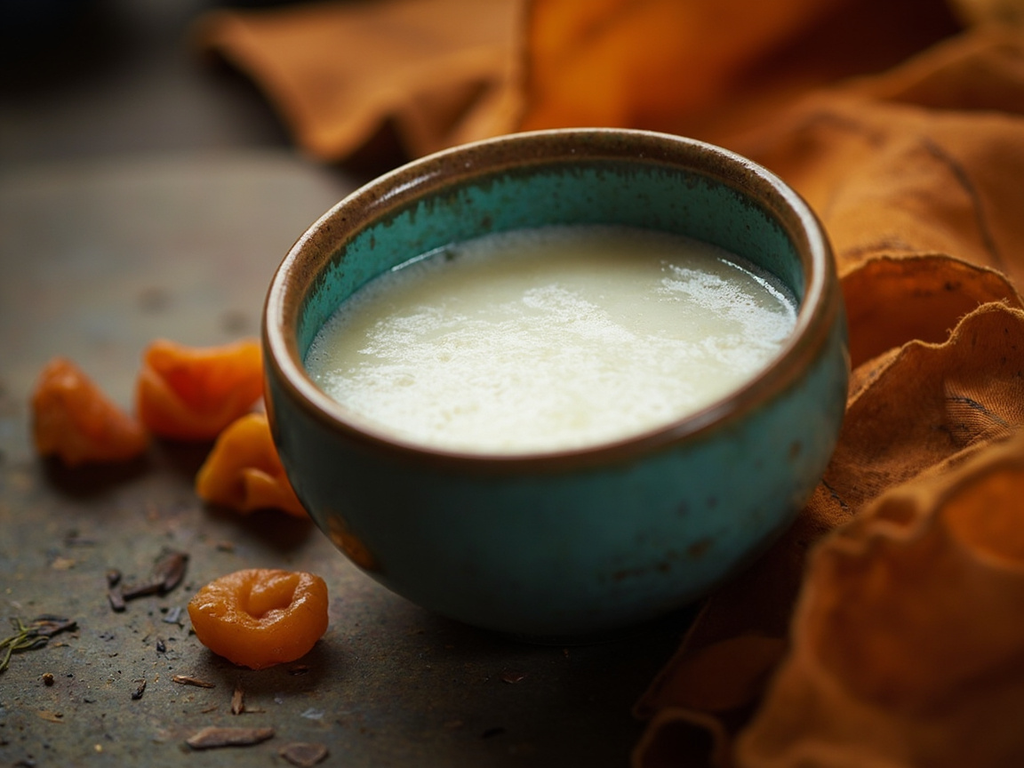
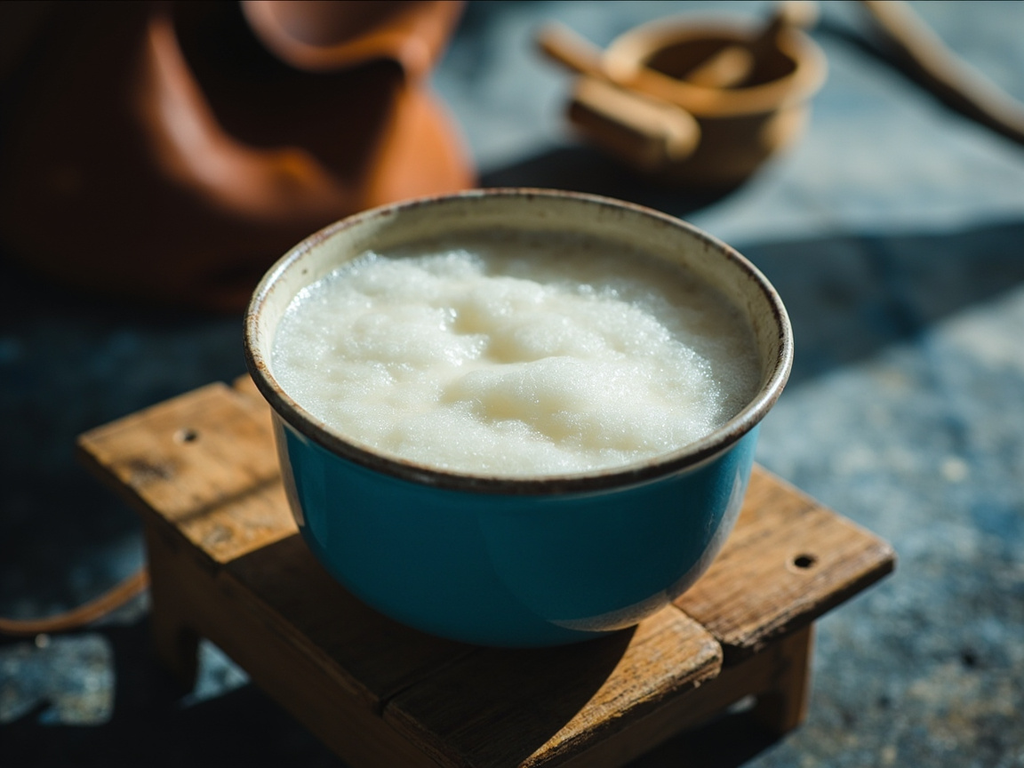
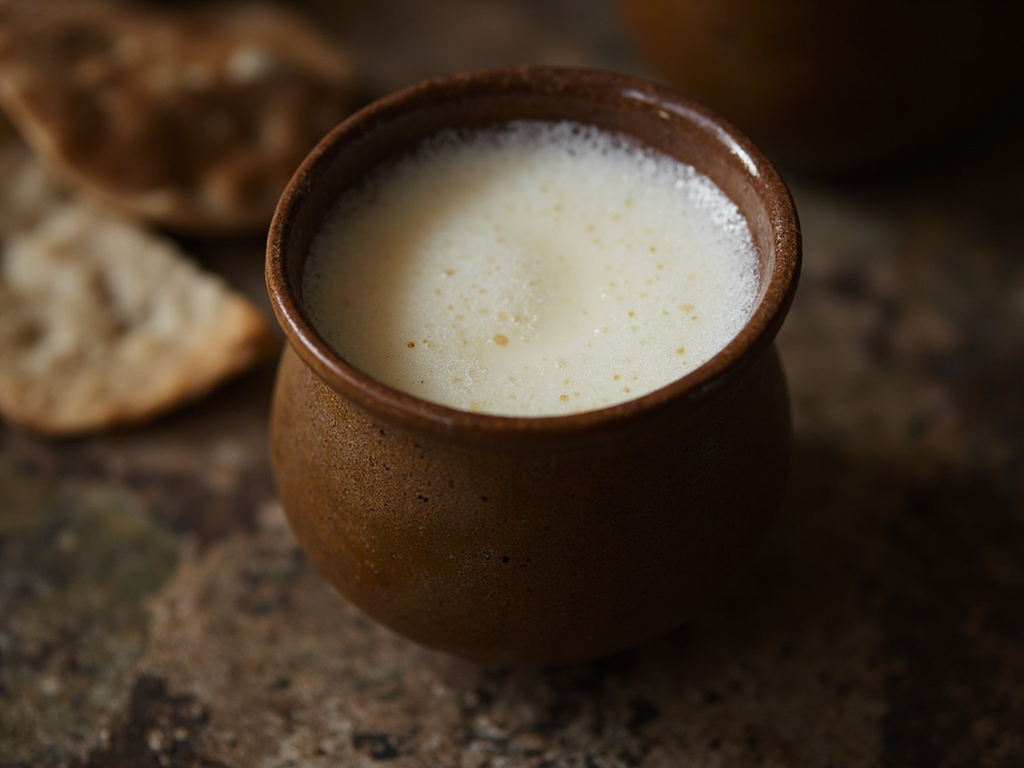
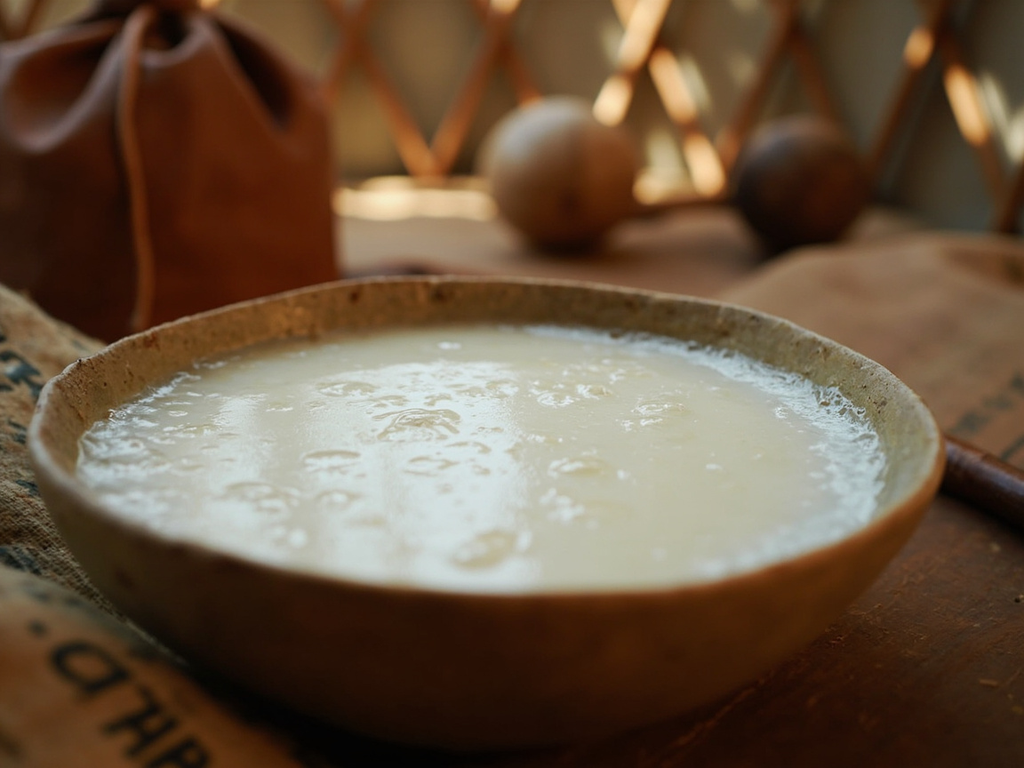
A slightly fizzy, tangy drink obtained by fermenting mare's milk, churned in a leather pouch for several hours. The national drink of the Turkish nomads, it is nourishing, refreshing, and mildly alcoholic. A modern adaptation is possible with cow's milk and kefir.
Among all the Turkish peoples I have visited, there is none that does not drink qımız. In Barskhan, where my family comes from, mares graze on the pastures of the great lake, and the women milk and churn the milk in leather pouches all day. The more it is churned, the more it sparkles on the tongue and gladdens the heart. It is the drink that gives strength to the rider and clarity to the scholar. The Arabs of Baghdad do not know it — I had to explain this word to them, and they were astonished that one could drink the milk of a mare.
- •Fresh mare's milk — a full skin bag (base)
- •Previous qımız starter — a ladleful (inoculation)
Qımız
A slightly fizzy, tangy drink obtained by fermenting mare's milk, churned in a leather pouch for several hours. The national drink of the Turkish nomads, it is nourishing, refreshing, and mildly alcoholic. A modern adaptation is possible with cow's milk and kefir.
Why this dish? Qımız (fermented mare's milk) is one of the most powerful cultural markers of the Turkic peoples documented by al-Kashgari. Originally from Barskhan, on the shore of Lake Issyk-Kul, he grew up in a region of horse breeding where this drink was daily. The Dîwân mentions vocabulary related to the horse and its products, including mare's milk.
Among all the Turkish peoples I have visited, there is none that does not drink qımız. In Barskhan, where my family comes from, mares graze on the pastures of the great lake, and the women milk and churn the milk in leather pouches all day. The more it is churned, the more it sparkles on the tongue and gladdens the heart. It is the drink that gives strength to the rider and clarity to the scholar. The Arabs of Baghdad do not know it — I had to explain this word to them, and they were astonished that one could drink the milk of a mare.
Ingredients (period version)
- Fresh mare's milk — a full skin bag (base)
- Previous qımız starter — a ladleful (inoculation)
Ingredients
- Fresh whole milk (cow or goat) — 1 liter (base)
- Milk kefir grains — 30 g (starter (substitute for qımız starter))
- Liquid honey (optional) — 1 tbsp (sweeten to balance acidity)
Method
- Warm the milk to 30°C (barely warm to the touch).
- Add the kefir grains to a clean glass jar. Pour the warm milk over them.
- Cover with a cloth secured with a rubber band (no airtight lid: fermentation produces gas).
- Let ferment at room temperature (20-25°C) for 24-48 hours, gently shaking the jar 2-3 times a day to mimic traditional churning.
- When the milk has thickened, is slightly fizzy, and tastes distinctly sour, strain out the kefir grains using a plastic sieve (not metal).
- Add honey if desired to sweeten. Bottle and refrigerate.
- Serve chilled in a bowl. Store the kefir grains in the refrigerator in a little milk for the next batch.
How it was made : Qımız (koumiss) is attested among Turkish and Mongol peoples since antiquity. Herodotus already mentioned the fermentation of mare's milk among the Scythians. Al-Kashgari lived in a region where the horse was central. Fermentation was done in leather pouches (saba) churned regularly — constant movement being key to lactic and slightly alcoholic fermentation. Real mare's milk qımız is still made in Kyrgyzstan and Kazakhstan.
The contemporary twist : Serve in a small rustic ceramic bowl with an ice cube and a fresh mint leaf, like a Central Asian milky lemonade.
Sources : Mahmoud al-Kashgari, Dîwân Lughât al-Turk (1072-1074) · Peter B. Golden, An Introduction to the History of the Turkic Peoples, Harrassowitz, 1992
Mahmoud al-Kashgari · Charactorium