 Flip the card
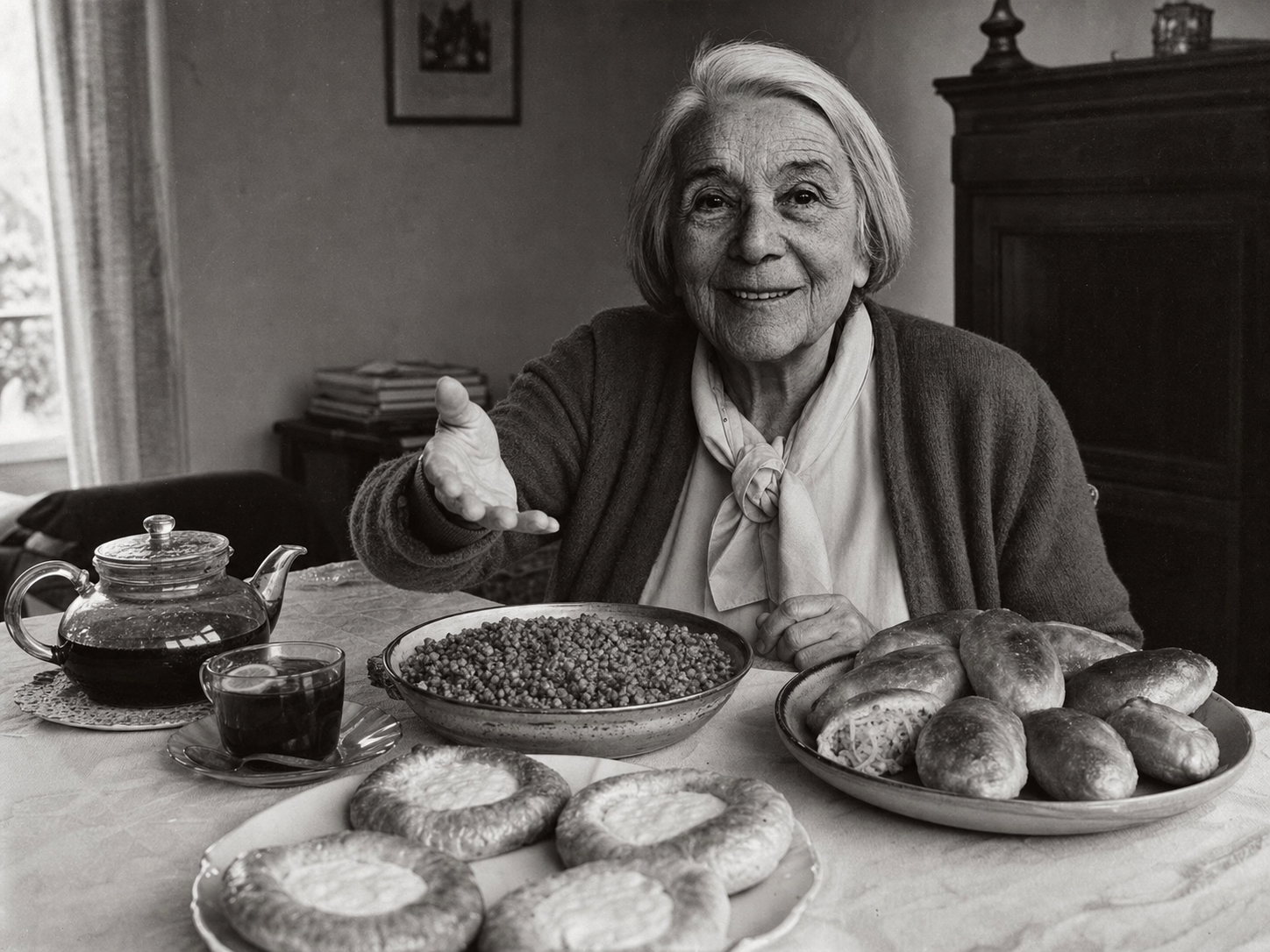
Nathalie Sarraute at the table
1900 — 1999
On the menu
Russian Tea and Its Accompaniments (Parisian Style)
In émigré Russian families like Sarraute's, meals were not organized around the starter-main-dessert grid, but around a central core: tea, served at length, originally from the samovar, then from a teapot in Parisian apartments. Everything revolves around it — the zakouski (small savory bites taken before or during), the porridge and pasta dishes that nourish daily, and the sweets (jams, sweetened quark) nibbled cup after cup while talking. Conversation, more than the table, is the real main course.
Signature : Buckwheat (gretchka) and Jam-in-Tea
Two markers of domestic Russian cuisine: toasted buckwheat, the everyday Slavic grain with a nutty, roasted flavor; and the habit of taking a spoonful of jam (varenye) not spread but melted into the tea or eaten separately between sips of the hot brew. Two gestures that the Russian childhood of a Parisian from the 16th arrondissement does not forget.
click to flip back
Nathalie Sarraute at the table
1900 — 1999
5 period recipes
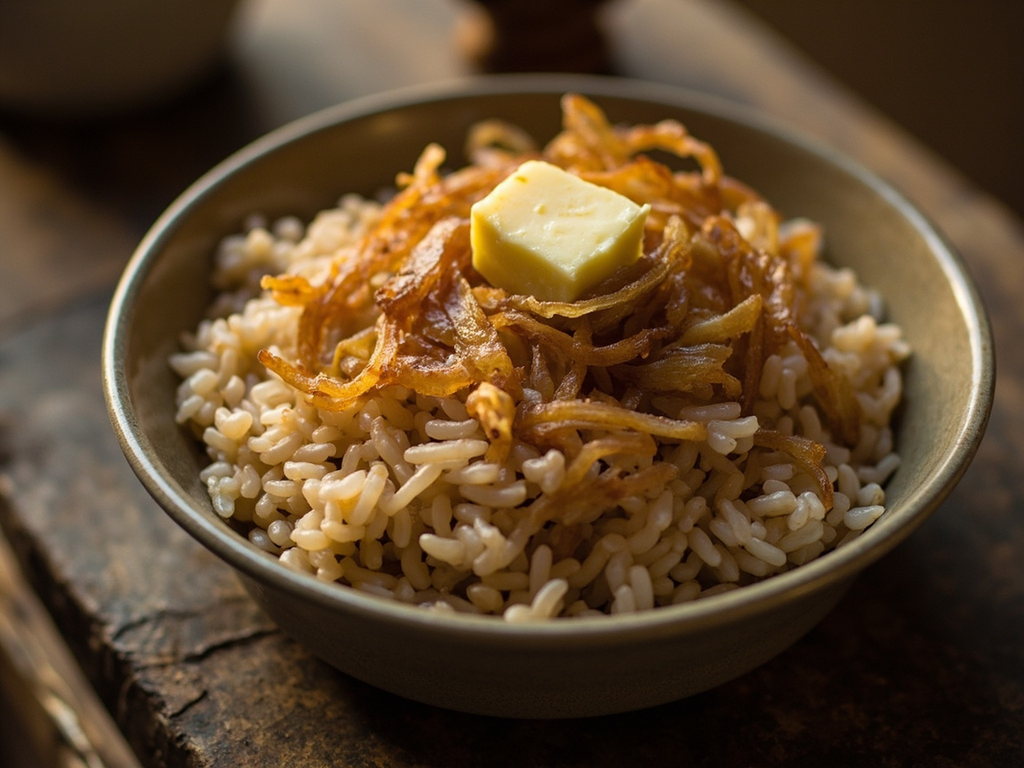 Everyday
Buckwheat Kasha
Everyday Porridge Dish (kasha)
🍄 🧂· 30 min
View the recipe
 Travel
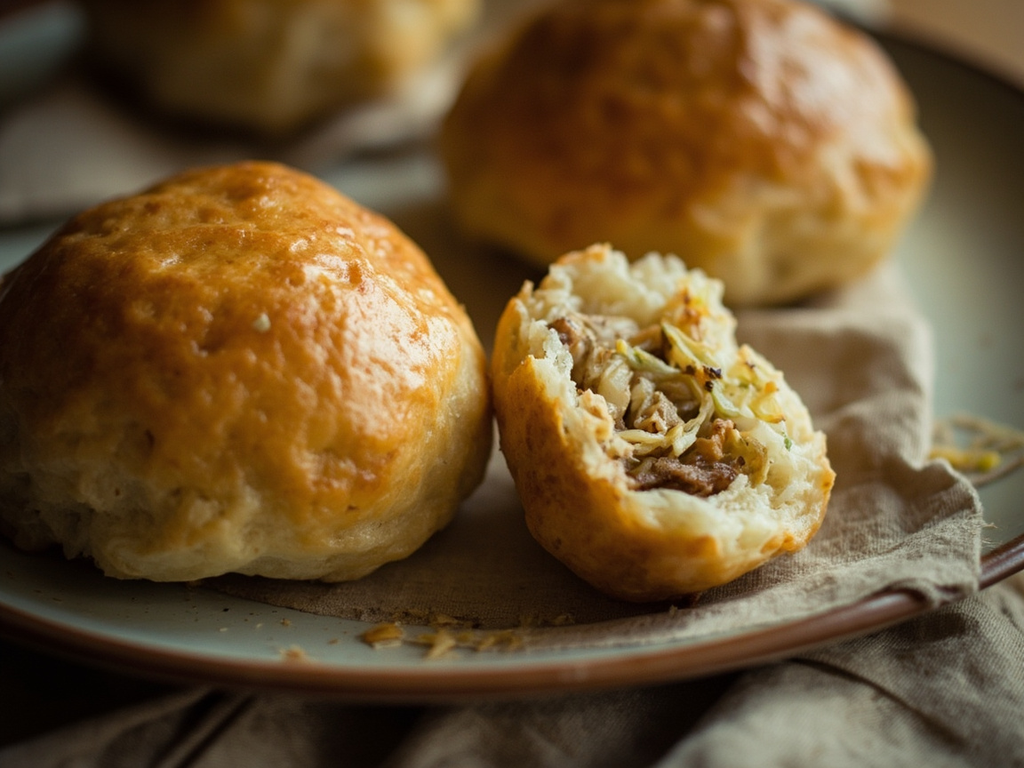
Cabbage Pirozhki
Zakouska / Stuffed Hand-Held Pastry (pirojki)
🧂 🍄· 2 h (including rising)
View the recipe
 Festive
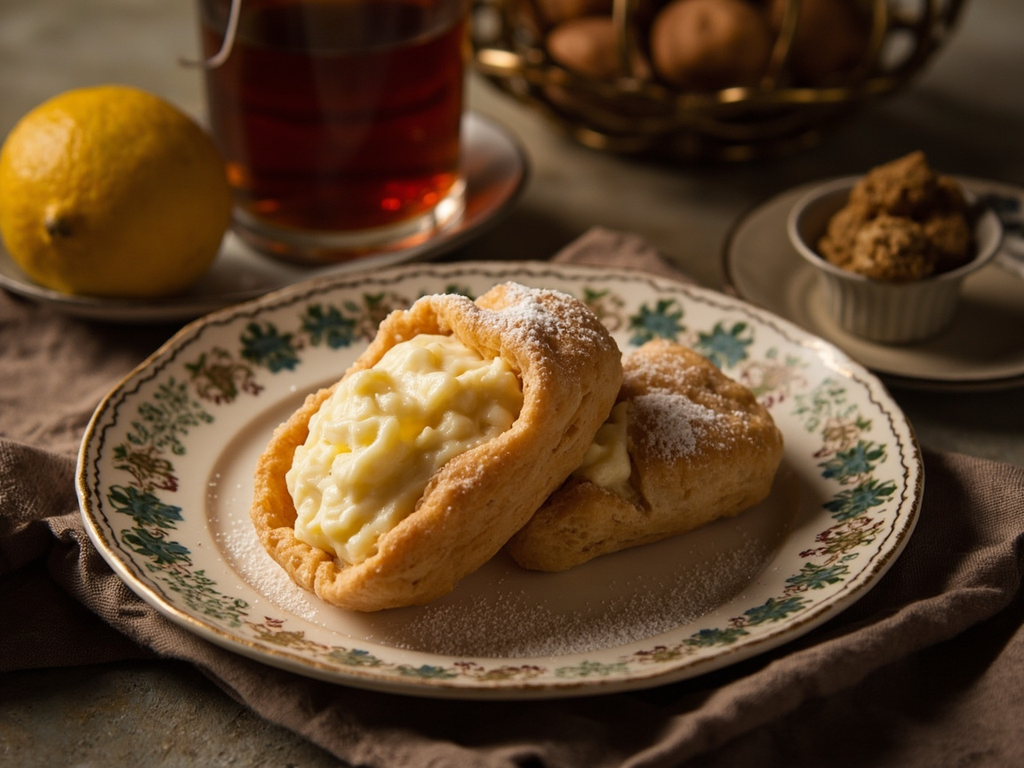
Quark Vatrushka
Tea Sweet (Russian style)
🍯· 2 h 30 (including rising)
View the recipe
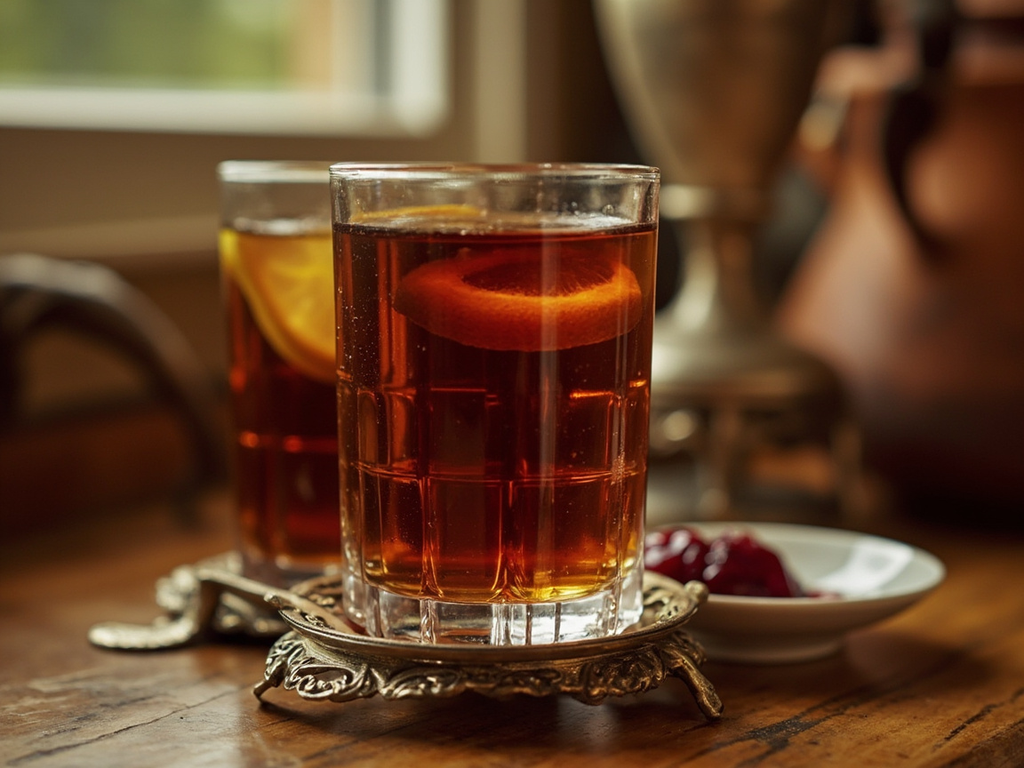 Drink
DrinkRussian Black Tea with Lemon
Meal-Anchor Beverage (tchaï)
☕ 🍋· 10 min
View the recipe
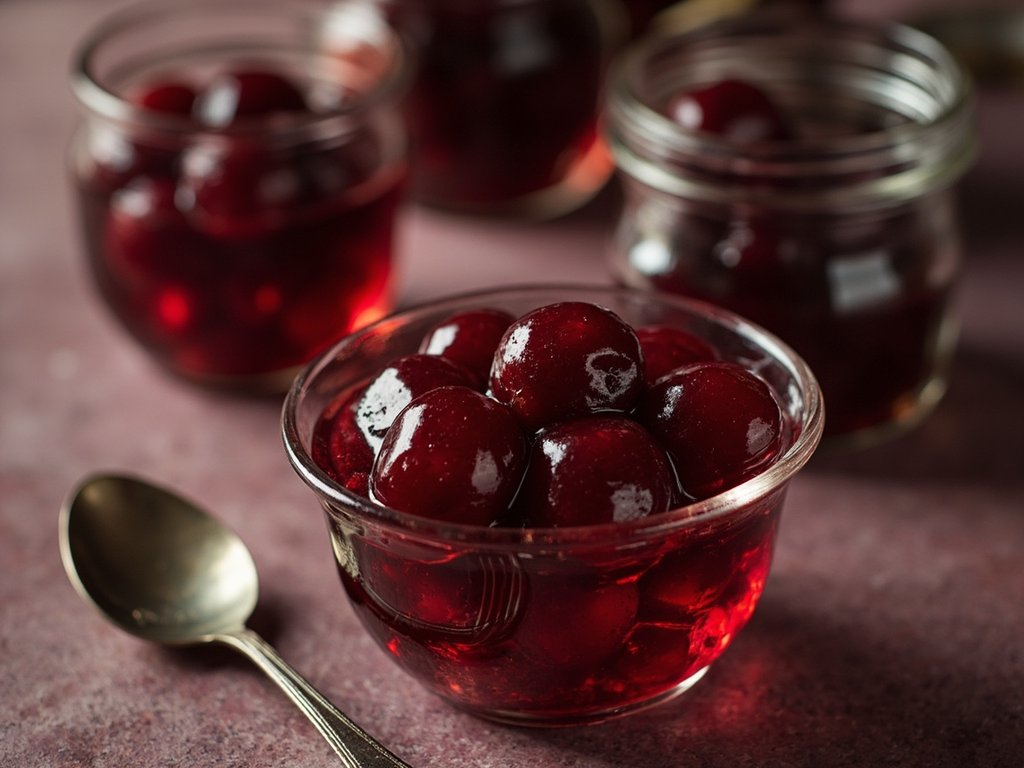 Preserving
Sour Cherry Varenye
Pantry Sweet Preserve (varenye)
🍯 🍋· 50 min
View the recipe