 flip
flipBuckwheat Kasha
Buckwheat Kasha
Why this dish? Born in Ivanovo-Voznesensk in the Russian Empire, Sarraute grew up with Slavic flavors before her Parisian exile. Buckwheat kasha is the quintessential domestic Russian dish: plain, nourishing, unpretentious — exactly the simple, moderate table attributed to her, where the quality of the moment mattered more than that of the place setting.
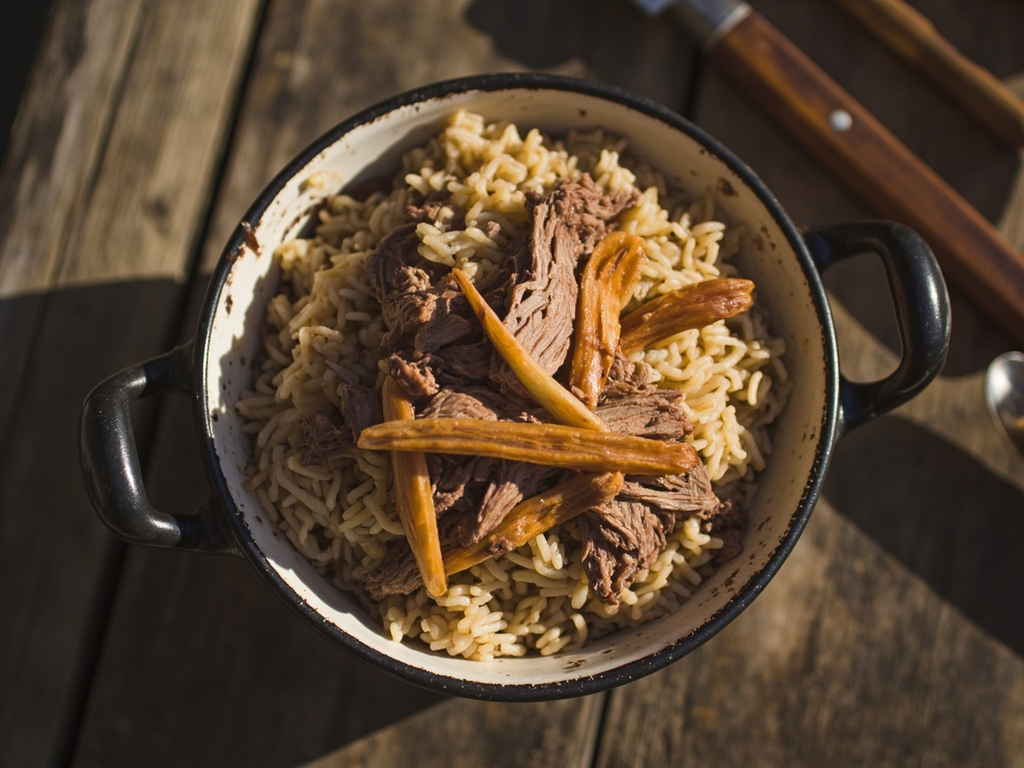
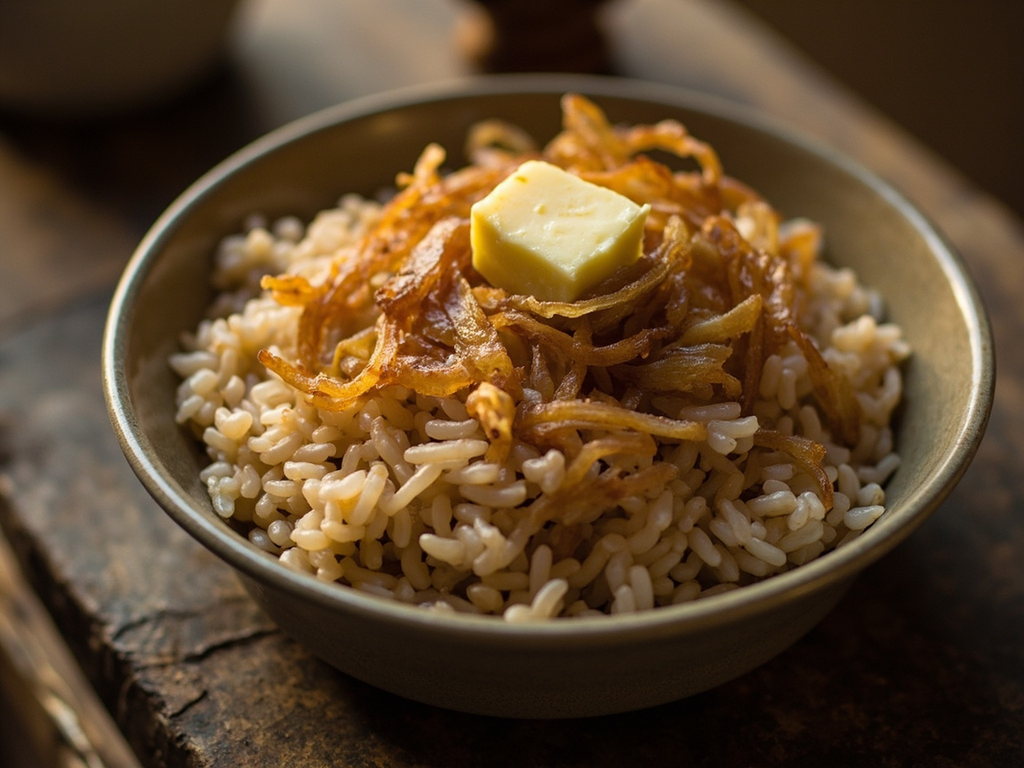
A porridge of toasted buckwheat groats, plumped in broth, bound with a little butter. Rustic, comforting, with a deep roasted nutty flavor. Eaten alone, or as an accompaniment to an egg, mushrooms, or caramelized onions.
You know, it's nothing, almost nothing: little brown grains that you make sing in the pan until a nutty smell rises — and already something stirs, deep down, a memory from before Paris. My mother would pour the boiling water all at once, the grain hissed, we covered it, we waited without lifting the lid. A knob of butter at the last moment, and that's it. You don't say it's good, you say nothing; you eat, and you go on talking.
- •Buckwheat groats (gretchka) — one bowl (base grain)
- •Water or broth — twice the volume of grain (cooking liquid)
- •Butter — a good knob (binding and fat)
- •Salt — to taste (seasoning)
- •Egg (optional) — 1 (traditional binder before cooking)
Buckwheat Kasha
A porridge of toasted buckwheat groats, plumped in broth, bound with a little butter. Rustic, comforting, with a deep roasted nutty flavor. Eaten alone, or as an accompaniment to an egg, mushrooms, or caramelized onions.
Why this dish? Born in Ivanovo-Voznesensk in the Russian Empire, Sarraute grew up with Slavic flavors before her Parisian exile. Buckwheat kasha is the quintessential domestic Russian dish: plain, nourishing, unpretentious — exactly the simple, moderate table attributed to her, where the quality of the moment mattered more than that of the place setting.
You know, it's nothing, almost nothing: little brown grains that you make sing in the pan until a nutty smell rises — and already something stirs, deep down, a memory from before Paris. My mother would pour the boiling water all at once, the grain hissed, we covered it, we waited without lifting the lid. A knob of butter at the last moment, and that's it. You don't say it's good, you say nothing; you eat, and you go on talking.
Ingredients (period version)
- Buckwheat groats (gretchka) — one bowl (base grain)
- Water or broth — twice the volume of grain (cooking liquid)
- Butter — a good knob (binding and fat)
- Salt — to taste (seasoning)
- Egg (optional) — 1 (traditional binder before cooking)
Ingredients
- Hulled buckwheat (kasha) — 200 g (base grain)
- Chicken or vegetable broth — 400 ml (cooking liquid)
- Butter — 30 g (binding and fat)
- Salt and pepper — to taste (seasoning)
- Onion — 1, sliced (caramelized garnish (optional))
Method
- Toast the buckwheat in a dry pan over medium heat for 3–4 minutes, stirring, until it smells nutty.
- Pour the boiling broth over the grain (watch for splashes), add salt, cover.
- Reduce heat to low and let absorb for 12–15 minutes without lifting the lid.
- Remove from heat, stir in butter, cover again, and let rest for 5 minutes.
- Serve as is, or with golden caramelized onions.
How it was made : In Russian households, raw buckwheat was often mixed with a beaten egg before drying in the pan: this separated the grains to yield a 'rassypchataya' (crumbly, non-sticky) kasha. The samovar heated nearby, ready for the tea that followed.
The contemporary twist : A spoonful of sautéed wild mushrooms and a drizzle of smetana (sour cream) on top: the kasha becomes an author's dish, as spare as a line of Nouveau Roman.
Sources : Elena Molokhovets, *A Gift to Young Housewives* (Подарок молодым хозяйкам), classic of Russian domestic cuisine, 19th c.
Nathalie Sarraute · Charactorium