Sofre (سفره)
The medieval Persian meal is laid out on the sofre, a cloth spread on the floor or a carpet. First comes nan (flatbread), the foundation of the meal, followed by accompaniments: an âsh (thick soup), torshi (pickled condiments), and mâst (yogurt). On ordinary days, the meal remains frugal. On feast days, a polow (enriched rice) and lamb kabâb are added. Sharbat (sweet aromatic drink) accompanies or ends the meal. Sweets like halvâ appear during celebrations or as offerings to visitors. The structure is not sequential like in France: everything is set out together and each person helps themselves freely.
Signature : Rose water (golâb) and saffron (za'farân)
The rose water-saffron duo is the aromatic signature of classic Persian cuisine. Saffron, harvested in Khorasan and Qaen, colors and perfumes festive dishes with a deep gold. Rose water, distilled from the roses of Shiraz and Kashan, softens sweets and drinks. In Nizami's time, these two ingredients were at once culinary, medicinal, and poetic — saffron symbolized joy and suffering, the rose love and the ephemeral.
Nizami Ganjavi at the table
1141 — 1209
4 period recipes
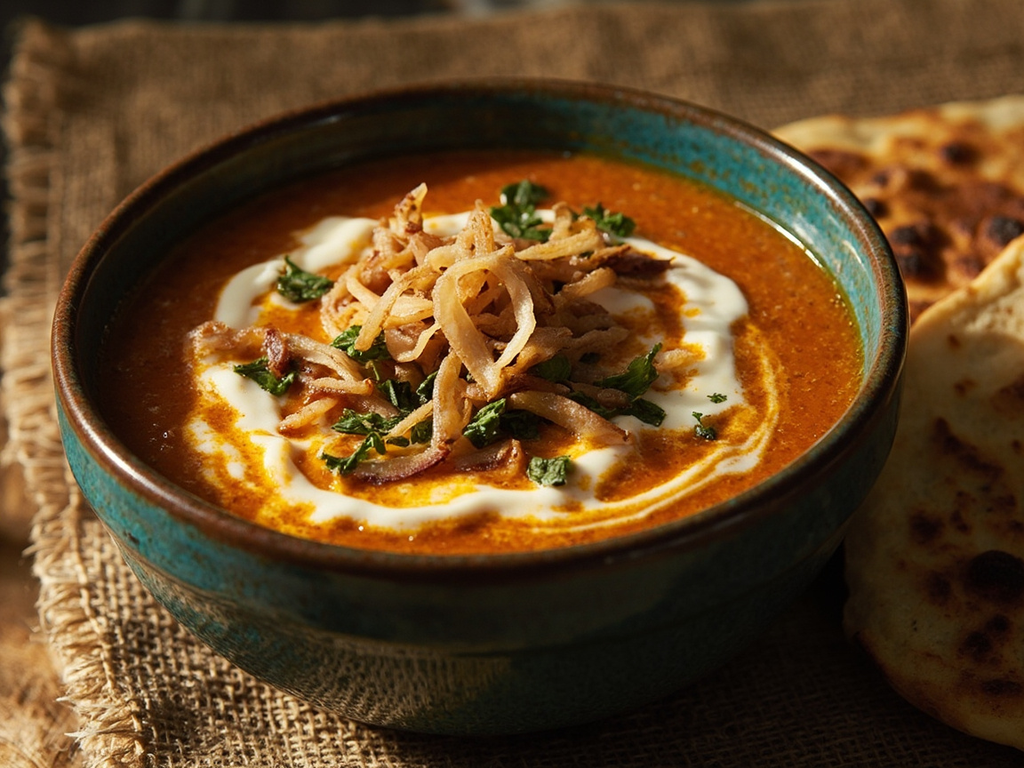 Everyday
Âsh-e reshte (آش رشته)
Âsh (thick soup)
🧂 🍋 🫙· 1 h 15
View the recipe
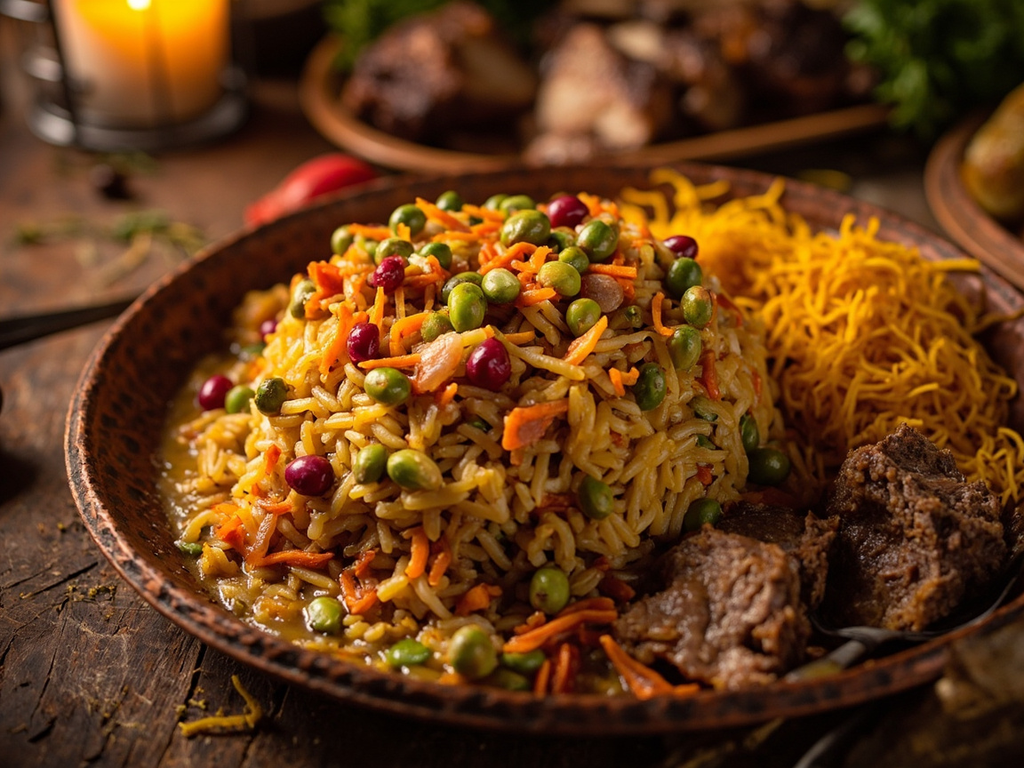 Festive
Polow-e morâssâ' (پلو مرصع) — Jeweled Rice
Polow (enriched festive rice)
🍯 🧂 🌶️· 2 h 30
View the recipe
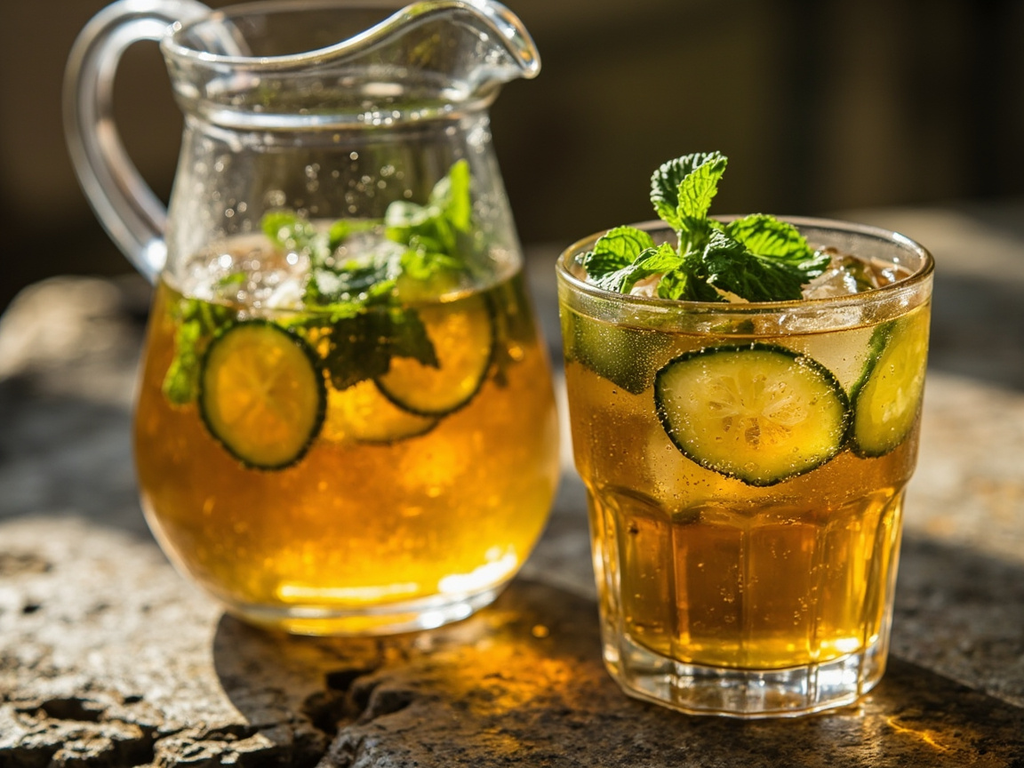 Drink
DrinkSharbat-e sekanjabin (شربت سکنجبین)
Sharbat (aromatic drink)
🍯 🍋· 20 min + infusion
View the recipe
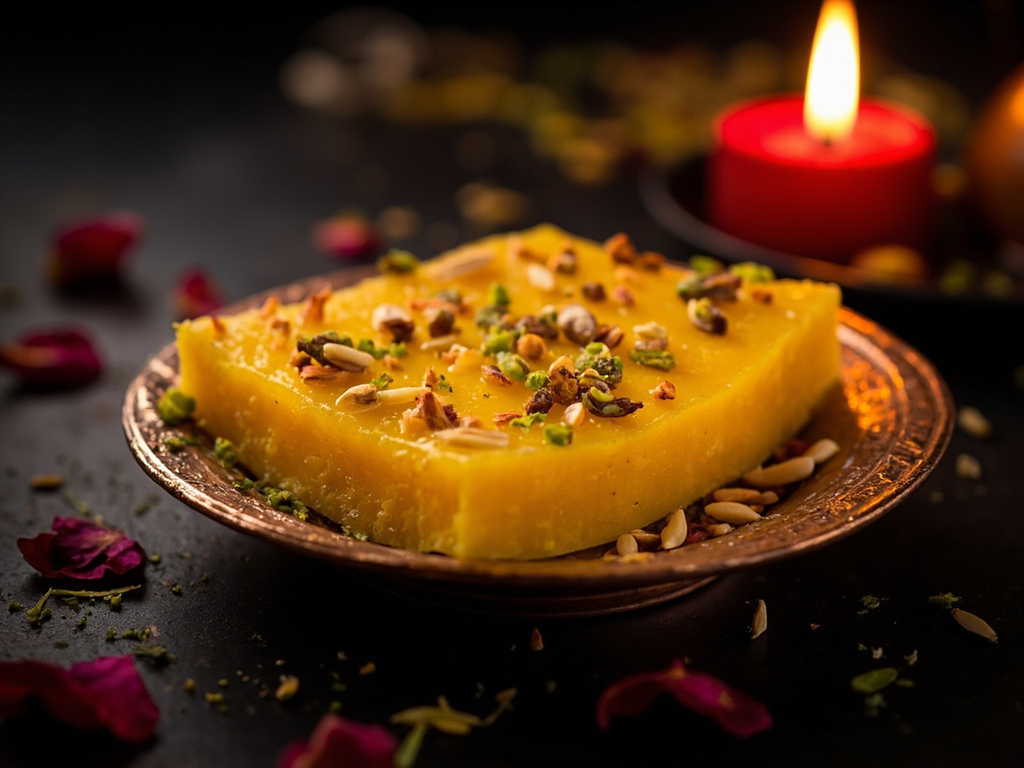 Offering
Halvâ-ye ârd (حلوای آرد) — Flour Halva
Halvâ (ritual sweet)
🍯 🌶️· 45 min
View the recipe