 flip
flipÂsh-e reshte (آش رشته)
Âsh-e reshte (آش رشته)
Why this dish? Nizami led a sedentary scholar's life in Ganja, devoted to writing and meditation. Âsh-e reshte, a nourishing soup of legumes and noodles, is the everyday meal par excellence for the Persian man of letters: inexpensive, filling, easy to reheat between writing sessions. The noodles (reshte) symbolize in Persian tradition the threads of destiny — a direct echo of the themes of the Khamsa.
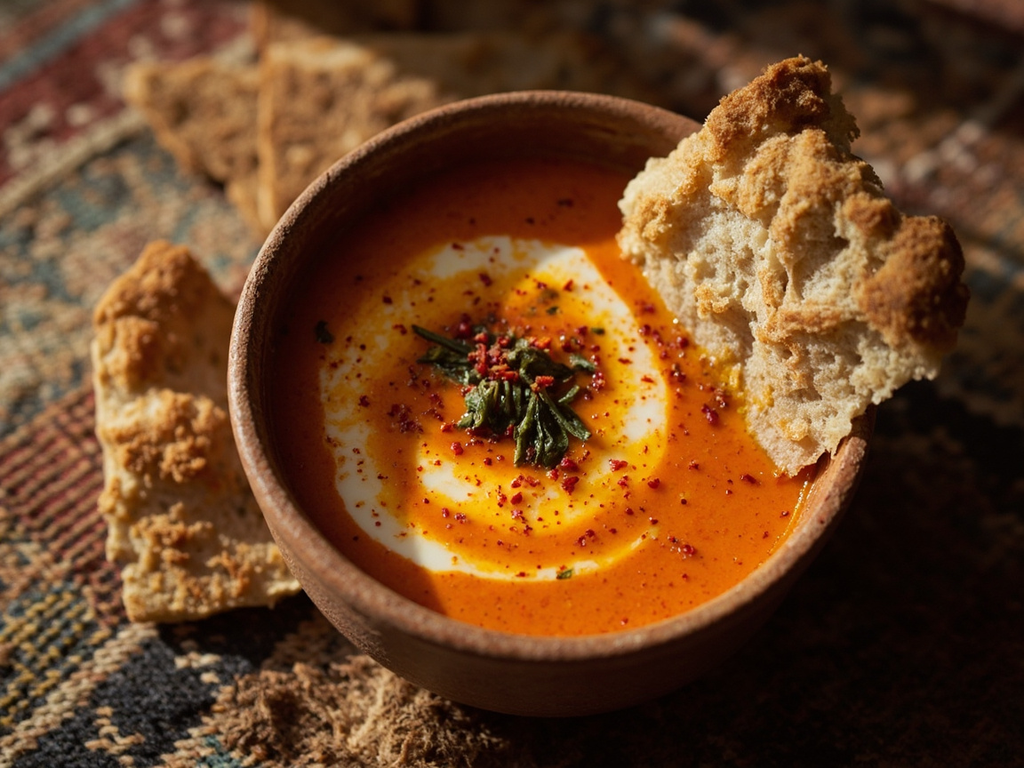
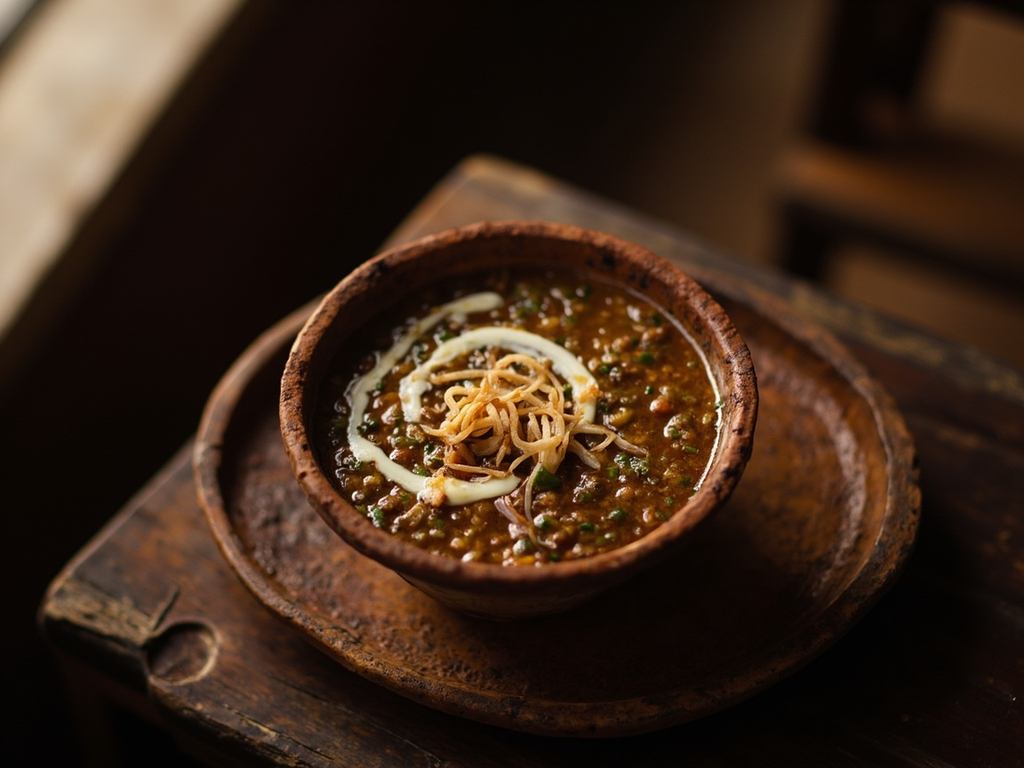
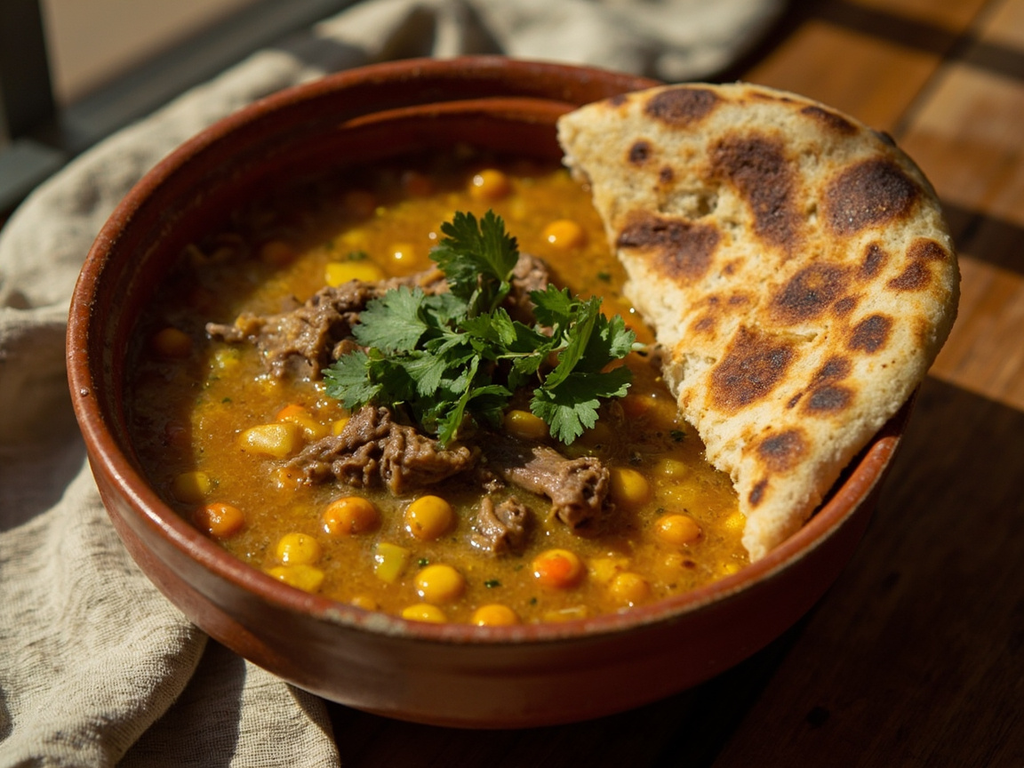
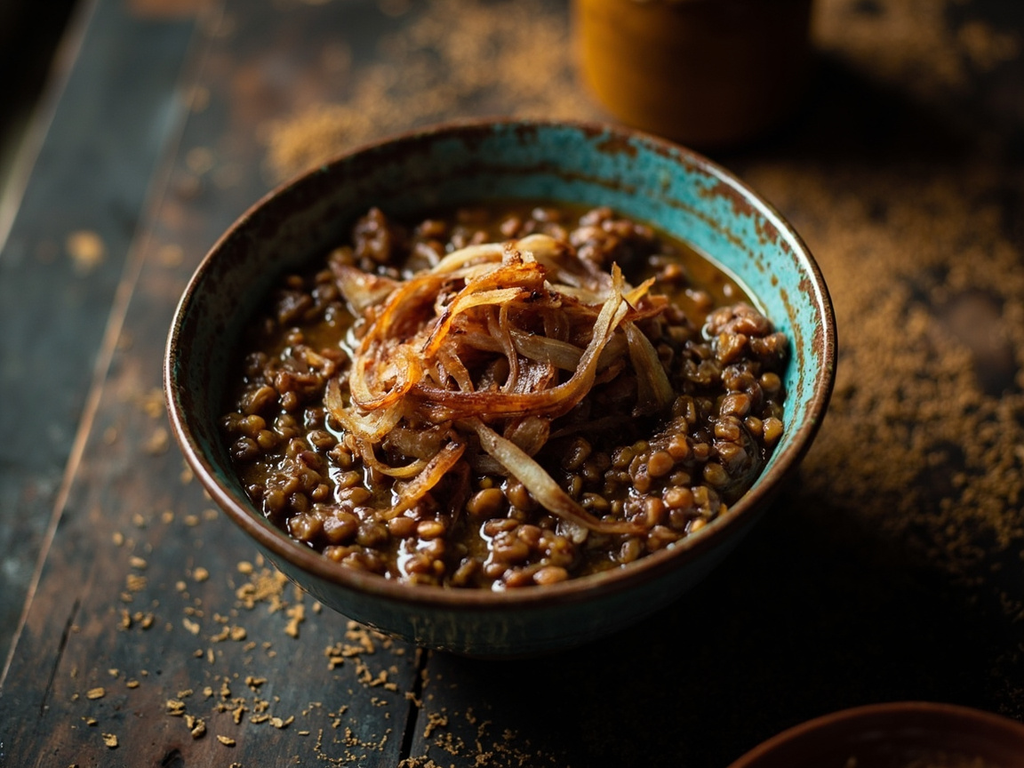
Thick soup of lentils, chickpeas, and white beans, bound with flat noodles, perfumed with dried mint and turmeric, served with kashk (fermented whey) and fried onions. A complete winter dish that stands alone with bread.
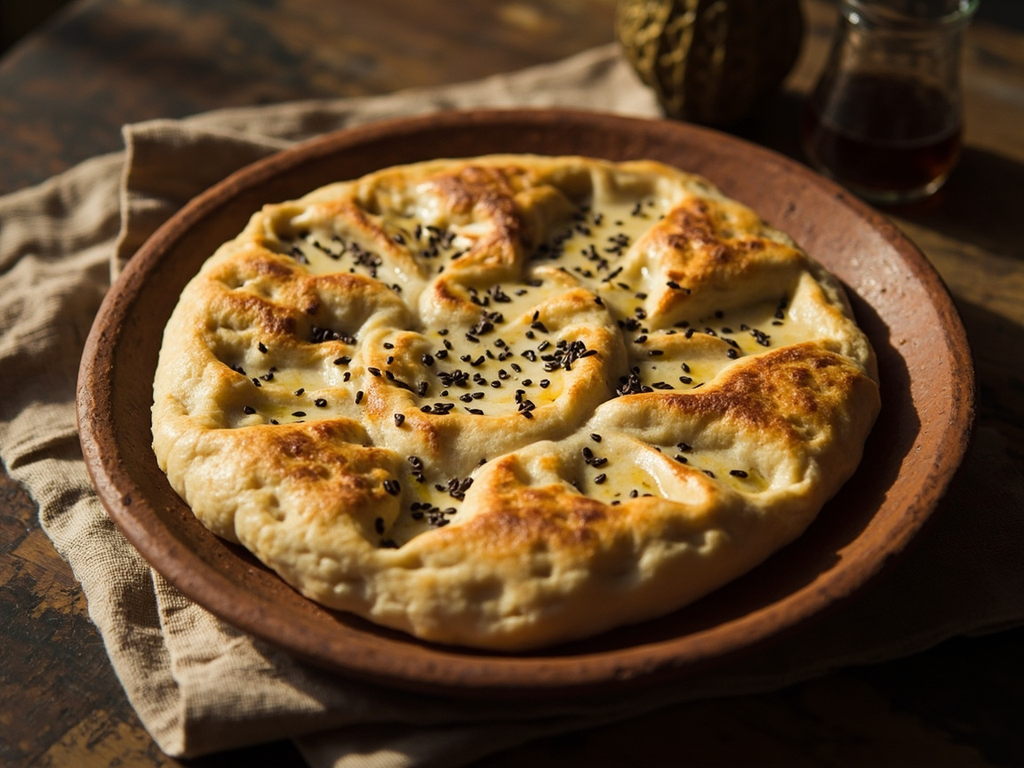
Friend, if you pass through my door on a winter evening, you will smell the âsh simmering in the copper pot — lentils, peas, garden herbs, all tied together by those ribbons of dough that the women of Ganja stretch between their fingers. The kashk poured in a white thread over the dark surface is the moon on an inky sky, and I never resist dipping a piece of warm nan into it. They say that he who breaks the reshte in the bowl also breaks the thread of his fortune — so I wind them carefully around my spoon, as I wind my verses around meaning.
- •Brown lentils — a generous handful (protein base)
- •Dried chickpeas — half a handful, soaked overnight (legume)
- •Dried white beans (dolma) — half a handful, soaked overnight (legume)
- •Flat wheat noodles (reshte) — a handful (starch, binder)
- •Onions — two, sliced (aromatic base)
- •Spinach or chard — one bunch (greens)
- •Fresh parsley and cilantro — a handful of each (herbs)
- •Dried mint (na'nâ) — a pinch (flavor)
- •Turmeric — a pinch (color, warmth)
- •Kashk (dried fermented whey) — one piece, diluted (acidity, creaminess)
- •Sesame oil or tail fat — a drizzle (cooking)
- •Salt — to taste (seasoning)
Âsh-e reshte (آش رشته)
Thick soup of lentils, chickpeas, and white beans, bound with flat noodles, perfumed with dried mint and turmeric, served with kashk (fermented whey) and fried onions. A complete winter dish that stands alone with bread.
Why this dish? Nizami led a sedentary scholar's life in Ganja, devoted to writing and meditation. Âsh-e reshte, a nourishing soup of legumes and noodles, is the everyday meal par excellence for the Persian man of letters: inexpensive, filling, easy to reheat between writing sessions. The noodles (reshte) symbolize in Persian tradition the threads of destiny — a direct echo of the themes of the Khamsa.
Friend, if you pass through my door on a winter evening, you will smell the âsh simmering in the copper pot — lentils, peas, garden herbs, all tied together by those ribbons of dough that the women of Ganja stretch between their fingers. The kashk poured in a white thread over the dark surface is the moon on an inky sky, and I never resist dipping a piece of warm nan into it. They say that he who breaks the reshte in the bowl also breaks the thread of his fortune — so I wind them carefully around my spoon, as I wind my verses around meaning.
Ingredients (period version)
- Brown lentils — a generous handful (protein base)
- Dried chickpeas — half a handful, soaked overnight (legume)
- Dried white beans (dolma) — half a handful, soaked overnight (legume)
- Flat wheat noodles (reshte) — a handful (starch, binder)
- Onions — two, sliced (aromatic base)
- Spinach or chard — one bunch (greens)
- Fresh parsley and cilantro — a handful of each (herbs)
- Dried mint (na'nâ) — a pinch (flavor)
- Turmeric — a pinch (color, warmth)
- Kashk (dried fermented whey) — one piece, diluted (acidity, creaminess)
- Sesame oil or tail fat — a drizzle (cooking)
- Salt — to taste (seasoning)
Ingredients
- Brown lentils — 100 g (protein base)
- Canned chickpeas — 200 g drained (legume)
- Canned white beans — 200 g drained (legume)
- Reshteh or broken linguine — 100 g (starch)
- Onions — 2 medium (aromatic base)
- Fresh spinach — 200 g (greens)
- Flat-leaf parsley — 30 g (herbs)
- Fresh cilantro — 20 g (herbs)
- Dried mint — 1 tbsp (flavor)
- Ground turmeric — 1 tsp (color)
- Liquid kashk (or Greek yogurt) — 100 ml (sour garnish)
- Olive oil — 3 tbsp (cooking)
- Salt — to taste (seasoning)
Method
- Rinse the lentils and place them in a large pot with 1.5 liters of water. Bring to a boil, then cook for 20 minutes over medium heat.
- Meanwhile, finely slice the onions. Sauté two-thirds of them in olive oil over medium heat until golden brown. Reserve the remaining third for garnish.
- Add turmeric to the browned onions, stir for 30 seconds, then pour everything into the pot with the lentils.
- Chop the spinach, parsley, and cilantro. Add them to the pot along with the drained chickpeas and white beans. Cook for 15 minutes.
- Add the noodles broken into 5 cm pieces. Cook for another 10 minutes, stirring regularly to prevent sticking.
- Fry the remaining onions in a drizzle of oil until crispy and dark brown. Set aside. In the same pan, fry the dried mint in a little oil for 30 seconds.
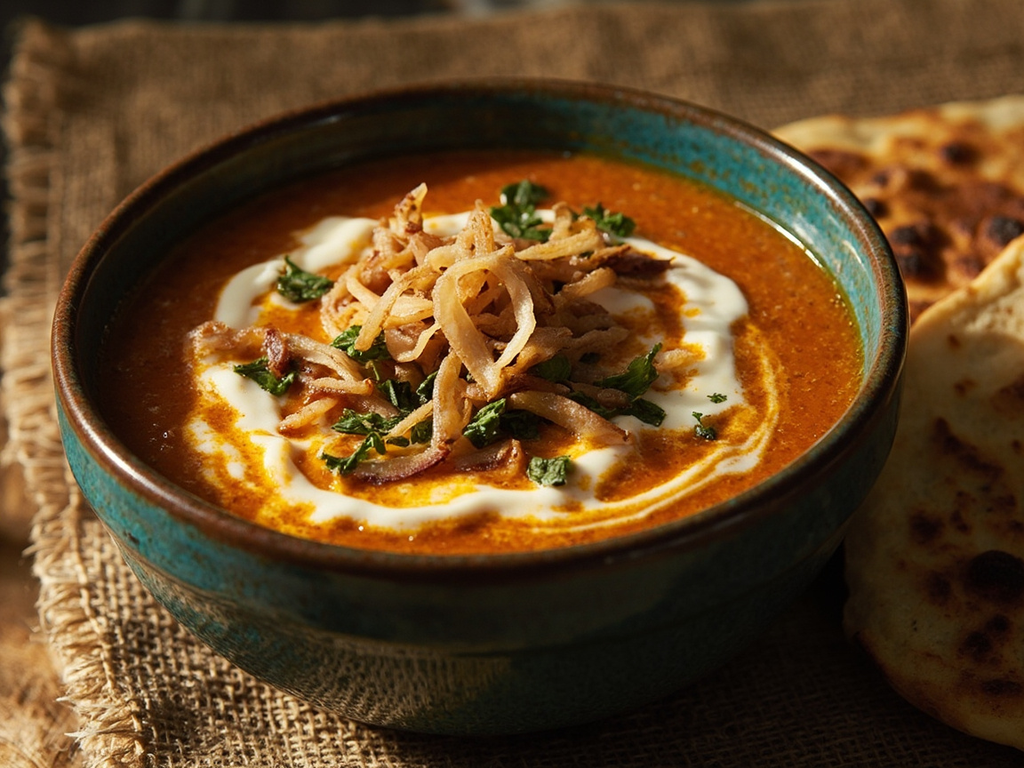
- Serve the soup in bowls, garnish with kashk (or thinned yogurt), fried onions, and mint in oil.
How it was made : Âsh is one of the oldest dishes in Persian cuisine, mentioned in culinary texts as early as the 10th century. Noodles (reshte) likely arrived in Persia via Central Asian trade routes. Kashk, fermented whey dried into balls, allowed dairy proteins to be preserved year-round. In Nizami's time, sheep's tail fat (donbe) was the main cooking fat.
The contemporary twist : Serve in a turquoise ceramic bowl evoking the faience of Kashan, with a spiral of kashk and a few fresh mint leaves.
Sources : Charles Perry, “Medieval Arab Cookery” (medieval Persian soup recipes) · Najaf Daryabandari, “Ketâb-e mostattâb-e âshpazi” (Persian culinary encyclopedia)
Nizami Ganjavi · Charactorium