 flip
flipHalvâ-ye ârd (حلوای آرد) — Flour Halva
Halvâ-ye ârd (حلوای آرد) — Flour Halva
Why this dish? Nizami tragically lost his three successive wives — each was mourned in his verses. In Persian tradition, halvâ is inseparable from mourning and commemoration ceremonies: it is prepared for nazr (votive offering) and to honor the memory of the departed. This dense halvâ perfumed with saffron and cardamom is what the neighbors of Ganja would have brought to the poet's house in grief.
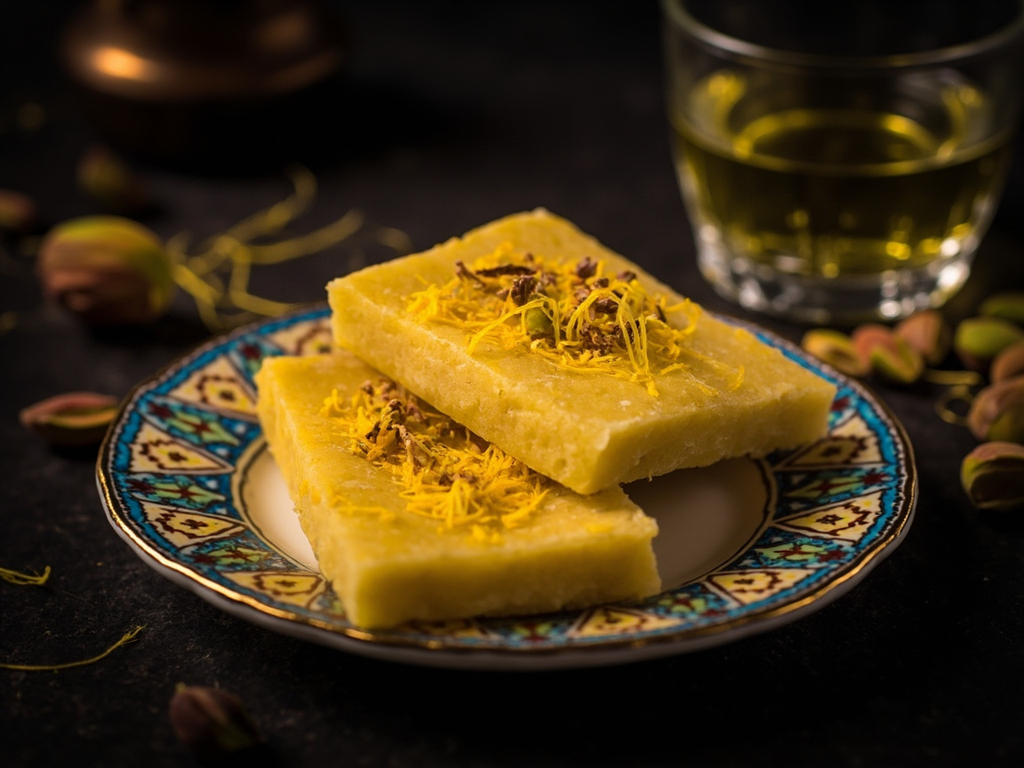
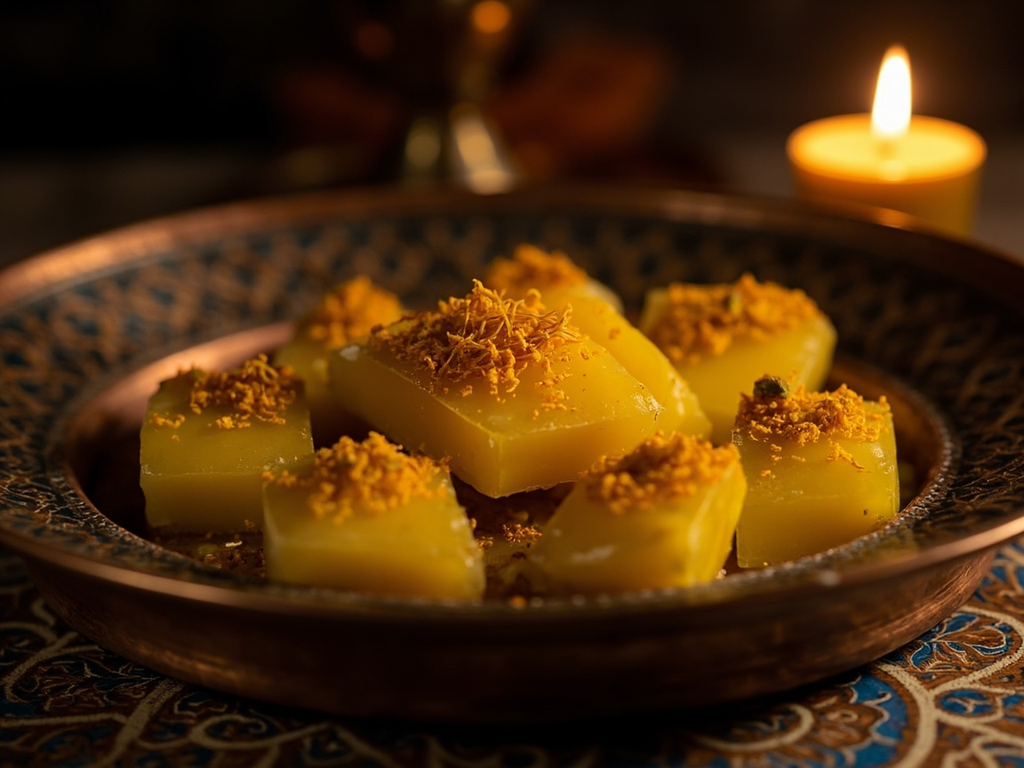
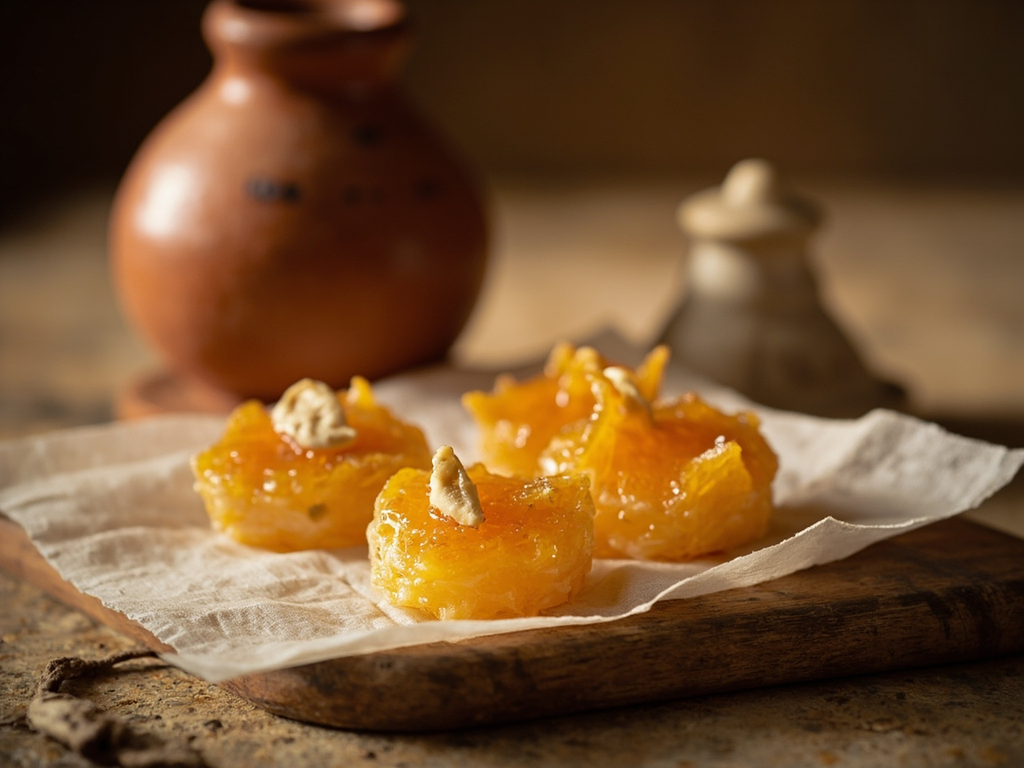
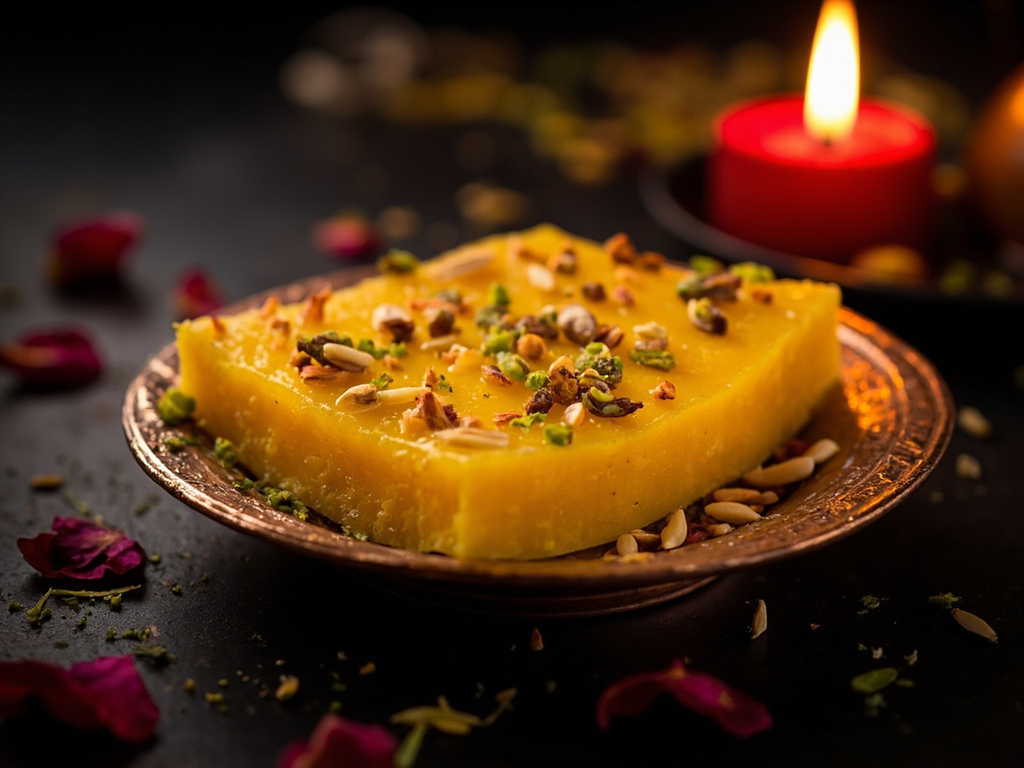
Dense and silky sweet made from wheat flour toasted in butter, bound with sugar syrup perfumed with saffron, rose water, and cardamom. Served in diamond shapes decorated with almonds and pistachios.
When Afâq, my beloved, left this world, the women of Ganja came knocking at my door with their arms full of halvâ. That fragrance of golden flour in butter, of saffron and rose — it is the very smell of grief turning into sweetness. It is distributed so that the soul of the departed may still taste a little of the tenderness of the living. I in turn offer it to anyone who crosses my threshold, for halvâ, you see, is the poetry of hands — it asks only for patience and a low fire, like mourning itself.
- •Wheat flour — two handfuls (base)
- •Clarified butter (roghan) — a good measure (cooking, richness)
- •Sugar or honey — one measure (sweetener)
- •Rose water (golâb) — a drizzle (flavor)
- •Saffron — a pinch (color, flavor)
- •Cardamom — a few crushed seeds (spice)
- •Almonds and pistachios — a handful (decoration)
Halvâ-ye ârd (حلوای آرد) — Flour Halva
Dense and silky sweet made from wheat flour toasted in butter, bound with sugar syrup perfumed with saffron, rose water, and cardamom. Served in diamond shapes decorated with almonds and pistachios.
Why this dish? Nizami tragically lost his three successive wives — each was mourned in his verses. In Persian tradition, halvâ is inseparable from mourning and commemoration ceremonies: it is prepared for nazr (votive offering) and to honor the memory of the departed. This dense halvâ perfumed with saffron and cardamom is what the neighbors of Ganja would have brought to the poet's house in grief.
When Afâq, my beloved, left this world, the women of Ganja came knocking at my door with their arms full of halvâ. That fragrance of golden flour in butter, of saffron and rose — it is the very smell of grief turning into sweetness. It is distributed so that the soul of the departed may still taste a little of the tenderness of the living. I in turn offer it to anyone who crosses my threshold, for halvâ, you see, is the poetry of hands — it asks only for patience and a low fire, like mourning itself.
Ingredients (period version)
- Wheat flour — two handfuls (base)
- Clarified butter (roghan) — a good measure (cooking, richness)
- Sugar or honey — one measure (sweetener)
- Rose water (golâb) — a drizzle (flavor)
- Saffron — a pinch (color, flavor)
- Cardamom — a few crushed seeds (spice)
- Almonds and pistachios — a handful (decoration)
Ingredients
- Wheat flour — 200 g (base)
- Butter — 150 g (cooking)
- Granulated sugar — 200 g (syrup)
- Water — 250 ml (syrup)
- Rose water — 3 tbsp (flavor)
- Saffron threads — 1 pinch (color)
- Ground cardamom — 1 tsp (spice)
- Slivered almonds — 30 g (decoration)
- Chopped pistachios — 30 g (decoration)
Method
- Prepare the syrup: dissolve the sugar in water over low heat. Add the saffron infused in 1 tbsp hot water and the cardamom. Simmer for 5 minutes. Add the rose water off the heat. Set aside.
- In a wide, heavy pan, melt the butter over medium heat. Add the flour all at once and stir constantly with a wooden spatula.
- Continue stirring for 15 to 20 minutes: the flour should turn blonde, then golden, releasing a nutty fragrance. Do not stop stirring to prevent burning.
- When the flour is well golden, pour the hot syrup in a stream while stirring vigorously. Be careful of splatters. The paste will thicken quickly.
- Continue stirring for 3 to 4 minutes until you have a smooth, homogeneous mass that pulls away from the sides.
- Pour into an oiled or parchment-lined dish. Smooth the surface, decorate with almonds and pistachios, pressing lightly.
- Let cool completely before cutting into diamonds.
How it was made : Flour halvâ is one of the oldest sweets of the Iranian world, attested in Abbasid culinary texts. The word halvâ comes from Arabic ḥulw (sweet). In medieval Persia, halvâ had a dual function: festive confection and funerary offering. The ritual of nazr (pious vow accompanied by distributed food) almost always included halvâ, a tradition that continues in Iran and Azerbaijan.
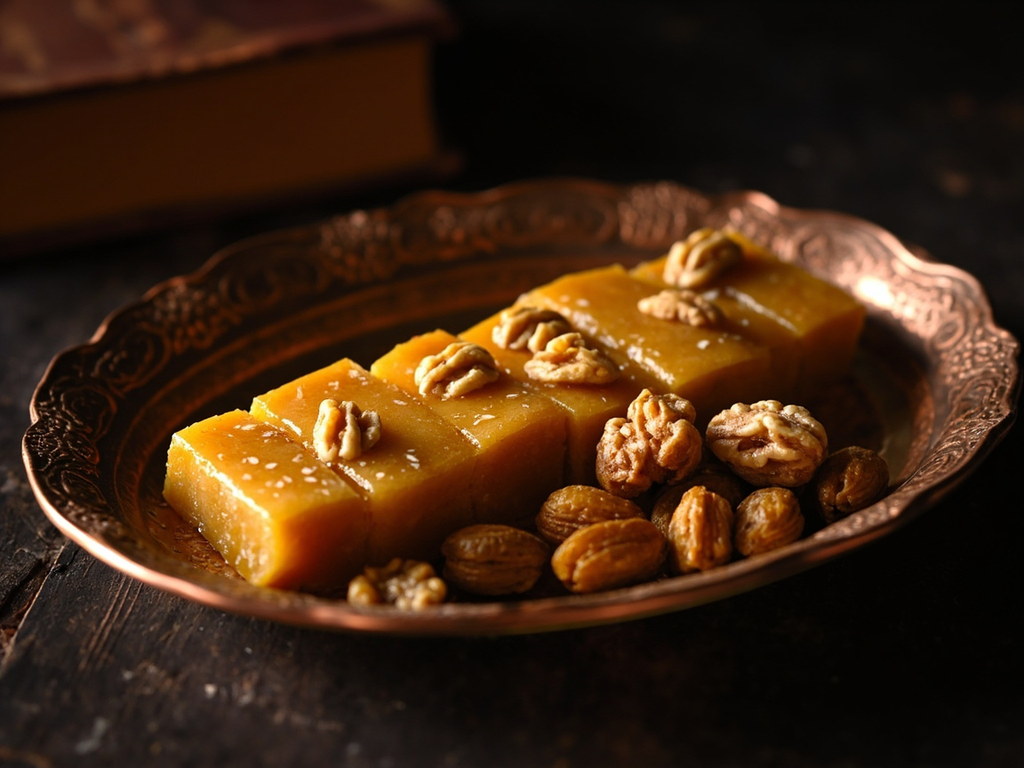
The contemporary twist : Arrange the diamonds on a copper tray with dried rose petals and a veil of ground pistachio, in the manner of a refined bazaar pastry.
Sources : Nawal Nasrallah, “Annals of the Caliphs' Kitchens” (halva in Abbasid cookery treatises) · Margaret Shaida, “The Legendary Cuisine of Persia”
Nizami Ganjavi · Charactorium