 flip
flipPolow-e morâssâ' (پلو مرصع) — Jeweled Rice
Polow-e morâssâ' (پلو مرصع) — Jeweled Rice
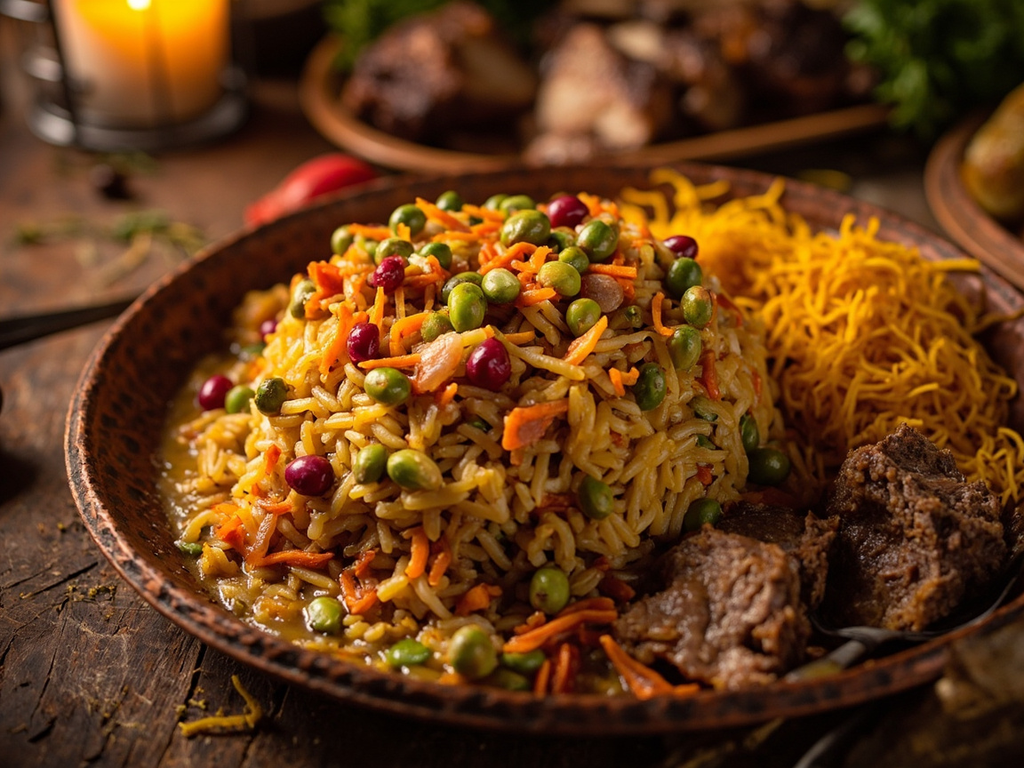
Why this dish? Nizami wrote on commission for local princes — the Atabegs of Ganja and Seljuk rulers. Each completion of a major poem (the Khamsa comprised five) was an occasion for a sumptuous banquet hosted by the patron. Polow-e morâssâ', rice adorned with dried fruits and saffron, is the dish of these celebrations: its colors — amber, ruby, emerald — evoke the precious stones Nizami describes in his verses about the treasures of kings.
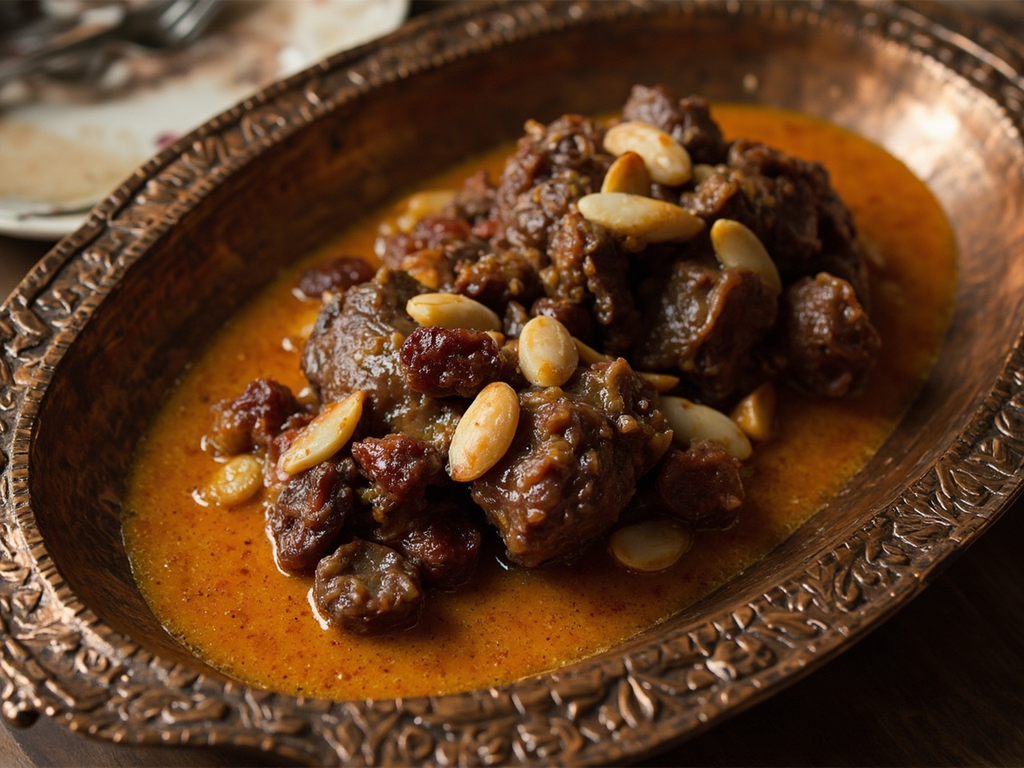
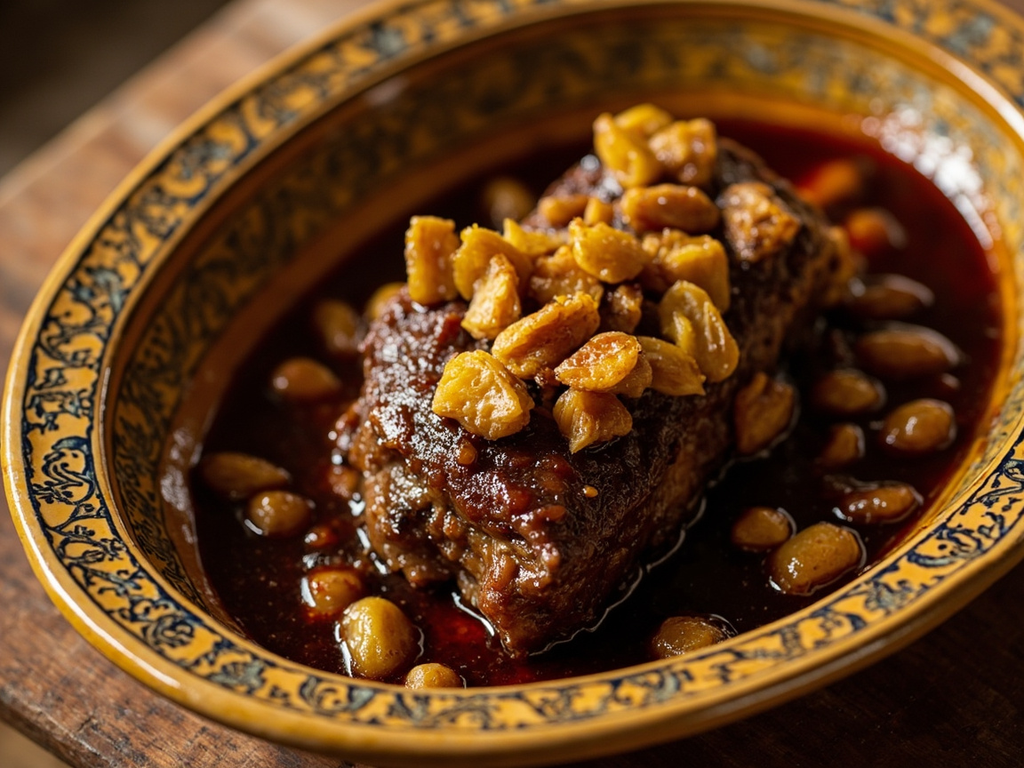
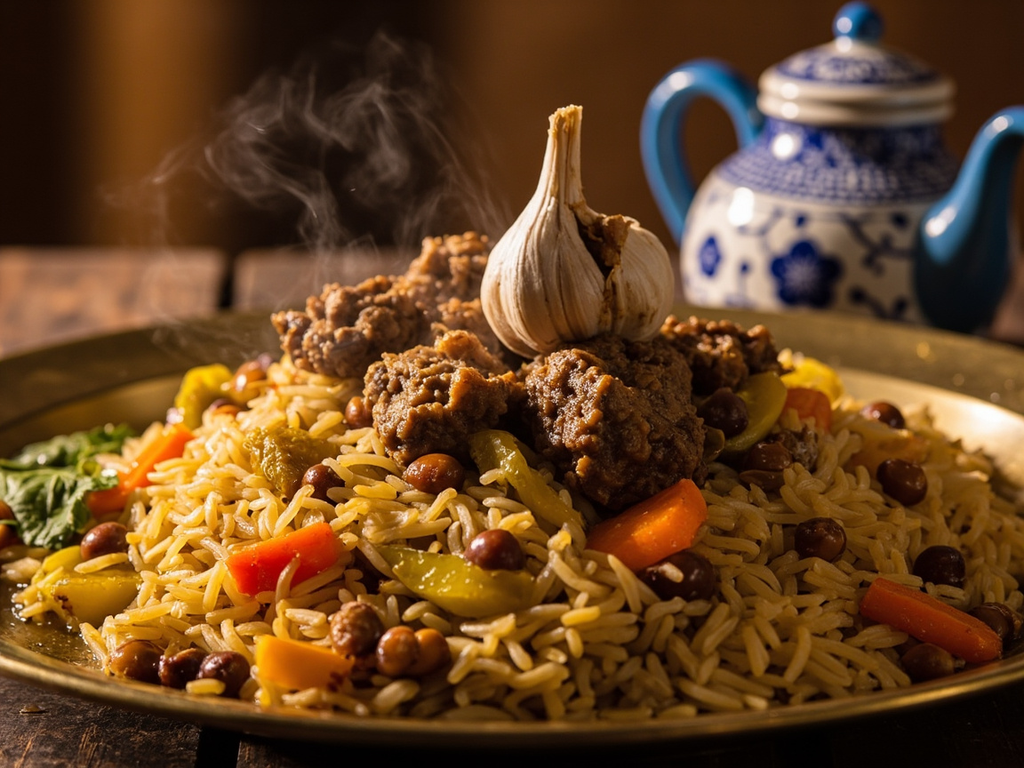
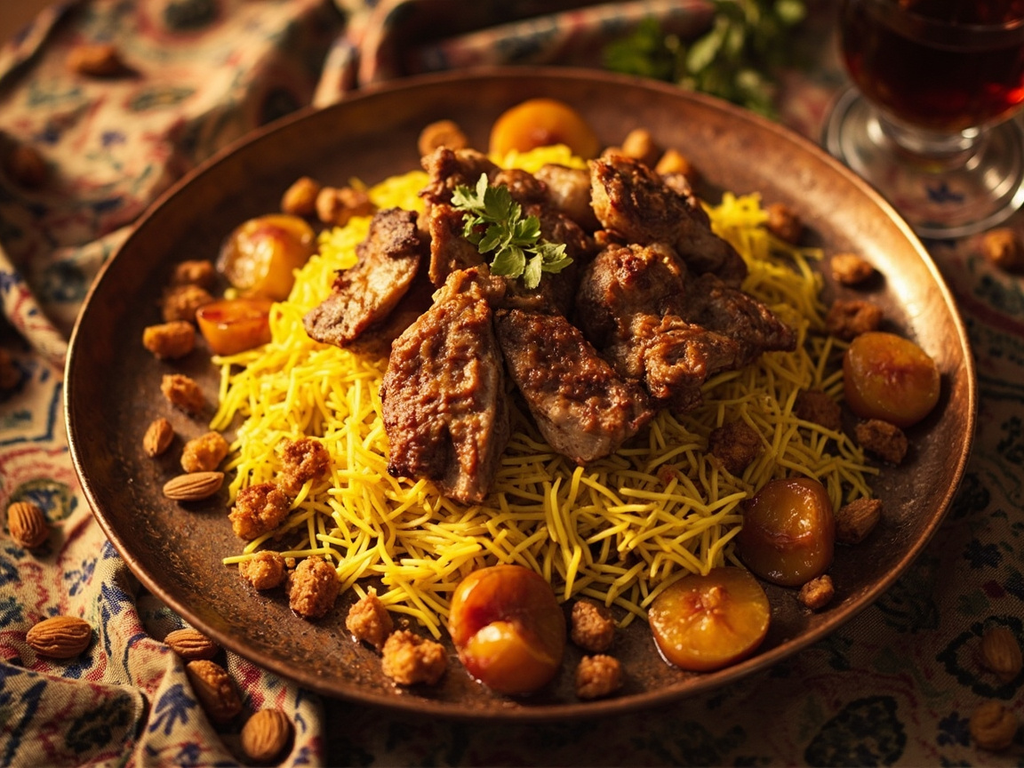
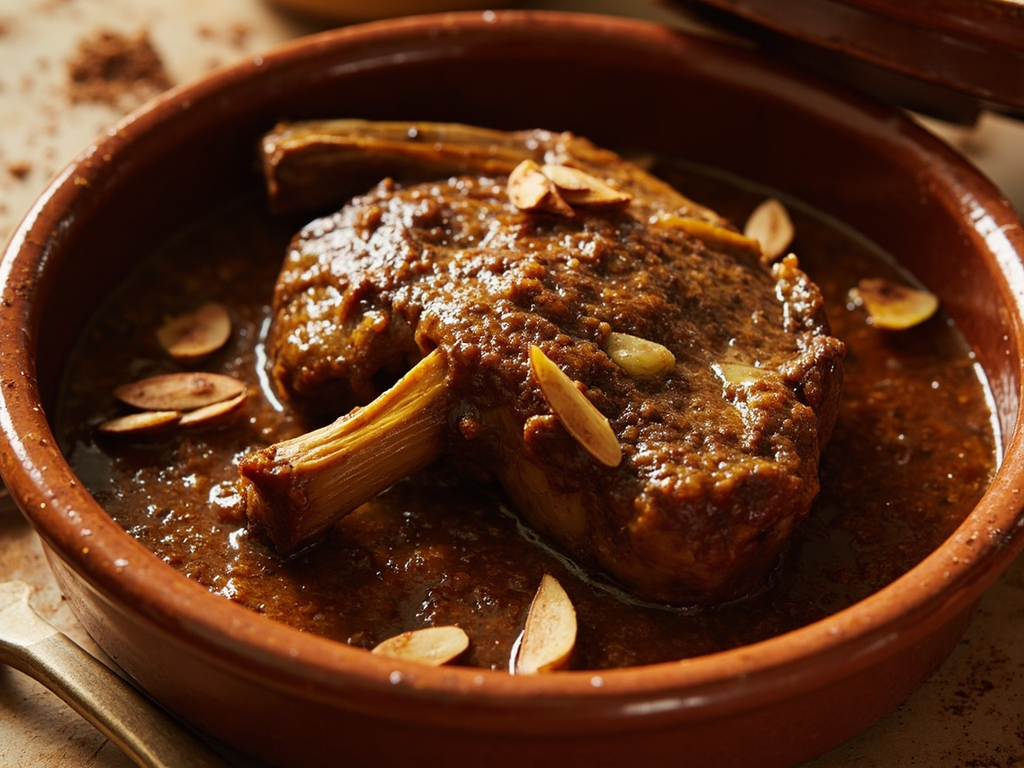
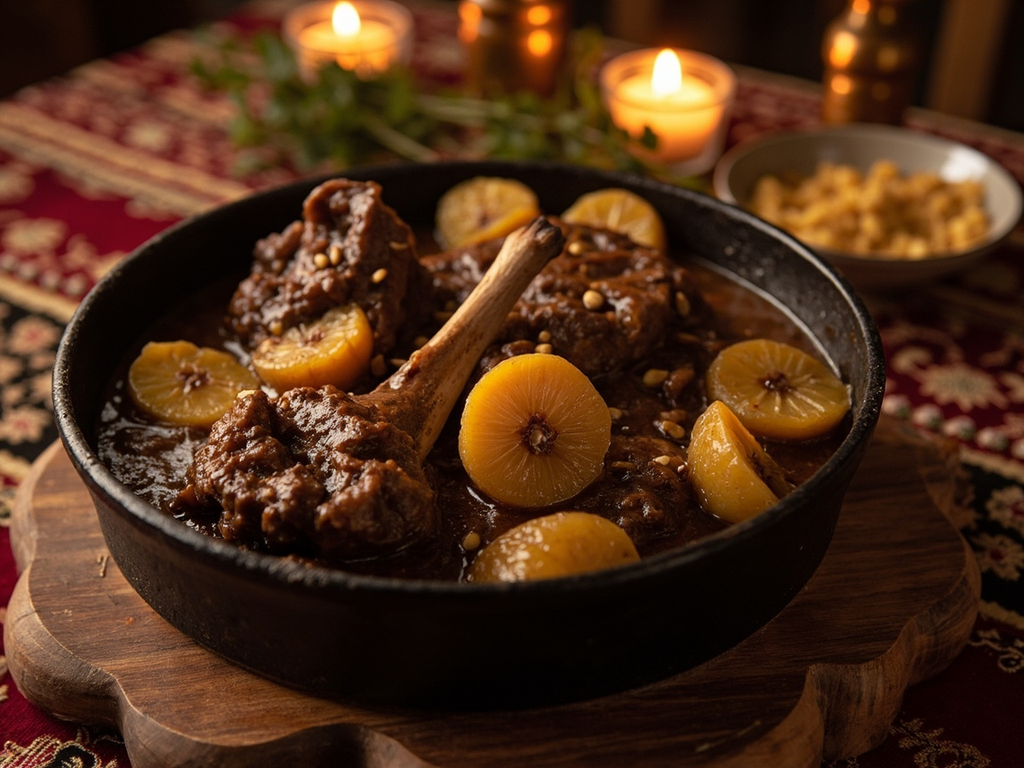
Basmati rice cooked with a tahdig (golden crust), enriched with slivered almonds, pistachios, candied orange peel, barberries (zereshk), and julienned carrots, all perfumed with saffron and cardamom, served with braised lamb in onions.
When I finished telling the torments of Majnun for his Layla, the Atabeg sent to my home a silver tray covered with this polow that his cooks call morâssâ' — the jewel setting. See how the pistachios make emeralds, the zereshk rubies, the saffron spreads its gold on every grain! I am but a man of words, but this dish is a poem you eat. The secret, the palace cook confided to me, lies in the tahdig — that crunchy crust at the bottom of the pot, golden like a hidden sun, which you flip with a swift gesture. It is the art of patience: the fire must be as low as the voice of a lover whispering.
- •Long-grain rice — two handfuls per guest (base)
- •Lamb (shoulder) — a good piece (festive meat)
- •Saffron — a generous pinch (flavor, color)
- •Almonds — a handful (jewel)
- •Pistachios — a handful (jewel)
- •Barberries (zereshk) — a handful (acidity, ruby)
- •Dried orange peel — a few strips (fragrant bitterness)
- •Carrots — two, cut into thin sticks (sweetness)
- •Onions — two (braise base)
- •Green cardamom — a few pods (spice)
- •Clarified butter — a good lump (cooking, tahdig)
- •Sugar or honey — a little (balance for carrots)
- •Salt — to taste (seasoning)
Polow-e morâssâ' (پلو مرصع) — Jeweled Rice
Basmati rice cooked with a tahdig (golden crust), enriched with slivered almonds, pistachios, candied orange peel, barberries (zereshk), and julienned carrots, all perfumed with saffron and cardamom, served with braised lamb in onions.
Why this dish? Nizami wrote on commission for local princes — the Atabegs of Ganja and Seljuk rulers. Each completion of a major poem (the Khamsa comprised five) was an occasion for a sumptuous banquet hosted by the patron. Polow-e morâssâ', rice adorned with dried fruits and saffron, is the dish of these celebrations: its colors — amber, ruby, emerald — evoke the precious stones Nizami describes in his verses about the treasures of kings.
When I finished telling the torments of Majnun for his Layla, the Atabeg sent to my home a silver tray covered with this polow that his cooks call morâssâ' — the jewel setting. See how the pistachios make emeralds, the zereshk rubies, the saffron spreads its gold on every grain! I am but a man of words, but this dish is a poem you eat. The secret, the palace cook confided to me, lies in the tahdig — that crunchy crust at the bottom of the pot, golden like a hidden sun, which you flip with a swift gesture. It is the art of patience: the fire must be as low as the voice of a lover whispering.
Ingredients (period version)
- Long-grain rice — two handfuls per guest (base)
- Lamb (shoulder) — a good piece (festive meat)
- Saffron — a generous pinch (flavor, color)
- Almonds — a handful (jewel)
- Pistachios — a handful (jewel)
- Barberries (zereshk) — a handful (acidity, ruby)
- Dried orange peel — a few strips (fragrant bitterness)
- Carrots — two, cut into thin sticks (sweetness)
- Onions — two (braise base)
- Green cardamom — a few pods (spice)
- Clarified butter — a good lump (cooking, tahdig)
- Sugar or honey — a little (balance for carrots)
- Salt — to taste (seasoning)
Ingredients
- Basmati rice — 400 g (base)
- Boneless lamb shoulder — 500 g (festive meat)
- Saffron threads — 1 good pinch (0.5 g) (flavor, color)
- Slivered almonds — 50 g (garnish)
- Shelled pistachios — 50 g (garnish)
- Dried barberries (zereshk) — 60 g (acidity)
- Candied orange peel — 50 g, fine julienne (flavor)
- Carrots — 2 medium, julienned (sweetness)
- Onions — 2 (braise base)
- Green cardamom — 5 pods (spice)
- Butter — 80 g (cooking, tahdig)
- Granulated sugar — 2 tbsp (caramelizing carrots)
- Salt — to taste (seasoning)
Method
- Rinse the basmati rice several times in cold water, then soak for 1 hour in salted water. Drain.
- Cut the lamb into pieces. Slice the onions and sauté in 30 g butter. Add the meat, sear, then add water to cover. Add crushed cardamom pods, salt. Braise covered for 1 hour on low heat until tender.
- Infuse the saffron in 3 tbsp hot water for 15 minutes.
- Bring a large pot of salted water to a boil. Cook the rice for 6 minutes (it should remain firm in the center). Drain.
- Sauté the julienned carrots in 20 g butter with the sugar until lightly caramelized. Set aside. Sauté the almonds and pistachios in a little butter. Rinse the barberries and sauté for 1 minute in butter.
- In the pot, melt 30 g butter. Spread a layer of rice on the bottom, pressing lightly (future tahdig). Alternate layers of rice with the garnishes (carrots, nuts, barberries, orange peel). Drizzle with saffron water.
- Wrap the lid in a clean cloth, close tightly. Cook for 10 minutes over medium heat, then 40 minutes over very low heat to form the tahdig.
- Invert the polow onto a large platter. Arrange the braised meat around it. Decorate with a few pistachios and saffron threads.
How it was made : Enriched polows are attested in Persian banquets from the Abbasid period (8th-13th c.). Al-Baghdadi's Kitâb al-Tabîkh (1226, shortly after Nizami) describes several variants of rice with dried fruits and spices. The tahdig (bottom crust) was already prized. Barberries, foraged wild in the Caucasus and Iran, served as a sour condiment long before common citrus fruits arrived.
The contemporary twist : Mound into a dome on a hammered copper platter, invert the golden tahdig as a crown. Sprinkle with dried rose petals to evoke the gardens of the Khamsa.
Sources : Muhammad ibn al-Hasan al-Baghdadi, “Kitāb al-Ṭabīkh” (1226) · Nawal Nasrallah, “Annals of the Caliphs' Kitchens” (annotated translation)
Nizami Ganjavi · Charactorium