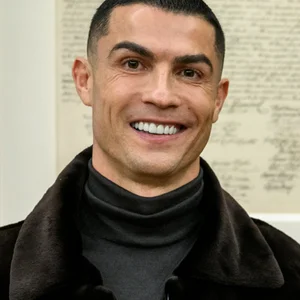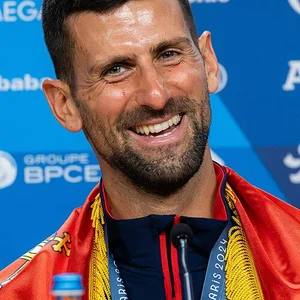

Serbian tennis player born in 1987, considered one of the greatest in the history of the sport. He holds the record for the most men's Grand Slam titles and dominated the professional tour for over a decade.
Novak Djokovic(1987 — ?)
Novak Djoković
Serbie, Serbie-et-Monténégro, république fédérative socialiste de Yougoslavie, république fédérale de Yougoslavie
6 min read
Frequently asked questions
Key Facts
- Born on 22 May 1987 in Belgrade, then in Yugoslavia
- Won his first Grand Slam title at the Australian Open in 2008
- Became world number one for the first time in 2011
- Holds the men's record for Grand Slam titles (24, in 2023)
- Won the gold medal in singles at the Paris Olympic Games in 2024
Works & Achievements
First major victory breaking the dominance of the Federer-Nadal duo and heralding the rise of the “Big Three.”
An exceptional year with three Grand Slam titles and a rise to world number one; considered one of the most dominant seasons in history.
Holding all four Grand Slam titles simultaneously, a feat that few players have achieved.
He surpasses Roger Federer for the most weeks spent atop the ATP rankings.
The all-time men's record for major titles, lifting him among the greatest athletes of all time.
The crowning achievement of his career at the Paris Games, the last major trophy missing from his record.
A book in which he recounts his childhood in Serbia and the importance of his diet in his success.
Anecdotes
In 1999, when he was 11 years old, Novak Djokovic trained while NATO bombs struck Belgrade during the Kosovo War. With his family, he took shelter every night in bunkers, but courageously returned to the courts the very next morning, often choosing the recently bombed grounds, reasoning that the same target would not be hit twice.
As a child, Djokovic humorously imitated the gestures and quirks of his opponents such as Maria Sharapova or Rafael Nadal during exhibition matches, which earned him the nickname “Djoker,” a blend of Djokovic and “joker” (the prankster).
Around 2010, medical tests revealed that he suffered from a gluten intolerance. By radically changing his diet, he underwent a physical transformation and, in 2011, began one of the greatest seasons in tennis history, with 41 consecutive wins at the start of the year.
In January 2022, Djokovic, unvaccinated against Covid-19, was detained upon his arrival in Australia and then deported from the country after a highly publicized legal battle. As a result, he could not defend his title at the Australian Open, an episode that deeply divided public opinion.
At the 2024 Paris Olympic Games, at the age of 37, Djokovic finally won the one major prize missing from his record: the Olympic gold medal in singles, beating Carlos Alcaraz in the final. He broke down in tears, fulfilling a dream he had pursued for years.
Primary Sources
I remember the first night of the bombings. At 3 in the morning, the piercing shriek of the planes and the deafening explosion of the bombs woke us up.
This is perhaps the greatest success I have ever had. Playing for your country is different from anything else.
I am extremely disappointed with the Court's ruling to dismiss my application for judicial review. I am uncomfortable that the focus of the past few weeks has been on me.
Key Places
Djokovic's hometown, where he grew up and learned tennis despite the difficult context of the 1990s. He lived through the NATO bombings there in 1999.
Mountain resort where the young Novak, aged four, discovered tennis under the guidance of coach Jelena Genčić, who immediately spotted his talent.
Grass-court tournament where Djokovic has won several titles and which he has regarded as a dream goal since childhood.
Center court of the Parisian clay-court tournament, where he achieved the “Career Grand Slam” in 2016. He also won his Olympic gold medal there in 2024.
Home of the Australian Open, his most successful tournament, but also the site of his deportation episode in 2022.
Typical Objects

The player's main piece of equipment, made up of a frame and tightly strung mesh that allows the ball to be struck. Djokovic is renowned for the precision and consistency of his shots.

A small, fuzzy yellow ball used in competition, whose bounce varies depending on the court surface. Djokovic is famous for bouncing it many times before his serves.

The cup awarded to the winners of the four major tournaments (Australian Open, Roland-Garros, Wimbledon, US Open). Djokovic holds the men's record with 24 titles.

Lightweight technical clothing and a sweat-absorbing headband worn during matches. The outfit, often supplied by sportswear brands, is part of the athlete's media image.

A strict eating program adopted around 2010 after he discovered his intolerance, focused on natural foods and the exclusion of wheat. It is regarded as a turning point in his career.

The supreme honor of the Olympic Games, won in singles in Paris in 2024. It rounds out his record by giving him the one major title he was still missing.
School Curriculum
Vocabulary & Tags
Key Vocabulary
Daily Life
Morning
A top-level tennis player's day begins early, often with stretching exercises, yoga, and meditation. Djokovic places great importance on flexibility and mental focus from the moment he wakes up.
Afternoon
The afternoon is devoted to intensive training on the court: technical work on strokes, serves, and footwork, followed by strength-training sessions. A team of trainers and coaches oversees every detail.
Evening
The evening is for recovery: body care, a balanced meal, and rest. Sleep is considered essential to regenerate a body subjected to extreme exertion.
Food
Since discovering his gluten intolerance around 2010, Djokovic has followed a strict diet based on natural foods, with no wheat or dairy products. This dietary discipline has become a hallmark of his success.
Clothing
In competition, he wears lightweight technical outfits supplied by his sponsors, with a headband to absorb sweat. Off the court, he also cultivates the elegant image of a global star.
Housing
A wealthy player leading an international life, he divides his time between several residences, notably in Monaco and Serbia. His life is shaped by constant travel between the tournaments of the world circuit.
Historical Timeline
Period Vocabulary
Liens externes & ressources
Références
Œuvres
Premier titre du Grand Chelem (Open d'Australie)
2008
Saison 2011
2011
« Petit Chelem Djokovic »
2015-2016
Record de semaines au rang de numéro 1 mondial
2021
24e titre du Grand Chelem
2023
Médaille d'or olympique en simple
2024
Autobiographie « Service Gagnant »
2013