 Flip the card
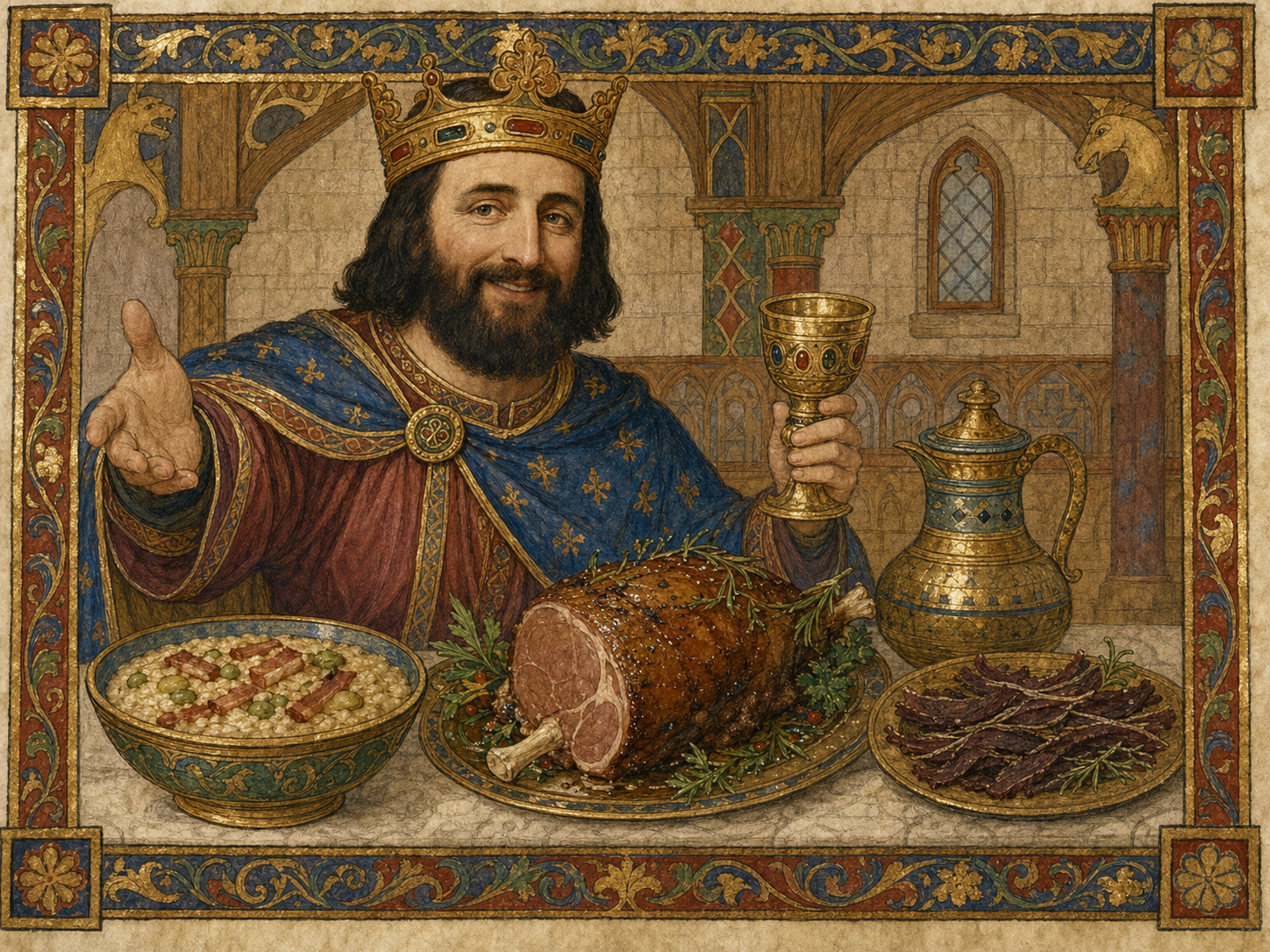
Pepin the Short at the table
714 — 768
On the menu
The Frankish Royal Table Meal
At the Carolingian court, there was no distinction between starter, main course, and dessert as we know it today. Everything arrived together or almost on large tables: the wheat porridge (the *puls* inherited from Rome) served as a nourishing base, roasted meats took center stage on feast days, wheat bread served as plate and utensil, and honey sweetened both meats and drinks. The rhythm was dictated by the Church: meat days and lean days (fish, vegetables). They drank a lot — wine for the nobles, ale and mead for everyone.
Signature : Honey and Lovage
Before the conquest of the great spice routes, the Franks flavored and sweetened with what they had at hand: honey from monastic beehives (used as sugar, glaze, and base for mead) and powerful herbs like lovage, savory, or sage, grown in the gardens of palaces and abbeys. This is the gustatory hallmark of Pepin's table: a marriage of sweet-honeyed and lively herbs.
click to flip back
Pepin the Short at the table
714 — 768
4 period recipes
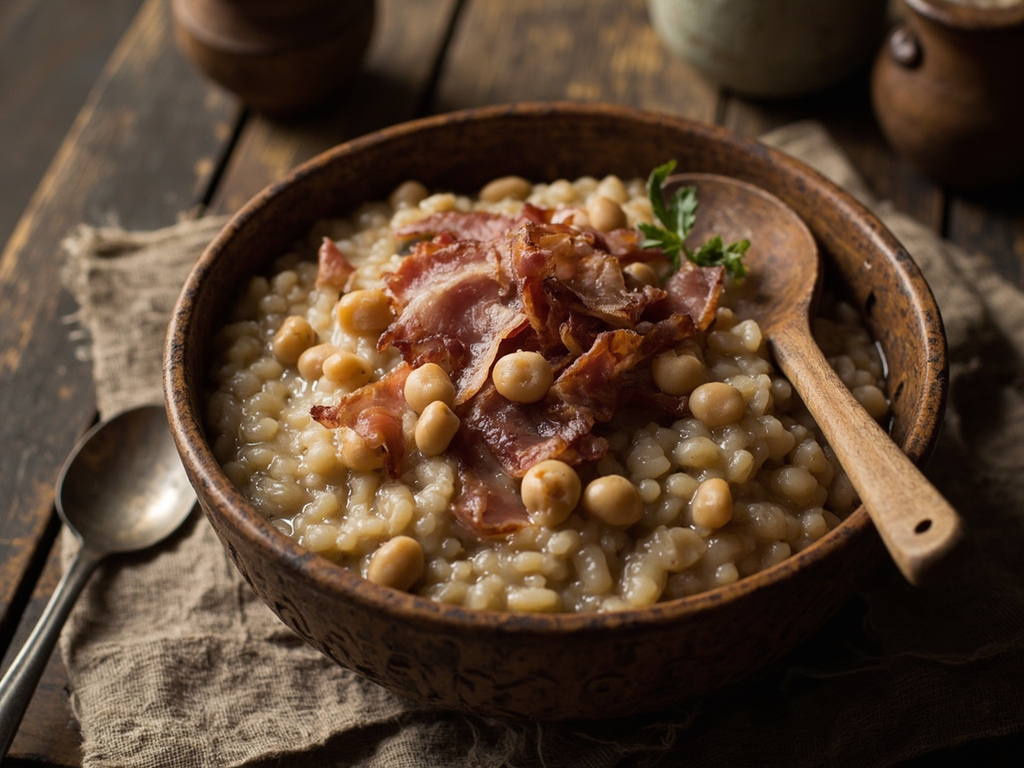 Everyday
Wheat Porridge with Bacon and Broad Beans
The Puls — the staple porridge of Frankish meals
🧂 🍄· 1 h
View the recipe
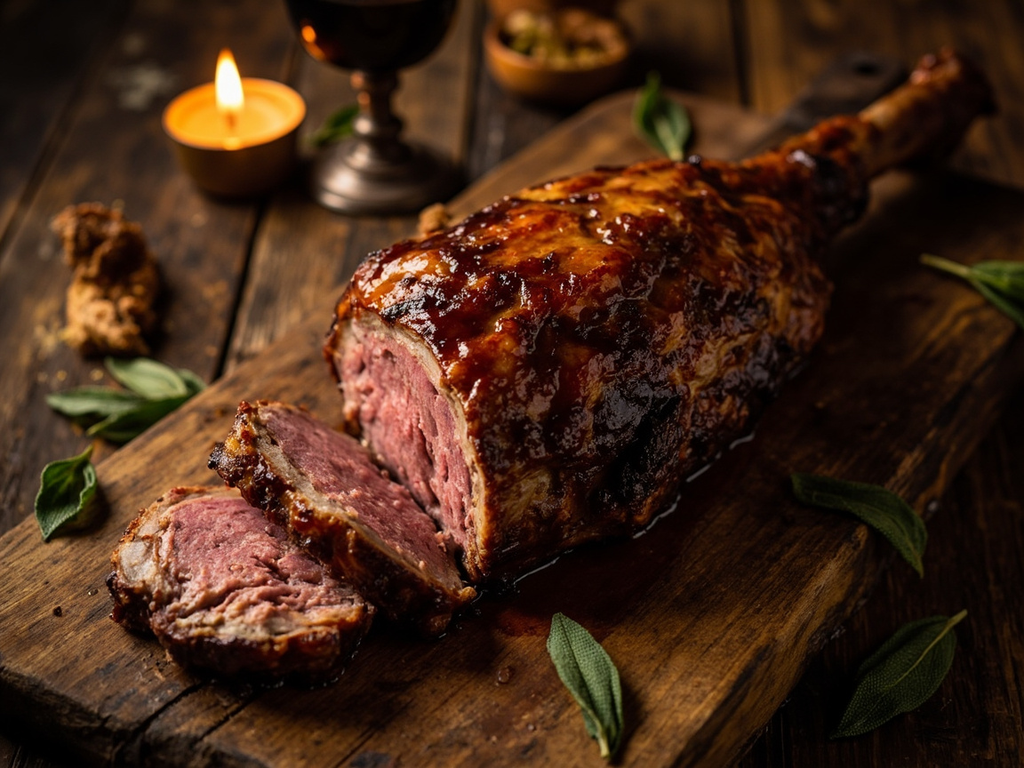 Festive
Roasted Wild Boar Haunch with Honey and Lovage
The festive roast — game meat at the center of the table
🍯 🧂 🌶️· 3 h (+ marinade the day before)
View the recipe
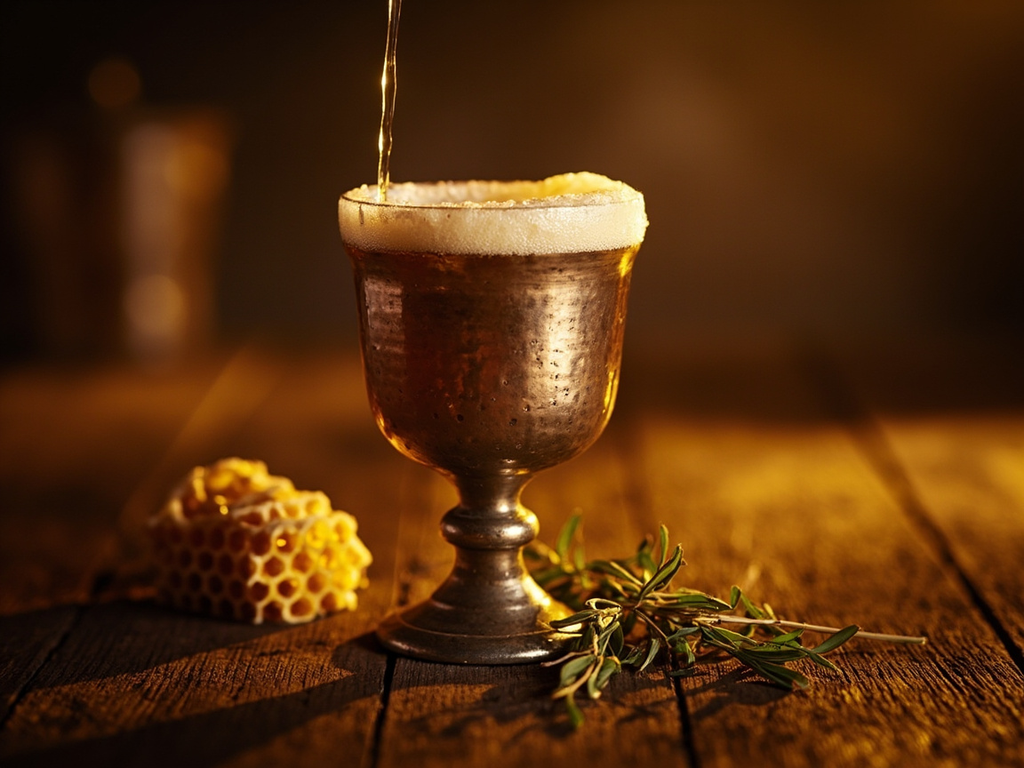 Drink
DrinkMead from the Monastic Beehives
The noble drink — honey-wine of banquets
🍯 🫙· 30 min (+ 2 to 4 weeks fermentation)
View the recipe
 Travel
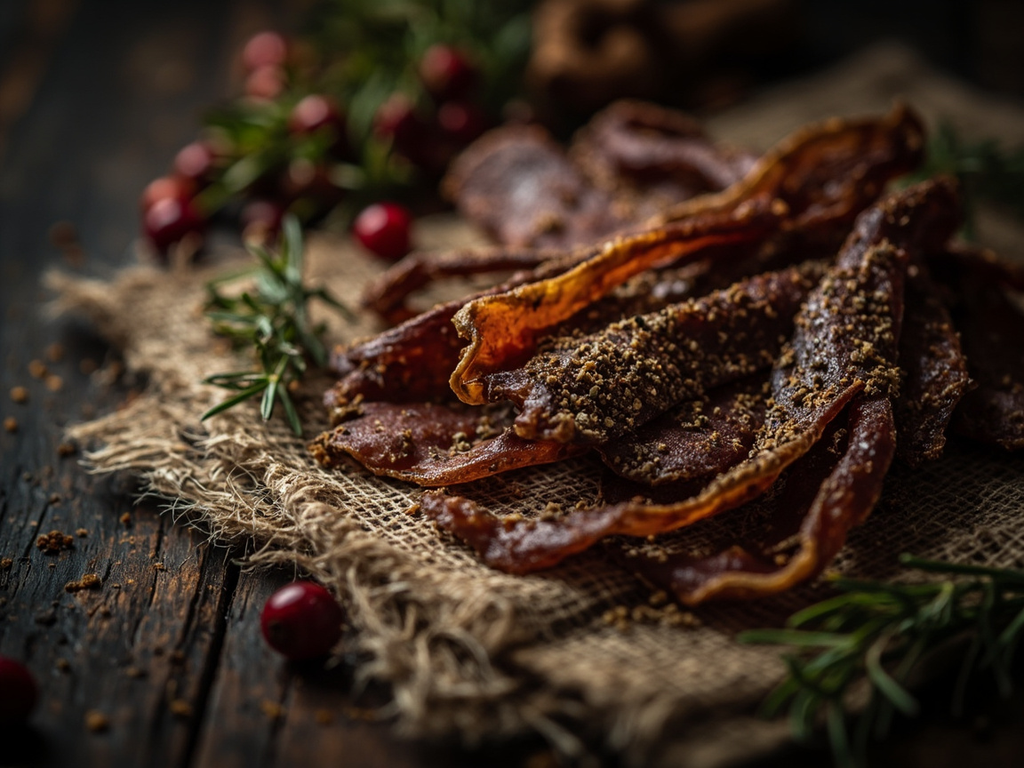
Dried Venison Strips with Salt and Herbs
The campaign food — meat that travels under the tent
🧂 🍄· 30 min (+ 12 h curing and 5 h drying)
View the recipe