 flip
flipDried Venison Strips with Salt and Herbs
Dried Venison Strips with Salt and Herbs
Why this dish? Pepin spent a large part of his reign on campaign — all the way to Italy, to Pavia, against the Lombards, living under the campaign tent mentioned among his belongings. An army on the march eats preserved foods: salted and dried venison is the king's snack on horseback.
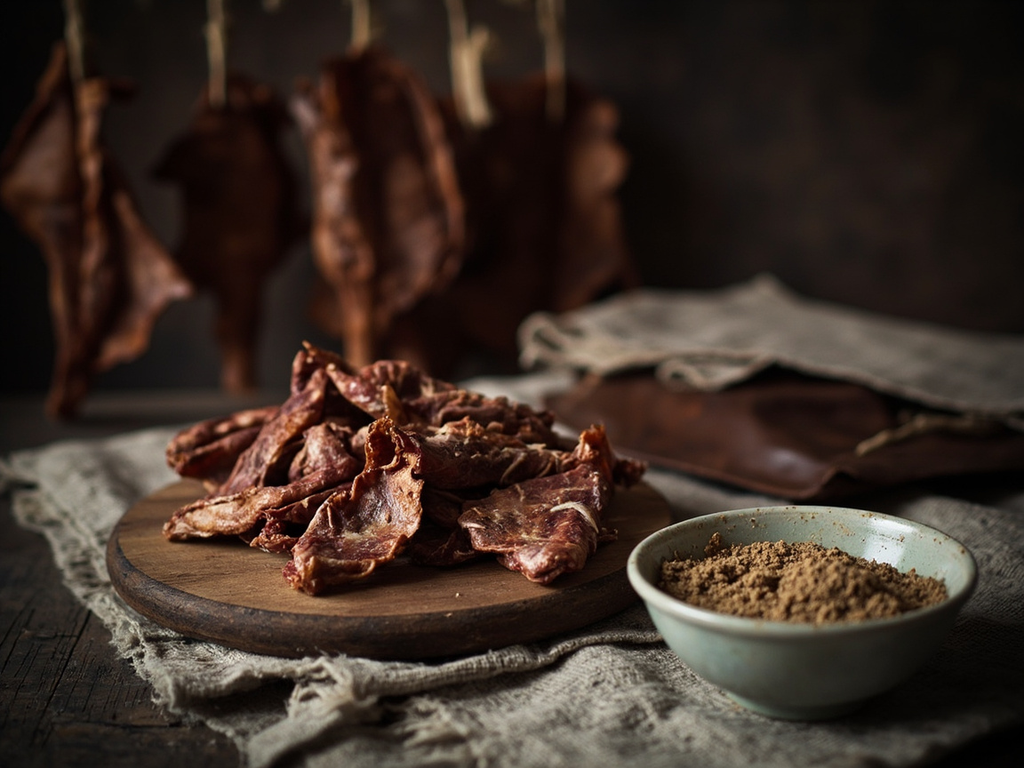
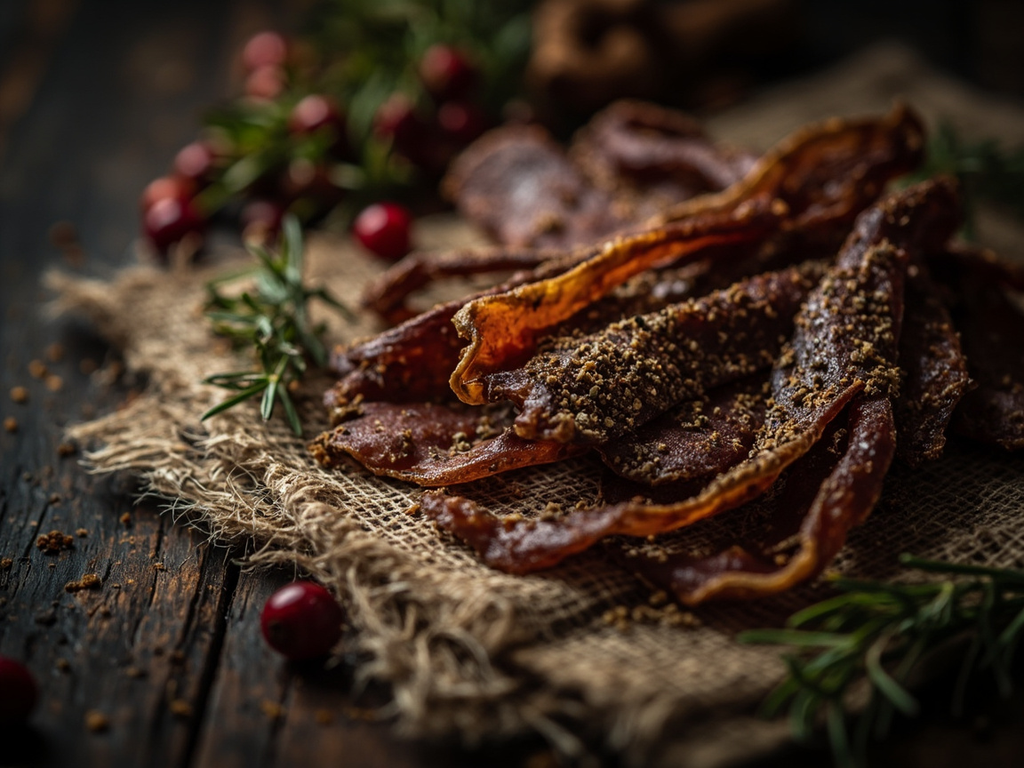
Thin strips of venison rubbed with salt and herbs, dried until firm and concentrated in flavor. Light and imperishable, they slip into baggage and are chewed in the saddle. The army's food on the roads of Italy.
When I march toward the mountains beyond which the Lombards await me, I do not bring my roasting spit nor my valets. I bring this: the flesh of the deer rubbed with coarse salt, perfumed with herbs, then hung to dry in the wind until it becomes hard and savory. Under the tent, in the evening, I break off a piece like a soldier among my soldiers — it does not rot, it lasts weeks, and it reminds my men of the taste of our forests back home. This is how a king feeds his army without weighing down his carts.
- •Lean venison meat — in strips (meat to preserve)
- •Coarse salt — in abundance (preservation)
- •Savory, lovage, juniper berries — to hand (flavor, antiseptic)
Dried Venison Strips with Salt and Herbs
Thin strips of venison rubbed with salt and herbs, dried until firm and concentrated in flavor. Light and imperishable, they slip into baggage and are chewed in the saddle. The army's food on the roads of Italy.
Why this dish? Pepin spent a large part of his reign on campaign — all the way to Italy, to Pavia, against the Lombards, living under the campaign tent mentioned among his belongings. An army on the march eats preserved foods: salted and dried venison is the king's snack on horseback.
When I march toward the mountains beyond which the Lombards await me, I do not bring my roasting spit nor my valets. I bring this: the flesh of the deer rubbed with coarse salt, perfumed with herbs, then hung to dry in the wind until it becomes hard and savory. Under the tent, in the evening, I break off a piece like a soldier among my soldiers — it does not rot, it lasts weeks, and it reminds my men of the taste of our forests back home. This is how a king feeds his army without weighing down his carts.
Ingredients (period version)
- Lean venison meat — in strips (meat to preserve)
- Coarse salt — in abundance (preservation)
- Savory, lovage, juniper berries — to hand (flavor, antiseptic)
Ingredients
- Lean venison fillet or rump steak (or beef as substitute) — 500 g (meat to preserve)
- Coarse salt — 2 tbsp (curing)
- Crushed juniper berries — 1 tsp (flavor)
- Dried savory and thyme — 1 tbsp (flavor)
- Pepper (a luxury of the time, optional) — 1 pinch (noble spice)
Method
- Cut the meat into very thin strips (3-4 mm) along the grain; chilling in the freezer for 30 minutes makes cutting easier.
- Mix the salt, juniper berries, herbs, and pepper, then rub each strip with the mixture; let cure for 8 to 12 hours in the refrigerator.
- Wipe the strips and hang them, or arrange on a rack.
- Dry in an oven at 60-70°C with the door ajar for 4 to 6 hours (or in a dehydrator), until the meat is firm and dry but still pliable.
- Store in a cloth or dry jar; keeps for several weeks.
How it was made : Before modern refrigeration, meat was preserved by salting, smoking, and drying — vital techniques for feeding an army on the move. Carolingian campaigns, which took the Franks as far as Italy, relied on light, durable provisions. Salt, a precious and taxed commodity, was central to all preservation.
The contemporary twist : Serve these strips on a charcuterie board as "the king's ration," with a few hazelnuts and a drizzle of honey, in the style of nomadic Carolingian charcuterie.
Pepin the Short · Charactorium