 flip
flipRoasted Wild Boar Haunch with Honey and Lovage
Roasted Wild Boar Haunch with Honey and Lovage
Why this dish? The royal file notes that Pepin's table overflowed with game meats — wild boar, venison, birds. Roasted wild boar is THE dish of great Frankish assemblies, coronations, and religious feasts, served when the king receives his counts and bishops.
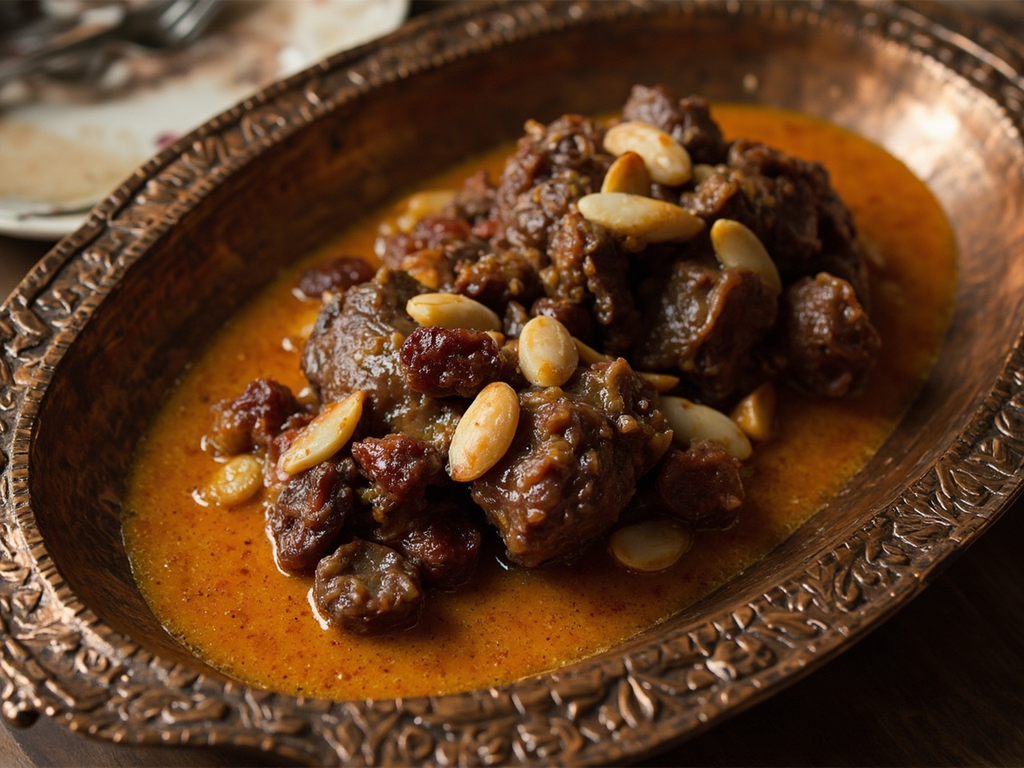
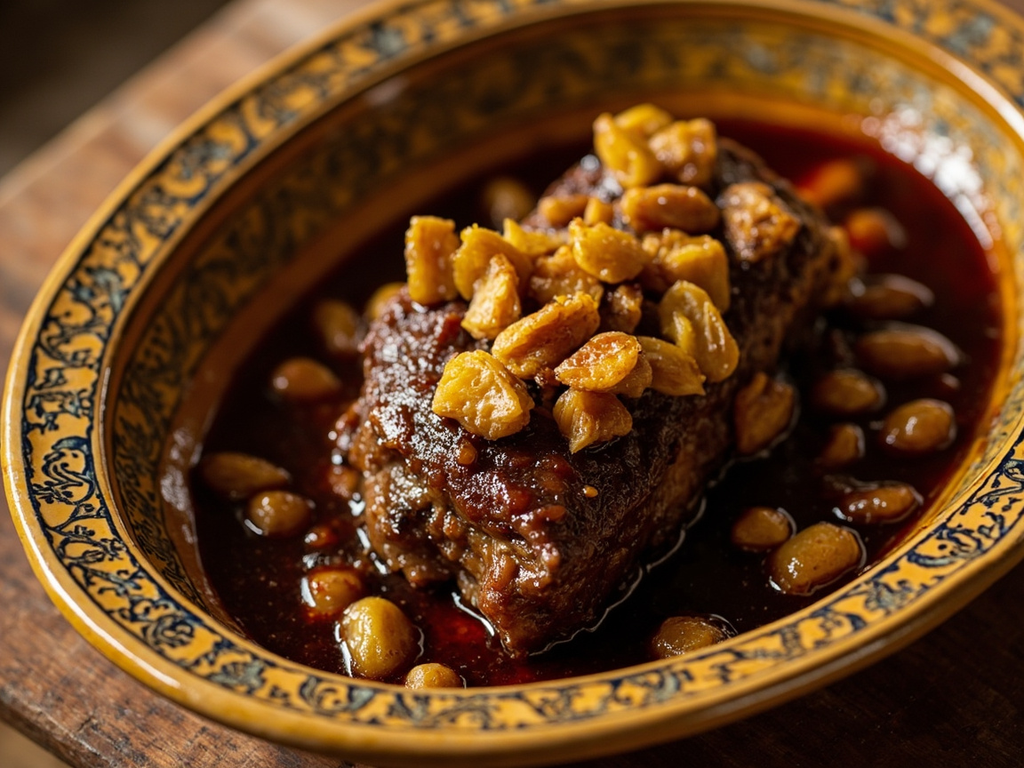
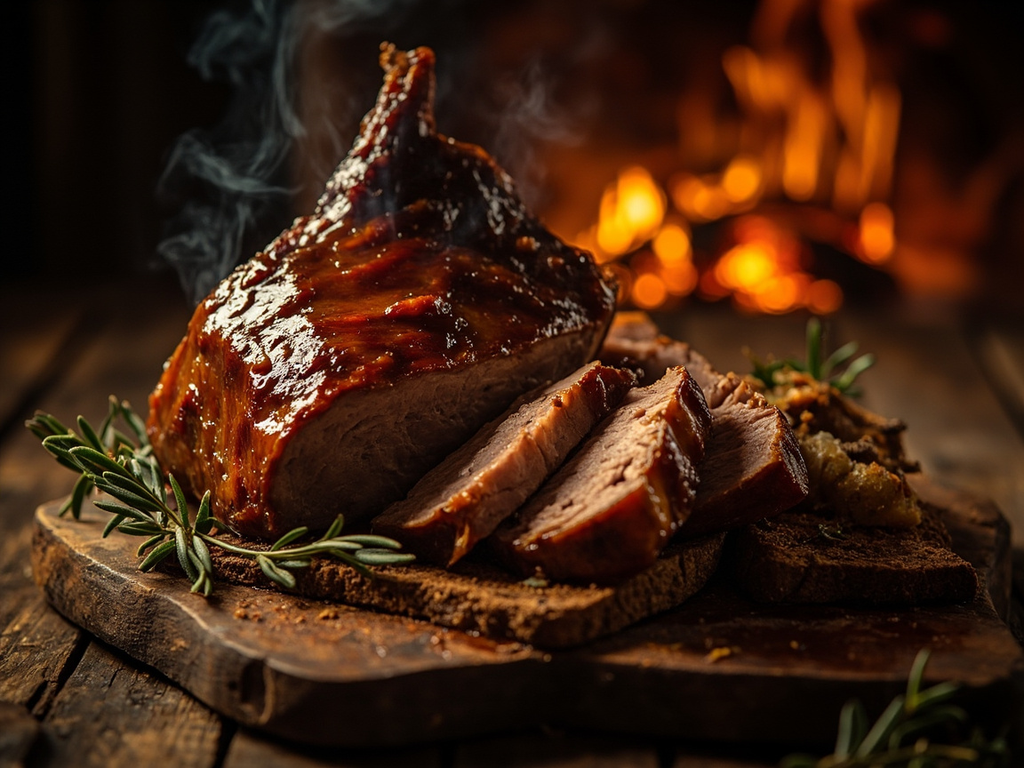
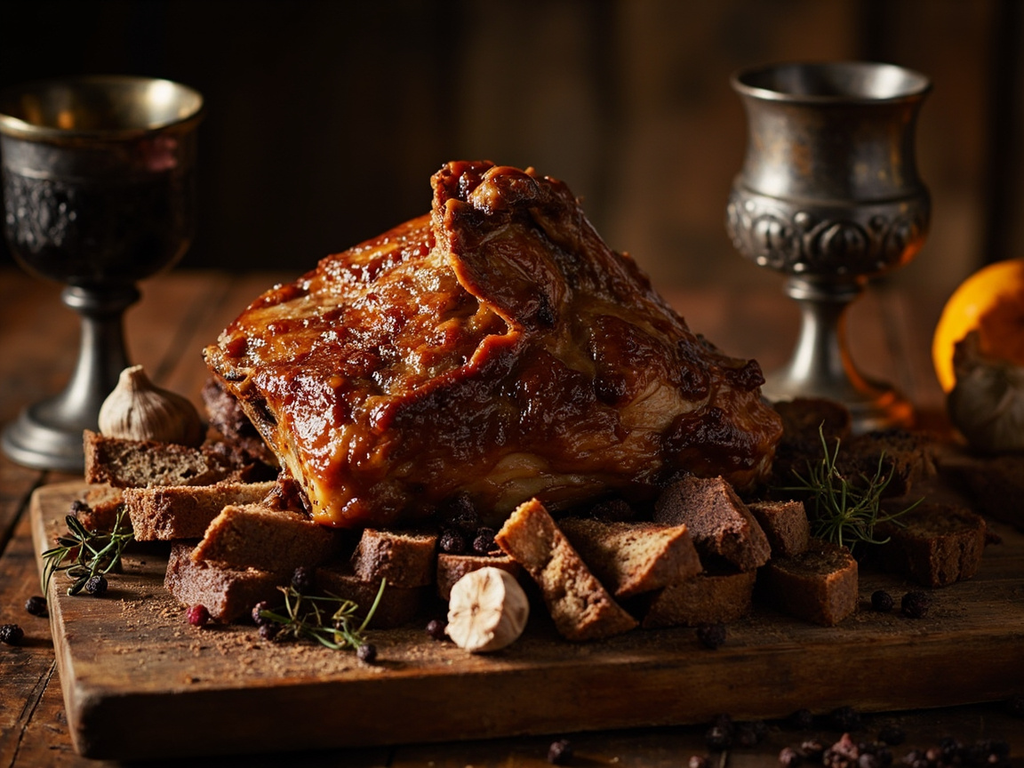
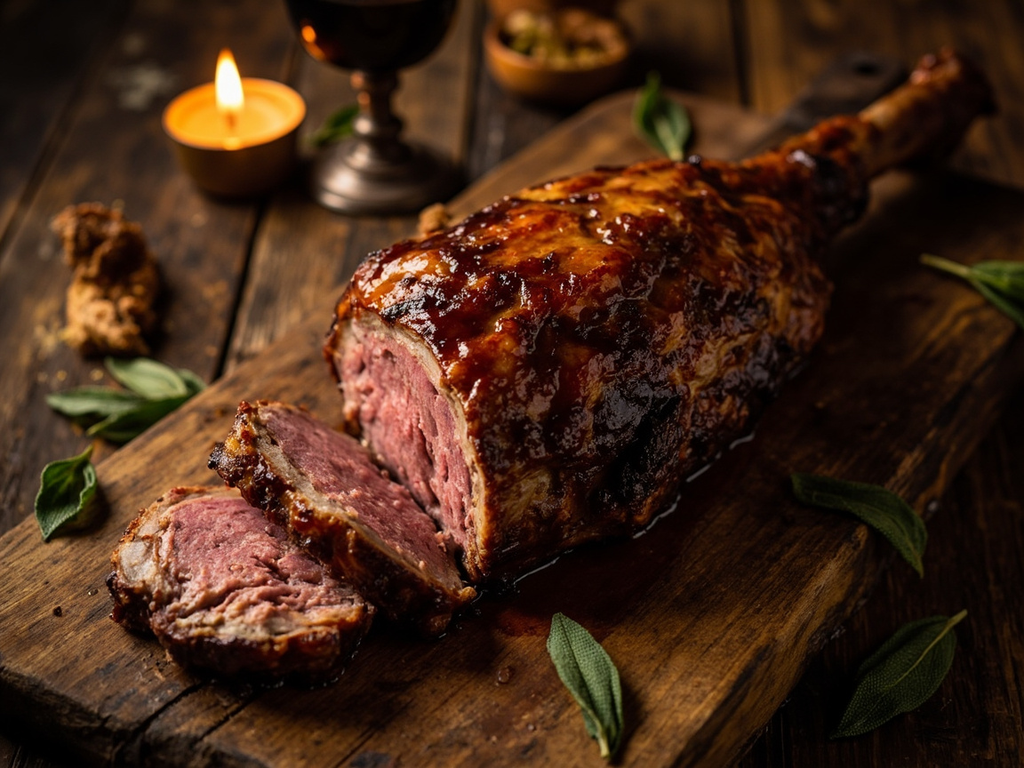
A wild boar haunch slowly roasted, basted with honey and rubbed with fresh herbs until a caramelized, glossy crust forms. The centerpiece of Frankish banquets, carved in front of guests and shared as a sign of power and royal generosity.
Approach, and look at this beast that my huntsmen raised in the royal forest. When I gather my counts and the bishops of my kingdom, this is how I honor them: a wild boar haunch turning for hours over the embers, while a servant bastes it with melted honey so it takes on this beautiful amber color. Rub it with sage and lovage, salt it with a generous hand, and let the fat sizzle as it falls into the fire. He who shares my meat shares my loyalty — thus goes the kingdom of the Franks.
- •Wild boar haunch — one piece (main meat)
- •Honey — as needed for basting (glaze, sweetness)
- •Lovage, sage, savory — a bunch (herb flavor)
- •Salt — generously (seasoning)
- •Wine — a cup (basting liquid)
Roasted Wild Boar Haunch with Honey and Lovage
A wild boar haunch slowly roasted, basted with honey and rubbed with fresh herbs until a caramelized, glossy crust forms. The centerpiece of Frankish banquets, carved in front of guests and shared as a sign of power and royal generosity.
Why this dish? The royal file notes that Pepin's table overflowed with game meats — wild boar, venison, birds. Roasted wild boar is THE dish of great Frankish assemblies, coronations, and religious feasts, served when the king receives his counts and bishops.
Approach, and look at this beast that my huntsmen raised in the royal forest. When I gather my counts and the bishops of my kingdom, this is how I honor them: a wild boar haunch turning for hours over the embers, while a servant bastes it with melted honey so it takes on this beautiful amber color. Rub it with sage and lovage, salt it with a generous hand, and let the fat sizzle as it falls into the fire. He who shares my meat shares my loyalty — thus goes the kingdom of the Franks.
Ingredients (period version)
- Wild boar haunch — one piece (main meat)
- Honey — as needed for basting (glaze, sweetness)
- Lovage, sage, savory — a bunch (herb flavor)
- Salt — generously (seasoning)
- Wine — a cup (basting liquid)
Ingredients
- Wild boar roast (shoulder or haunch, or substitute farmed pork roast) — 1.5 kg (main meat)
- Honey — 4 tbsp (glaze, sweetness)
- Fresh sage — 6 leaves (herb flavor)
- Lovage (or celery) + savory — 2 tbsp total (herb flavor)
- Red wine — 150 ml (basting, sauce)
- Salt and a little ground cumin — to taste (seasoning)
Method
- The day before, rub the meat with salt, chopped herbs, and a little cumin; refrigerate.
- Preheat the oven to 160°C. Sear the roast on all sides in a pot.
- Roast for 2 to 2.5 hours, basting regularly with wine and cooking juices.
- In the last half hour, brush several times with honey to form a caramelized, glossy crust.
- Let rest 10 minutes, deglaze the pan with wine for a short sauce, then carve in front of your guests.
How it was made : Hunting was an aristocratic privilege, and game meat a strong social marker: only the lord could offer wild boar or venison in abundance. Large pieces were roasted on a spit over the hearth, and honey — the only sweetener available — served both as a glaze and a luxury marker. Sharing meat sealed vassalage bonds.
The contemporary twist : Serve it on a rough wooden board with a drizzle of honey-wine jus and christen it "the coronation haunch" as a nod to Pepin's coronation in 751.
Pepin the Short · Charactorium