 flip
flipSesamis — sesame honey cakes
Sesamis — sesame honey cakes
Why this dish? Toasted sesame bound with honey (sesamis) was the festive treat of the Greeks, served at the tragemata, the second course of the banquet, and at weddings as a symbol of fertility. For the Pythagorean community, these honey sweets — without flesh, pure — were the permitted share of shared joy.
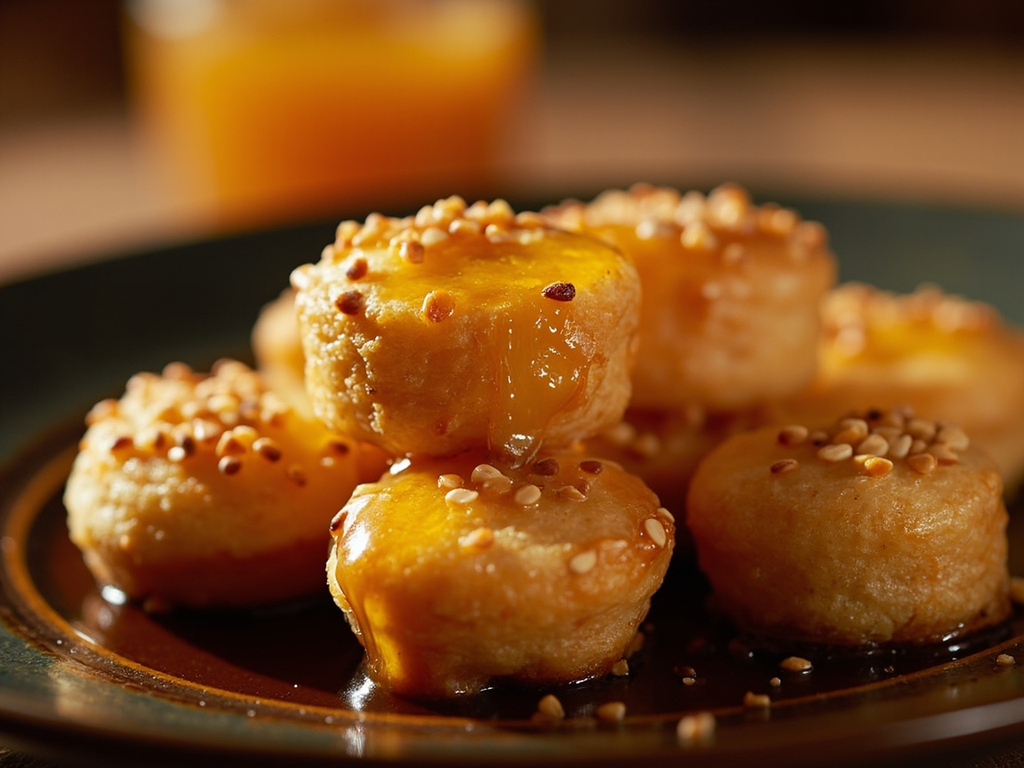
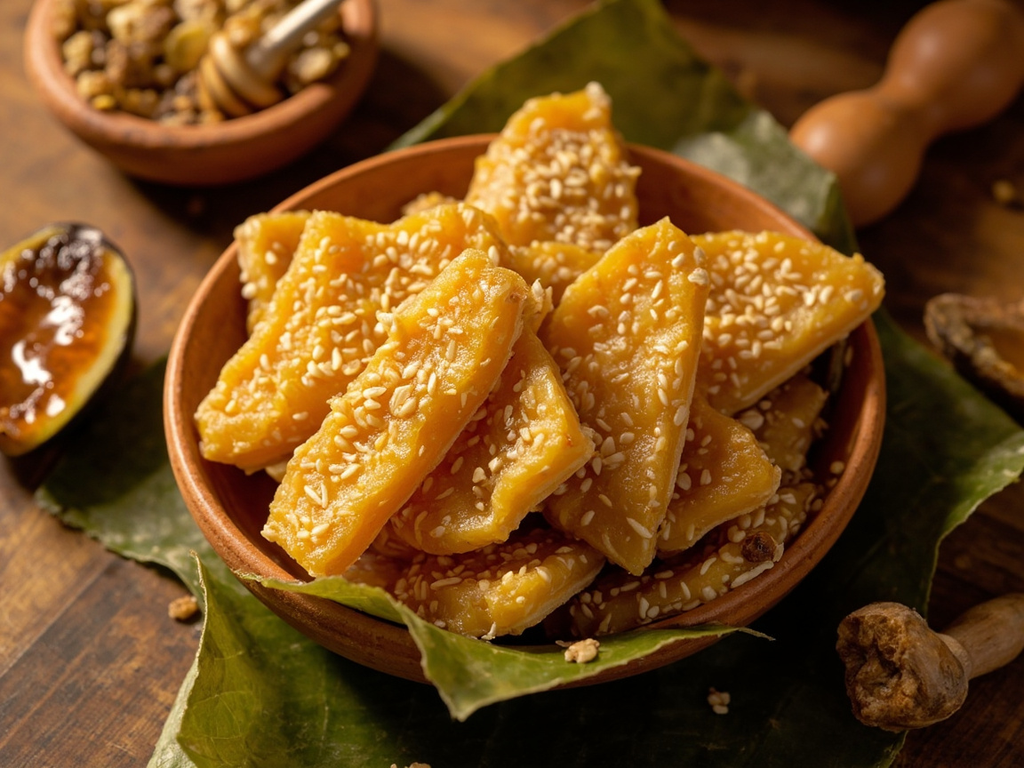
Small balls or diamonds of toasted sesame seeds set in hot honey, crunchy and golden. The deep sweetness of thyme honey meets the roasted bitterness of sesame. The direct ancestor of today's Greek pasteli.
On this feast day, I allow you sweetness, for even he who seeks measure knows regulated joy. See: we make the sesame seeds sing on the fire until they dance, then we drown them in the honey of our hills, this thyme honey that the bees, those just workers, give us without shedding blood. Roll the paste quickly before it hardens, and cut it into diamonds as one traces a figure. Eat little: what is rare remains precious, and the number of sweet things must also keep its just proportion.
- •Sesame seeds — a full bowl (crunchy base)
- •Thyme honey — enough to coat (sweet binder)
Sesamis — sesame honey cakes
Small balls or diamonds of toasted sesame seeds set in hot honey, crunchy and golden. The deep sweetness of thyme honey meets the roasted bitterness of sesame. The direct ancestor of today's Greek pasteli.
Why this dish? Toasted sesame bound with honey (sesamis) was the festive treat of the Greeks, served at the tragemata, the second course of the banquet, and at weddings as a symbol of fertility. For the Pythagorean community, these honey sweets — without flesh, pure — were the permitted share of shared joy.
On this feast day, I allow you sweetness, for even he who seeks measure knows regulated joy. See: we make the sesame seeds sing on the fire until they dance, then we drown them in the honey of our hills, this thyme honey that the bees, those just workers, give us without shedding blood. Roll the paste quickly before it hardens, and cut it into diamonds as one traces a figure. Eat little: what is rare remains precious, and the number of sweet things must also keep its just proportion.
Ingredients (period version)
- Sesame seeds — a full bowl (crunchy base)
- Thyme honey — enough to coat (sweet binder)
Ingredients
- Sesame seeds — 200 g (base)
- Honey (preferably thyme honey) — 150 g (sweet binder)
- Water — 1 tbsp (loosens the honey)
Method
- Dry-toast the sesame seeds in a pan until golden and fragrant, stirring constantly.
- In a saucepan, gently heat the honey with the water until it just simmers (do not burn).
- Pour the sesame seeds into the hot honey and stir vigorously to coat well.
- Spread the mixture on an oiled sheet or parchment paper, about 1 cm thick.
- While still warm and pliable, mark diamond shapes with an oiled knife.
- Allow to cool and harden, then break into pieces.
How it was made : The Greeks already prepared this sesame-honey mixture, mentioned as a banquet sweet and offered to newlyweds. Sugar was unknown: honey was the only sweetener, and sesame, imported from the East, had long been cultivated around the Mediterranean. Cooking was done over high heat, cooling on a smooth oiled surface.
The contemporary twist : Sprinkle with grated lemon zest and present the diamonds on a fig leaf — the ancient pasteli in a chef's pastry version.
Sources : Athenaeus of Naucratis, The Deipnosophists (The Banquet of the Learned) · Andrew Dalby, Food in the Ancient World from A to Z
Pythagoras · Charactorium