 flip
flipMallow and fresh cheese with oil and vinegar
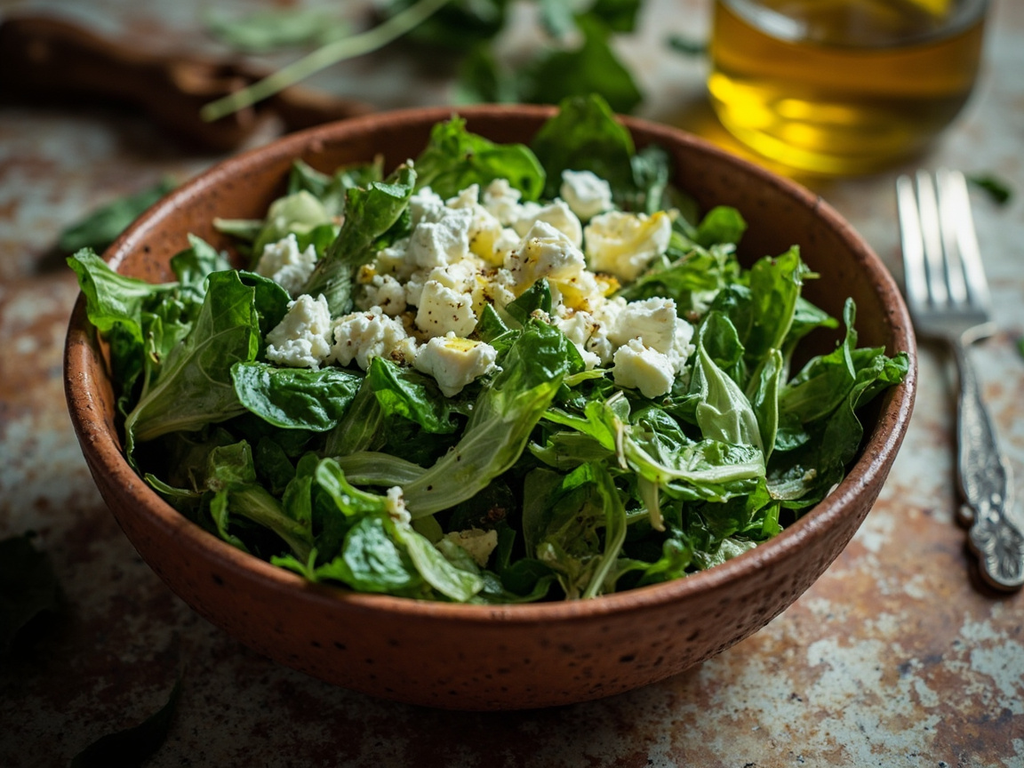
Mallow and fresh cheese with oil and vinegar
Why this dish? Mallow (malache) was reputed to be healthy, digestive, and soothing: the Greeks ate it as much for nourishment as for gentle purging. A dish of tender leaves and fresh cheese, without meat, corresponds exactly to the permitted opson among the Pythagoreans, who sought a light body in service of the mind.
Tender mallow leaves (or chard/spinach as a substitute) softened by heat, arranged with fresh goat cheese, a drizzle of olive oil, and a few drops of vinegar. Fresh, tangy, and slightly salty from the cheese — a healthful opson.
When the body is heavy, the soul hears poorly the number and accord of the spheres. Take then the mallow, this gentle herb that the earth offers without killing anyone, and let it wilt a moment in the heat. Place upon it the fresh cheese of the goat, pour the oil, and just enough vinegar to awaken the tongue without irritating it. This lightens the belly and keeps the mind clear — and above all, keep yourself from the bean: there are foods that a man such as you must not bring to his mouth.
- •Tender mallow leaves — a good armful (base vegetable, digestive virtue)
- •Fresh goat cheese (tyros) — a piece (allowed protein source)
- •Olive oil — a drizzle (binder, fat)
- •Vinegar (oxos) — a few drops (acidity)
- •Sea salt — a pinch (seasoning)
Mallow and fresh cheese with oil and vinegar
Tender mallow leaves (or chard/spinach as a substitute) softened by heat, arranged with fresh goat cheese, a drizzle of olive oil, and a few drops of vinegar. Fresh, tangy, and slightly salty from the cheese — a healthful opson.
Why this dish? Mallow (malache) was reputed to be healthy, digestive, and soothing: the Greeks ate it as much for nourishment as for gentle purging. A dish of tender leaves and fresh cheese, without meat, corresponds exactly to the permitted opson among the Pythagoreans, who sought a light body in service of the mind.
When the body is heavy, the soul hears poorly the number and accord of the spheres. Take then the mallow, this gentle herb that the earth offers without killing anyone, and let it wilt a moment in the heat. Place upon it the fresh cheese of the goat, pour the oil, and just enough vinegar to awaken the tongue without irritating it. This lightens the belly and keeps the mind clear — and above all, keep yourself from the bean: there are foods that a man such as you must not bring to his mouth.
Ingredients (period version)
- Tender mallow leaves — a good armful (base vegetable, digestive virtue)
- Fresh goat cheese (tyros) — a piece (allowed protein source)
- Olive oil — a drizzle (binder, fat)
- Vinegar (oxos) — a few drops (acidity)
- Sea salt — a pinch (seasoning)
Ingredients
- Mallow leaves (or young chard/spinach) — 250 g (base vegetable)
- Fresh goat cheese — 150 g (topping)
- Extra virgin olive oil — 3 tbsp (dressing)
- Wine vinegar — 1 tsp (acidity)
- Salt — 1 pinch (seasoning)
Method
- Wash the leaves thoroughly. Wilt them in a hot pan with a little water for 1 to 2 minutes, until tender but still green.
- Drain well and let cool slightly.
- Arrange the leaves on a plate, crumble the goat cheese on top.
- Drizzle with olive oil, add vinegar and a pinch of salt.
- Serve warm or at room temperature, alongside the maza.
How it was made : Mallow and asphodel were part of the frugal diet idealized by the Greeks as the food of the sage. Mallow was considered laxative and good for the stomach. Leafy greens were cooked little, just softened, then seasoned with oil and vinegar — the direct ancestor of modern Greek horta.
The contemporary twist : Replace mallow with a mix of young wild greens (dandelion, chard) and finish with an edible flower: the 'philosopher's horta', dressed like a contemporary salad.
Sources : Andrew Dalby, Siren Feasts: A History of Food and Gastronomy in Greece · Diogenes Laërtius, Lives and Opinions of Eminent Philosophers, Book VIII (Pythagoras)
Pythagoras · Charactorium