American singer of Mexican descent, nicknamed the “Queen of Tejano music.” A rising star of Latin pop, she was murdered at age 23 in 1995 by the president of her fan club, becoming a posthumous cultural icon.
Selena Quintanilla-Pérez
Selena Quintanilla-Pérez
6 min read
Frequently asked questions
Key Facts
- Born on April 16, 1971, in Lake Jackson (Texas), into a Mexican-American family.
- Launched her career in childhood with the family band Selena y Los Dinos in the 1980s.
- Won the Grammy Award for Best Mexican-American Album in 1994 for “Live.”
- Murdered on March 31, 1995, in Corpus Christi by Yolanda Saldívar, the president of her fan club.
- The biographical film “Selena” (1997) introduced Jennifer Lopez to a wide audience.
Works & Achievements
Album that became one of the first Tejano music records by a female artist to reach gold status.
Album featuring the hit “Como la Flor,” which propelled Selena to stardom in Latin music.
Live album crowned with the Grammy Award for Best Mexican-American Album, a major milestone in her career.
The best-selling album of her career, whose title track was inspired by her grandparents' love story.
Song that became her most iconic hit, still widely covered and celebrated today.
Posthumous bilingual album, her successful crossover into the English-language pop market; it reached number one on the Billboard 200.
Fashion line and beauty salon-boutiques launched by the singer, reflecting her entrepreneurial ambitions.
Anecdotes
Selena sang hit songs in Spanish… even though she didn't speak the language fluently! Raised in the United States, she learned the pronunciation phonetically with the help of her father, who wrote out the lyrics for her. She later studied Spanish so she could give her interviews in the language.
Before becoming a star, Selena sang from the age of 9 in the family restaurant, the *Papagayos*, opened by her father in Lake Jackson, Texas. When the restaurant went bankrupt and the family lost their home, they crisscrossed Texas by bus giving concerts to make ends meet.
In February 1995, Selena set a record by filling the Houston Astrodome in front of more than 60,000 people. She appeared there in a sparkling purple jumpsuit she had made herself, as she designed her own stage costumes.
Selena had launched her own fashion label and opened boutique-salons called “Selena Etc.” It was a dispute over the management of her fan club and her boutiques that drove Yolanda Saldívar to murder her on March 31, 1995.
After her death, *People* magazine published a special edition that sold out immediately: demand was so great that the publisher launched a new magazine, *People en Español*. The 1997 film *Selena* also revealed a then-unknown young actress, Jennifer Lopez.
Primary Sources
Live recording of Selena y Los Dinos capturing the singer in concert at the Memorial Coliseum in Corpus Christi; the album won the Grammy Award for Best Mexican-American Music Album.
Selena explains her journey and how she learned Spanish, stating that she hopes to serve as a role model for Mexican-American youth.
Special issue published after the singer's assassination, whose exceptional print run reflected the depth of mourning within the Latino community of the United States.
Key Places
Selena's hometown, where her father opened the family restaurant in which she sang as a child. The cradle of her musical calling.
The city where the family settled and where Selena spent most of her career. It is also the site of her murder, at the Days Inn, on March 31, 1995.
Indoor stadium where, in February 1995, Selena gave a record-breaking concert before more than 60,000 people. A symbol of her career's peak.
Memorial erected along the seafront in tribute to the singer, which has become a place of pilgrimage for her admirers. A bronze statue depicts her facing the bay.
Venue where the album Selena Live! was recorded, earning her a Grammy Award. A landmark of her Tejano concerts.
Typical Objects

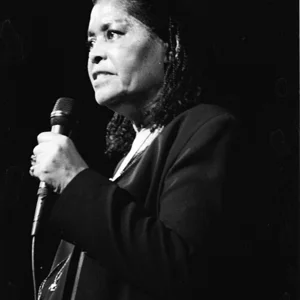
An essential tool for the singer during her concerts, amplifying her voice in front of entire stadiums. Selena also used it to speak directly and warmly to her audience.

An iconic stage costume worn at the 1995 Astrodome concert, designed by Selena herself. She created her own outfits, blending glamour with personal style.

A garment that became a signature of her look, which she accessorized with rhinestones and shiny patterns. It symbolized her boldness and her sense of popular fashion.

The dominant music format of the 1990s, on which her albums such as Amor Prohibido and Dreaming of You were released. The massive sales of her CDs made her a commercial icon.

The “Big Bertha,” the bus in which the Quintanilla family traveled across Texas to play one concert after another. It embodies the modest, itinerant beginnings of Selena y Los Dinos.

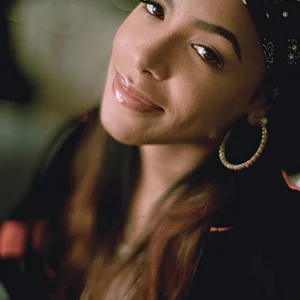
Large golden hoops that were part of her recognizable style, blending Latino influences with 1990s fashion. They reinforced her image as a young woman proud of her roots.
School Curriculum
Vocabulary & Tags
Key Vocabulary
Tags
Daily Life
Morning
During tour periods, Selena often woke up on the band's bus or in a hotel after a late-night concert. Her mornings were devoted to rest, travel, and preparing for upcoming shows.
Afternoon
Afternoons could be filled with rehearsals with Los Dinos, recording sessions in the studio, or interviews for Spanish-language radio and television. She also looked after her Selena Etc. fashion boutiques.
Evening
Evenings were the time for concerts, before tejano dance halls or huge stadiums. Bursting with energy, Selena danced and sang, forging a warm bond with her audience.
Food
Coming from Mexican-Texan culture (“Tex-Mex”), she enjoyed a cuisine blending tacos, fajitas, rice, and beans. Like many touring artists, she often grabbed a quick bite between two concerts.
Clothing
On stage, she wore sparkling outfits that she designed herself: rhinestone-studded bustiers, high-waisted pants, and embroidered jackets. Around town, she embraced the casual fashion of young American women in the 1990s.
Housing
Selena lived in Corpus Christi, Texas, close to her tight-knit family, who also made up her band. The Quintanilla family home remained the heart of her daily life.