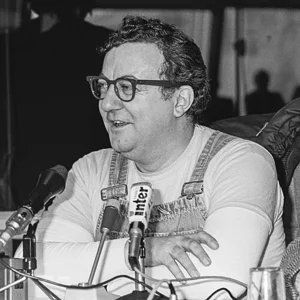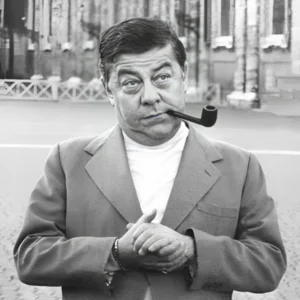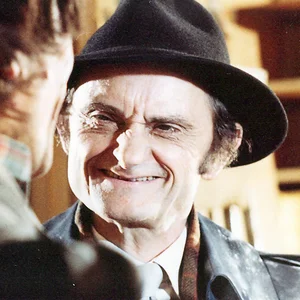

Sim (1926-2009), whose real name was Simon Berryer, was a French actor and comedian. A figure of café-théâtre and television, he embodied a zany, provocative comic style, famous in particular for his cross-dressed character, the Baroness.
Sim(1926 — 2009)
Sim
France
5 min read
Frequently asked questions
Key Facts
- Born in 1926 in Marseille under the name Simon Berryer
- Made his name as an entertainer and comedian in the 1950s and 1960s
- Created the burlesque, cross-dressed character of the Baroness, his comic trademark
- Appeared in numerous comedy films and cabarets throughout the 20th century
- Died in 2009, leaving behind the image of a provocative and popular comic
Works & Achievements
A cross-dressing character playing an eccentric old aristocrat, his most famous creation, which became emblematic of French comedy television.
Numerous supporting roles in popular comedies, where his silhouette and zany acting were highly sought after.
Appearances in the satirical and provocative comedies of Jean Yanne, in tune with the irreverent humour of the era.
A regular on Saturday-night programmes, where he unleashed his zany comedy and cross-dressing characters live.
Participation in the Parisian café-théâtre scene, a laboratory for free and intimate humour.
Anecdotes
Behind the outrageous makeup of the Baroness de la Tronche-en-Biais, Sim created one of the most famous cross-dressing characters of French television in the 1970s. Improbable wig, extravagant dress and shrill voice: this caricature of a batty old aristocrat made him popular on every variety show.
Before making his breakthrough, Sim — whose real name was Simon Berryer — endured long years of hardship, juggling odd jobs and cabaret gigs. It was only thanks to television and the emerging café-théâtre scene that he found his audience, proving that a comedy career can begin later in life.
Sim loved to provoke and to play on absurd, biting humour. He made countless appearances in the popular comedies of French cinema, crossing paths with stars like Louis de Funès or the zany world of Jean Yanne, always in colourful supporting roles.
A television regular, Sim knew how to improvise and throw hosts off balance with his madcap comebacks. His freedom of tone and his taste for the grotesque made him an emblematic figure of that golden age of variety-show comedy, when live broadcasting left room for every kind of whimsy.
Primary Sources
Sim, dressed up as an eccentric old aristocrat, plays the Baroness of Tronche-en-Biais, a recurring character who triggers laughter through her grotesque appearance and absurd one-liners.
A sought-after supporting actor, Sim appears in numerous popular comedies, bringing his distinctive silhouette and zany style to comic secondary roles.
The comedian Sim, whose real name was Simon Berryer, a figure of French comedy and creator of the Baroness, died at the age of 82.
Key Places
Capital of café-théâtres, television studios and French cinema where most of his career unfolded. It is also the city where he passed away.
Sets of the variety shows from which his sketches and his character of the Baroness were broadcast. Television made his national fame.
Intimate venues of the Latin Quarter and the Left Bank where the comedy of the 1970s flourished. Sim mingled there with the emerging café-théâtre scene.
Shooting sets of the popular French comedies in which he held many supporting roles. Cinema extended his television presence.
Typical Objects

An extravagant, oversized wig that tops off his character of an old aristocrat. It is one of the immediately recognizable trademarks of his comic drag persona.

Elaborate, deliberately kitsch outfits worn to embody the Baroness. The over-the-top costume is part of the comic mechanism of the drag act.

Foundation, false eyelashes and heavy make-up that transform Sim's face into a grotesque caricature. An essential tool of drag comedy.

The studio cameras of variety shows broadcast his sketches across all of France. Television was the main vehicle of his fame.

A microphone used on stage sets and in café-théâtres to carry the shrill voice of his characters. A symbol of live performance and improvisation.

The small platform of Parisian café-théâtres where the intimate comedy of the 1970s was performed. A place for experimenting with free and provocative humor.
School Curriculum
Vocabulary & Tags
Key Vocabulary
Daily Life
Morning
As an artist of the night and the stage, Sim often started his day late. His mornings were spent reading the papers, answering the phone and preparing the scripts or improvisations for upcoming sketches.
Afternoon
Afternoons were devoted to rehearsals, studio filming, or sessions of makeup and costume fittings to create his cross-dressed characters. He also met with producers, writers and fellow performers.
Evening
The evening was the heart of his profession: café-théâtre performances, variety show recordings or galas. It was before an audience, live or on stage, that he truly came into his own.
Food
His life as a Parisian artist blended late dinners after the show, brasseries and cafés frequented by the music-hall crowd. Meals followed the offbeat rhythm of performance nights.
Clothing
About town, he cultivated a classic actor's elegance; on stage, he slipped into wigs, extravagant gowns and outrageous makeup to embody the Baroness and her grotesque creatures.
Housing
He lived in Paris, as close as possible to the television studios, theatres and café-théâtres that shaped his career, amid the cultural buzz of the capital.
Historical Timeline
Period Vocabulary
Liens externes & ressources
Références
Œuvres
La Baronne de la Tronche-en-Biais
années 1970
Rôles au cinéma comique français
1968-1985
Collaborations avec Jean Yanne
années 1970
Sketches de variétés à la télévision
années 1970-1980
Spectacles de café-théâtre
années 1970