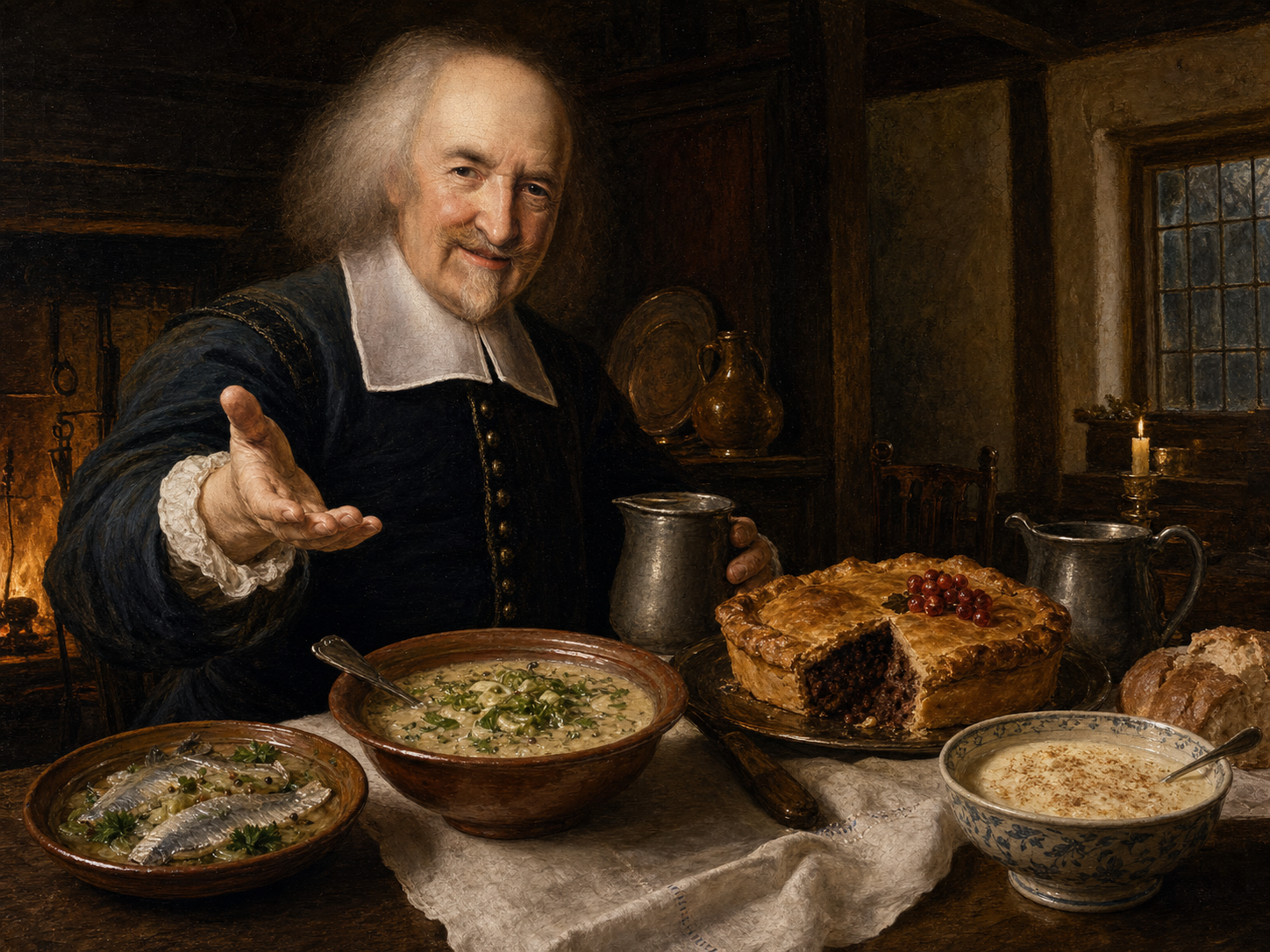
 Flip the card
Thomas Hobbes at the table
1588 — 1679
On the menu
The multi-course meal of the English gentry
At a 17th-century gentleman's table, one does not serve a starter then a main then a dessert: one sets out several 'courses' (shared dishes) in two or three successive services. The first course mingles pottages (broths), boiled meats and pies; the second brings roasts, game and delicate meats; one closes with sweet 'banqueting stuffs' and hot spiced drinks (possets, caudles). On lean days prescribed by the Church, fish replaces meat.
Signature : Mace and nutmeg
The husk and the seed of the same fruit (the nutmeg tree) perfume almost everything in English baroque cooking: savoury pies, sweet possets, spiced fish. Along with verjuice (sour green grape juice), it is the aromatic signature of a cuisine that loves to marry meat, dried fruits and sweetness.
click to flip back
Thomas Hobbes at the table
1588 — 1679
5 period recipes
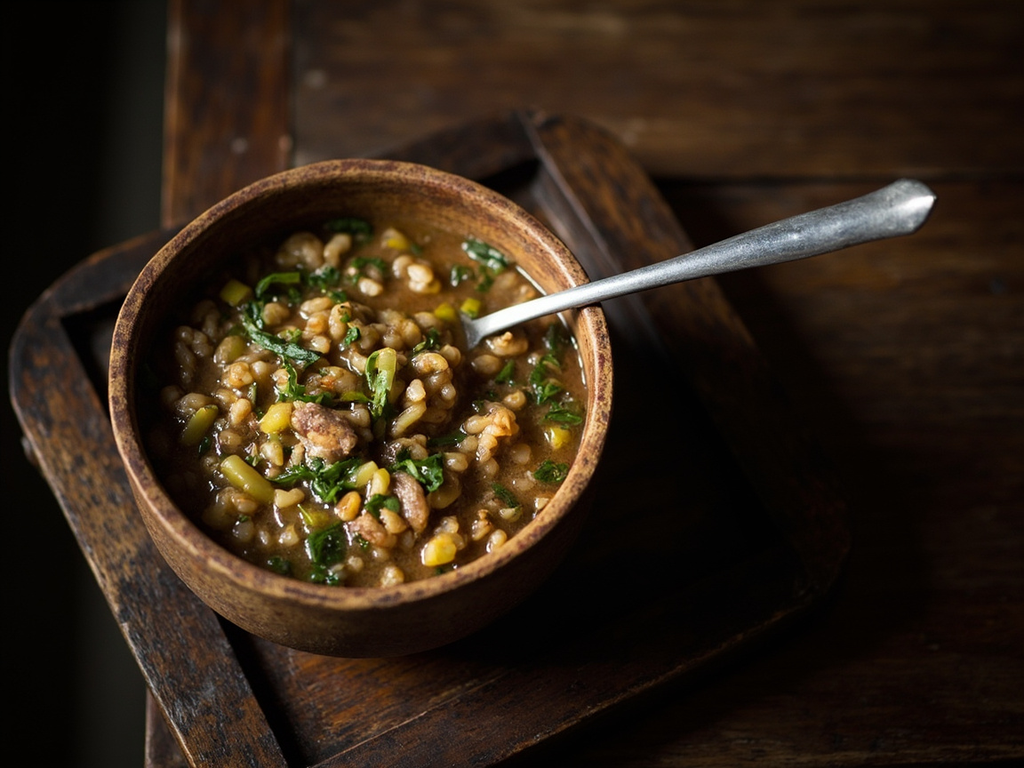 Everyday
Oat pottage with leeks and pot herbs
First course — pottage (the foundational broth of the meal)
🧂 🍄· 50 min
View the recipe
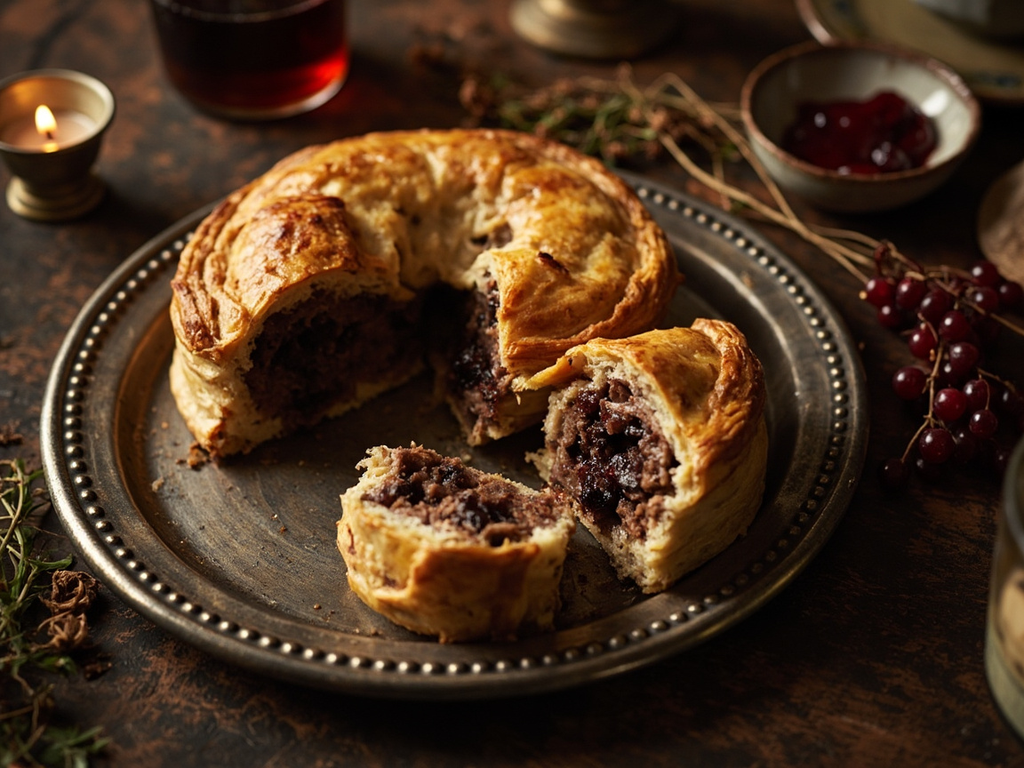 Festive
Venison pasty with currants and sweet spices
Second course — pasty (the grand game pie of feast days)
🧂 🍯 🍄· 2 h 30
View the recipe
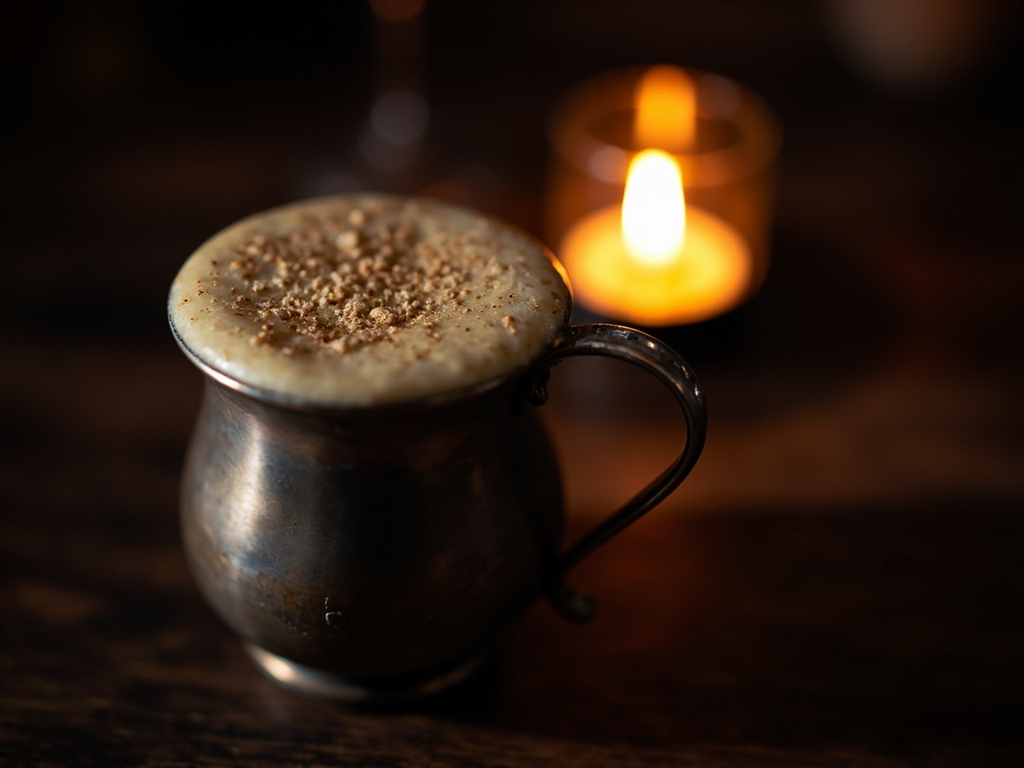 Drink
DrinkSack posset — curdled milk with Spanish wine, eggs and nutmeg
Closing — banqueting drink (hot sweet end-of-meal beverage)
🍯 🍋· 20 min
View the recipe
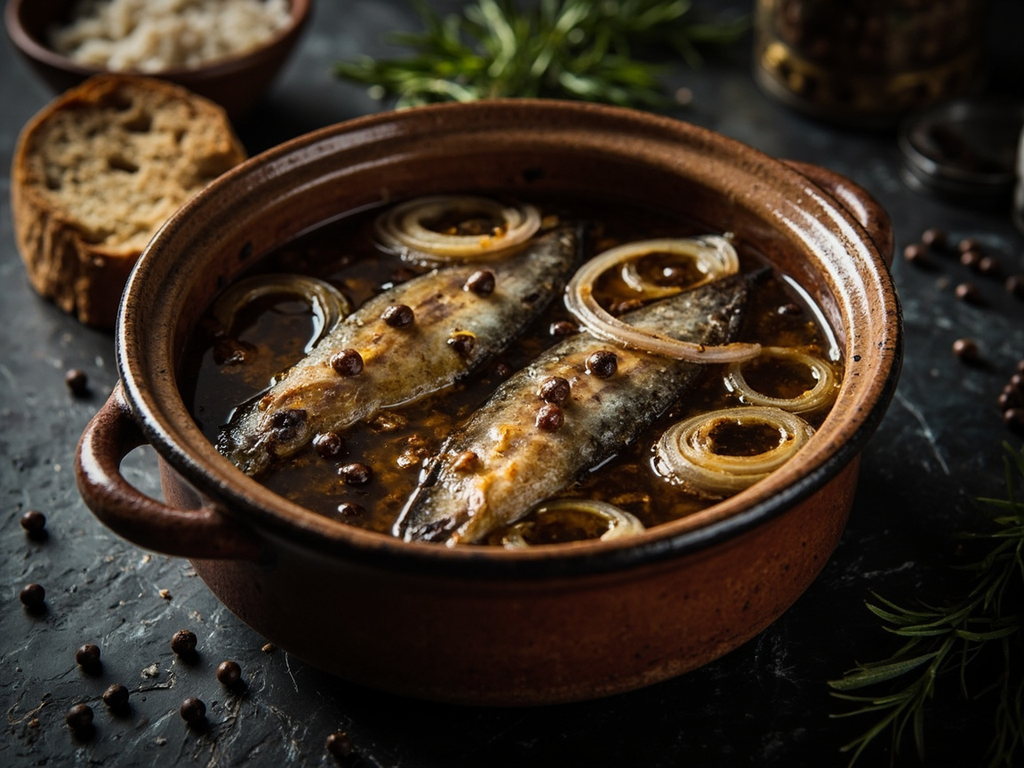 Preserving
Soused herrings — fish marinated in verjuice and spices for lean days
Lean day — soused fish (preserved fish for Lent and Fridays)
🍋 🧂 🌶️· 30 min + 24 h marinating
View the recipe
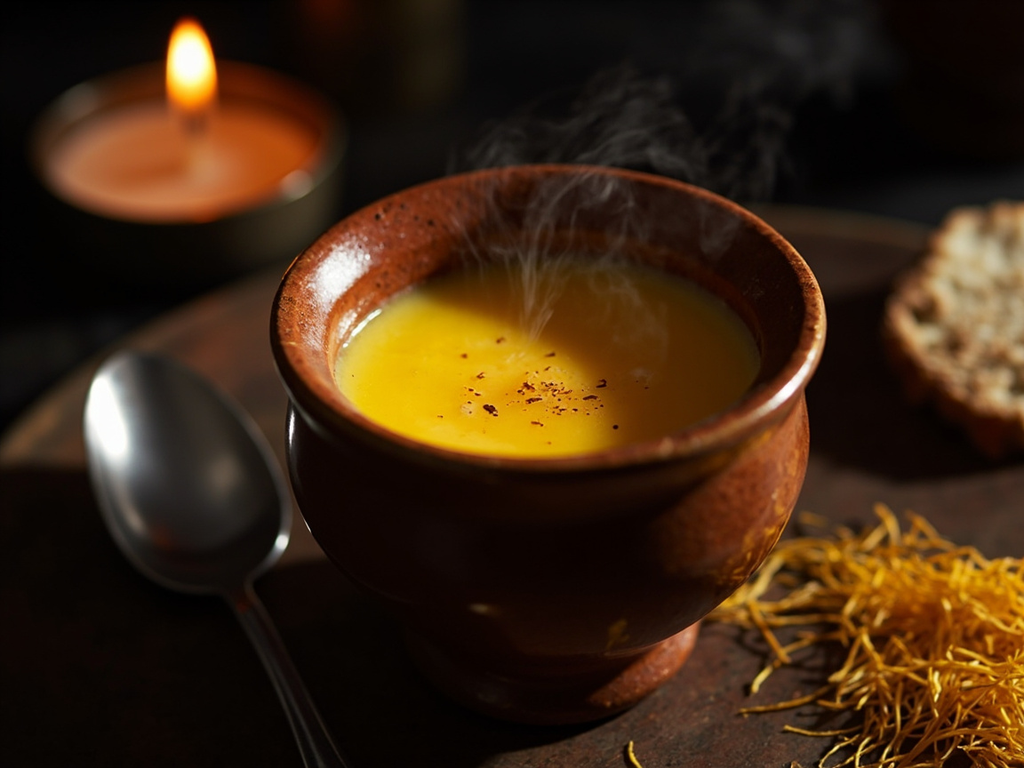 Remedy
Small beer caudle with saffron and eggs
Restorative — caudle (hot restorative drink for convalescents and night owls)
🍯 🌶️· 20 min
View the recipe