 flip
flipOat pottage with leeks and pot herbs
Oat pottage with leeks and pot herbs
Why this dish? Before the Leviathan, there is the belly: pottage is the daily foundation of every English table, from labourer to gentleman. In the long study mornings at Hardwick Hall, it is this binding broth of oats and garden herbs that keeps a man until evening.
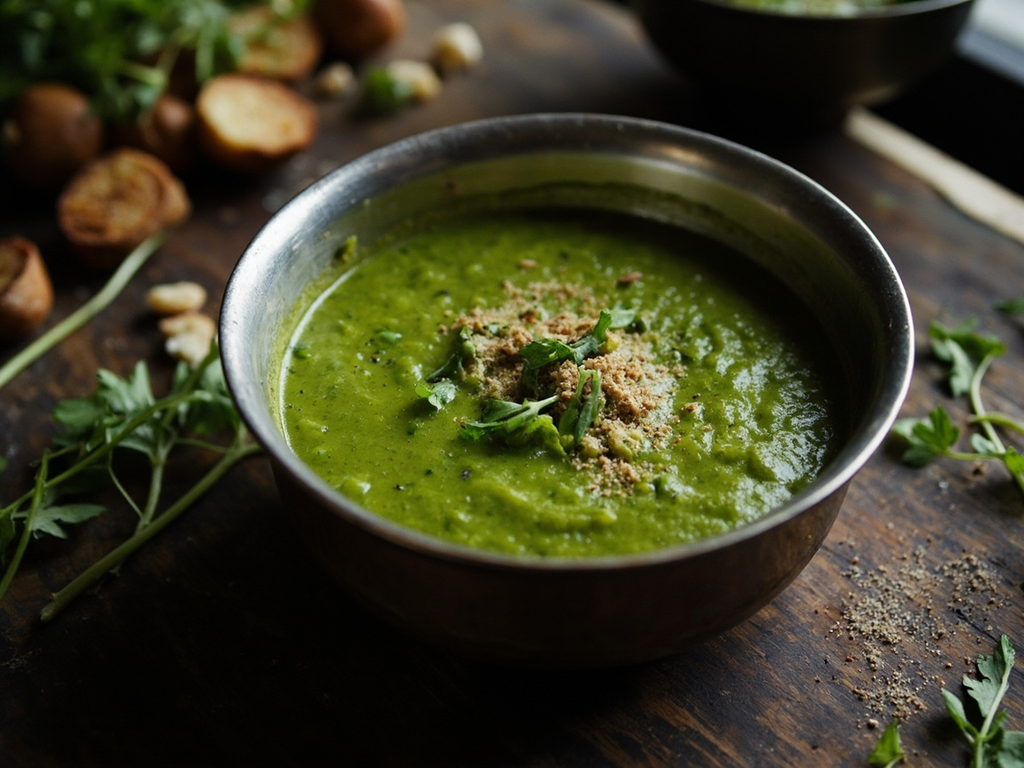
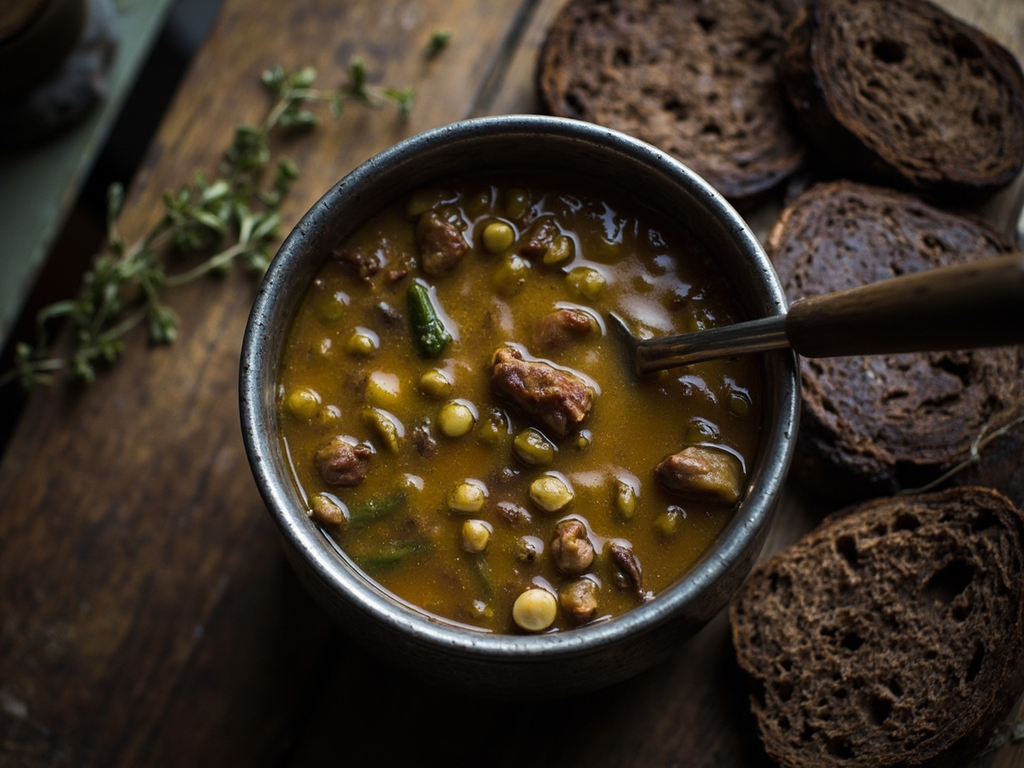
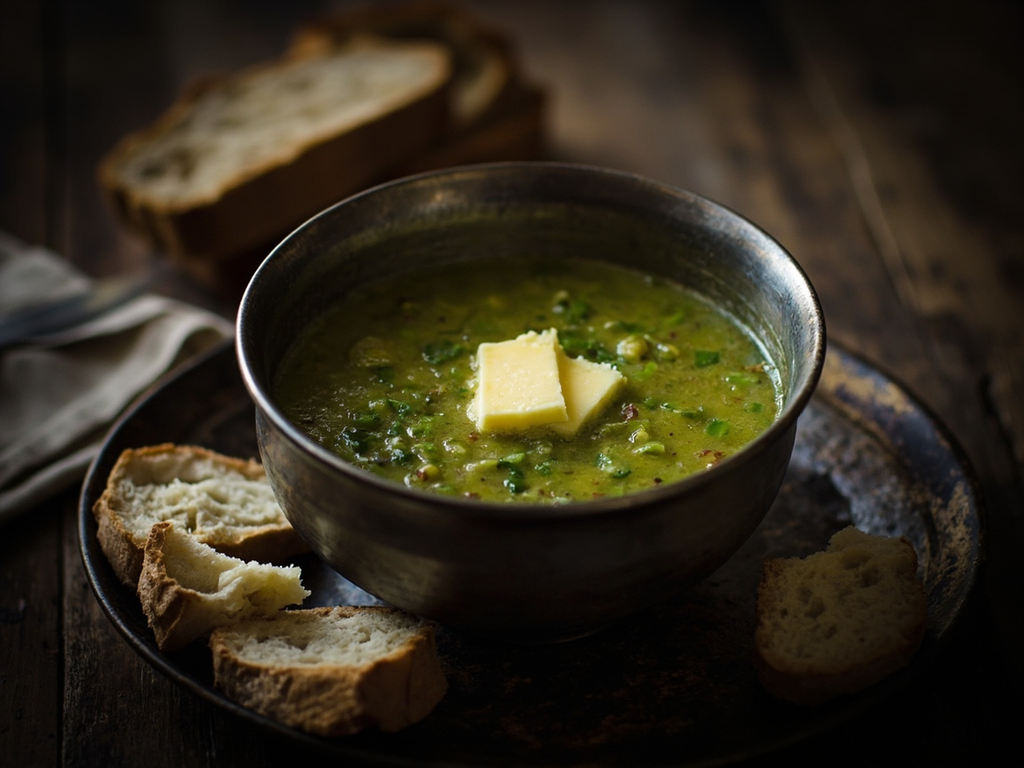
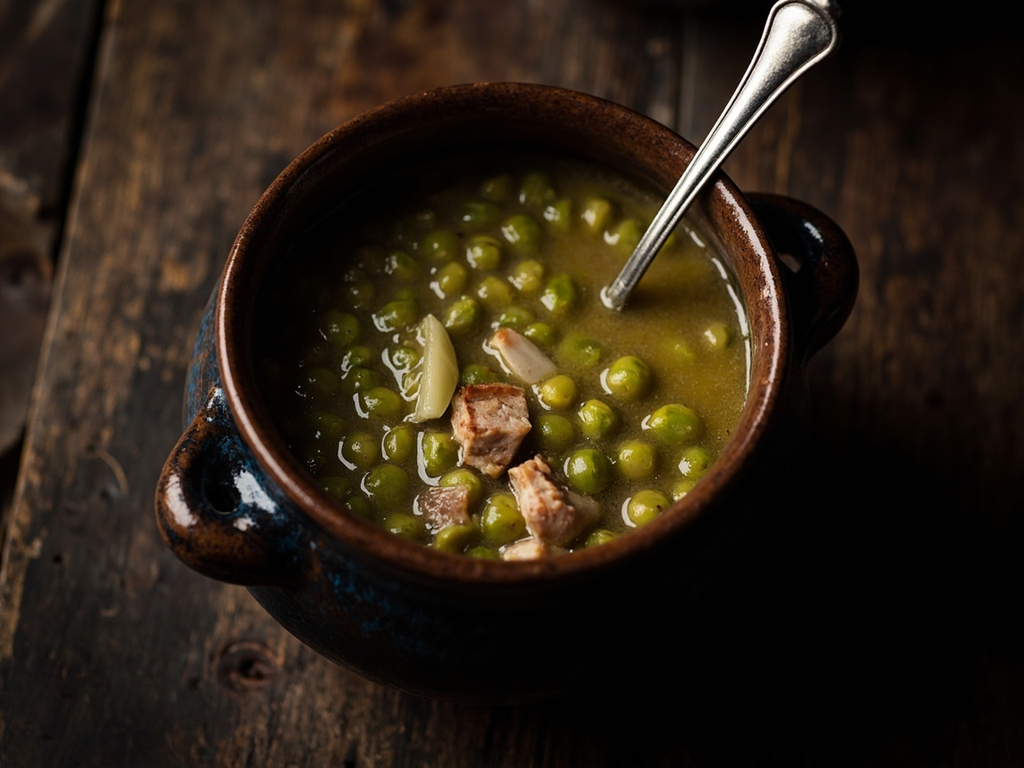
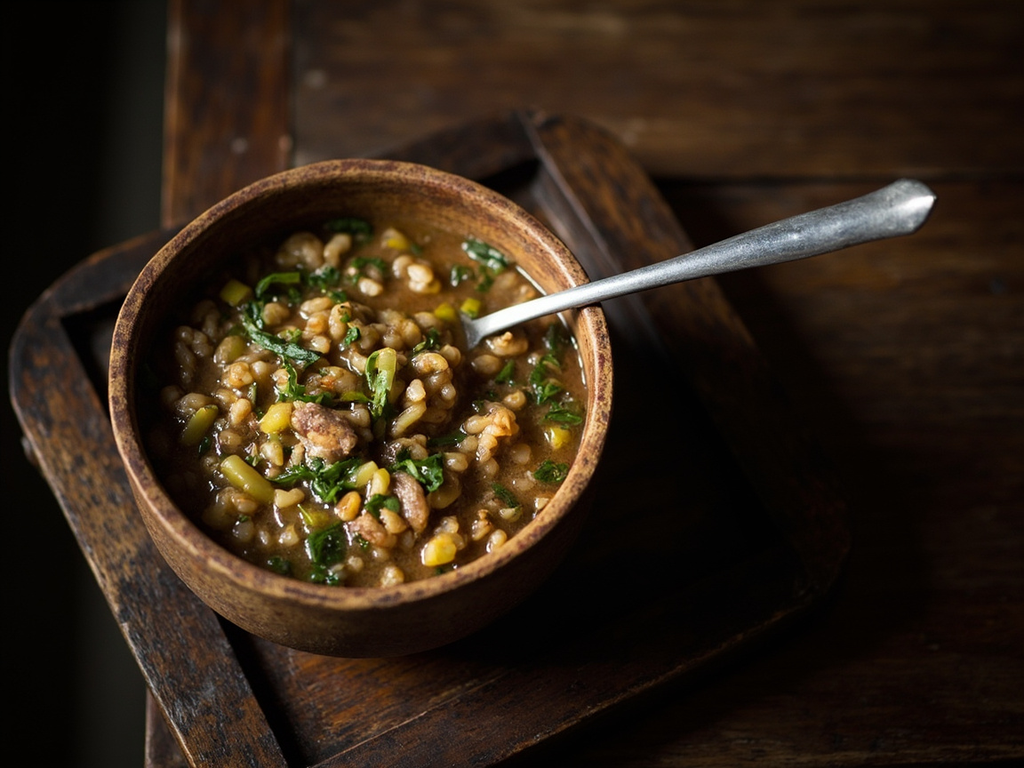
A thick and comforting pottage: oat grains and barley melted into a meat broth, bound with garden herbs. The most common and universal dish of England at that time, eaten with a spoon from a wooden bowl.
Consider first simplicity, for in it lies the peace of the body as of the State. At Hardwick, from daybreak, one put the oats in the cauldron with yesterday's broth, a few leeks and whatever the garden yielded — borage, parsley, hyssop. One kept it on the fire until the spoon stood upright in it. Believe a man who lived ninety-one years: no learned dish ever sustained my study better than this humble bowl.
- •Oat groats and hulled barley — two handfuls (binding base)
- •Beef or mutton broth — as needed (foundation)
- •Leeks — a few (vegetable)
- •Garden herbs (parsley, borage, hyssop) — a bunch (flavouring)
- •Salt, pepper, mace — to taste (seasoning)
Oat pottage with leeks and pot herbs
A thick and comforting pottage: oat grains and barley melted into a meat broth, bound with garden herbs. The most common and universal dish of England at that time, eaten with a spoon from a wooden bowl.
Why this dish? Before the Leviathan, there is the belly: pottage is the daily foundation of every English table, from labourer to gentleman. In the long study mornings at Hardwick Hall, it is this binding broth of oats and garden herbs that keeps a man until evening.
Consider first simplicity, for in it lies the peace of the body as of the State. At Hardwick, from daybreak, one put the oats in the cauldron with yesterday's broth, a few leeks and whatever the garden yielded — borage, parsley, hyssop. One kept it on the fire until the spoon stood upright in it. Believe a man who lived ninety-one years: no learned dish ever sustained my study better than this humble bowl.
Ingredients (period version)
- Oat groats and hulled barley — two handfuls (binding base)
- Beef or mutton broth — as needed (foundation)
- Leeks — a few (vegetable)
- Garden herbs (parsley, borage, hyssop) — a bunch (flavouring)
- Salt, pepper, mace — to taste (seasoning)
Ingredients
- Thick rolled oats + pearl barley — 120 g total (binding base)
- Beef broth — 1.2 L (foundation)
- Sliced leeks — 2 (vegetable)
- Flat-leaf parsley + a little borage (or spinach) — 1 good handful (flavouring)
- Salt, pepper, ground mace — 1 pinch of mace (seasoning)
Method
- Gently sweat the sliced leeks in a little butter without browning.
- Pour in the broth, add the pearl barley and simmer for 25 min.
- Add the oats and continue for 15 min, stirring, until a thick savoury porridge texture.
- Off the heat, stir in the chopped herbs, season with salt, pepper, and a grating of mace.
- Serve very hot in bowls; the spoon should almost stand upright.
How it was made : Pottage was THE quintessential English dish before the 18th century: one simmered cereals and herbs in the pot broth, sometimes for hours, over embers. Depending on the household, it was enriched with meat or kept lean.
The contemporary twist : Served in a glass with a drizzle of herb oil and a few croutons: a savoury 'porridge' that would hold its own on a modern bistro menu.
Sources : Gervase Markham, The English Huswife (1615) · Hannah Woolley, The Queen-like Closet (1670)
Thomas Hobbes · Charactorium