 Flip the card
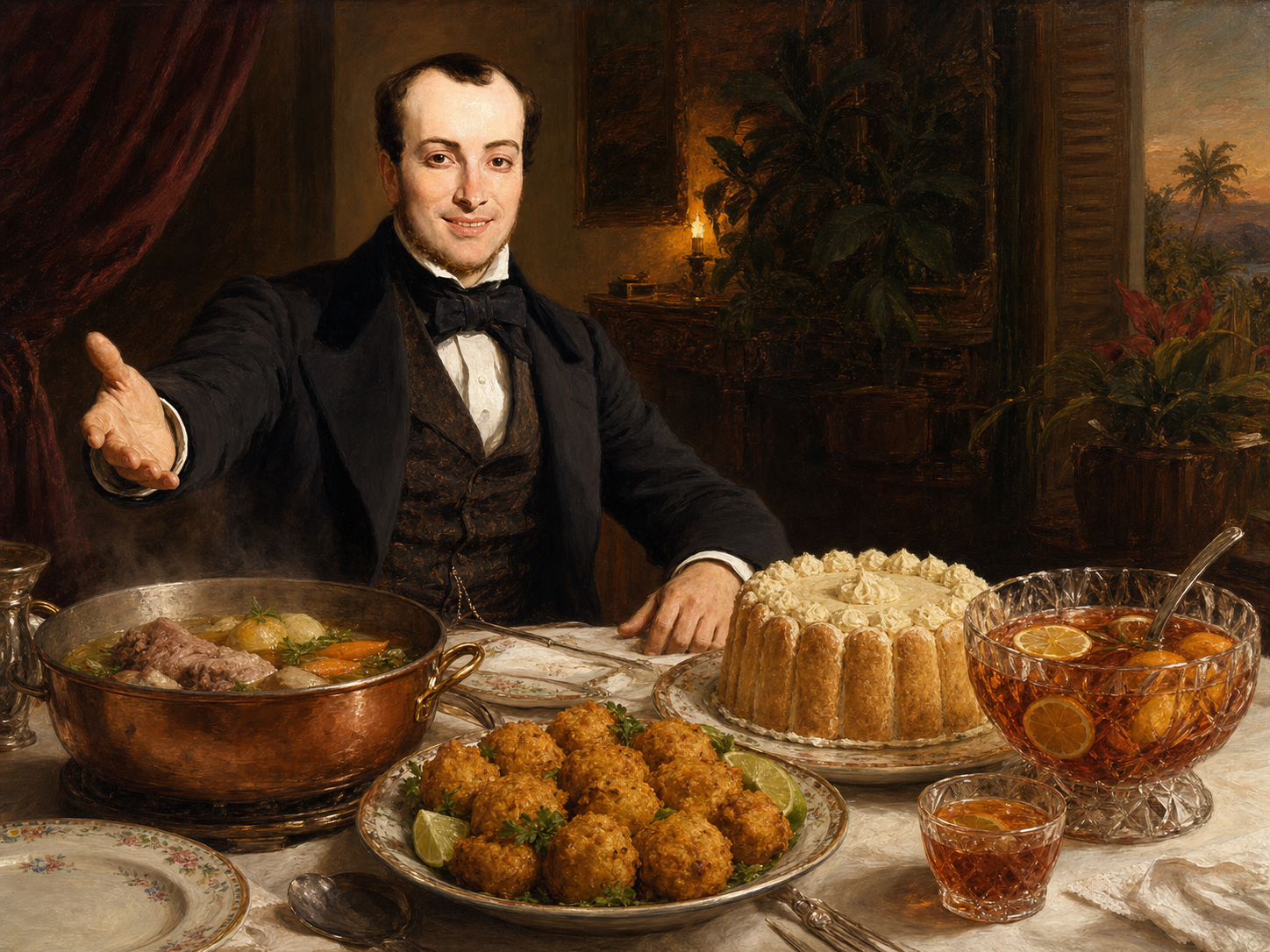
Victor Schoelcher at the table
1804 — 1893
On the menu
Russian-style service at the bourgeois table (19th century)
In Schœlcher's France, the upper middle class gradually abandoned "French-style service" (all dishes placed together) for "Russian-style service": dishes arrive one after another in order — soup, relevé, entrées, roast, sweet entremets, coffee. Lunch and dinner are the two structured meals of the day, taken at fixed hours, accompanied by wine. But Schœlcher's life also took him to the West Indies and the Americas, where he shared the Creole table: salt cod fritters, punch, and cane sugar — the very sugar whose producers he sought to liberate.
Signature : Cane sugar
No ingredient tells Schœlcher's story better than cane sugar. A sweetener of the bourgeois table, it is also the bitter fruit of forced labor in the colonies: it was for the men and women who cultivated it under the whip that he fought. Finding it in a Parisian charlotte as in a West Indian punch is to hold both ends of his struggle.
click to flip back
Victor Schoelcher at the table
1804 — 1893
5 period recipes
 Everyday
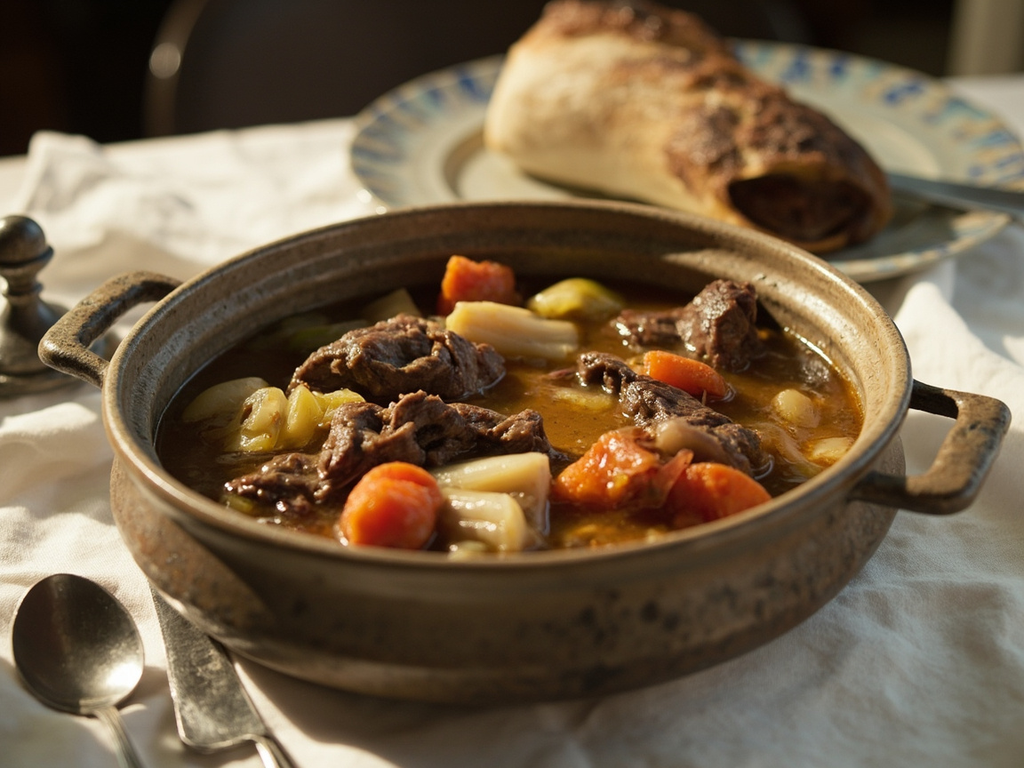
Pot-au-feu with boiled beef
Soup and relevé of lunch
🧂 🍄· 3 h 30
View the recipe
 Festive
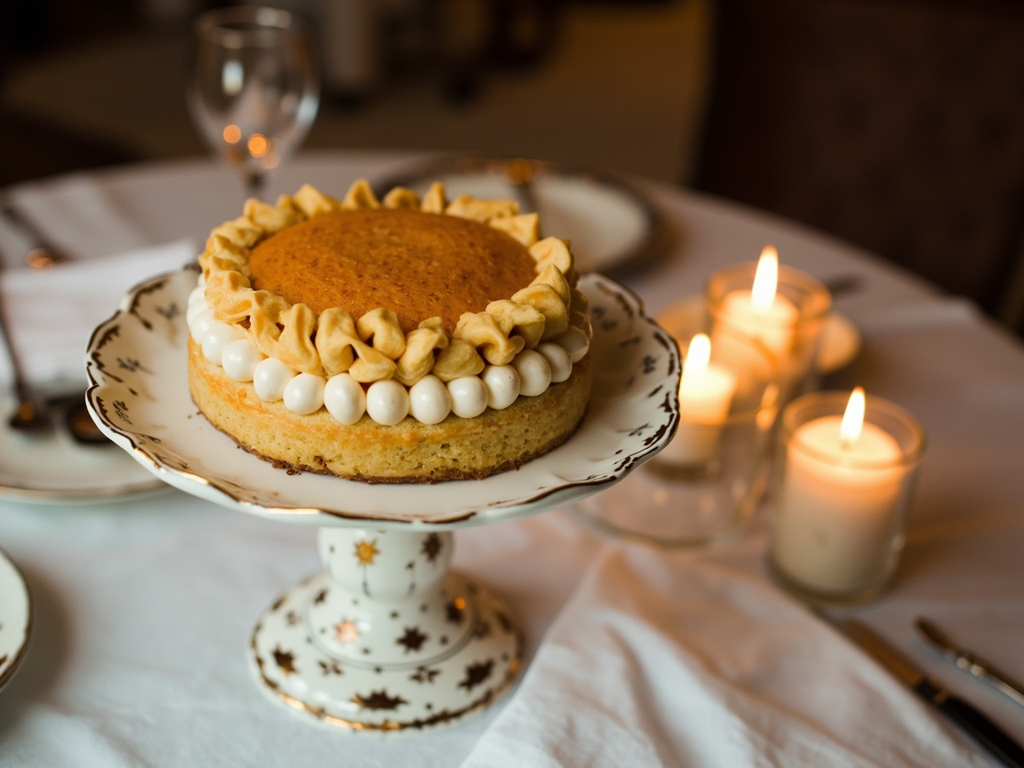
Charlotte russe with cream
Sweet entremets
🍯· 5 h (including 4 h chilling)
View the recipe
 Travel
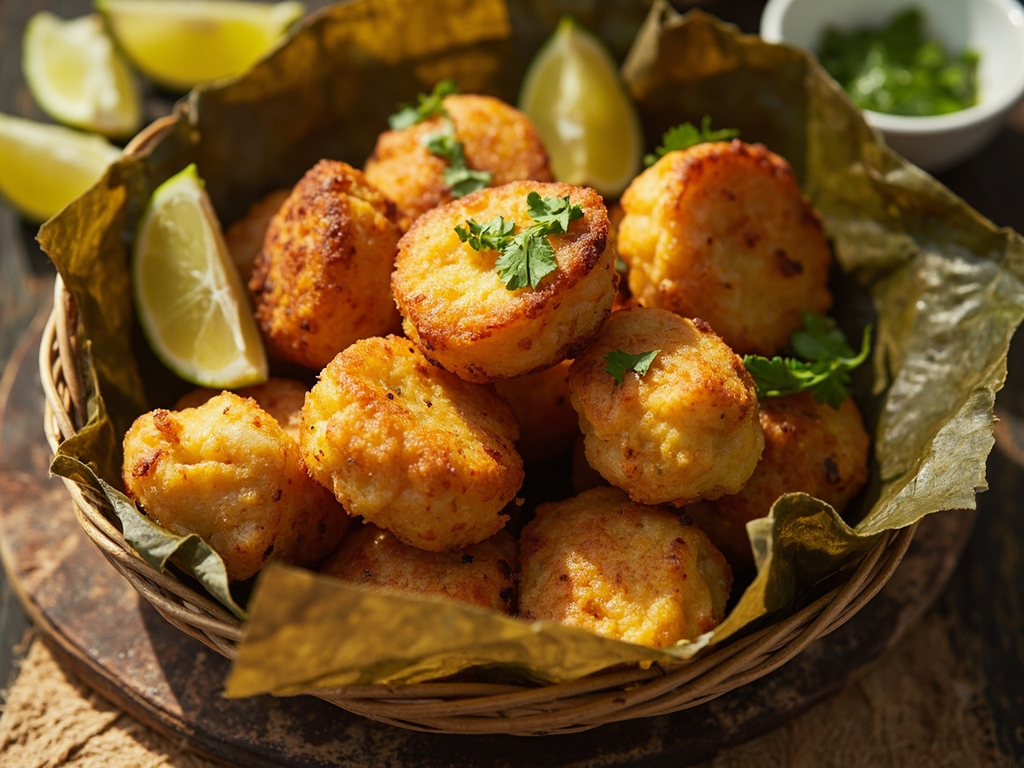
Creole salt cod fritters
Welcome fritter of the Creole table
🧂 🌶️· 40 min (+ 12 h desalting)
View the recipe
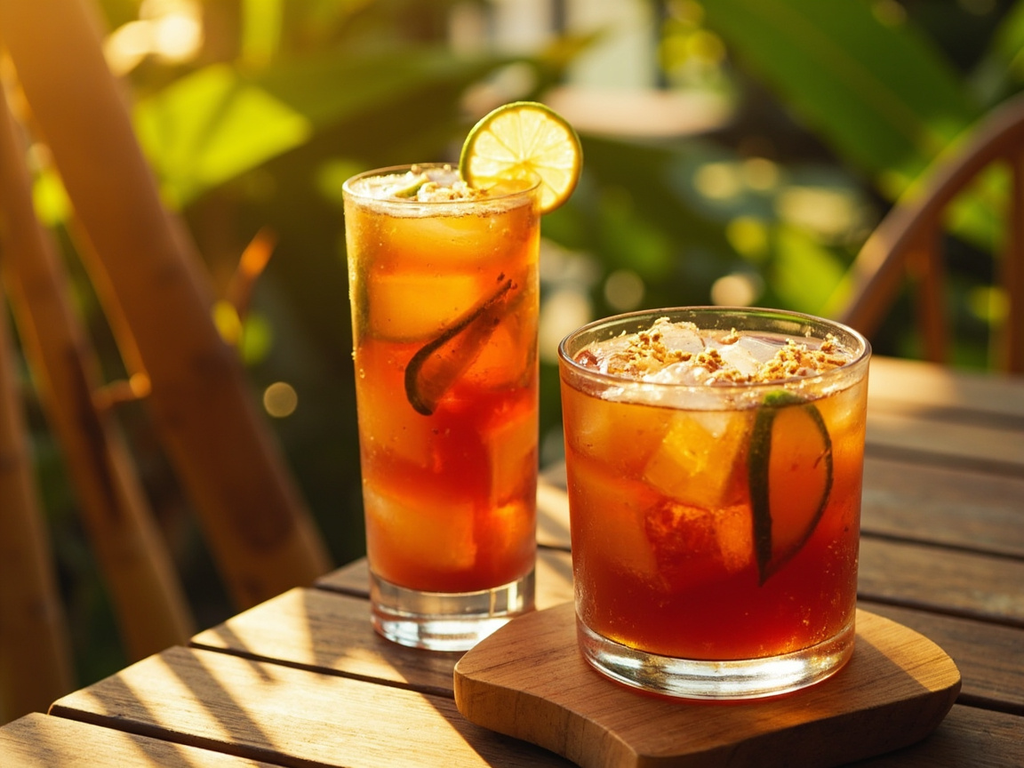 Drink
DrinkPlanter's punch with island rum
Welcome drink of the Creole veranda
🍯 🍋· 10 min
View the recipe
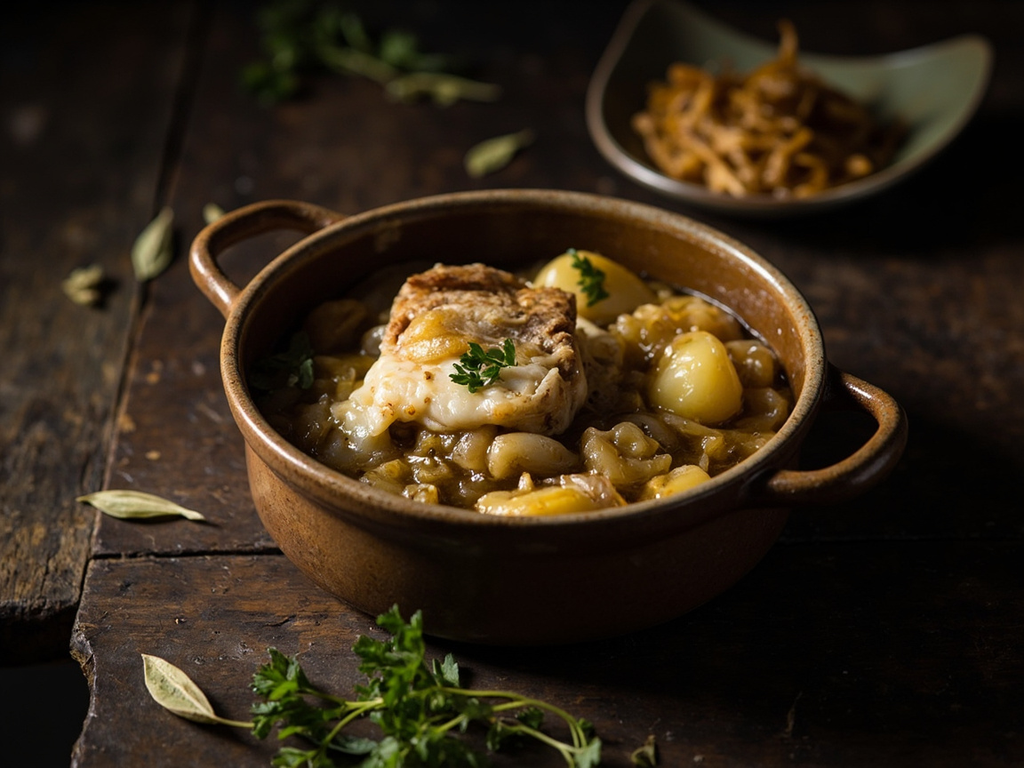 Preserving
Newfoundland-style salt cod, preserved in salt
Pantry provision (salting)
🧂 🍄· 1 h (+ 24 h desalting)
View the recipe