 flip
flipCharlotte russe with cream
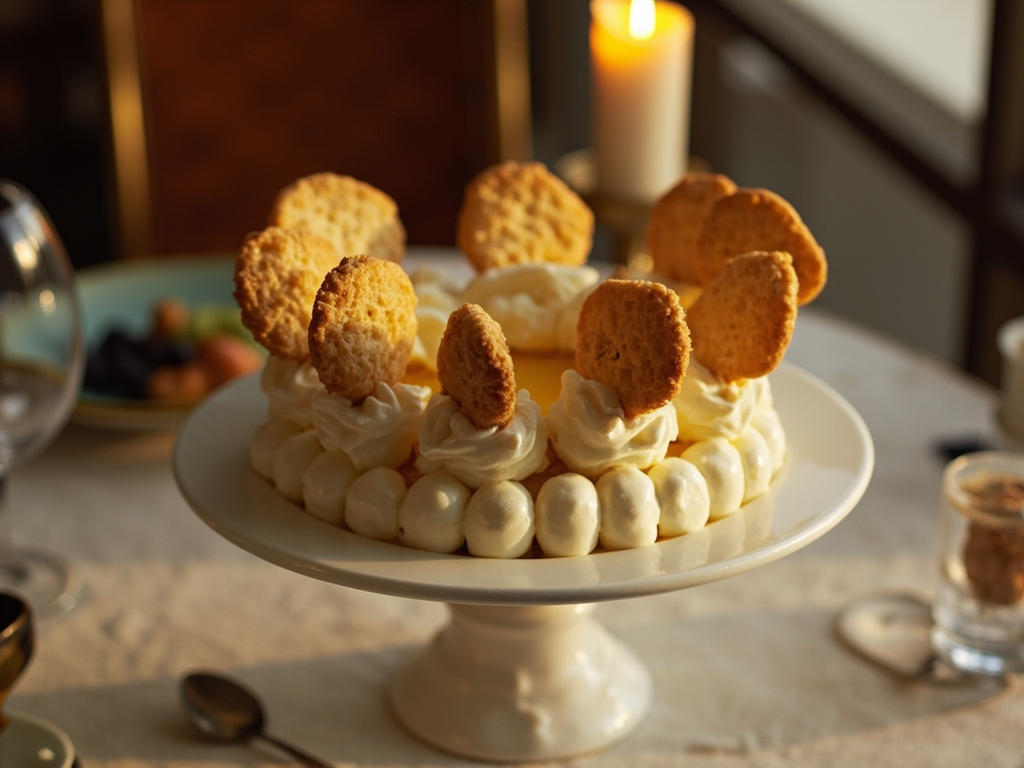
Charlotte russe with cream
Why this dish? The sweet entremets closes the reception dinners of the republican bourgeoisie. The “Russian” charlotte, made with ladyfingers and cream, is the triumph of cane sugar — the sugar whose human cost Schœlcher, secretary of the Abolition Commission in 1848, knew better than anyone. Serving it is celebrating sweetness finally separated from servitude.
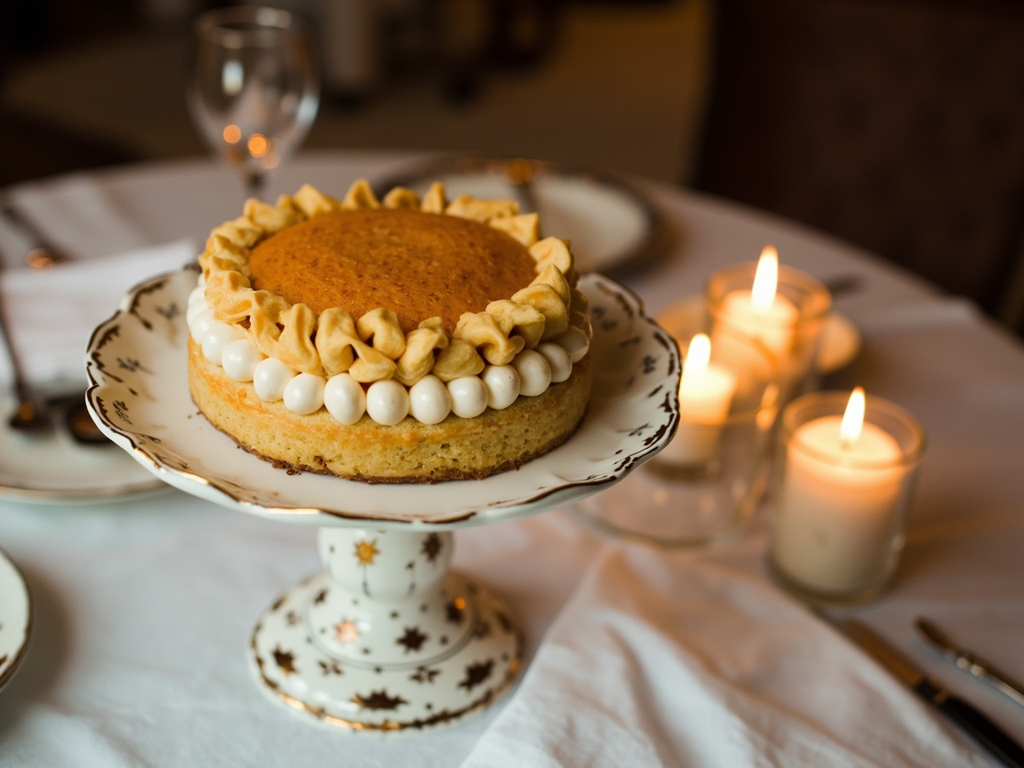
A mold lined with ladyfingers, filled with vanilla Bavarian cream set in the cold. Unmolded, a trembling, fragrant dome, served for dessert at a festive dinner.
When I receive a few friends of good cause, it is with this charlotte that dinner ends. We line the mold with those little long biscuits, then fill it with a cream set in the cold, flavored with vanilla and sweetened — ah, that sugar! Think, as you taste it, of those hands that tore it from the earth of the islands. I wanted that one day this sweetness would no longer bear any chain; taste it then as free men.
- •Ladyfingers — enough to line the mold (structure)
- •Milk — a pint (cream base)
- •Egg yolks — half a dozen (thickener)
- •Cane sugar — generously (sweetness (signature))
- •Vanilla bean — one (flavor)
- •Isinglass (gelatin) — a few leaves (setting)
- •Whipped cream — to taste (lightness)
Charlotte russe with cream
A mold lined with ladyfingers, filled with vanilla Bavarian cream set in the cold. Unmolded, a trembling, fragrant dome, served for dessert at a festive dinner.
Why this dish? The sweet entremets closes the reception dinners of the republican bourgeoisie. The “Russian” charlotte, made with ladyfingers and cream, is the triumph of cane sugar — the sugar whose human cost Schœlcher, secretary of the Abolition Commission in 1848, knew better than anyone. Serving it is celebrating sweetness finally separated from servitude.
When I receive a few friends of good cause, it is with this charlotte that dinner ends. We line the mold with those little long biscuits, then fill it with a cream set in the cold, flavored with vanilla and sweetened — ah, that sugar! Think, as you taste it, of those hands that tore it from the earth of the islands. I wanted that one day this sweetness would no longer bear any chain; taste it then as free men.
Ingredients (period version)
- Ladyfingers — enough to line the mold (structure)
- Milk — a pint (cream base)
- Egg yolks — half a dozen (thickener)
- Cane sugar — generously (sweetness (signature))
- Vanilla bean — one (flavor)
- Isinglass (gelatin) — a few leaves (setting)
- Whipped cream — to taste (lightness)
Ingredients
- Ladyfingers — 24 to 30 (structure)
- Whole milk — 50 cl (cream base)
- Egg yolks — 5 (thickener)
- Cane sugar — 120 g (sweetness (signature))
- Vanilla bean — 1 (flavor)
- Gelatin — 4 leaves (8 g) (setting)
- Cold heavy cream — 25 cl (whipped cream)
Method
- Soak the gelatin in cold water. Line a charlotte mold with ladyfingers, rounded side against the wall.
- Make a crème anglaise: whisk yolks and sugar, pour in hot vanilla milk, cook until it coats the spoon without boiling (82°C).
- Off the heat, stir in the squeezed gelatin. Let cool until the cream begins to thicken.
- Whip the cold cream into soft peaks and gently fold into the cooled cream.
- Pour into the mold, smooth the top, refrigerate at least 4 hours. Unmold onto a plate and serve well chilled.
How it was made : The charlotte russe is attributed to the famous Antonin Carême in the early 19th century, who named it in honor of the tsar. Without refrigerators, it was set in an icebox filled with crushed ice brought down from the mountains or stored in winter — a luxury of the bourgeois table.
The contemporary twist : Add a splash of aged West Indian rum between the ladyfingers and name it “Charlotte of April 27,” the date of the 1848 abolition decree.
Sources : Marie-Antoine Carême, Le Pâtissier royal parisien, 1815 · Jules Gouffé, Le Livre de cuisine, 1867
Victor Schoelcher · Charactorium