 flip
flipPot-au-feu with boiled beef
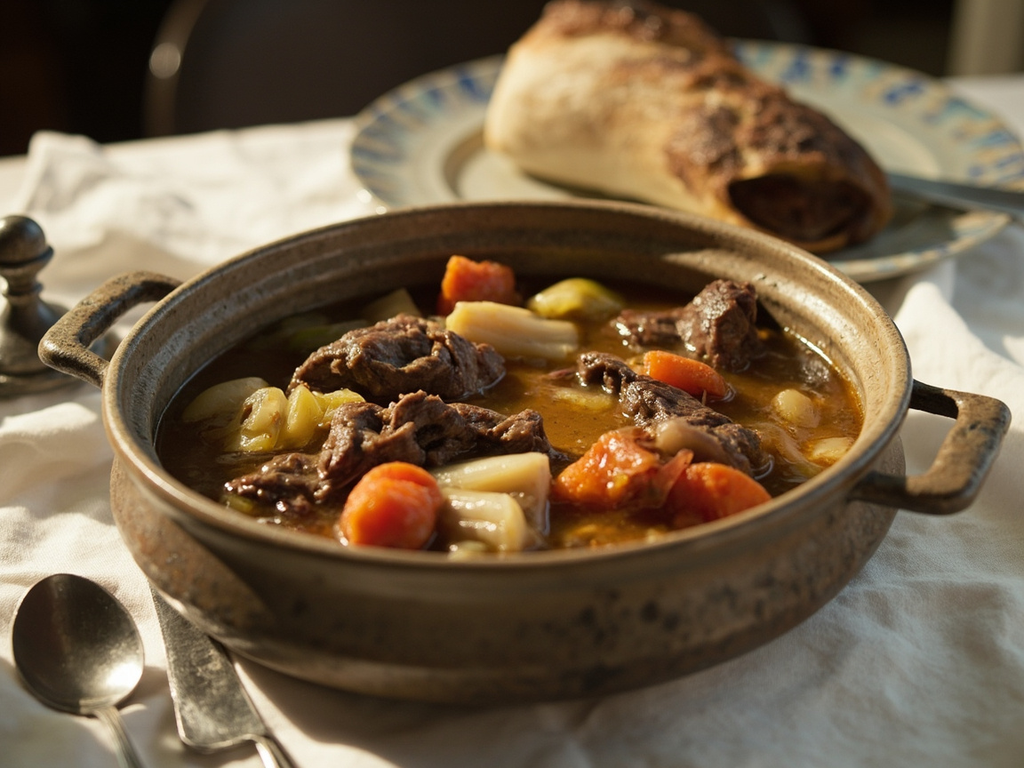
Pot-au-feu with boiled beef
Why this dish? Pot-au-feu is the pillar of the Parisian bourgeois lunch that Schœlcher took between sessions at the Assembly. A single pot yields first a clear broth (the soup), then the meat and vegetables (the relevé): economical, nourishing, it is the meal of the working man he was, more devoted to his cause than to the splendors of the table.
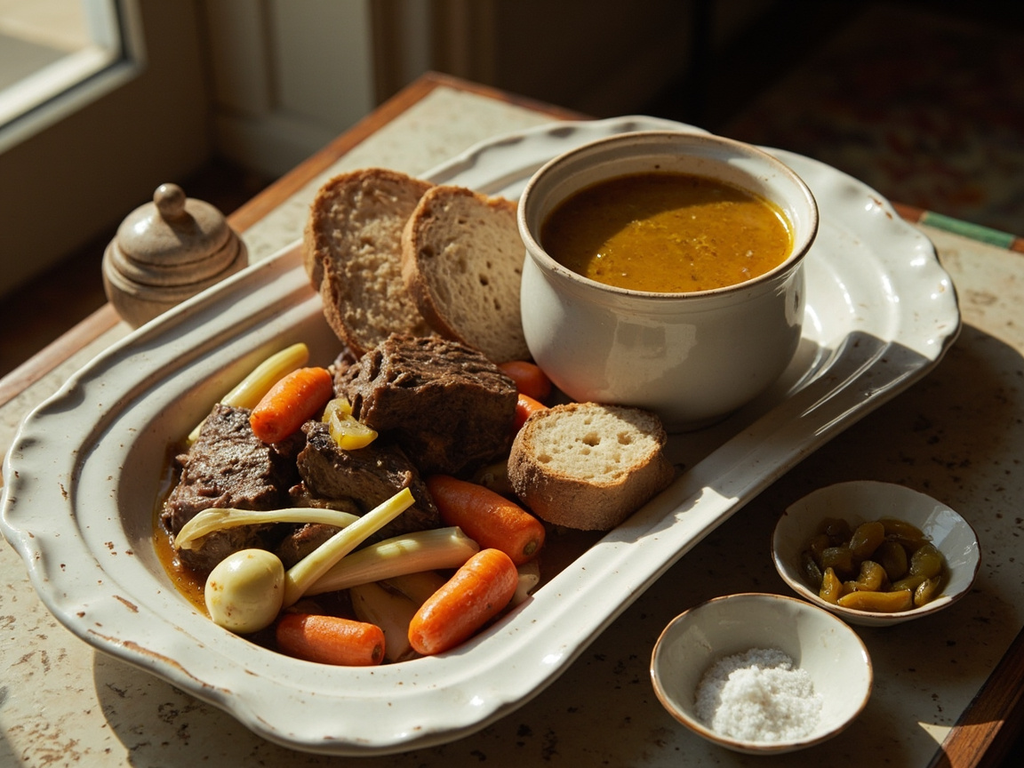
A piece of beef and vegetables simmered for hours in water. First you drink the broth, then you eat the tender meat with coarse salt, pickles, and strong mustard.
Believe me, there is no need for a great feast to dine well. On my table, as on that of any honest Parisian bourgeois, the pot has been simmering since morning on the corner of the stove, without anyone tending to it. First we draw a broth that is served piping hot, then the boiled beef, which I like seasoned with a bit of coarse salt and a mustard that bites. There is a citizen's meal: simple, honest, and leaves the mind free for the affairs of the Republic.
- •Gîte or short ribs of beef — a nice piece (boiling meat)
- •Marrow bones — a few (richness of broth)
- •Carrots, turnips, leeks — to taste (pot vegetables)
- •Onion studded with a clove — one (flavor)
- •Coarse salt, peppercorns — to taste (seasoning)
Pot-au-feu with boiled beef
A piece of beef and vegetables simmered for hours in water. First you drink the broth, then you eat the tender meat with coarse salt, pickles, and strong mustard.
Why this dish? Pot-au-feu is the pillar of the Parisian bourgeois lunch that Schœlcher took between sessions at the Assembly. A single pot yields first a clear broth (the soup), then the meat and vegetables (the relevé): economical, nourishing, it is the meal of the working man he was, more devoted to his cause than to the splendors of the table.
Believe me, there is no need for a great feast to dine well. On my table, as on that of any honest Parisian bourgeois, the pot has been simmering since morning on the corner of the stove, without anyone tending to it. First we draw a broth that is served piping hot, then the boiled beef, which I like seasoned with a bit of coarse salt and a mustard that bites. There is a citizen's meal: simple, honest, and leaves the mind free for the affairs of the Republic.
Ingredients (period version)
- Gîte or short ribs of beef — a nice piece (boiling meat)
- Marrow bones — a few (richness of broth)
- Carrots, turnips, leeks — to taste (pot vegetables)
- Onion studded with a clove — one (flavor)
- Coarse salt, peppercorns — to taste (seasoning)
Ingredients
- Beef chuck and short ribs — 1.2 kg (boiling meat)
- Marrow bones — 2-3 pieces (richness of broth)
- Carrots — 4 (vegetable)
- Turnips — 2 (vegetable)
- Leeks — 3 (vegetable)
- Onion + 1 clove — 1 (flavor)
- Bouquet garni — 1 (flavor)
- Coarse salt, peppercorns — to taste (seasoning)
Method
- Put the meat in a large pot, cover with cold water, bring slowly to a simmer, and skim carefully.
- Add the clove-studded onion, bouquet garni, and pepper. Let simmer over low heat for 2h30, without boiling hard.
- Add peeled carrots and turnips, then tied leeks and marrow bones 45 minutes before the end.
- Salt with coarse salt. First serve the strained broth in soup plates, then the sliced meat and vegetables.
- Accompany with coarse salt, pickles, strong mustard, and country bread.
How it was made : In the 19th century, pot-au-feu simmered all morning on the coal stove of the bourgeois kitchen. It was said that a good pot should only “smile,” never boil vigorously, lest the broth become cloudy. The marrow spread on toast was a treat reserved for the master of the house.
The contemporary twist : Serve the roasted marrow on a slice of toasted rye bread, sprinkled with fleur de sel and parsley — the “citizen's marrow bone.”
Sources : Jules Gouffé, Le Livre de cuisine, 1867 · Urbain Dubois & Émile Bernard, La Cuisine classique, 1856
Victor Schoelcher · Charactorium