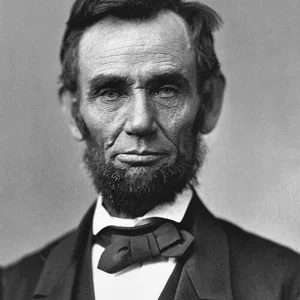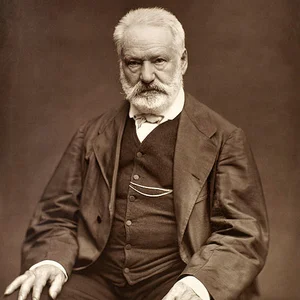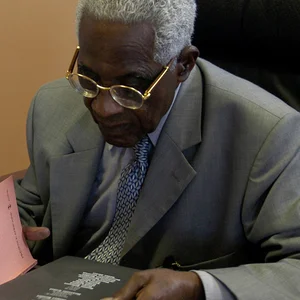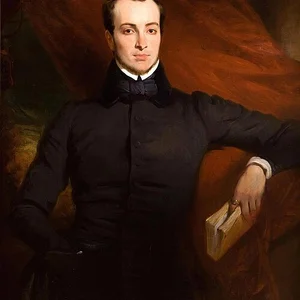

French politician (1804–1893), Victor Schœlcher was one of the greatest abolitionists of the 19th century. He played a decisive role in the abolition of slavery in France in 1848, serving as secretary of the Commission for the Abolition of Slavery.
Victor Schoelcher(1804 — 1893)
Victor Schœlcher
France
8 min read
Frequently asked questions
Key Facts
- 1840: Travels to the Caribbean and Egypt, deepening his commitment to abolition
- 1845: Publication of 'Des colonies françaises, abolition de l'esclavage' (On French Colonies and the Abolition of Slavery)
- 1848: Secretary of the Commission for the Abolition of Slavery; abolition decree signed on April 27, 1848
- 1848: Deputy to the Constituent Assembly of the Second Republic
- 1849: Abolition decree effectively enforced across all French colonies
Works & Achievements
A landmark work in which Schœlcher lays out his arguments against slavery and proposes solutions for its abolition. The book became an essential reference for the French abolitionist movement.
As Secretary of the Commission for the Abolition of Slavery under the Second Republic, Schœlcher played a decisive role in the adoption of the decree of April 27, 1848, which abolished slavery in all French colonies.
Fieldwork expeditions to the French colonies that allowed Schœlcher to directly document the conditions of slavery and strengthen his abolitionist convictions through firsthand observation.
A report presented to the French National Assembly setting out the moral, economic, and political reasons for the immediate abolition of slavery in the colonies.
A historical biography celebrating the life of the Haitian revolutionary leader and recognizing his central role in the struggle against slavery, demonstrating Schœlcher's enduring commitment to the cause.
Schœlcher was elected as a representative of Guadeloupe, allowing him to directly influence legislative decisions in favor of the abolition of slavery.
Anecdotes
In 1833, Victor Schœlcher undertook a long journey to the Caribbean and the Americas to study firsthand the living conditions of enslaved people. This trip transformed the young man into a committed abolitionist — he had previously held more moderate views on the matter. Upon returning to France, he devoted his entire life to fighting slavery, becoming a journalist and politician in service of this cause.
During the Revolution of 1848, Schœlcher was appointed Secretary of the Commission for the Abolition of Slavery and personally drafted the emancipation decree. On April 27, 1848, slavery was officially abolished across all French territories: Guadeloupe, Martinique, Réunion, and French Guiana. More than 250,000 enslaved people were freed with the stroke of a pen, thanks in large part to his political efforts.
Schœlcher wrote several important works on slavery, including 'Des colonies françaises — Abolition de l'esclavage' (1841), which became a key reference for abolitionists everywhere. Through his writings, he educated French public opinion and helped shift attitudes on this fundamental moral issue.
After the abolition of 1848, Schœlcher continued his commitment as a member of parliament, working to ensure that formerly enslaved people received genuine civic and economic equality. He championed access to education for the freed populations, convinced that learning was the key to their full emancipation.
Victor Schœlcher died in 1893 at the age of 89, having devoted more than sixty years of his life to the fight against slavery. His remains were transferred to the Panthéon in 1949 in recognition of his foundational role in the history of freedom in France.
Primary Sources
Slavery is a crime against humanity; it must be abolished. This abolition is not only an act of justice, but also a measure of true statesmanship.
Slavery shall be abolished in all French colonies and possessions [...]. All men, without distinction of color, shall enjoy civil and political rights.
The commission has endeavored to prepare the legislative measures necessary to put an end to this abominable system that brought dishonor upon France.
The moment has come for France to declare itself definitively in favor of freedom and against the oppression weighing upon millions of human beings in its colonies.
Key Places
Victor Schœlcher's birthplace on July 22, 1804. His family was living there temporarily, making this American city the starting point in the life of the future abolitionist.
The center of Schœlcher's political activity, where he led his abolitionist cause within the Chamber of Deputies and the Commission for the Abolition of Slavery. Paris was the heart of his political work.
A French slave colony that Schœlcher visited and observed firsthand, which deepened his abolitionist convictions and shaped his actions leading to the abolition of slavery in 1848.
Another French colony where Schœlcher traveled to document the conditions of slavery and support the abolitionist movement in France's overseas territories.
The venue where Schœlcher played a decisive role as secretary of the Commission for the Abolition of Slavery, culminating in the decree abolishing slavery in France on April 27, 1848.
A French colony visited by Schœlcher where he investigated the conditions of slavery, contributing to his documentation of the realities of bondage across the French empire.
Typical Objects

Official document signed by the provisional government of the Second Republic, drafted under the leadership of Victor Schœlcher as secretary of the Commission for the Abolition of Slavery. This decree marks the permanent abolition of slavery in French colonies.

A symbol of the oppression that Schœlcher fought against throughout his life. These chains visually represent the abolitionist cause and appear notably in the iconography of the struggle against slavery in the 19th century.

The tools of Schœlcher the politician and writer, who produced numerous texts and speeches to convince the public and members of parliament of the urgency of abolishing slavery.

Official dress worn by Schœlcher in the Constituent and Legislative Assembly during the Second Republic, reflecting his political standing and legislative commitment.

Periodicals and polemical writings of the 19th century that Schœlcher used to spread his abolitionist ideas and raise awareness among the French public about the issue of slavery.

An honorary distinction representing Schœlcher's achievements and the recognition of his central role in the abolition of slavery, typical of the honors bestowed upon great reformers of the 19th century.

Geographic maps showing French colonial territories where slavery was practiced (Guadeloupe, Martinique, Réunion, French Guiana), essential documents in the parliamentary debates led by Schœlcher.

Sculpted monuments bearing the likeness of Victor Schœlcher, erected in several French colonies after his death in tribute to his fight for the freedom and equality of all people.
School Curriculum
Vocabulary & Tags
Key Vocabulary
Tags
Daily Life
Morning
Victor Schœlcher rises early, as was customary among the bourgeoisie of the 19th century. He has a light breakfast of coffee, bread, and fruit before immersing himself in newspapers and correspondence related to his political and abolitionist commitments.
Afternoon
The afternoon is devoted to his political and administrative activities: attending parliamentary sessions and committee meetings (notably those on the abolition of slavery), meeting with fellow deputies and activists, and drafting articles and memoirs. He also visits Parisian political salons where the great questions of the day are debated.
Evening
In the evenings, Schœlcher receives visitors or attends dinner parties in the republican and progressive circles of Paris. These occasions allow him to advocate for his abolitionist ideas and cultivate his influential political network.
Food
As a wealthy 19th-century bourgeois, Schœlcher enjoys a varied and refined diet: meats, fish, vegetables, cheeses, and fruits. He follows structured mealtimes, particularly lunch and dinner, accompanied by wine. Coffee and tea are his daily beverages.
Clothing
Schœlcher wears the typical attire of a bourgeois politician: a black or grey suit, white shirt, cravat, waistcoat, and frock coat. His well-groomed appearance reflects his social and political standing. He sports the sideburns and beard characteristic of 19th-century men's fashion.
Housing
Schœlcher lives in Paris, in the heart of the bourgeois neighborhoods, in a spacious residence furnished to the comfort standards of the Second Empire and the Third Republic. His home features bookshelves, reception rooms, and studies where he conducts his political and literary work.
Historical Timeline
Period Vocabulary
Visual Style
Un style de portrait romantique et néoclassique caractéristique du XIXe siècle français, mêlant dignité académique et symbolique abolitionniste, avec un éclairage chaleureux et dramatique évoquant les grandes toiles de maîtres comme Ingres et Delacroix.
Sound Ambience
Une ambiance sonore solennelle de chambre parlementaire du XIXe siècle, mêlant le bruit des débats politiques passionnés sur l'abolition de l'esclavage avec les sons authentiques d'une époque révolue : plumes grattant le parchemin, feuilles bruissant, voix graves en français formel.
Liens externes & ressources
Références
Œuvres
Des colonies françaises - Suppression de l'esclavage
1840
Décret d'abolition de l'esclavage
1848
Voyage aux Antilles
1839-1841
Rapport sur l'esclavage colonial
1847
Vie de Toussaint Louverture
1889
Élection à l'Assemblée nationale constituante
1848