Kids interview Bùi Thị Xuân
by Charactorium · Bùi Thị Xuân (1752 — 1802) · Military · Politics · 5 min read

Two young visitors of twelve years old step through the door of a hall where an old suit of war armor rests. Before them stands a Vietnamese general from the time of war elephants. She smiles, touched that they have come to listen, and invites them to sit close by.
—Is it true that at school, as a little girl, you wore boys' clothes?
Yes, my child, it's quite true. At the village school, I dressed like the boys. I didn't want to sit still embroidering while they ran outside. Imagine a little girl who refuses to be told what a girl should be. At twelve, I even struck two classmates who mocked me. So I left the classical books and devoted myself entirely to the martial arts. Later, I sewed my own warrior outfit, inspired by the courageous women I saw drawn in old history books. You see, I chose myself before I was chosen.
I chose myself before I was chosen.
—Who taught you to fight? Did you have a master?
Ah, that's a strange story, listen closely. Every night for three years, an old woman no one knew came to my home. She arrived at sunset and left at the first rooster's crow. Imagine a shadow in the courtyard, showing you without a word how to wield two swords at once. This art is called song kiếm, the double sword: a blade in each hand, spinning like two wings. At fifteen, I handled those swords better than many soldiers. And do you know who that woman was? No one ever really knew. A mystery I kept all my life.
Two blades in the hands, spinning like two wings.
—How did you meet your husband? Was it romantic?
Romantic? Let's say terrifying, my child! I was twenty, in 1771. A man, a warrior named Trần Quang Diệu, was being attacked by a wild tiger. Imagine the scene: fangs, claws, a huge beast. I drew my sword and charged the beast to save him. Afterwards, he came to tend his wounds at my house. And so, from seeing each other, two fighters became husband and wife. Together, we left to join the Tây Sơn, at the camp of Phú Lạc. Our love story began with a sword in hand.
Our love story began with a sword in hand.
—And once with the Tây Sơn, what exactly did you do?
Many things, you know, not just fighting. At first, I was entrusted with the movement's money and supplies. It's less glorious than a battle, but listen: an army without rice or horses wins nothing at all. Feeding soldiers is already fighting. My husband, he rose so high that he was given the title of Thái phó, a kind of grand advisor to the king. We were a powerful couple. Imagine two people deciding the fate of a kingdom together, one with arms, the other with treasures. That was our life with the Tây Sơn.
An army without rice wins nothing at all.
—They say you commanded war elephants. What was that like?
Elephants, yes, dozens of them! This corps was called the tượng binh, the elephant army. Imagine living mountains advancing, the earth trembling beneath their feet, and me standing atop. Every morning before sunrise, I inspected my beasts with my mahouts, the quản tượng, the men who care for and train elephants. You must know each one individually, like huge, stubborn friends. My greatest day was spring 1789: we crushed the immense Chinese army of the Qing alongside King Quang Trung. That day, my elephants made an entire empire tremble.
Living mountains advancing, and the earth trembling.

—Had you ever killed an enemy general yourself?
Yes, my child, and I won't hide it from you. It was in 1785, at the Battle of Rạch Gầm-Xoài Mút. Twenty thousand Siamese soldiers had come to attack our country. I commanded the infantry. At the height of the fighting, amid the din, dust, and cries, I crossed paths with their general, a man named Lục Côn. With a single stroke of my sword, I struck him down. War is never a game, you know. A leader must fight in the front rank, not hide behind. That day, our victory protected the delta rice paddies for a long time.
A leader fights in the front rank, never hidden behind.
—What was your last battle like? Did you know it would end badly?
My last battle was the palisade of Trấn Ninh, in spring 1802. A palisade is a great wall of wood and earth for defense. I rode my elephant from morning till night, armor soaked with blood and sweat. And when I saw my soldiers weakening, my heart tightening, I seized the sticks of the great war drum. Boom, boom, without stopping. Imagine that sound filling your chest and giving you courage again. I struck so hard the enemy almost fell back. But our fleet was destroyed at Nhật Lệ, and everything collapsed.
When my soldiers weakened, I beat the drum myself.
—Were you afraid when they captured you at the end?
Fear, my child, I had tamed long ago. After Trấn Ninh, my husband, my daughter, and I fled north through the mountains of Laos. Our last soldiers had abandoned us. We were captured at Hương Sơn. I knew what awaited me, and I tell you calmly. Before the elephant that was to kill me, I stepped forward straight, without trembling. I even told my daughter to die with courage, to be worthy of me. A warrior does not always choose his end. But he always chooses how he walks toward it.
You don't choose your end, but you choose how you walk toward it.
—What's the use of jumping and running so well for fighting?
Excellent question! A warrior is not just a pair of arms, you know. My old nocturnal mistress made me jump for hours. First over a rigid pole, then with a green, flexible bamboo: I would bend it, and hop, its rebound would hurl me very high, very far. Imagine a wooden spring that launches you into the air. Thanks to that, I could leap onto an elephant, dodge a spear, cross a ditch in the midst of battle. An agile body counts as much as a sword. People often forget that fighting is first about knowing how to move.
Fighting is first about knowing how to move.
—Did you have your own heroes, role models when you were little?
Oh yes, especially two women! They are called Bà Trưng and Bà Triệu. They had lived long before me, and they too rode elephants into battle against Chinese invaders. As a child, I dreamed of being like them. Imagine growing up telling yourself: 'These women did it, so I can too.' Later, I trained a whole group of young girls from my village in martial arts. And I was ranked among the Tây Sơn ngũ phụng thư, the five phoenixes of Tây Sơn, five heroines. Role models, you see, are passed on like a flame.
A role model is passed on like a flame.
—Today, what would you like to be remembered for?
That I was not an exception, my child. I would like all the girls I trained at Xuân Hòa, my village, and those who fought before me to be remembered. A lone heroine fades in time; a chain of courageous women is not forgotten. I was given the title of Đô đốc, a very high rank, almost like an admiral. But my greatest title is having shown that a girl of the people could command armies. So if one day someone tells you 'you can't, you're too small,' remember me.
A lone heroine fades; a chain of courageous women is not forgotten.
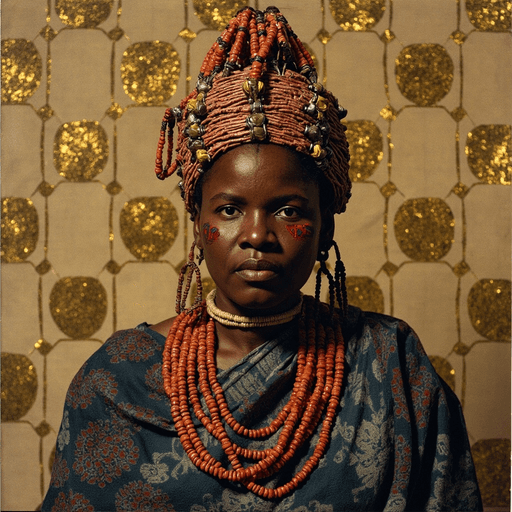
This imaginary interview was generated by artificial intelligence from sources documented in Bùi Thị Xuân's profile. It dramatises what the figure might have said based on what we know about them, but does not constitute attested historical testimony. For primary sources and factual documentation, refer to the full profile.