Imaginary interview with Dihya
by Charactorium · Dihya (668 — 703) · Politics · Military · 6 min read
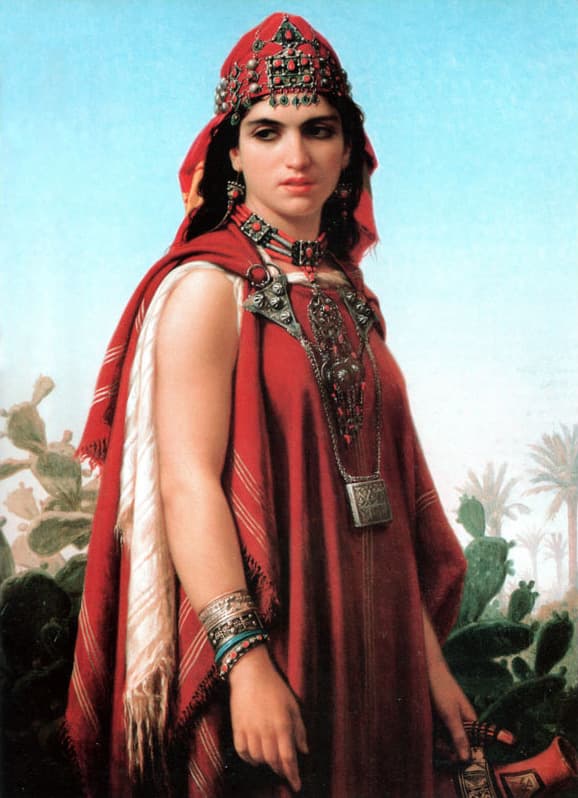
We are on the edge of the year 700 of your Christian calendar, in a camp pitched on the slopes of the Aurès mountains. Fires crackle, horses snort in the cold of the gorges, and a woman in an indigo robe, her hair braided with amber and coral, agrees to speak. The Arabs call her the Kahina; her own people, simply, the queen of the Djerawa.
—How did a woman become queen of so many tribes that, only yesterday, were quarreling?
One does not become queen of the Imazighen, the free people, by decreeing it: one becomes it because the tribes follow you into battle without being forced. Among the Djerawa, the agellidatu, the royal charge, is earned as much by speech as by the sword. I gathered under my banner Christian clans who prayed to Christ, Jewish clans who kept the Sabbath, and others still faithful to the old gods of the mountain. I did not ask them to renounce their altars. I asked them not to die separately when the stranger came from Kairouan to take us one by one. A single javelin breaks; a sheaf of javelins holds. That was my whole policy, and it held for years.
I did not ask them to renounce their altars, only not to die separately.
—What do you say to those who claim that no Berber chief ever ruled the Maghreb for so long?
Storytellers love to inflate numbers, and I distrust poets who count my years like dates in a good orchard. What I know is that since the founding of Kairouan by their generals, the Arabs never held our highlands for long. I reigned long enough to see children born free and grow up under my protection in the gorges of the Aurès. To reign, for us, is not to collect the jizya as the Umayyads do from their subjects. It is to settle disputes in the morning, receive messengers from allied clans, ensure the barley is stored before the snows. If I am remembered as a queen who reigned long, let it be remembered above all that it was a reign of upright men.
—Why do the Arabs call you the Kahina, the soothsayer?
It is their word, Kahina, which in their language means she who reads the invisible. They gave it to me because they feared me, and one readily calls sorceress what one does not understand. Every morning, before the sun crosses the ridge, I consult the dreams of the night and watch the flight of birds above the camp; the elders sit near me and we weigh the omens. Is that magic? I rather think that those who listen long to the mountain eventually hear where the enemy will pass. My lieutenants know that when I say 'they will come through this gorge,' archers must be posted there. So the Arabs say I foresee battles. Let them say it: the enemy's fear is already half a victory.
One readily calls sorceress what one does not understand.
—Are your divination rites a strength or a burden when you command an army?
Both, like any gift from heaven. A chief who delivers his oracles in the evening, around the fires, while griots sing the exploits of ancestors, gives his warriors more than an order: he gives them a reason to believe that tomorrow belongs to them. I wear against my chest a leather amulet, a tirz, as my people do; it is not a queen's superstition, it is the bond that holds me to the tribes. But I am not fooled: when I announce a victory, the javelins still have to fly straight. The burden is that the day my omens weaken, they will stop following me. A seer who errs once too often ends up alone in her tent. I live with that knife at my throat every morning.
—Do you remember the day General Hassan had to pack up before you?
I remember it like a sky turning over. Hassan ibn al-Nu'man, who had just taken Carthage from the Byzantines and believed himself master of all Ifriqiya, marched on our lands with his djund from the Levant. We awaited him at the mouth of the Aurès, in the plain of Meskiana, men and women mixed on horseback, javelin in hand. It was a great slaughter, and in the end it was they who retreated. He had to fall back to Tripolitania and wait there for years for reinforcements that did not come. Around the year 698 of your calendar, the conqueror of the Maghreb fled before a woman of the mountains. His own chroniclers, I am told, wrote it: Hassan was defeated, and he retreated. Let them remember that.
The conqueror of the Maghreb fled before a woman of the mountains.
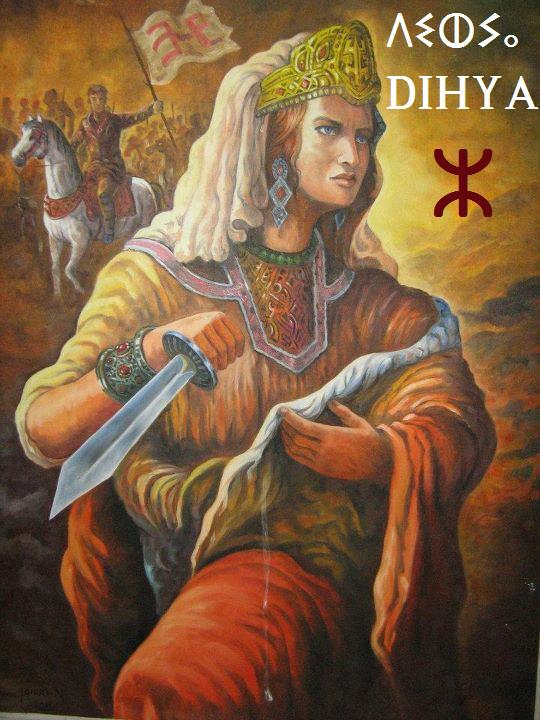
—What allowed your warriors to hold their own against an army from the Levant?
The mountain, first. The gorges of the Aurès are my oldest ally: a foreign horseman gets lost there, a Djerawa archer hides behind every rock. Our men threw the azagaye, that light javelin wielded on horseback or on foot, then vanished before the djund could turn around. We knew every path, every well, every hollow cliff where our families could shelter out of sight. And then there was the number, for the tribes had come from everywhere, and the heart, for these people were defending their own gardens. A paid soldier fights for his pay; a free man fights so his mother does not have to pay the jizya. That is why, as long as the coalition held, no general from Damascus could settle among us.
—They say you ordered your own villages burned. How does one make such a decision?
One makes it with the heart in ashes before the land is. When I understood that Hassan would return, stronger, with reinforcements from the Near East, I saw clearly: what these people covet is not our rocks, but our orchards, our harvests, our wells. So I said: let them find nothing. Burn the gardens, fill the wells, raze whatever feeds an army. If they want the eastern Maghreb, let them have it bare and barren. I hoped that thus, lacking bread and water, they would give up settling and head back east. It was the strategy of exhaustion: deprive the enemy of his bases before he takes them. No chief gives that order with a smile. But between the hunger of one winter and the servitude of a thousand years, I chose hunger.
Between the hunger of one winter and the servitude of a thousand years, I chose hunger.
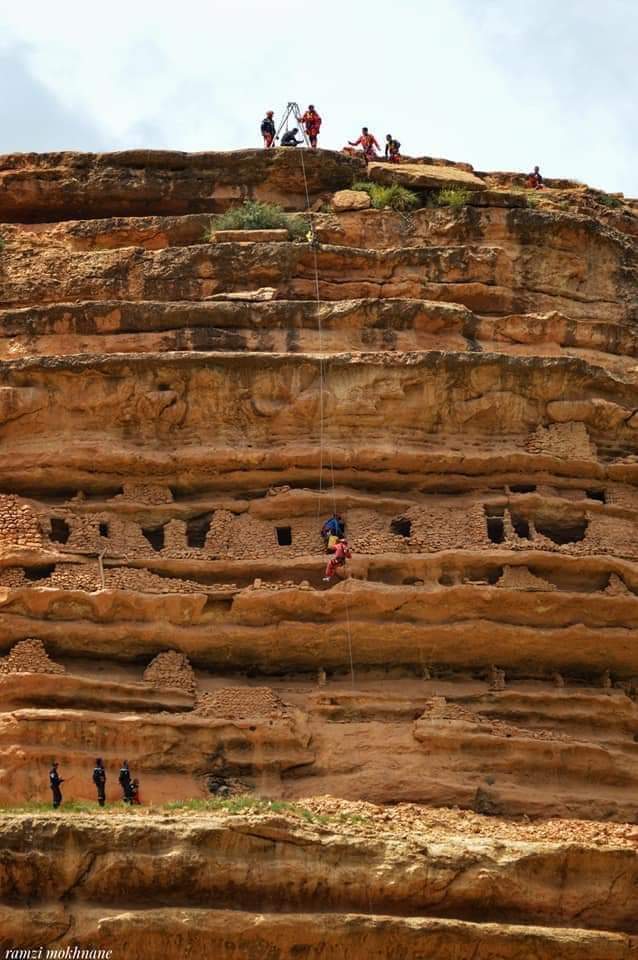
—Did this scorched earth cost you the support of some of your own people?
Bitterly, yes. The mountain tribes understood me: they live off herds, they move, they know that a pasture grows back. But the people of the plains, those who live off their olive trees and wheat around the old cities, those cursed me. What good is repelling the stranger, they said, if it is our own queen who razes our fields? Many preferred to submit to Hassan and pay the jizya rather than lose everything by my hand. I do not blame them: a man who sees his only orchard smoking no longer hears the reasons of war. That is the cruel price of my strategy, and I bear it. One cannot save a people without wounding it; but a wounded people can heal, an enslaved one never.
—Is it true that you adopted an Arab prisoner as a son?
The thing always surprises strangers, but among us adoption is nothing strange: one brings into the blood of the tribe whomever one deems worthy, even if born elsewhere. I took in a young Arab captured with weapons in hand, Khaled ibn Yazid, and treated him as a son. He came and went between my camp and that of Hassan as a messenger, for a man of two worlds speaks both languages. Some of my people murmured that I was nursing a snake at my breast. Perhaps. But whoever claims to wage war without ever reaching out to the enemy knows neither war nor men. An adopted son, even Arab, was worth more in my eyes than a chained hostage. Time will tell if I was wrong to trust him.
—How do you envision your last battle, and the fate of your own sons?
I feel it coming like one feels the storm behind the ridge. Hassan will return with an army I can no longer break, and it is near Tobna, at the foot of the Aurès, that the end awaits me, I think. So I have already spoken to my sons. I do not want them to die with me out of stubbornness: I told them to join the Arab ranks, to accept peace, so that our blood does not die out and the Berber people survive my defeat. A queen knows when her time has come to fall so that her people may rise. I will die with javelin in hand, face turned to the enemy. And if the griots of the Aurès still sing my name a century from now, around their drums, then I will not have perished entirely.
A queen knows when her time has come to fall so that her people may rise.

This imaginary interview was generated by artificial intelligence from sources documented in Dihya's profile. It dramatises what the figure might have said based on what we know about them, but does not constitute attested historical testimony. For primary sources and factual documentation, refer to the full profile.