Imaginary interview with Ella Baker
by Charactorium · Ella Baker (1903 — 1986) · Society · Politics · 6 min read
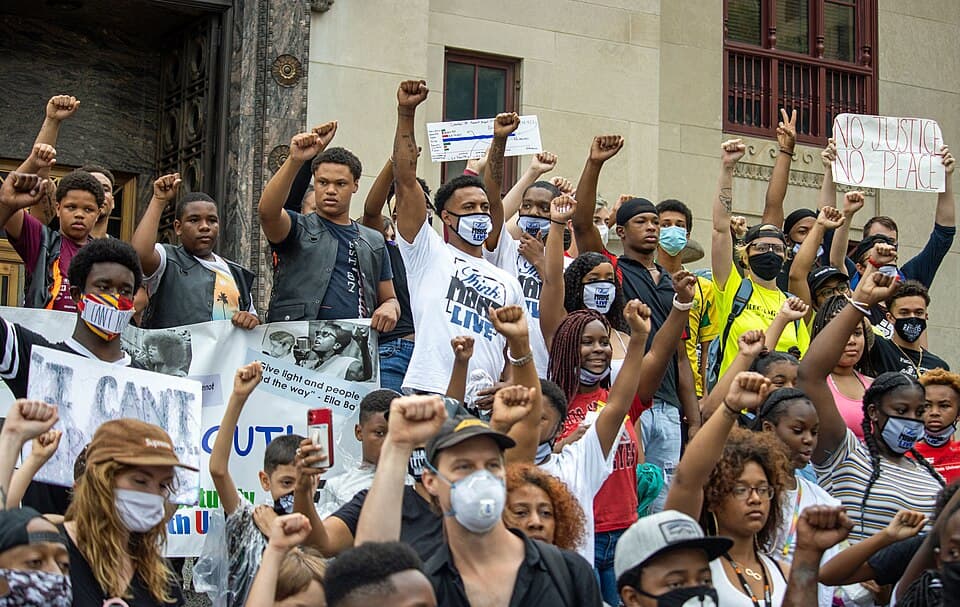
Harlem, an evening in the late 1970s. In a modest apartment where the phone has been ringing all afternoon, Ella Baker receives us with the patience of someone who spent fifty years listening before speaking. The light fades on 135th Street; she offers us a chair and waits, calmly, for the first question.
—How did your NAACP recruitment tours in the 1940s actually work?
I would hit the road alone, a road map of the South unfolded on the passenger seat, and drive for days through Virginia, the Carolinas, Mississippi. At every diner, every gas station, I had to figure out where a Black woman could stop safely, bypassing Whites Only signs like you'd avoid a snake on the path. I'd arrive in a small town, knock on doors, sit in kitchens and church back rooms, and leave with a handful of signed membership cards. In a 1941 report, I wrote that progress in the Old South states was slow but real. Each name collected wasn't a statistic: it was a family deciding, that day, to no longer suffer alone.
Each name collected wasn't a statistic: it was a family deciding to no longer suffer alone.
—Weren't you afraid on those hostile roads?
Fear—you don't chase it away; you learn to drive with it in the back seat. I knew that a flat tire after dark in certain counties could turn very bad for someone like me. So I dressed carefully—a well-tailored suit, a hat—because a sharp-dressed woman inspires a second's hesitation, and that second is sometimes enough. But the main thing wasn't my courage. It was those rural communities in the Deep South, isolated, watched, who took an immense risk by hosting an organizer under their roof and sharing their cornbread and beans with her. My role was only to show them they weren't alone in the vastness of Jim Crow laws.
Fear—you don't chase it away; you learn to drive with it in the back seat.
—They say you listened more than you spoke. Was that a method?
It was my whole method, yes. Many speakers enter a room with the answer already on their lips; I entered with a notebook and a question. I'd sit in parish halls in the afternoon, ask sharecroppers, seamstresses, teachers: what's wrong here, in your lives, and what do you think you can change? Then I'd write everything down—the grievances, the names of trustworthy neighbors, the fears. Ordinary people know perfectly well what oppresses them; they only lack someone who considers them capable of naming it themselves. What I called group-centered leadership began there, in that patient silence, far more than in grand speeches.
Ordinary people know perfectly well what oppresses them; they only lack someone who considers them capable of naming it.
—What was an evening training session like with those young activists?
Evenings were my most alive hours. We'd gather in a church, the only institution the Black community truly owned, under a bare bulb, around a few folding chairs. There, tongues loosened as they never do in broad daylight. I didn't climb a platform to dictate doctrine; I bounced their own questions back until they found the next step themselves. These discussions often stretched past midnight. I'd leave exhausted but certain of one thing: each of those boys and girls left a little less dependent on me, a little more their own master. Training autonomous people means accepting in advance that they will soon no longer need you.
Training autonomous people means accepting in advance that they will soon no longer need you.
—How did the founding conference of SNCC come about in April 1960?
It all started with the Greensboro sit-ins: students sat at forbidden counters and refused to move. I felt we absolutely must not let that energy scatter. So I summoned those young people to Shaw University in Raleigh, North Carolina—the university where I myself had studied. There they were, two hundred of them, burning, ready for anything. There was strong pressure to slide them under the wing of the SCLC, to make them the youth arm of an established organization. I held firm that they should found their own structure, free. In an article that year, I wrote that their struggle was bigger than a hamburger: it wasn't about a lunch counter stool, but about human dignity as a whole.
It wasn't about a lunch counter stool, but about human dignity as a whole.
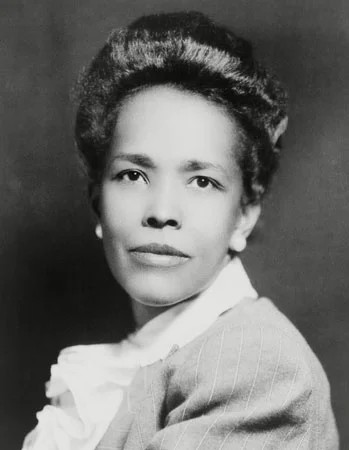
—Why were you so insistent that those students remain independent?
Because a youth that is absorbed is a youth that is muzzled. I had spent the years 1957 to 1960 running the SCLC day-to-day in Atlanta, and I had seen up close how an organization built around a single man ends up stifling every voice rising from below. Those students didn't need to be lent prestige; they needed a tool of their own. In my 1960 article, I said it clearly: We in the adult community have the obligation to support, encourage, and to assist them in every way possible. Support, encourage, assist—but never command. SNCC became the movement's most inventive wing precisely because no one, myself included, ever owned it.
A youth that is absorbed is a youth that is muzzled.
—You profoundly disagreed with the model of the great charismatic leader. Where did that conviction come from?
It comes from everything I saw on the roads of the South. When an oppressed people entrusts all its hope to a single man, it becomes infinitely vulnerable: if that man is bought, discredited, or struck down, it is orphaned, forced to start from scratch. I told historian Gerda Lerner: I have always felt it was a handicap for oppressed peoples to depend so largely upon a leader, because unfortunately in our culture, the charismatic leader usually becomes a leader because he has found a spot in the public limelight. The spotlight manufactures idols, not movements. I have always preferred what I call collective leadership: a power that is distributed, rooted, and does not die with a martyr.
The spotlight manufactures idols, not movements.
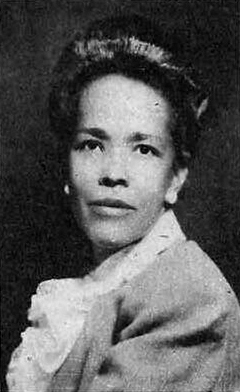
—Did that put you at odds with Martin Luther King?
Let's say we didn't look at the mountain from the same slope. Reverend King had a gift for moving entire crowds, and I never denied that. But I was wary of an activism that expects everything from the top and nothing from the base. I summed it up in a phrase that has been repeated back to me many times: strong people don't need strong leaders. It wasn't a jab at one man; it was a conviction about how freedom is born. A movement built on grassroots organization can lose ten leaders and keep moving; a movement built on a single face trembles at every death threat. I chose to serve the first, in the shadows, never chasing titles.
Strong people don't need strong leaders.
—What place did a Black woman occupy in a movement whose public faces were almost all men?
An immense place, yet rarely named. It was women who filled the churches, kept membership lists, housed organizers, and ran the shadow of the movement—while the microphones went to the pastors. I never demanded the podium; my work was elsewhere, at the typewriter churning out reports and flyers, on the telephone connecting isolated counties. Consider that in 1920 the Nineteenth Amendment gave women the vote, but in the South, a Black woman still could not register without risking her life. I carried that double burden—race and sex—as one more reason to build a power that depends on no providential man.
It was women who ran the shadow of the movement, while the microphones went to the pastors.
—After so many years of struggle, what in your view was the task that remained?
Never to confuse a law passed with justice achieved. The Civil Rights Act of 1964, then the Voting Rights Act of 1965, tore down legal walls, and I wept with relief. But I always thought further. Before the Institute of the Black World in 1969, I put it bluntly: In order for us as poor and oppressed people to become part of a society that is meaningful, the system under which we now exist has to be radically changed. Racism is not just about lunch counters and ballots; it is woven into poverty, into who owns what. As long as the humblest do not decide their own fate, the work will remain unfinished.
Never to confuse a law passed with justice achieved.
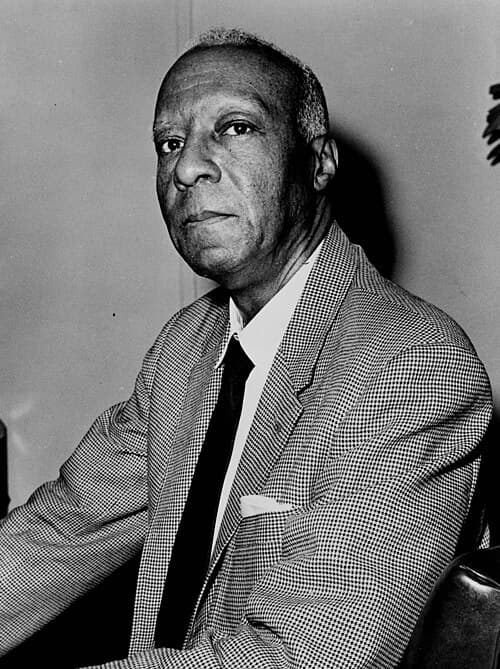
This imaginary interview was generated by artificial intelligence from sources documented in Ella Baker's profile. It dramatises what the figure might have said based on what we know about them, but does not constitute attested historical testimony. For primary sources and factual documentation, refer to the full profile.