Imaginary interview with Emily Warren Roebling
by Charactorium · Emily Warren Roebling (1843 — 1903) · Technology · Sciences · 5 min read
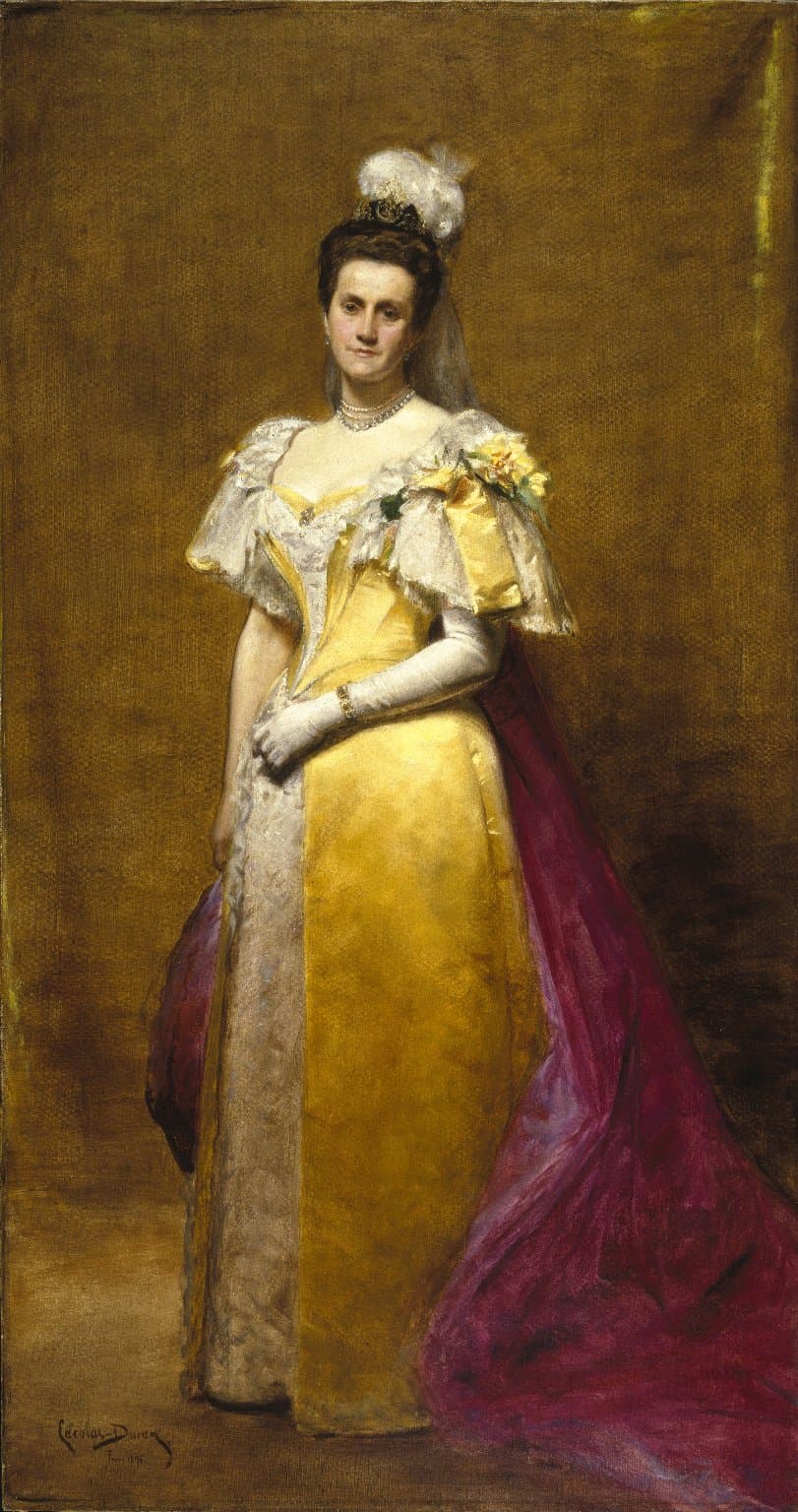
Brooklyn Heights, an afternoon in 1901. From the window of a house on Columbia Heights, the silhouette of the bridge, whose every cable she knows, is still visible. Emily Warren Roebling welcomes us, an old calculation notebook lying on the table.
—How did everything change the day your husband could no longer go to the construction site?
In 1872, caisson disease confined Washington to our bedroom on Columbia Heights. People think the illness only strikes workers who descend into compressed air; it also strikes those who ascend too quickly, and it never gives back what it steals. So in the morning, I would sit at his bedside, jot down his instructions, word for word, sketch for sketch, then head down to the river with that notebook under my arm. In the evening, I would go back up to report to him, and he would watch the bridge through a spyglass from his window. We formed a single engineer, split in two: his head in a closed room, his hands a quarter-hour's walk away, in my boots.
We formed a single engineer, split in two: his head in a closed room, his hands in my boots.
—What did that daily correspondence between the bedroom and the construction site mean to you?
That notebook was our common language. I would record the engineers' questions in the morning, Washington's answers in the evening, and sometimes, in between, my own calculations when a decision couldn't wait until the next day. Letters also went back and forth between him and the men on site, but it was I who translated — a foreman's report into instructions, a contractor's worry into reassuring figures. I learned that a great work holds together not only by its steel cables, but by that fragile chain of words passed without error. A misreported word, and an entire span begins to doubt itself.
—How did a woman without engineering training learn to speak the language of cables?
Alone, in the evenings, work after work. No one led me into a school; I learned higher mathematics, material strength, metal construction, the way you learn a foreign language on which your life depends. The most beautiful thing is the curve a suspension cable takes when hung by its two ends — the catenary. It looks like a simple smile stretched over the East River, yet all the bridge's calculation resides in that shape that gravity draws better than any architect. In the 1870s, I filled notebooks with those equations, not to shine, but to be able to answer, without trembling, an engineer who tested me with his eyes.
The catenary looks like a smile stretched over the East River, and all the bridge's calculation resides in that shape.
—What was the most daunting thing to master in this construction?
The foundations, without hesitation. To seat the towers on bedrock, we had to lower pneumatic caissons to the riverbed: immense watertight boxes, inflated with compressed air, where men dug by lamplight. That's where the illness struck Washington and so many others. Understanding the bridge was therefore not only knowing how to string four steel cables between two towers; it was understanding why earth, water, and the pressure of trapped breath could kill as surely as a fall. I studied that too, because an intermediary who doesn't understand the danger suppresses it instead of transmitting it.
—Do you remember May 24, 1883, when you crossed the bridge first?
How could I forget. On May 24, 1883, I was given the extraordinary honor of opening the bridge to the public by crossing ahead of everyone else, in a horse-drawn carriage, from Brooklyn to Manhattan. On my lap, according to custom, I held a live rooster — an old symbol of victory and good omen. Imagine: ten years of shuttling in dust and mud, and suddenly this ribbon stretched over the water, firm under the wheels, with that rooster flapping its wings as if celebrating in my stead. I wasn't weeping with pride for myself; I was thinking of Washington, up there behind his window, who finally saw rolling over his work the proof that it held.
Ten years in the dust, and suddenly this ribbon stretched over the water, firm under the wheels.
—How did you receive the public tribute paid that day by Abram Hewitt?
The speech by Abram Hewitt moved me more than I would have thought. Before a crowd of dignitaries and officials, he presented the bridge as a monument raised as much to woman's capability as to man's genius. To hear that, out loud, in 1883, when most believed me at best a devoted messenger — it was dizzying. I knew that one day the names of my father-in-law John and Washington would be engraved, and I rejoiced. But that a statesman would publicly acknowledge that a wife had borne her share of the calculation and the will — that opened a breach. Not for me alone: for those who would come after, who would be less quickly sent back to their parlors.
—It is said that many secretly believed you were the chief engineer. What did that rumor inspire in you?
It made me smile, and sometimes grind my teeth. On the construction site, after discussing cable tension and deadlines with foremen, negotiating with contractors and New York officials, many ended up whispering that the real chief engineer wore a skirt. The truth is more accurate: the title remained with Washington, and I never claimed to take it from him. But between his ailing mind and the world, there was only me, and I knew enough that no one could lie to me about a figure. That confusion says a lot about the era: they couldn't conceive that a woman understood a bridge, so they secretly promoted her to engineer rather than admit she simply knew.
They couldn't conceive that a woman understood a bridge; so they made me engineer in secret.

—What allowed you to hold your place in that world of men, on the construction site?
Competence, and a bearing that could not be faulted. I received the contractors in an impeccable silk dress, corset and bustle, because a woman they want to discredit is attacked first on her attire before her equations. So I gave them neither. In the afternoon, I inspected progress, noted problems, discussed strength and deadlines, then went home to record everything for Washington. One day, the plaque sealed on the bridge would say that my 'faith and courage' helped him complete the work. Faith and courage, yes — but add, I pray you, arithmetic. It was that which silenced the foremen.
—Why, after the bridge was finished, did you turn to law instead of resting?
Because a bridge crossed does not close the questions it opened. I had managed a construction site, negotiated with powerful men, kept accounts that many engineers would have envied — and yet, before the law, a wife remained diminished, like a perpetual minor. That revolted me. At New York University, in the law class open to women, I resumed studies at an age when others knit, and I earned my law degree in 1899. Understanding the law was still engineering: spotting where the structure is miscalculated, where it makes all the weight fall on those who cannot protest.
Understanding the law was still engineering: spotting where the structure makes all the weight fall on the weakest.
—What did you argue in that award-winning essay on the disabilities of wives?
In A Wife's Disabilities, in 1899, I wanted to show, texts in hand, to what extent marriage stripped a woman of rights that no man would tolerate losing: disposing of her property, her earnings, her own voice before a court. It was not a cry; it was a demonstration, almost a calculation of resistance: here is the load, here is the breaking point. I put into it everything the construction site had taught me — precision, obstinacy, the art of not yielding on a figure. That it was rewarded touched me less than the idea that a young woman, one day, might read it and tell herself that her condition is not a law of nature, only a law of men. And the laws of men can be remade.
This imaginary interview was generated by artificial intelligence from sources documented in Emily Warren Roebling's profile. It dramatises what the figure might have said based on what we know about them, but does not constitute attested historical testimony. For primary sources and factual documentation, refer to the full profile.