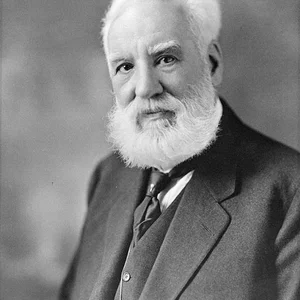
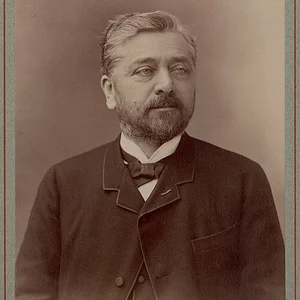
Auguste Lumière (1862–1954) was a French inventor and industrialist who, together with his brother Louis, developed the Cinématographe in 1895, giving birth to cinema. He also contributed to colour photography with the invention of the Autochrome.
Auguste Lumière(1862 — 1954)
Auguste Lumière
France
8 min read
Frequently asked questions
Key Facts
- 1862: born in Besançon
- 1895: patent for the Cinématographe filed with his brother Louis
- 28 December 1895: first paid public screening at the Grand Café in Paris
- 1907: invention of the Autochrome, the first industrial colour photography process
- 1954: death in Lyon at the age of 91
Works & Achievements
Patented on February 13, 1895, this device combined camera, printer, and projector into a single portable unit. It laid the technical foundations of world cinema and permanently revolutionized the representation of movement.
The first film shot by the Lumière brothers, showing female workers leaving the factory in Lyon. Screened at the first private showing on March 22, 1895, it is considered one of the founding acts of documentary cinema.
An iconic film from the dawn of cinema: a locomotive pulling into a station, filmed from the platform at close angle. It illustrates the illusionistic power of the Cinématographe and has become one of the most recognizable symbols of the pioneers of the seventh art.
The first commercial color photography process, based on a mosaic filter of dyed starch grains. It allowed generations of photographers to capture color for the first time and revolutionized portraiture, landscape photography, and photojournalism.
The complete body of films shot by Lumière camera operators around the world, forming an ethnographic and historical archive of exceptional value. These shorts document daily life and landscapes across dozens of countries at the turn of the nineteenth and twentieth centuries.
Anecdotes
At the first paid public screening at the Salon Indien du Grand Café on **December 28, 1895**, Parisian audiences witnessed moving images on a large screen for the first time. According to contemporary accounts, some spectators recoiled in astonishment when the locomotive in *L'Arrivée d'un train en gare de La Ciotat* seemed to barrel toward them — a reaction that illustrates the utterly unprecedented sense of reality the Cinématographe produced.
The magician **Georges Méliès**, who was in the audience that December evening in **1895**, was so captivated that he immediately offered to buy the invention. **Auguste Lumière** reportedly advised him not to bother: the device, he believed, had no commercial future and would remain nothing more than a scientific curiosity. Méliès ignored the advice and went on to become one of the fathers of narrative cinema — proving that Auguste had been quite wrong on that particular point.
After revolutionizing moving images, **Auguste Lumière** turned to color photography alongside his brother **Louis**. Their Autochrome plates, brought to market in **1907**, used millions of tiny potato-starch grains dyed orange, green, and violet to reproduce the full spectrum of color. The process remained the primary accessible means of color photography until the **1930s**.
In the second half of his life, **Auguste Lumière** shifted his attention to medicine and biology, publishing research on treatments for arthritis. He died in **1954** at the age of 91, having lived through the invention of cinema, color photography, two world wars, and the atomic age — an inventor's life that spanned nearly a century of history.
Primary Sources
We, the undersigned Auguste and Louis Lumière, industrialists in Lyon, have invented an apparatus for obtaining and viewing chronophotographic prints, which apparatus, which we designate by the name of Cinématographe, is based on the following principle: the prints are obtained and viewed by means of a flexible, perforated film strip, which is advanced at a rate of sixteen frames per second.
Autochrome plates make it possible to obtain directly photographic images in natural colours, without retouching or intermediate printing, by a single exposure to light in any ordinary camera fitted with an achromatic lens.
Our apparatus, which can serve both for capturing images and for projecting them, makes it possible to reproduce on a large screen animated scenes of any kind, with absolute sharpness and steadiness of image, at a rate of sixteen frames per second.
We did not invent cinema in the strict sense of the word: we developed an apparatus that made it possible to show it to the public. The credit for the invention belongs to all those who, before us, had broken down movement into successive images.
Key Places
Birthplace of Auguste Lumière, on October 19, 1862. Besançon was a thriving industrial and watchmaking center, and also the birthplace of Victor Hugo.
The heart of the Lumière family's industrial empire, this photographic plate factory was where the two brothers worked and made their inventions. Auguste lived and died here in 1954. The site now houses the Institut Lumière and a cinema museum.
A basement room at the Grand Café, 14 Boulevard des Capucines in Paris, where the first paid public screening of the Cinématographe took place on December 28, 1895. That evening marks the official birth of cinema as a public, ticketed spectacle.
A Mediterranean coastal town where the Lumière family owned a holiday villa. It was here that the famous film *L'Arrivée d'un train en gare de La Ciotat* (1896) was shot, one of the most iconic works from the early days of cinema.
Typical Objects
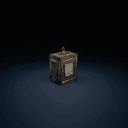
A device patented in 1895 combining camera, film printer, and projector into a single portable unit weighing around 5 kg. Its claw mechanism advanced the film at 16 frames per second, creating the illusion of movement.
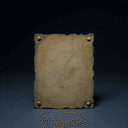
Glass plates coated with a gelatin and silver salt emulsion, the standard support for professional photography of the era. The Lumière factory in Lyon produced millions of them each year, forming the industrial and financial backbone behind the brothers' inventions.
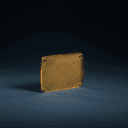
Invented by the Lumières and brought to market in 1907, these glass plates coated with potato starch granules dyed in three colors were the first accessible color photography process. They were used by artists and photojournalists through the 1930s.

A flexible, transparent 35 mm strip onto which the Cinématographe's images were exposed. This format, standardized by the Lumières, became the global standard for cinema and remains a technical reference to this day.
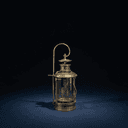
A forerunner of the cinema projector, the magic lantern cast fixed images painted on glass using a light source. Widely used before the invention of the Cinématographe for popular entertainment and educational shows, it represents the direct technical predecessor to the Lumières' work.
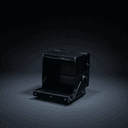
A large tripod-mounted camera used by professional photographers of the Belle Époque, into which a sensitive plate was slid. The Lumière brothers grew up in this world: their father Antoine was a photographer before founding his plate factory.
School Curriculum
Vocabulary & Tags
Key Vocabulary
Daily Life
Morning
Auguste Lumière was an early riser, a habit formed in an industrial household where the factory set the pace. After a hearty Lyonnais bourgeois breakfast, he would head to the Monplaisir factory to oversee photographic plate production and meet with engineers and foremen.
Afternoon
Afternoons were often devoted to laboratory experiments, in close collaboration with his brother Louis. They tested emulsions, film-advance mechanisms, and color filters, spending hours fine-tuning their equipment in a workshop crowded with precision instruments and photographic chemicals.
Evening
In the evenings, Auguste rejoined his family at the Monplaisir villa. Dinners frequently brought together engineers, scientists, and Lyonnais businessmen. He read widely — scientific journals, foreign patents — and jotted his ideas in research notebooks he kept with great care.
Food
The Lyonnais cuisine of the Belle Époque was hearty and rooted in tradition: quenelles, gratins, charcuterie, slow-cooked stews. As a prosperous industrialist, Auguste ate well and appreciated the region's wines. In the latter part of his life, his medical research led him to take a greater interest in dietary hygiene.
Clothing
Auguste wore the typical three-piece suit of the Belle Époque industrial bourgeoisie — matching jacket, waistcoat, and trousers, a white shirt with a stiff collar, and a dark tie. In the laboratory or workshop, he put on a white coat to protect his clothes from photographic chemicals.
Housing
The Lumière family lived in a large bourgeois villa in the Monplaisir district of Lyon, steps away from the factory. The house, comfortable and well-furnished, reflected the family's industrial prosperity. In summer, the Lumières stayed at their villa in La Ciotat, overlooking the Mediterranean.
Historical Timeline
Period Vocabulary
Liens externes & ressources
Références
Œuvres
L'Autochrome Lumière
1907 (brevet 1903)