Imaginary interview with Ethel Waters
by Charactorium · Ethel Waters (1896 — 1977) · Music · Performing Arts · 6 min read
We found her in a velvet-draped dressing room, somewhere between two performances, a shawl over her shoulders and a Bible near the mirror. The most famous voice of Harlem agrees to trace the thread of a life that started from nothing. She speaks softly, as if singing a blues.
—When you think back to your very earliest years, what image comes to mind first?
The cold, mostly. I was born in 1896 in Chester, Pennsylvania, in lodgings we left as soon as the rent caught up with us. I say it plainly, because it's written in black and white in my memoirs: "I never was a child. I never was coddled, or liked, or understood by my family." You grow up fast when no one rocks you. I ran through the alleys, sometimes I stole, but above all I learned to read faces before books. That childhood didn't give me tenderness, but it gave me an ear: I knew how to hear the pain in a voice, the real one, the one you don't fake. Later, when I sang the blues, I didn't invent anything. I just remembered.
That childhood didn't give me tenderness, but it gave me an ear.
—How did a kid from Chester end up in front of a microphone to cut her first records?
Through the vaudeville stages, from town to town, singing for a few coins. In 1921, I was taken into the studio for the Black Swan label, one of the very first companies owned by Black people. My voice ended up on a 78 rpm record, engraved in wax, those fragile discs then called race records because they sold us separately, as if our music weren't everyone's music. "Down Home Blues," "Oh Daddy"… they sold, and that helped the label stay afloat. It was the time when Harlem was bubbling, when people who had come up from the South through the Great Migration were looking for a voice to tell their exile. I was lucky enough to be that voice, on a piece of wax you could take home.
—Tell us about the night "Stormy Weather" entered your life.
It was at the Cotton Club, in 1933. A magnificent cabaret in the heart of Harlem, where people came to applaud Black artists — but the audience remained white. We sang for tables where we wouldn't have been allowed to sit. Stormy Weather came like a storm, indeed: a slow song, wet with rain, that spoke of a broken heart and much more. I carried it with a ribbon microphone, that little marvel that captured the slightest breath. No more need to shout to fill a room; I could whisper, let a note tremble, do crooning, as they later called it. That night, I understood that a confidence sung softly struck harder than a shout.
A confidence sung softly struck harder than a shout.
—You often speak of that microphone as a partner. Why was it so important to you?
Because before it, singing was fighting the room. You pushed, you forced, you lost the nuances. The ribbon mic of the thirties changed everything: it brought my mouth close to everyone's ear, as if I were sitting on the edge of the bed to tell a story. They praised my diction, my phrasing — but that's not just talent, it's listening. I weighed each word, I placed it like you place a full glass without spilling it. On my 78 rpm records, then on the radio, in the TSF sets of American homes, that intimate manner traveled the country. People believed I was singing just for them. It was true. Every night, I forgot the crowd and chose a face.
—In 1939, with "Mamba's Daughters," you became the first Black woman in a dramatic lead on Broadway. What remains of that night?
The ovation. Long, standing, almost unbearable. They didn't expect me there — a cabaret singer on the serious boards of Broadway, in the role of a mother who suffers and kills. Mamba's Daughters was the drama of a Black woman carried by a Black woman, something that had never been allowed before. I drew on everything I knew of pain, from Chester, from the lost lodgings. When the curtain fell and the audience rose, I thought it wasn't just me they were applauding, but a door that was finally giving way. In the midst of segregation, in a country where Jim Crow laws sent us to the back of streetcars, a Black actress received what is usually reserved for theater queens.
It wasn't just me they were applauding, but a door that was finally giving way.
—Hollywood then opened its sets to you. How did you experience that transition to the screen?
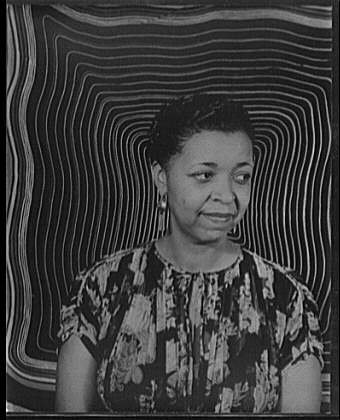
Strangely. In Hollywood, I reprised my stage role in Cabin in the Sky, in 1943, an all-Black musical — a rarity that was shown as an achievement, when it should have been ordinary. The days were long: makeup at dawn, waiting between takes, the burning lights. Then came Pinky, in 1949, a film about color prejudice, which earned me an Oscar nomination for Best Supporting Actress. I was proud, of course, but lucid: they offered us roles as maids and devoted mothers, rarely the lead in our own lives. I made those characters into something more than shadows. A maid, under my voice, had a soul, a past, a dignity that no script had written for me.
—Then came television, that brand-new medium, with "Beulah" in 1950. How did it feel to become the first African-American star of the small screen?
Disbelief, at first. Television was a strange box, barely born, that people proudly installed in their living rooms. And then Beulah, in 1950, entered it through me: a Black woman leading an American series, in homes every night. The role was still that of a maid, I won't hide it, and that cost me. But I knew what the Black child sitting cross-legged in front of the screen saw: someone who looked like them, in the light, not relegated to the wings. That same year, the nomination for Pinky made me the second of our people to come close to an Oscar. Two "firsts" in twelve months — I realized they weren't trophies, but milestones planted on a road still long.
The Black child in front of the screen saw someone who looked like them, in the light.
—You told this whole ascent in a book. Why was it important to write your own story?
Because others would have told it for me, and badly. In 1951, I published His Eye Is on the Sparrow, named after the spiritual I had made famous. I started from the misery of Chester to arrive at the spotlights of Broadway, without glossing over anything. Writing was refusing to have my life summed up as a silhouette on a poster. I wanted a little girl like the one I had been to know that you can be born without tenderness and end up singing before thousands. The title is no accident: the sparrow in the hymn, God never takes His eyes off it. I long felt like that little bird — without a nest, but never quite lost.
—Toward the end of your life, you joined Billy Graham's great crusades. What were you looking for there?
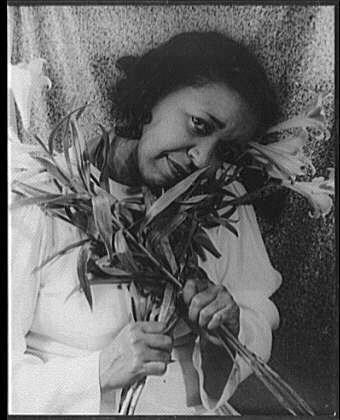
Peace, simply. From 1957, I joined the crusades of pastor Billy Graham, those immense gatherings where thousands prayed. I no longer came as a cabaret star, but as a woman who had been around glory and its emptiness. Under the tent, I sang His Eye Is on the Sparrow, that same spiritual born among slaves, which says that hope survives everything. The Bible never left me. I wrote in my memoirs this sentence that keeps me standing: "I am somebody. I am God's child." After a life where I had so often been treated as less than nothing, that was the most beautiful thing I could say to myself — and the truest.
After a life where I had been treated as less than nothing, I could say: I am somebody.
—That spiritual, you sang it all your life. What does it represent for you, beyond the music?
It is my backbone. The spiritual comes from the tradition of slaves, people from whom everything had been taken except the voice to hope. His Eye Is on the Sparrow says that if God watches over the humblest bird, then He watches over me too. I sang that song at the top, on the stages of Harlem, and I sang it at the end, in Billy Graham's campaigns, with the same conviction. In between, I had known everything: money, then debts, comfortable houses in California then tight ends of the month. Glory is a storm rain, it passes. That hymn remained. In my second book of memoirs, in 1972, I said it again: my life was wonderful, not despite the trials, but through them.
—If you had to pass on one thing to those who will sing after you, what would you tell them?
To sing what they know, and nothing else. My strength was never a beautiful technique — it came from the alleys of Chester, the trains of vaudeville, from everything I had carried before going on stage. The blues does not lie: it demands that you have lived the note before you hold it. I would also tell them not to wait for someone to open the door. I pushed it open myself, on Broadway with Mamba's Daughters, in front of Hollywood cameras, in the little box of television with Beulah. Each time, they told me it wasn't my place. Each time, I stayed long enough for someone else to come after me. That, in the end, is what I did: keep the door ajar.
The blues does not lie: it demands that you have lived the note before you hold it.
This imaginary interview was generated by artificial intelligence from sources documented in Ethel Waters's profile. It dramatises what the figure might have said based on what we know about them, but does not constitute attested historical testimony. For primary sources and factual documentation, refer to the full profile.