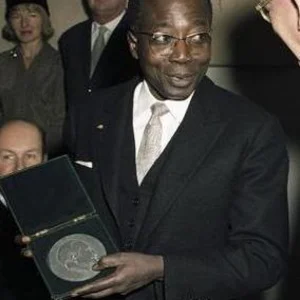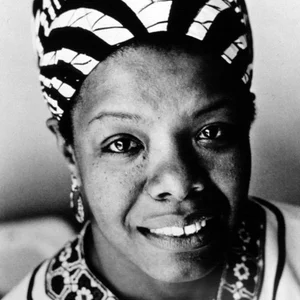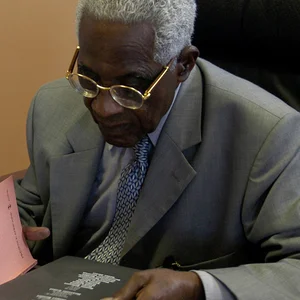

Martinican writer, poet and politician (1913-2008), founder of the Négritude movement. He served as mayor of Fort-de-France and deputy of Martinique, combining literary commitment with political action to defend the rights of colonized peoples.
Aimé Césaire(1913 — 2008)
Aimé Césaire
France
8 min read
Frequently asked questions
Famous Quotes
« I assert myself Black in skin and in civilization.»
« No race has a monopoly on beauty, intelligence, or strength.»
« Négritude is a plunge into the deep waters of our history.»
Key Facts
- 1939: Publication of the poetry collection 'Notebook of a Return to the Native Land', manifesto of Négritude
- 1945: Elected deputy of Martinique to the French Constituent Assembly
- 1960: Publication of 'Discourse on Colonialism', a landmark critique of the colonial system
- 1960-2001: Mayor of Fort-de-France for 41 years
- 1956: Co-founder of the Négritude concept alongside Léopold Sédar Senghor and Frantz Fanon
Works & Achievements
Major founding poetic collection of the Négritude movement, expressing revolt against colonialism and the affirmation of Black identity. This work is considered one of the foundational texts of 20th-century Francophone literature.
Scathing political essay denouncing the effects of European colonialism in Africa and the Caribbean. This theoretical work influenced decolonization movements in Africa and remains a landmark reference in the critique of colonialism.
Collection of surrealist poems blending personal lyricism with political commitment to the cause of colonized peoples. The work consolidates the poetics of Négritude and its artistic expression.
Historical and political essay analyzing the figure of Toussaint Louverture and the Haitian Revolution as a response to the contradictions of the French Revolution regarding slavery. This work connects colonial history with revolutionary thought.
Intellectual and theoretical creation of a literary and philosophical movement asserting the dignity, culture, and values of Black peoples in the face of racism and colonialism. This concept profoundly influenced African writers, thinkers, and liberation movements.
Major political achievement: elected mayor of Fort-de-France for 56 years, Césaire modernized the city and championed the interests of Martinique while remaining a symbolic figure of anti-colonialism in the Caribbean.
Play exploring Haitian history and the paradoxes of building a free Black nation. This dramatic work examines the tensions between revolutionary idealism and post-colonial political realities.
Collection of autobiographical and reflective poems marking a poetic maturity, in which Césaire meditates on his political journey, his commitments, and the evolution of his thought in the face of contemporary challenges.
Anecdotes
In 1939, Aimé Césaire published his Notebook of a Return to the Native Land, a long revolutionary poem written in Paris that became the manifesto of Négritude. This text, discovered late by readers, redefined Black identity by celebrating African culture and denouncing the ravages of colonialism. It would remain his major work and one of the most important poems of the 20th century.
In 1945, Aimé Césaire was elected mayor of Fort-de-France, his hometown, a position he would hold for 56 years until 2001. He also became a deputy for Martinique, championing the assimilation of Martinique as a French overseas department while promoting Black identity pride. This dual responsibility reflects his commitment to improving the living conditions of his people.
In 1950, Césaire delivered the Discourse on Colonialism, a foundational text in which he exposed the crimes of the colonial system and drew a connection between colonial oppression and the barbarism seen in Europe. This discourse became an intellectual weapon for African and Asian independence movements, influencing generations of anti-colonialist leaders.
Césaire coined the term Négritude in 1935 alongside Léopold Sédar Senghor and Frantz Fanon — a concept celebrating the heritage, culture, and identity of Black peoples in the face of Western racism. This intellectual movement transformed the way Black writers and thinkers conceived of their own history and dignity.
Primary Sources
I would be a man of cries / To shout until I transfigure the cry / To shout on the barricades the essence of the human condition.
They speak to me of civilization, I speak of proletarianization and mystification. Before being inflicted upon peoples, famine was inflicted upon them, their economies were bled dry.
And now the horizon is never stingy with its reflections. It is to thought that I entrust my destiny and this exile of the heart.
Toussaint Louverture embodies the revolt against slavery and colonial domination, a symbol of human dignity reclaimed.
I am not and have never been a communist, and I renounce none of my principles in order to join the French Communist Party.
Key Places
Birthplace of Aimé Césaire on June 26, 1913. This small town in northern Martinique shaped his origins and his rootedness in Caribbean culture, which inspired his entire body of work.
Capital of Martinique where Césaire served as mayor from 1945 to 2001. He transformed the city and developed his political action there in favor of autonomy and the rights of the Martinican people.
Where Césaire pursued his higher education, studying at the Lycée Louis-le-Grand and the École normale supérieure in the 1930s. It was in Paris that he came into contact with Léopold Senghor and developed the concept of Négritude.
Where Césaire served as a deputy for Martinique from 1945 to 1961, then from 1962 to 1993. He defended the interests of colonized peoples there and fought for the recognition of the rights of oppressed nations.
Historic library of Fort-de-France that stands as an important place of memory for the preservation of the Caribbean's intellectual heritage. Césaire drew from it and contributed to Martinique's cultural influence.
Visited by Césaire in 1955, it was a significant milestone in his internationalist commitment. He met revolutionary figures there and consolidated his vision of an anti-imperialist struggle in solidarity with the peoples of the Global South.
Typical Objects

Aimé Césaire's masterwork published in 1939, this founding poem formalizes the concept of Négritude and becomes a manifesto for the reaffirmation of Black identity. The book symbolizes the literary and ideological revolution of the character.

Symbol of his political commitment as representative of Martinique in the French National Assembly from 1945 to 1976. It embodies his role as spokesperson for colonized peoples on the political stage.

Administrative workplace where Césaire exercised municipal power from 1945 to 2001. It represents his local commitment and his ability to transform institutions into tools of emancipation.

Tools of Aimé Césaire's trade as a writer and poet, characteristic of 20th-century literary creation before the digital era. They symbolize his constant intellectual productivity.

Emblem of the Caribbean identity that Césaire defended throughout his life. It represents his attachment to his homeland and his struggle for the recognition of colonized peoples.

Surrealist literary review founded in Martinique during World War II, which Césaire frequented and contributed to. It became a vehicle for spreading Négritude ideas in intellectual circles.

Visual documents representing Césaire's political campaigns as deputy and mayor. They bear witness to his unavoidable political journey in Martinique and his charisma among voters.

Major political essay published in 1950, in which Césaire denounces the harmful effects of the colonial system. This text became an intellectual reference for the anti-colonial struggle worldwide.
School Curriculum
Vocabulary & Tags
Key Vocabulary
Tags
Mouvement
Daily Life
Morning
Aimé Césaire begins his day in Fort-de-France by reviewing the political and literary correspondence piling up on his desk. After a light Creole breakfast, he prepares for his duties as mayor or deputy, depending on the legislative calendar, donning his official attire.
Afternoon
The afternoon is divided between municipal or parliamentary administrative tasks and literary work. During the hottest hours, he often retreats to read, write, or meet with intellectuals and writers who come to consult him on questions of culture and Antillean identity.
Evening
Evenings are dedicated to intellectual and political life: meetings with Négritude activists, correspondence with other Francophone writers, or participation in cultural debates. He dines with family before continuing his literary work late into the night.
Food
Césaire's diet reflects Martinican Creole cuisine: accras, féroce d'avocat, fish court-bouillon, rice and beans. He regularly consumes tropical fruits, bananas, and yams, accompanied by agricultural rum on festive or social occasions.
Clothing
Dressed with the elegance and formality characteristic of the Antillean intelligentsia, Césaire wears three-piece suits, white shirts, and ties for his official duties. In more informal settings, he opts for lightweight attire suited to the tropical climate, always with a certain distinction.
Housing
Césaire lives in Fort-de-France, the political and cultural capital of Martinique, in a residence befitting the upper-middle intellectual class. His home, located in an upscale urban neighborhood, features an impressive library reflecting his erudition and commitment to universal literature and Black thought.
Historical Timeline
Period Vocabulary
Visual Style
Un style fusionnant l'Art déco avec le modernisme caribéen, combinant la puissance politique et l'expression poétique. Les motifs géométriques épousent les influences africaines et antillaises, tandis que l'éclairage dramatique met en avant l'engagement intellectuel et révolutionnaire du personnage.
Sound Ambience
Une ambiance sonore capturant la double réalité d'Aimé Césaire : les bruits chauds et poétiques de la Martinique tropicale entrelacés avec l'énergie des cercles intellectuels parisiens du XXe siècle, symbolisant son engagement politique et littéraire entre création culturelle et lutte anticoloniale.
Liens externes & ressources
Références
Œuvres
Cahier d'un retour au pays natal
1939
Discours sur le colonialisme
1950
Les Armes miraculeuses
1946
Toussaint Louverture : La Révolution française et le problème colonial
1961
Fondation du concept de Négritude
1935-1945
Mandat de maire de Fort-de-France
1945-2001
La Tragédie du Roi Christophe
1963