Imaginary interview with Fannie Lou Hamer
by Charactorium · Fannie Lou Hamer (1917 — 1977) · Politics · Society · 6 min read
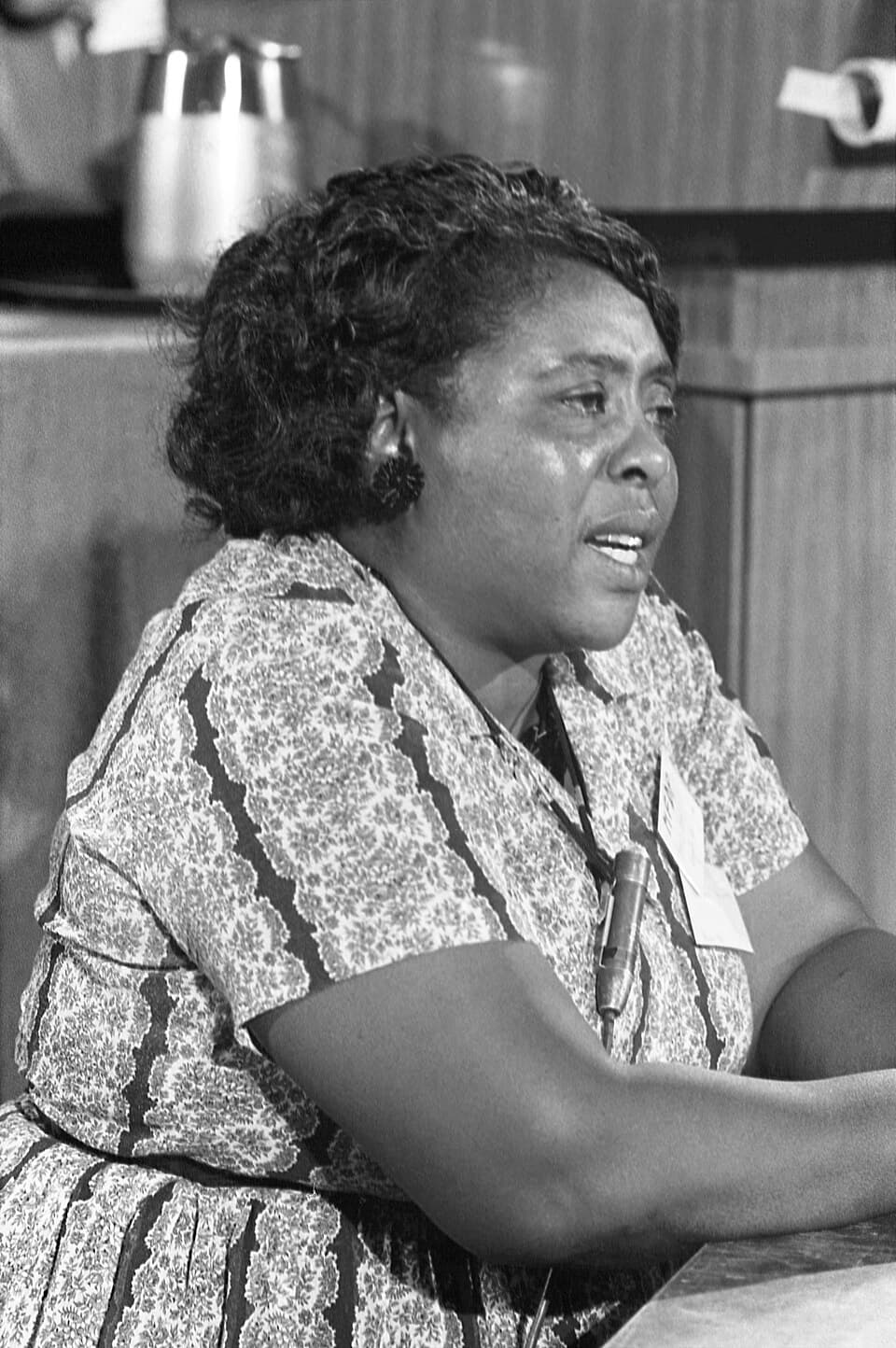
Ruleville, Mississippi, a humid summer evening in the Delta. On the porch of a modest wooden house, a woman with a back worn by cotton fields motions us to sit. Her voice, even before the words, already seems to sing.
—Do you remember the day you decided to go register to vote?
August 1962. I was forty-four years old and had lived for eighteen years on the Marlow plantation, in Ruleville. We were told, in a little church, that a Black person had the right to vote—I didn't even know that, believe it or not, at my age. So I got on the bus with seventeen others, and I tried to fill out that damn registration form, that piece of paper they made impossible to understand on purpose. That evening, the owner came. He told me to take my name off or leave. I took my bag. I told him: "I didn't register for you—I registered for myself." I no longer had a roof, but I finally had something of my own.
I didn't register for you—I registered for myself.
—What did that simple form represent, deep down, for a woman like you?
You know, I started picking cotton at six years old. All my life, I was taught that my place was someone else's land, bent under the sun of the Delta. That administrative paper, that sheet they made me copy while humiliating me with articles of the Mississippi Constitution that even white people couldn't read—it was the first time I was asked if I existed as a citizen. That's why they were so afraid of a piece of paper. They knew that a sharecropper who signs her name on a voter roll makes their whole world tremble. A form, it looks like nothing. But in my hands, it cost me my home, my job, and it gave me back my dignity the same day.
—A year later, in Winona, you were arrested. What happened in that jail?
June 1963. I was coming back from a civil rights training workshop in South Carolina, where we were taught just how to fill out those forms and stand up. Our bus stopped in Winona, and they threw us in a cell. The guards didn't want to dirty their own hands: they ordered other Black prisoners to beat me with a long, flat blackjack until my body stopped responding. "They beat me and they beat me with the long flat blackjack. I screamed to God in pain." My kidneys never healed, nor my leg. I carried that night in my body until today. But they didn't beat fear into me—they beat it out of me.
They didn't beat fear into me—they beat it out of me.
—How do you find the strength to continue after such violence?
You don't find that strength alone. The next day, they thought they had broken me, and yet I was singing in my cell. That's how we held on, we from Mississippi: when the body gives out, the voice takes over. Murdering Medgar Evers in front of his house that same year, beating a woman bloody in a county jail—they thought they could silence us. But each blow made silence more impossible. I told myself that if I stopped, everything they had done to me would be for nothing. So we set out again on the Delta roads, knocking on doors, convincing one more family to go register. Fear, you see, is a luxury you can't afford when you already have nothing left to lose.
—On August 22, 1964, you testified before the Democratic National Convention. What was on your mind as you approached the microphone?
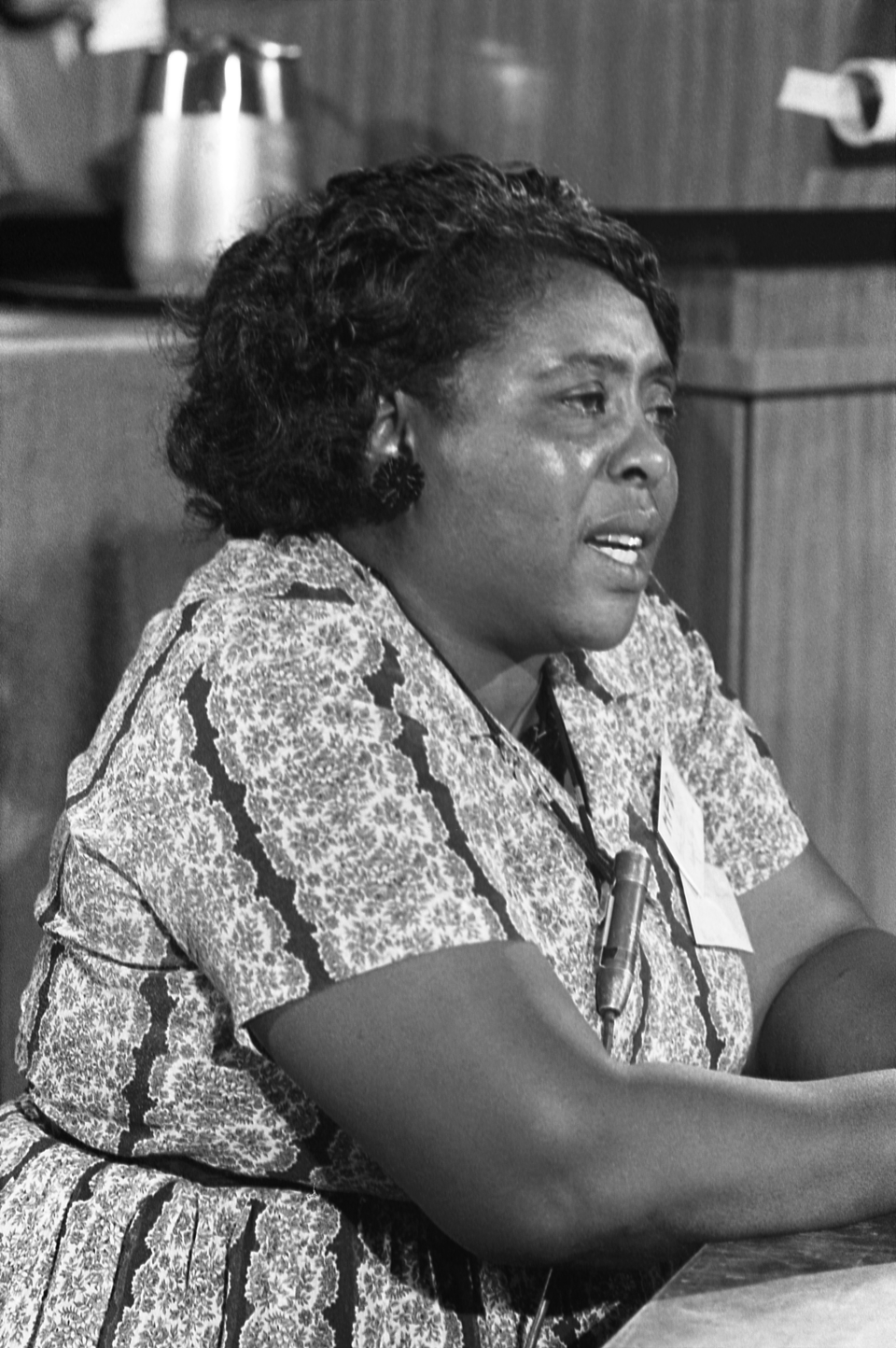
I hadn't prepared anything elegant. They sat me in front of the cameras, in Atlantic City, in that big Convention Hall, and I simply told: the eviction, the beatings in Winona, what it's like to want to become a first-class citizen in America. We of the Mississippi Freedom Democratic Party were asking that our delegates finally be recognized, not those of the white segregationist party. I said: "if the Freedom Democratic Party is not seated now, I question America." President Johnson was so afraid of what I was saying live that he called a press conference on the spot to divert the cameras from my face. But you can't hide the truth forever: the networks broadcast my testimony in full that evening.
You can't hide the truth forever.
—How does it feel to learn that a U.S. president maneuvered to silence you?
A poor sharecropper from the Delta making the White House tremble—it's almost laughable, if it weren't so serious. That Johnson interrupted the cameras to cover my voice hurt me at first. Then I understood it was the admission of our strength: if such a powerful man feared the testimony of a woman who had only a podium microphone and her true story, then that story was worth all the gold in the world. They didn't give us our seats that year. But millions of Americans saw, in their living rooms, what Mississippi really was. In 1968, the Black delegation was finally seated. A seed sown in humiliation had finally sprouted.
—In 1969, you founded the Freedom Farm Cooperative. Why the land, after the fight for the vote?
Because a hungry man is never truly free. I had gotten us the right to vote with the Voting Rights Act, but what good is a voter card if your white boss can starve you the next day to punish you? So I launched the Freedom Farm Cooperative, in Sunflower County, with donations raised as far as the North. We bought land—we, the descendants of those who cultivated it without ever owning it. Poor Black families could finally grow their beans, their corn, raise their pig. At its peak, the cooperative fed more than 1,500 families. I, who had held a hoe since I was six, finally turned soil that was ours.
A hungry man is never truly free.
—You speak of hunger as a chain. Had you known it closely?
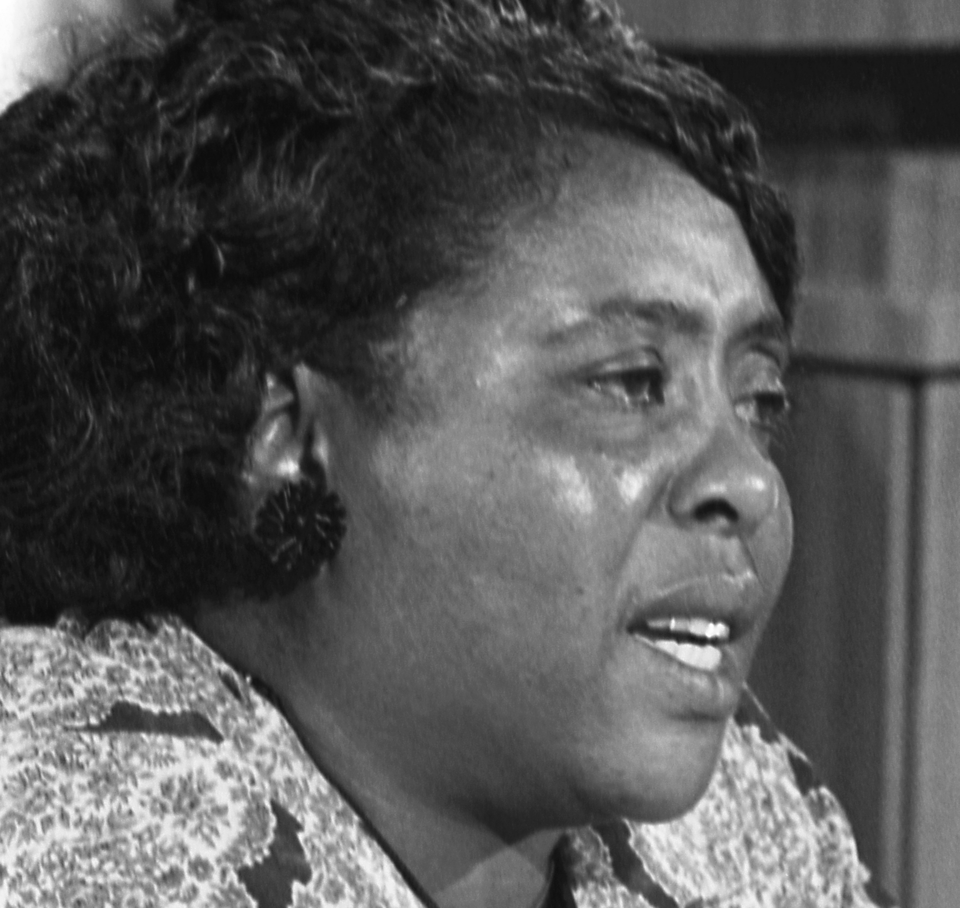
Very closely. Among sharecroppers in the Delta, we ate what we could: beans, corn, a little salt pork when the harvest allowed. Hunger wasn't an idea for us; it was the empty stomachs of children in the morning. That's why the cooperative wasn't just a farm: it was a declaration. As long as a Black family depended on the goodwill of a white owner to eat, they couldn't vote freely, nor speak freely, nor dream freely. By collectively growing our own bread, in Sunflower County, we cut the last thread that kept us bent. Self-sufficiency, in my country, was a form of resistance as powerful as a ballot.
—In the fields as in meetings, you are always said to be singing. What did those songs mean to you?
Singing was my breath. As a child, I sang negro spirituals while picking cotton, so that my back would forget its pain. Later, in the churches of Mississippi, I would lead "This Little Light of Mine" before every meeting, and I would see frightened faces lift. My Bible never left me—my faith was the foundation of everything else. When you have no money, no newspapers, no protection of the law, the voice remains. A people who sing together are no longer afraid together. That's why spirituals were both a prayer and a weapon: they turned a room full of terrified people into an army moving forward.
—After so many years of struggle, how would you describe what inhabits you today?
There's a phrase that has followed me everywhere, in SNCC meetings, in prisons, on dusty roads: "I'm sick and tired of being sick and tired." It says it all. I am weary, yes, to the bones that Winona broke. I still live in poverty, in Ruleville, despite all the noise made about my name. But the fatigue of a life of struggle is better than the rest of a life of slavery. My faith tells me that this little light that is mine, I will make it shine until the last day. And if someday, in a century, someone reads my story and rises in turn to go sign their name—then I will not have been exhausted in vain.
The fatigue of a life of struggle is better than the rest of a life of slavery.
This imaginary interview was generated by artificial intelligence from sources documented in Fannie Lou Hamer's profile. It dramatises what the figure might have said based on what we know about them, but does not constitute attested historical testimony. For primary sources and factual documentation, refer to the full profile.